
 Save 15% on your 1st Autoship learn more

 Email us
 Live Chat
 FAQs
FAQs





Introduction
You fill the bowl with crunchy kibble and set it down. Your dog looks at you, then at the dry nuggets, and waits. Maybe your pup is a fast eater who gulps food down. Perhaps you have a senior dog who seems to struggle with the hard texture. You might just wonder if they are drinking enough water during the day. It is a common moment for many pet owners. We often ask if adding a little moisture to the bowl makes the meal better or safer.
At BaxterBoo, we have helped pet parents since 2006 with practical advice and quality gear from our Vernon Hills warehouse. We know that small changes in the bowl can lead to big differences in health. This post explains the benefits of hydrating dry food and the safety steps you must follow. You will learn when it helps and when it might be better to keep the crunch.
Why Hydration Matters in the Bowl
Most dry dog foods contain very little moisture. Most brands average between six and ten percent water content. In the wild, a dog's diet would naturally include much more liquid from fresh food. While your dog has a water bowl nearby, many pets do not drink enough on their own. This can lead to mild, chronic dehydration that puts stress on the body. If you are comparing meal options, our dog food category is a helpful place to start.
Supporting Kidney and Urinary Health
Water is the most important nutrient for your dog. It helps the kidneys filter out waste and keeps the urinary tract flushing properly. When a dog eats completely dry food, their body must use internal fluids to process the meal. This can make the urine more concentrated. Over time, highly concentrated urine increases the risk of crystals or stones.
By adding water directly to the food, you ensure your dog takes in moisture with every bite. This is especially helpful for breeds prone to urinary issues. It helps the kidneys do their job without working overtime. If your dog has a history of stones, your vet might even suggest a prescription diet. Our dog healthcare collection includes products for a range of canine wellness needs.
Improving Digestion and Absorption
Dry kibble is dense. Once it reaches the stomach, it must absorb liquid before it can break down. This process takes time and energy. When you pre-soak the food, you start that breakdown process early. This makes it easier for the digestive system to pull nutrients from the meal.
Quick Answer: Yes, you can and often should put water in dry dog food. It helps with hydration, makes the food easier to chew, and can improve the smell and taste for picky eaters.
For another look at the basics, read our guide on how to wet dry dog food for better digestion and hydration.
Helping Different Life Stages
The decision to add water often depends on how old your dog is. Different life stages have different physical needs and challenges.
Puppies and the Transition to Solid Food
Puppies have small teeth and sensitive gums. If you are transitioning a puppy from milk or wet food to kibble, the hard nuggets can be a shock. Adding warm water turns the kibble into a soft mash. This feels more familiar to a young pup. It also prevents them from hurting their gums on hard edges. As they grow, you can slowly reduce the water until they are comfortable with the full crunch. Our Puppy Shop can help you find age-appropriate essentials.
Comfort for Senior Dogs
Many older dogs face dental issues. They may have missing teeth, sensitive gums, or even early-stage gum disease. Crunching down on hard kibble can be painful for them. You might notice your senior dog eating more slowly or dropping pieces of food. Adding water softens the meal, allowing them to eat without discomfort.
If your senior dog is also losing interest in food, the added water helps there too. A dog's sense of smell often fades with age. Warm water releases the fats and aromas in the kibble. A smelly meal is a tempting meal for an older dog who needs to maintain their weight.
Support for Picky Eaters
Some dogs simply find dry kibble boring. They might walk away from the bowl or wait for "better" toppers. Adding water creates a natural gravy. It coats every piece of kibble and makes the texture more interesting. It is a simple, cost-effective way to make a standard meal feel like a treat.
Vet Tip: If your dog suddenly stops eating dry food or seems to find it painful, schedule a checkup. Dental disease or mouth sores often cause this change. Our pet pharmacy can provide medications for oral infections if your vet provides a prescription.
The Risks and Downsides of Wetting Kibble
While there are many pros, adding water is not a perfect solution for every home. You must be aware of the safety risks involved with moist food.
The Problem of Spoilage
Dry kibble is designed to stay stable at room temperature. The low moisture content prevents bacteria and mold from growing quickly. The moment you add water, you change the chemistry of the bowl. Moisture plus warmth equals a breeding ground for bacteria like Salmonella or Listeria.
If your dog is a "grazer" who likes to eat a few bites and come back later, you cannot add water. Wet kibble should not sit out for more than 30 to 40 minutes. If it stays in the bowl longer than that, you must throw it away. Leaving wet food out all day can lead to upset stomachs or even serious food poisoning.
For more mealtime safety guidance, see our article on whether you should mix dry dog food with water.
Dental Health Debates
There is a long-standing belief that dry food cleans a dog's teeth by scraping away plaque. While the crunch does provide some mechanical cleaning, it is often exaggerated. Most kibble is high in carbohydrates. When these mix with saliva, they can actually stick to the teeth and contribute to plaque.
However, mushy food definitely provides zero cleaning benefit. If you choose to soak your dog's food, you must be more diligent about dental care. This includes regular brushing or using dental chews. Our dog healthcare collection includes dental care options to support your dog's regular routine.
The Mess Factor
Adding water makes the meal much messier. Dogs with long ears or "beards" will likely end up with soggy food stuck to their fur. It can also lead to more splatters on the floor if your dog is an enthusiastic eater. You will need to wash the food bowl thoroughly with soap and hot water after every single meal. A slow-feed option such as the Neater Feeder Non-Tip Stainless Steel Slow Feed Dog Bowl may also help make mealtime tidier.
Key Takeaway: Adding water improves hydration but requires strict cleaning habits. Never leave soaked food out for more than 40 minutes to avoid bacterial growth.
How to Properly Hydrate Dry Dog Food
If you decide to try this, do not just pour a gallon of cold water over the bowl. There is a right way to do it that maximizes the benefits.
Step 1: Use the Right Ratio
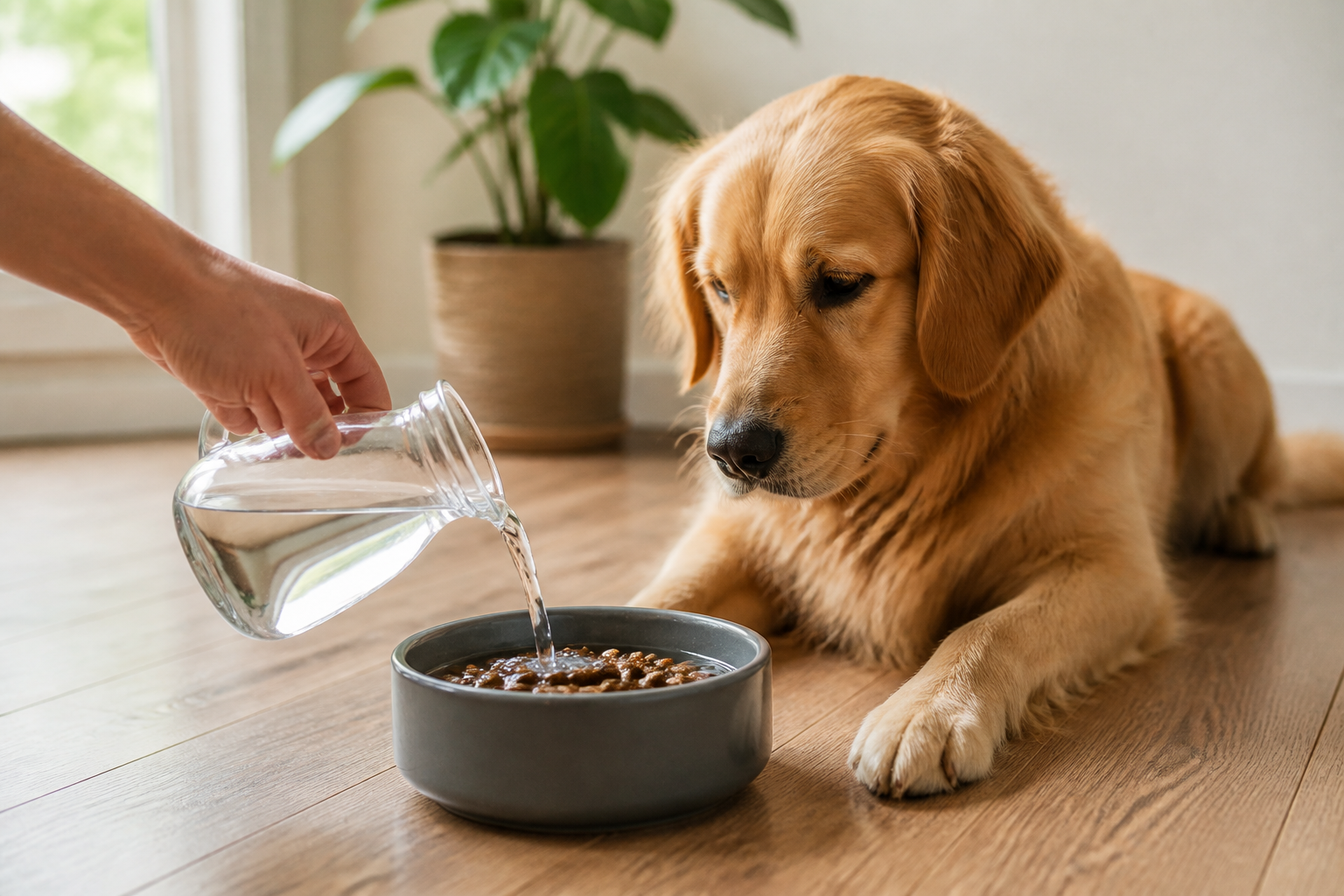
A good starting point is one part water to two parts kibble. For example, if you feed one cup of food, add half a cup of water. You do not want the food swimming like cereal. You want just enough to soak into the nuggets.
Step 2: Choose the Temperature
Use warm water, not boiling water. Boiling water can actually destroy some of the heat-sensitive vitamins and probiotics added to the kibble. Warm water is best because it softens the food faster and releases those enticing aromas.
Step 3: Let it Sit
Give the bowl about five to ten minutes to sit before serving. This allows the water to reach the center of the kibble. If you serve it immediately, the outside will be slippery but the inside will still be hard, which can be a weird texture for some dogs.
Step 4: Monitor the Portion
Soaked kibble looks like more food than dry kibble because it expands. Do not be fooled into feeding less. Use your standard measuring cup for the dry food first, then add the water.
Step 5: Clean the Bowl
Once the meal is done, wash the bowl immediately. Dried, soaked kibble turns into a cement-like substance that is very hard to scrub off later.
Bottom line: Use warm water in a 1:2 ratio and let it soak for a few minutes for the best results.
Alternatives to Plain Water
You do not have to stick to plain tap water. There are other ways to add moisture that also provide a nutritional boost.
Bone Broth for Dogs
Bone broth is a favorite for many pet parents. It is packed with collagen and minerals that support joint health and digestion. However, you should never use human bone broth from the grocery store. Those often contain onions, garlic, and high levels of sodium, which are toxic or unhealthy for dogs.
Look for bone broths specifically made for pets. We offer several options from brands like Stella and Chewy's or The Honest Kitchen. These are formulated to be safe and delicious.
Goat Milk
Raw or dehydrated goat milk is another excellent hydrator. It is often called "universal milk" because it is very easy for dogs to digest. It provides a boost of probiotics and enzymes that support gut health. You can mix the powder with water and pour it over the kibble.
Wet Food Toppers
If you want to keep it simple, you can mix a few spoonfuls of canned food with the dry kibble and a splash of water. This creates a very flavorful stew. You can browse our food topper selection for more ways to add moisture at mealtime.
It is also a great way to use our Frequent Buyer Program, which helps you earn free products on participating brands when you stock up on wet and dry food.
Checklist for Choosing a Hydrator:
- Ensure it is low in sodium.
- Check for toxic ingredients like onion or garlic powder.
- Make sure it is room temperature or warm, not hot.
- Avoid dairy milk, which can cause diarrhea in many adult dogs.
When to Avoid Adding Water
There are a few specific times when adding water might not be the best idea. If your dog is currently on a specific dental prescription diet designed to be very hard and fibrous, adding water will ruin the medical purpose of the food. These diets work by forcing the dog to chew through a specific structure that scrapes the teeth.
Some dogs also have a "texture aversion." They might simply dislike the feel of soggy food. If your dog stops eating when you add water, do not force it. You can try adding a very small amount and slowly increasing it over weeks. If they still refuse, stick to dry food and focus on encouraging them to drink more from their water bowl. You might try a pet fountain to make drinking more exciting.
If your dog has a history of Bloat (GDV), talk to your vet before changing how you feed them. While some believe soaking food prevents bloat by stopping the food from expanding in the stomach, others worry it might encourage fast gulping. Your vet can give you the best advice based on your dog's specific breed and health history.
Note: If you are managing a chronic condition like kidney disease or severe allergies, always consult your veterinarian before changing your feeding routine. Our pet pharmacy provides prescription support for eligible feeding plans and medical needs.
Summary of the Hydration Habit
Feeding your dog is about more than just calories. It is about comfort, health, and enjoyment. Adding water is a low-cost, high-impact way to improve your dog's daily routine. It helps their kidneys, makes their coat shine by boosting hydration, and ensures they actually enjoy their dinner.
At BaxterBoo, we want to make pet care easy and affordable. Whether you are buying premium kibble like Farmina or looking for a healthy bone broth topper, we are here to help. Our MVP Rewards program lets you earn back on every purchase, so you can provide the best for your dog while staying on budget.
- Adding water boosts hydration and supports kidney function.
- Warm water releases aromas that help picky eaters and seniors.
- Soaked food must be eaten within 40 minutes to stay safe.
- Always wash bowls thoroughly after every wet meal.
- Consult your vet for advice on prescription diets or chronic health issues.
The easiest way to stay stocked on your favorite food and hydrators is through our Autoship programme. You will save on your first order and get free MVP Gold membership. This ensures you never run out of the supplies you need to keep your dog's bowl full and healthy.
Our MVP Rewards programme lets you earn back on every purchase, so you can provide the best for your dog while staying on budget.
FAQ
How long can I leave soaked dog food out?
You should not leave soaked dog food out for more than 40 minutes. Because the moisture creates a perfect environment for bacteria to grow, it can spoil much faster than dry kibble. If your dog does not finish the meal within that window, throw the leftovers away and wash the bowl.
Does soaking kibble cause more dental problems?
Soaking kibble does not directly cause dental problems, but it does remove any slight cleaning benefit that dry food might provide. If you feed softened food, you should be extra careful about your dog's dental hygiene. Regular teeth brushing and dental treats become even more important when the food does not have a crunch.
Can I use hot water to soften the food faster?
It is best to use warm water rather than hot or boiling water. Boiling water can damage the nutritional profile of the food by breaking down certain vitamins and minerals. Warm water is sufficient to soften the nuggets and release the smell without compromising the quality of the ingredients.
What is the best ratio of water to dry food?
A standard recommendation is to use a 1:2 ratio, which means half a cup of water for every one cup of dry kibble. This provides enough moisture to soften the food without turning it into a watery soup. You can adjust this slightly based on whether your dog prefers a thicker mash or a thinner consistency.






