
 Save 15% on your 1st Autoship learn more

 Email us
 Live Chat
 FAQs
FAQs





Introduction
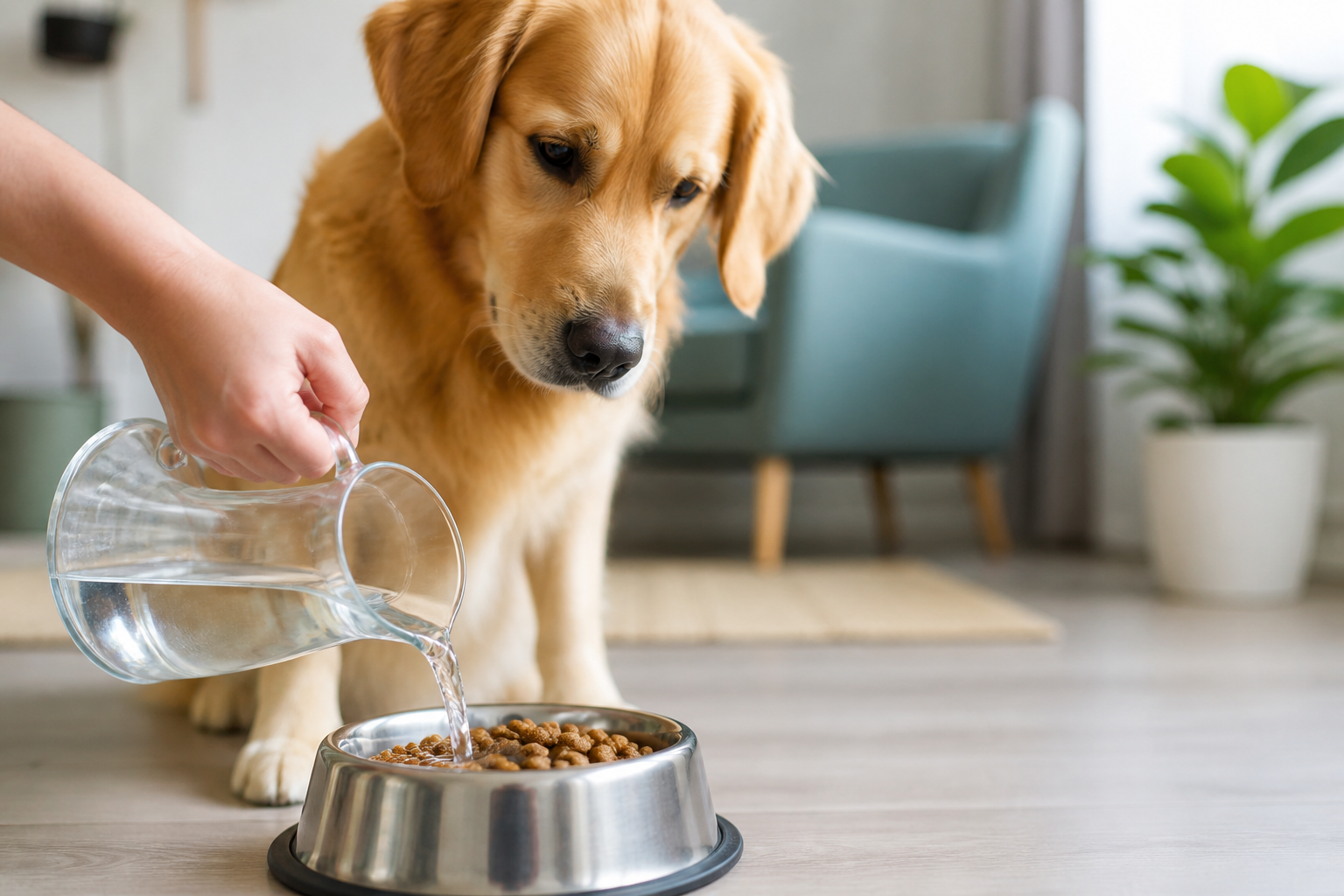
You are standing at the kitchen counter with a scoop of dry kibble in your hand. Your dog is waiting by their bowl with an expectant wag. You might wonder if adding a little warm water would make their dinner more enjoyable or healthier. This is a question many pet owners face, especially when dealing with picky eaters or aging dogs. At BaxterBoo, we want to help you understand how simple changes to mealtime can impact your dog's well-being. This article covers the benefits of adding moisture to kibble and the safety risks you need to keep in mind. We will also look at the best ways to transition your dog to hydrated meals. Adding water to dry dog food can be a great way to boost hydration and flavor, but it requires a careful approach to food safety and dental health.
Quick Answer: Adding water to dry dog food is generally safe and helps with hydration. It softens the texture for seniors and puppies while enhancing the natural aroma of the food. However, you must serve it immediately to prevent bacterial growth and stay on top of your dog's dental hygiene.
The Benefits of Adding Water to Kibble
Most dogs eat dry kibble because it is convenient and shelf-stable. However, dry food usually contains only about 10 percent moisture. Adding water changes the profile of the meal in several positive ways.
Improved Hydration
Many dogs do not drink enough water from their bowls. This is especially true for dogs that are less active or those living in cooler climates. By adding water directly to their food, you ensure they are getting a baseline level of hydration twice a day. Proper hydration supports kidney function and helps flush toxins from the body. It also helps maintain a healthy body temperature and keeps joints lubricated.
Better Digestion
Dry kibble is very dense. When a dog eats it, their body has to provide the moisture to break it down in the stomach. Adding water before they eat can jump-start this process. Softened food is often easier for the digestive system to process. This may be helpful for dogs that suffer from occasional constipation or those with sensitive stomachs.
Enhanced Aroma and Flavor
Dogs experience the world through their noses. Dry kibble does not have a very strong scent when it is cold and dry. Adding warm water releases the fats and aromas trapped in the pellets. This makes the food smell much more appealing to a dog. If you have a picky eater, this simple step can often entice them to finish their entire bowl.
Slower Eating Habits
Some dogs tend to "inhale" their food. This fast eating can lead to choking or digestive upset. When you add water to kibble, it creates a slightly more challenging texture to gulp down quickly. The increased volume also helps the dog feel full sooner. This can be a useful tool for weight management.
Key Takeaway: Adding water to dry food is a simple way to increase daily fluid intake and make meals more appealing to picky eaters.
Potential Downsides and Safety Concerns
While there are many benefits, you should not simply pour water into the bowl and walk away. There are real safety and health factors to consider before changing your routine.
The Risk of Bacterial Growth
Dry kibble is processed to be shelf-stable. Once you add moisture, you create a breeding ground for bacteria like Salmonella or Listeria. This is particularly dangerous if you leave the wet food out for a long time. If your dog is a "grazer" who eats a little bit throughout the day, wetting their food is not a good idea. Any food that has been moistened and left out for more than an hour should be thrown away.
Impact on Dental Health
One of the main selling points of dry food is its ability to help clean teeth. The mechanical action of chewing hard kibble can help scrape away a small amount of plaque. When you soften the food, you lose this abrasive benefit. Over time, a diet of only soft food may lead to faster tartar buildup. If you choose to wet your dog's food, you must be more diligent about their dental care routine.
Possible Digestive Stress
A recent study involving Beagles suggested that water-softened food might alter gut bacteria in specific ways. In some cases, it led to an increase in certain types of bacteria that could cause mild intestinal upset. While this does not happen to every dog, it is important to watch for changes in stool quality. If your dog starts having diarrhea or excessive gas after you start wetting their food, they may prefer it dry.
The Mess Factor
Wet kibble is messy. It can stick to the fur around your dog's mouth and chin. If your dog is a messy eater, they may splash the mixture onto your floors or walls. This residue can dry quickly and become difficult to clean. You will need to wash your dog's bowl thoroughly with hot, soapy water after every single meal to prevent slime and bacteria buildup.
Vet Tip: If your dog has existing dental disease or heavy tartar, consult your veterinarian before switching to softened food. They may recommend specific dental treats or prescription diets available through our pet pharmacy.
Best Practices for Wetting Dry Dog Food
If you decide that adding water is right for your pet, follow these steps to ensure the meal is safe and nutritious.
Use the Right Water Temperature
Never use boiling water to soften kibble. High heat can destroy some of the heat-sensitive vitamins and minerals in the food. It can also burn your dog's mouth. Use lukewarm or warm water from the tap or a filtered source. Warm water is best for releasing aromas without damaging the nutritional value.
Get the Ratio Right
You do not want to turn the food into a soup unless your vet has specifically recommended it. A good starting point is one part water to three or four parts kibble. For example, if you feed one cup of food, start with a quarter cup of water. You can adjust this based on your dog's preference.
Let it Soak
If you want the kibble to be truly soft, let it sit for about 10 to 15 minutes. This allows the water to penetrate to the center of the pellet. If you just want to enhance the flavor, you can serve it immediately after stirring.
Follow These Preparation Steps:
- Measure the dry kibble into a clean stainless steel or ceramic bowl.
- Add the measured amount of warm, filtered water.
- Stir the mixture to ensure all pellets are coated.
- Wait the desired amount of time for the texture you want.
- Discard any leftovers within 30 to 60 minutes.
For additional preparation ideas, read our guide to mixing dry dog food with water.
Alternatives to Plain Water
Plain water is the most cost-effective option, but it is not the only thing you can use to hydrate dry food. Other liquids can add even more nutritional value.
Bone Broth for Dogs
Bone broth is a fantastic way to add moisture and nutrients. It is rich in collagen and amino acids that support joint health and digestion. However, never use human bone broth from the grocery store. These often contain onions, garlic, and high levels of salt, all of which are toxic to dogs. Use a bone broth specifically formulated for pets. We carry brands like The Honest Kitchen and Brutus Broth that are safe and delicious. You can browse our dog food toppers and broths for suitable meal additions.
Goat Milk
Raw or dehydrated goat milk is another popular choice. It is packed with probiotics that support gut health. Many dogs find the taste of goat milk irresistible. It is much easier for dogs to digest than cow's milk. This is a great option for dogs that need to put on a little weight or those recovering from an illness.
Canned Food Toppers
If you want to increase moisture and protein, you can mix a spoonful of wet canned food with the dry kibble. This provides a variety of textures and flavors. Just be sure to adjust the amount of dry food you give to account for the extra calories in the wet food.
Key Takeaway: Using bone broth or goat milk instead of water provides extra nutrients like collagen and probiotics while still helping with hydration.
For another look at combining textures, see our guide to mixing wet and dry dog food.
Specific Needs by Life Stage
The decision to wet dry dog food often depends on how old your dog is and what health challenges they face.
Puppies and Weaning
When puppies are transitioning from their mother's milk to solid food, their teeth are small and their jaws are weak. Wetting their kibble is almost essential during this phase. It creates a "mush" that is easy to lap up and swallow. As they grow, you can gradually reduce the amount of water until they are eating fully dry kibble.
Senior Dogs
Senior dogs often face two main issues: dental pain and a decreased sense of smell. Missing teeth or sore gums can make crunching hard kibble painful. Softening the food allows them to eat without discomfort. Since their sense of smell fades with age, the enhanced aroma of warmed food can encourage them to keep eating and maintain their weight.
For more feeding guidance, read how to choose the right dog food for senior pets.
Dogs with Health Conditions
Dogs with kidney issues or urinary tract stones often need as much water as possible. In these cases, your vet might even suggest making the food "soupy" to maximize intake. On the other hand, dogs prone to bloat (GDV) require careful feeding. There is some debate among experts about whether wetting food increases or decreases the risk of bloat in large breeds.
Vet Tip: For dogs with chronic health conditions like kidney disease or food allergies, your vet may prescribe a specific therapeutic diet. Our pharmacy at BaxterBoo offers these prescription foods through our partnership with Pet's Choice, making it easy to get the exact nutrition your pet needs.
Cleaning and Maintenance
If you start wetting your dog's food, your cleaning routine must become more rigorous. Bacteria thrive in moist environments.
Choosing the Right Bowl
Plastic bowls often have microscopic scratches where bacteria can hide. If you wet your dog's food, it is best to use stainless steel, ceramic, or glass bowls. These materials are non-porous and can be sanitized more effectively.
The Daily Scrub
You cannot just rinse the bowl. You need to use hot water and a pet-safe detergent. Make sure to scrub the corners where the "kibble slime" tends to accumulate. If you use a dishwasher, ensure the bowls are dishwasher-safe and run them on a high-heat cycle.
Storing the Food
Never add water to the entire bag of dog food. Only hydrate the portion you are serving immediately. If you want to prep meals in advance, you can measure out the dry portions into containers, but do not add the liquid until it is time to eat.
Bottom line: Hygiene is the most important part of wetting dry food; always wash bowls after every meal to prevent dangerous bacterial buildup.
When to Consult Your Veterinarian
Changing your dog's diet is usually a simple process, but sometimes it requires professional advice. You should talk to your vet if you notice any of the following:
- Your dog suddenly stops eating their dry food even when it is moistened.
- There is a significant change in their bowel movements.
- Your dog seems to have pain while chewing even soft food.
- You are unsure if your dog's breed is at high risk for bloat.
If your dog is struggling with a health issue, they may need more than just a change in food texture. Sometimes, the need for softened food is a sign of underlying dental disease or internal health problems. Your vet can perform a physical exam to ensure your dog is healthy. If they require medication for dental pain or specialized diets for sensitive stomachs, you can find those through our pharmacy services. Our partnership with Pet's Choice ensures that you receive FDA-approved medications and authentic prescription diets delivered to your door.
Conclusion
Wetting dry dog food is a versatile technique that can help your pet in many ways. It is a powerful tool for increasing hydration, making meals more appetizing, and helping senior dogs eat comfortably. However, you must balance these benefits against the risks of spoilage and the loss of dental cleaning action.
- Always serve moistened food immediately and discard leftovers.
- Use warm water, never boiling, to preserve nutrients.
- Consider using bone broth or goat milk for added nutrition.
- Maintain a strict cleaning schedule for all food bowls.
Key Takeaway: Hydrating your dog's kibble is an excellent way to support their health as long as you follow strict food safety and hygiene protocols.
For all your dog's nutritional needs, explore our dog food category for premium dry foods, healthy toppers, and bone broths. If you find a routine that works for your pup, consider signing up for our Autoship programme to save on every order and ensure you never run out of their favorite meals.
FAQ
Does adding water to dog food cause bloat?
There is no single answer to this, as studies have shown conflicting results. Some research suggests that wetting food containing certain preservatives might increase the risk in large breeds, while others suggest it helps by preventing the food from expanding too quickly in the stomach. If you have a deep-chested breed like a Great Dane or a German Shepherd, it is vital to discuss your feeding routine with your veterinarian.
How long can I leave wet kibble in the bowl?
You should never leave moistened kibble out for more than 30 to 60 minutes. Once water is added, the food becomes a prime environment for bacteria to grow, especially in warm weather. If your dog has not finished their meal within an hour, throw it away and wash the bowl thoroughly before the next feeding.
Can I add cold water instead of warm water?
Yes, you can use cold water, but it will not release the aromas and fats as effectively as warm water. Cold water also takes much longer to soften the center of the kibble. If your goal is simply hydration and your dog doesn't mind the texture, cold water is perfectly safe.
Is it better to use broth instead of water?
Broth can be better because it adds extra nutrients like collagen, glucosamine, and amino acids. However, it also adds calories, so you must monitor your dog's weight. Always ensure the broth is specifically made for pets to avoid toxic ingredients like onions, garlic, and excessive sodium found in human-grade broths.






