Save 15% on your 1st Autoship learn more

 Email us
 Live Chat
 FAQs
FAQs





Introduction
Your dog just came back from a long walk around the neighborhood. You expect them to curl up for a nap, but instead, they are pacing the living room or nudging their leash. Physical exercise is wonderful, but many dogs remain restless because their brains are still looking for a job. This is a common situation for high-energy breeds and curious puppies. A snuffle play mat for dogs is one of the most effective tools for providing that missing mental stimulation. At BaxterBoo, we have seen how these simple fabric puzzles can transform a bored pet into a calm, satisfied companion. This article will explain how these mats work, why sniffing is so beneficial for canine health, and how to choose the best design for your specific dog.
Understanding the Snuffle Play Mat
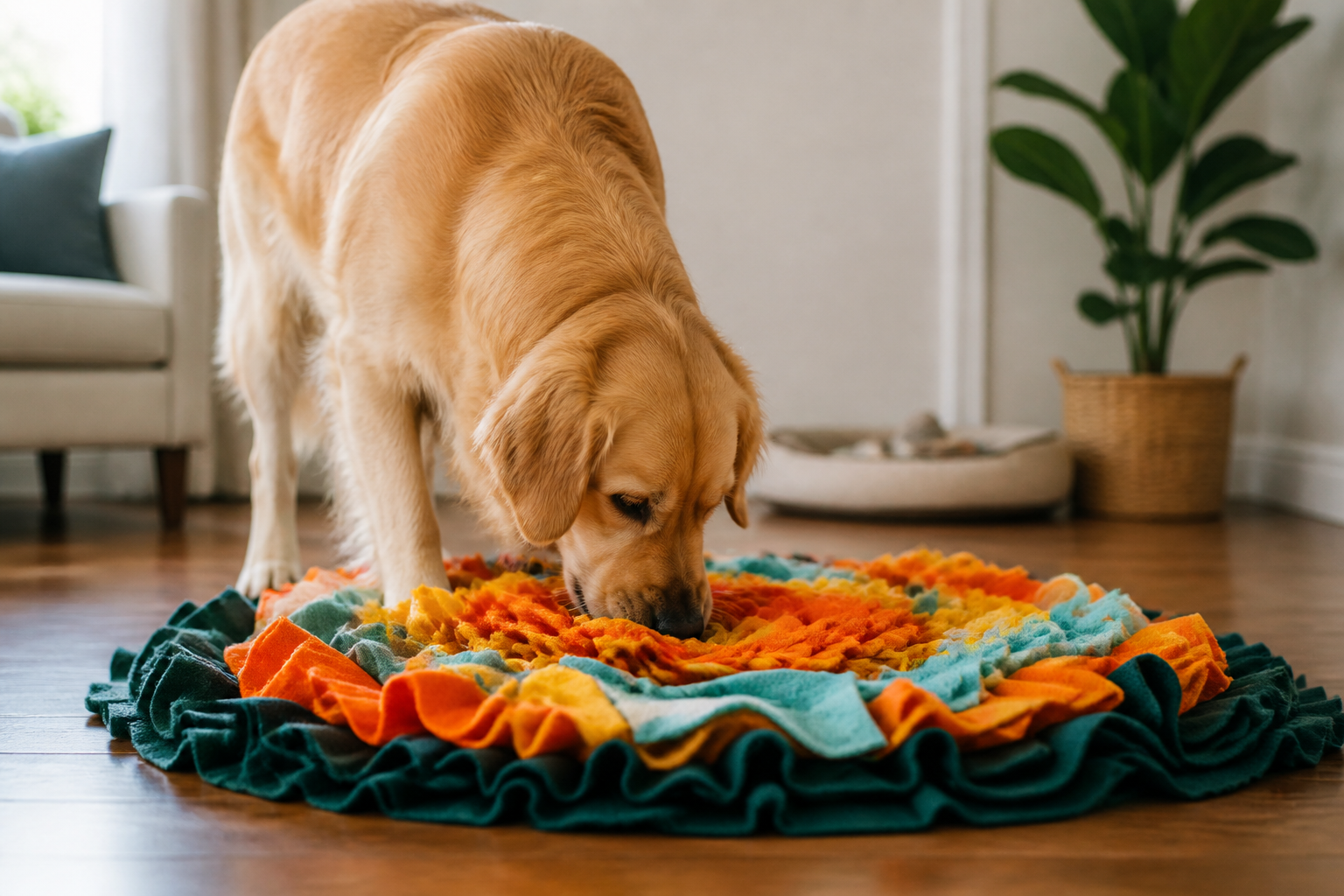
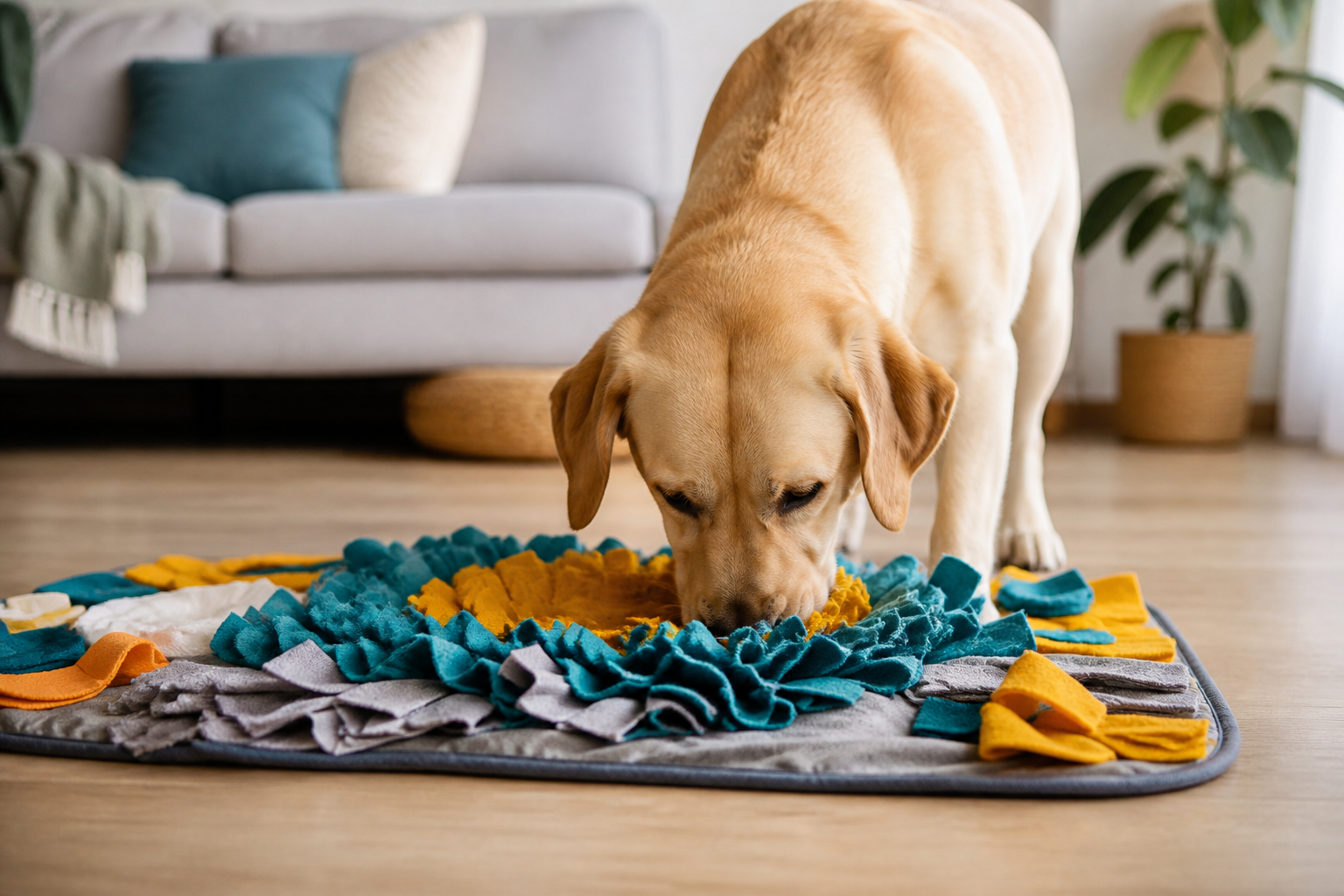
A snuffle mat is a fabric puzzle designed to mimic the experience of foraging in long grass. Most are made from strips of soft felt or fleece tied to a sturdy backing. These strips create deep folds, pockets, and hidden crevices. You hide dry food or treats inside these layers, and your dog must use their nose to find them.
While it looks like a simple rug, it serves a much deeper purpose. Dogs experience the world primarily through scent. Their sense of smell is estimated to be tens of thousands of times more acute than ours. When a dog uses a snuffle mat, they are engaging in a natural behavior known as foraging. This activity is deeply rewarding for them and provides a level of mental exhaustion that a walk alone cannot replicate.
Quick Answer: A snuffle mat is a fabric enrichment tool that hides treats or kibble within felt or fleece strips. It encourages dogs to use their natural foraging instincts to find food, providing significant mental stimulation and slowing down fast eaters.
Why Sniffing Is Better Than Running
Many pet owners assume that the only way to tire out a dog is through physical movement. While running and playing fetch are important, they can actually build up a dog’s physical stamina. This means you might end up with a dog that needs more and more exercise every day just to feel tired. Mental enrichment through sniffing works differently.
Sniffing requires intense concentration. A dog’s brain has to process every scent molecule they encounter. This cognitive work is exhausting. Experts often note that fifteen minutes of focused sniffing can be just as tiring as a one-hour walk. This makes a snuffle mat an excellent option for rainy days or for owners with limited mobility. It allows you to provide a “workout” for your dog without leaving your living room. For more ideas, explore these dog brain games for mental stimulation.
Benefits for Different Life Stages
- Puppies: Foraging helps focus their wandering minds. It gives them a safe outlet for their curiosity and can help with crate training.
- Adult Dogs: It prevents boredom-based behaviors like chewing furniture or excessive barking.
- Senior Dogs: Older dogs may have stiff joints or limited mobility. A snuffle mat provides enrichment that does not put stress on their hips or elbows.
- Anxious Dogs: The act of sniffing lowers the heart rate and triggers the release of dopamine. This can help calm a dog during thunderstorms or fireworks.
Using a Snuffle Mat as a Slow Feeder
If your dog inhales their dinner in seconds, they are at a higher risk for digestive upset. Some large breeds are also prone to bloat, which is a life-threatening condition often triggered by eating too fast. A snuffle mat serves as an excellent alternative to a standard food bowl.
When you scatter kibble into a mat, your dog has to find each individual piece. They cannot take large gulps of food. This naturally slows their eating pace. It turns a thirty-second meal into a ten-minute activity. This slower pace allows the stomach to signal to the brain that it is full, which can also help with weight management. Learn more about enrichment and interactive feeders that slow mealtimes.
Vet Tip: If your dog is prone to digestive issues or bloat, consult your veterinarian about using a slow feeder or snuffle mat. For pets requiring prescription diets for weight or digestion, our pet pharmacy carries a wide range of specialized foods.
How to Introduce a Snuffle Mat to Your Dog
Most dogs will understand the concept of a snuffle mat immediately. However, some dogs might get frustrated or try to pick up the mat and shake it. Introducing the toy correctly ensures they use their nose rather than their teeth.
Step 1: Start with high-value treats. / Use something with a strong scent like freeze-dried liver or small pieces of jerky. Place them right on top of the fabric strips where they are easy to see. Our freeze-dried dog treats can be useful for scent-based enrichment.
Step 2: Command your dog to wait. / Place the mat on the floor while your dog is in a stay or sit position. This builds impulse control and makes the activity more rewarding.
Step 3: Give the release cue. / Use a phrase like “find it” or “go sniff.” Encourage them as they find the easy treats.
Step 4: Increase the difficulty. / Once they understand the game, start tucking the treats deeper into the folds. You can eventually transition to using their regular dry kibble for mealtimes.
Step 5: Pick the mat up. / When the dog is finished, take the mat away. This prevents them from chewing the fabric and keeps the toy exciting for the next session.
Key Takeaway: Always supervise your dog during snuffle mat sessions to ensure they do not chew or swallow the fabric strips. Removing the mat after use keeps the activity fresh and protects the longevity of the toy.
Choosing the Right Design and Material
There are many types of snuffle mats available, and the best one for you depends on your dog’s size and personality. Most quality mats use felt or fleece because these materials are soft on the nose. They also hold onto scents well, which keeps the dog engaged. Browse our puzzle dog toys for additional enrichment options.
Flat Mats vs. Shaped Puzzles
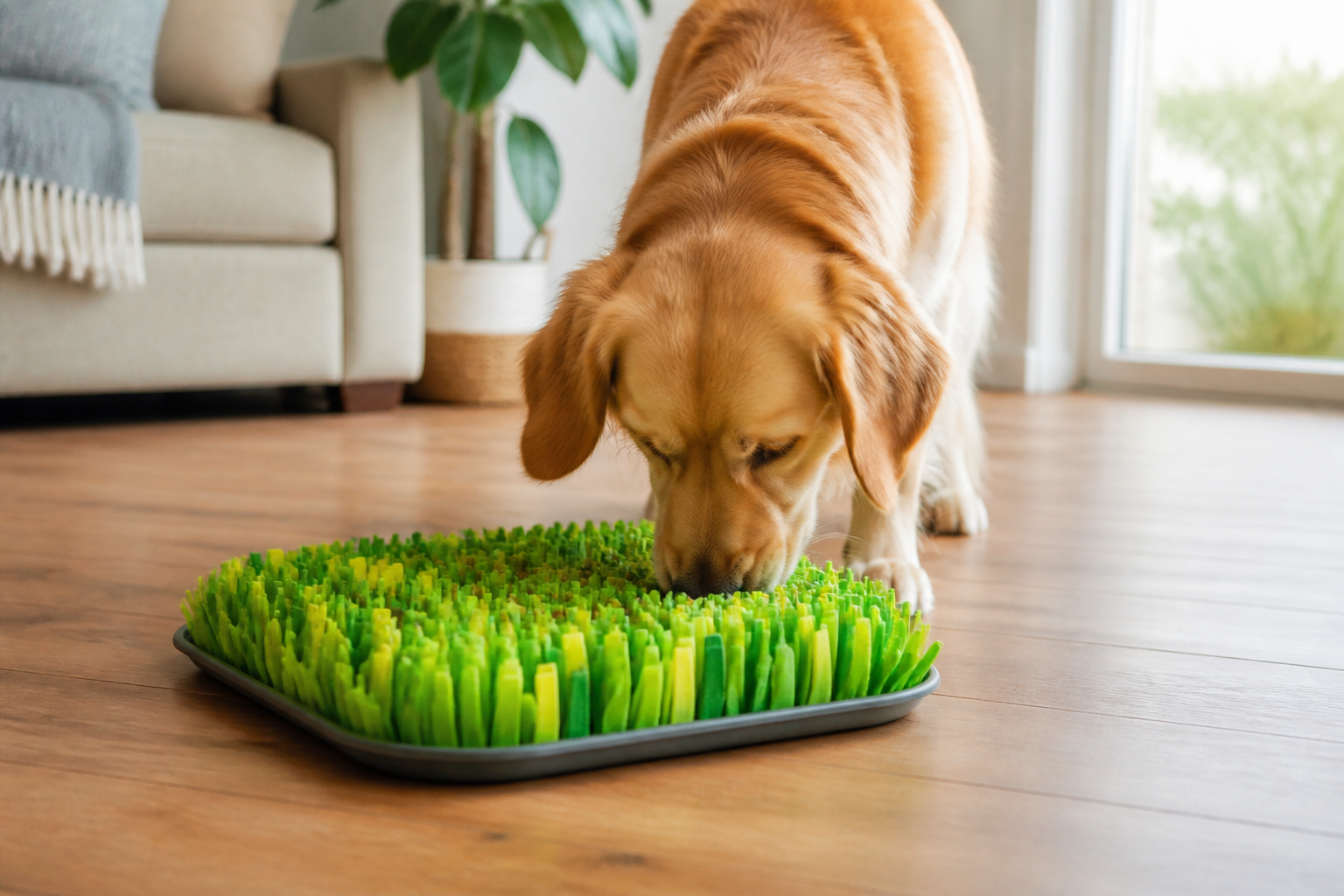
A standard flat mat is great for beginners. It provides a large surface area and is usually easy to clean. However, some dogs are “super sniffers” who solve flat mats too quickly. For these dogs, you might look for mats with varied textures. Some designs include cups, tunnels, and pockets made of fabric.
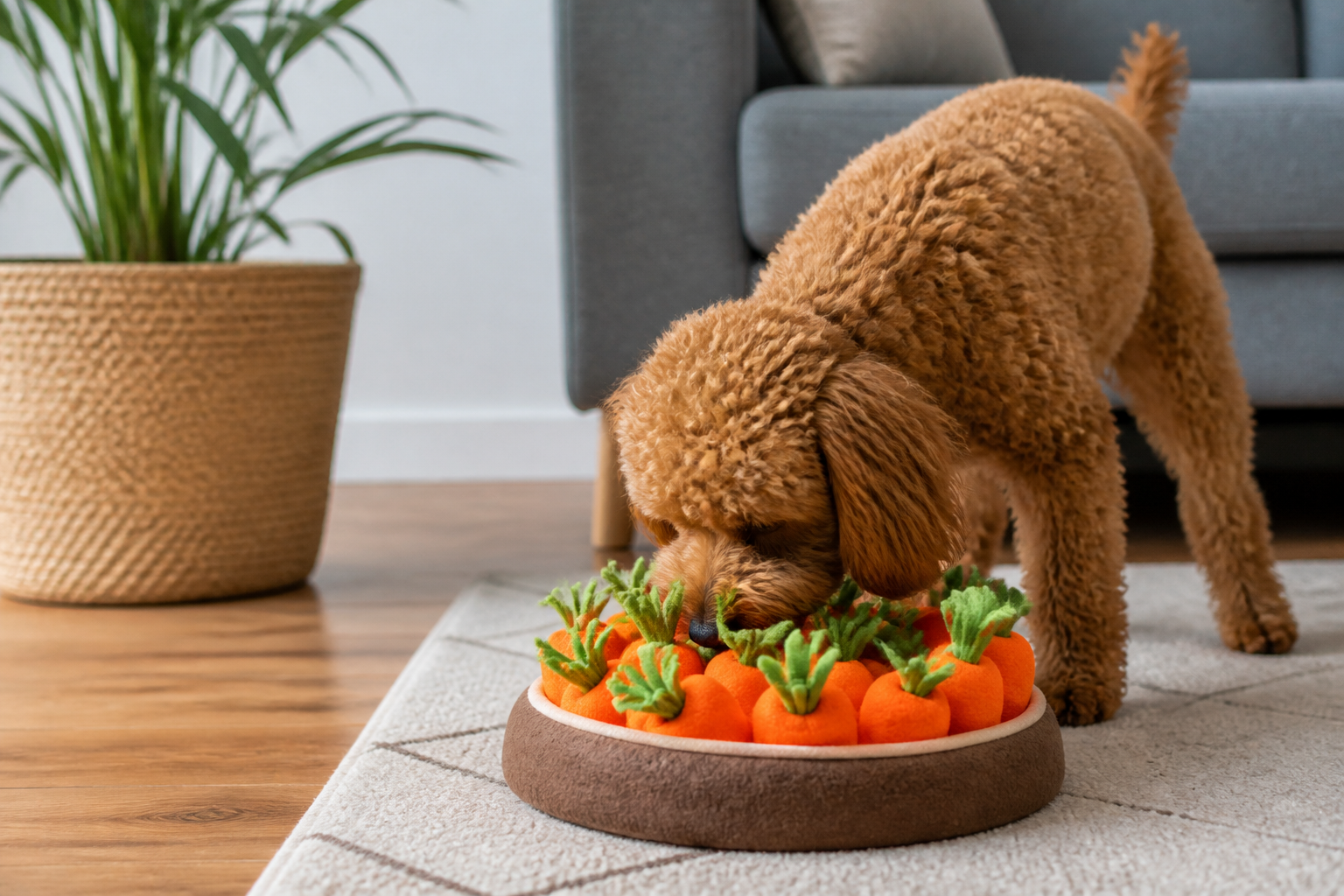
We carry brands like P.L.A.Y. that offer themed mats with extra features. Some even include detachable squeaky toys for added fun. If you have a dog that likes to move while they work, a snuffle ball is another option. These are round fabric puzzles that the dog must roll around to release the treats.
Size and Portability
Consider the size of your dog when shopping. A small toy breed may get overwhelmed by a massive mat, while a Great Dane will finish a tiny mat in seconds. If you travel often, look for a design that has a drawstring or can be rolled up and tied. This allows you to bring your dog’s favorite enrichment tool on road trips or to the vet’s office to help keep them calm.
Bottom line: Choose a mat made of machine-washable fleece with a non-slip bottom to provide the safest and most convenient experience for your pet.
Cleaning and Maintenance
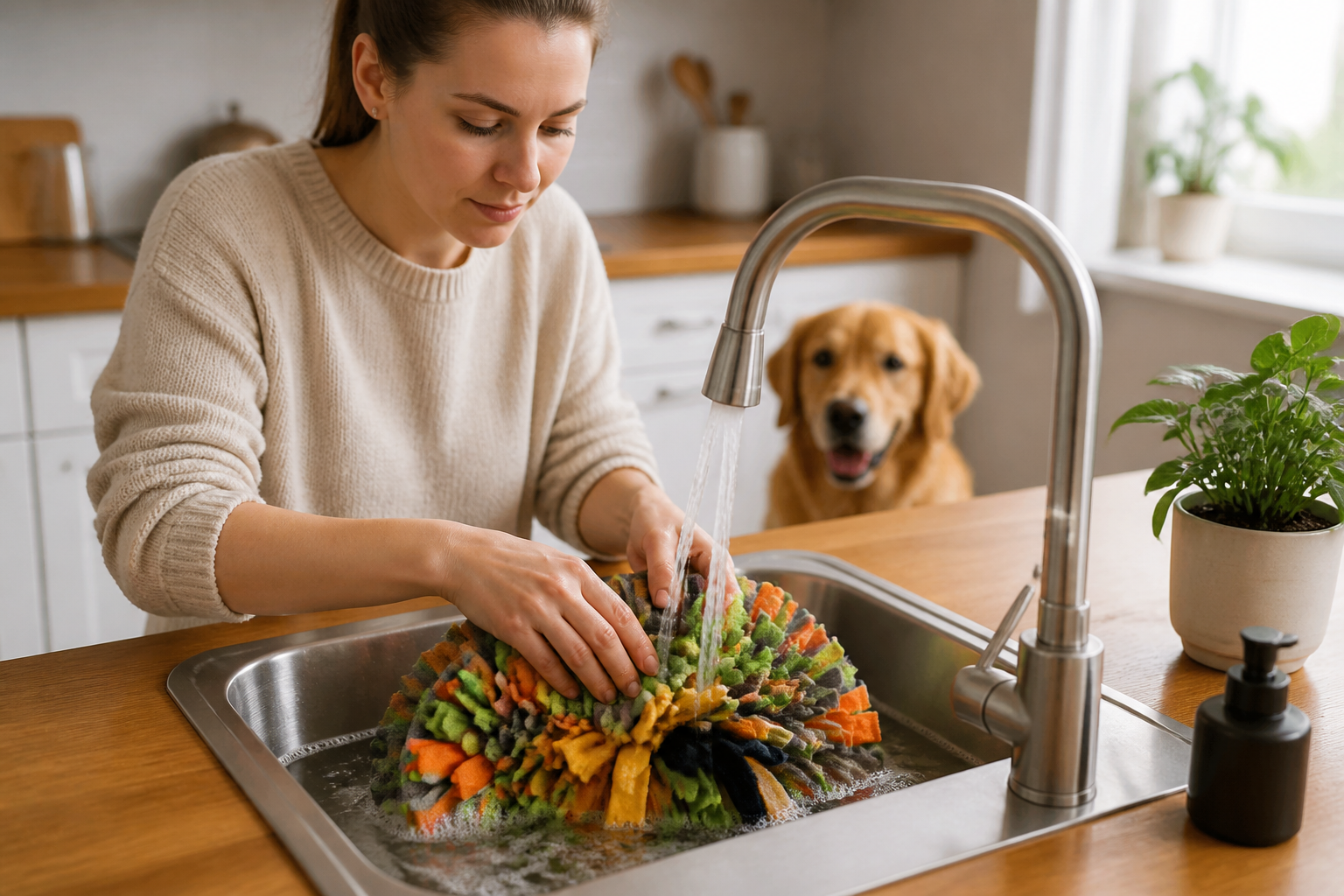
Because your dog will be drooling on the mat and food particles will be left behind, regular cleaning is mandatory. Bacteria can grow in the damp fabric if it is left unwashed. Most snuffle mats are machine washable, but you should always check the manufacturer’s label first.
To keep the mat in good shape, use a pet-safe, unscented detergent. Strong floral scents can be overwhelming for a dog’s sensitive nose and might discourage them from using the mat. Air drying is usually the best way to prevent the fabric from shrinking or the non-slip backing from melting. If you use a dryer, use a low-heat setting.
Maintenance Checklist
- Shake out the mat after every use to remove crumbs.
- Spot clean small stains with a damp cloth.
- Machine wash every week if used daily for meals.
- Check for loose fabric strips or torn backing regularly.
When a Snuffle Mat Might Not Be the Best Choice
While most dogs love these puzzles, they are not a universal solution. If your dog is an aggressive chewer who tries to eat non-food items, a fabric mat could be dangerous. Ingesting fleece or felt can cause intestinal blockages. For these dogs, a hard rubber puzzle toy like those made by KONG might be a safer way to provide mental stimulation.
Additionally, if your dog is not motivated by food, they may ignore the mat entirely. In these cases, you might need to use very high-value, smelly treats to get them interested. If your dog shows signs of resource guarding, you should never use a snuffle mat in a room with other pets. Give each dog their own space to forage safely and comfortably.
Managing Health and Anxiety
A snuffle mat is a great frontline tool for managing mild anxiety. It gives the dog a productive way to channel their nervous energy. However, some dogs suffer from severe separation anxiety or noise phobias that a toy cannot solve alone.
If your dog is struggling with chronic stress, it is important to speak with your veterinarian. They can help determine if behavioral training or medication is necessary. Our pharmacy at BaxterBoo provides prescription medications for a variety of conditions, including anxiety, skin allergies, and joint support, which can be delivered right to your door.
Key Takeaway: Combining mental enrichment like snuffle mats with professional veterinary care is the best way to manage a pet’s long-term wellness and behavior.
Summary of Snuffle Mat Benefits
Using a snuffle mat is one of the easiest ways to improve your dog’s quality of life. It requires very little effort from the owner but provides a massive payoff for the dog. By turning mealtime into a game, you are satisfying their biological drive to hunt and forage. This leads to a more relaxed household and a happier, healthier pet.
- Provides mental exhaustion that physical walks can’t match.
- Acts as a slow feeder to prevent bloating and indigestion.
- Reduces stress and anxiety through the natural act of sniffing.
- Offers a safe activity for senior dogs or pets recovering from surgery.
- Builds confidence in shy or rescue dogs.
Our warehouse in Vernon Hills is stocked with a variety of enrichment toys and high-quality treats to fill them. Whether you are looking for a simple fleece mat or a complex puzzle, we have options that fit your dog’s specific needs. For ongoing health needs, remember to check our pharmacy for prescription items and wellness supplements.
Bottom line: A snuffle mat is a versatile, low-cost investment that provides essential mental stimulation and digestive support for dogs of all ages.
FAQ
Can I put wet food in a snuffle play mat?
It is generally not recommended to use wet or raw food in a fabric snuffle mat. The moisture will soak into the fleece or felt, making it very difficult to clean and potentially leading to mold or bacterial growth. If you want to use wet food for enrichment, a silicone lick mat or a stuffable rubber toy is a much better choice. Stick to dry kibble or dehydrated treats for fabric puzzles.
How often should I let my dog use a snuffle mat?
Most dogs can use a snuffle mat daily. Many owners use them for every meal to help with slow feeding and mental stimulation. However, you should monitor your dog’s weight and ensure the treats you put in the mat are part of their daily caloric intake. If your dog starts to lose interest, try putting the mat away for a few days to keep it feeling like a special activity.
Is a snuffle mat safe for a puppy that is teething?
You should be extra cautious with teething puppies. Because their gums are sore, they may be more inclined to chew and tear the fabric strips rather than just sniffing for treats. If you use a mat with a puppy, keep the sessions short and stay right next to them. If they start to gnaw on the fabric, redirect them to a proper teething toy and put the mat away for later.
What should I do if my dog just flips the mat over to get the treats?
This is a common “shortcut” that smart dogs take. To prevent this, you can look for a mat with a weighted bottom or suction cups. You can also try placing the mat in a corner or inside a shallow box to make it harder for them to flip. If they continue to flip it, go back to the beginning stages and reward them only when they keep their nose down and the mat flat on the floor.