
 Save 15% on your 1st Autoship learn more

 Email us
 Live Chat
 FAQs
FAQs





Introduction
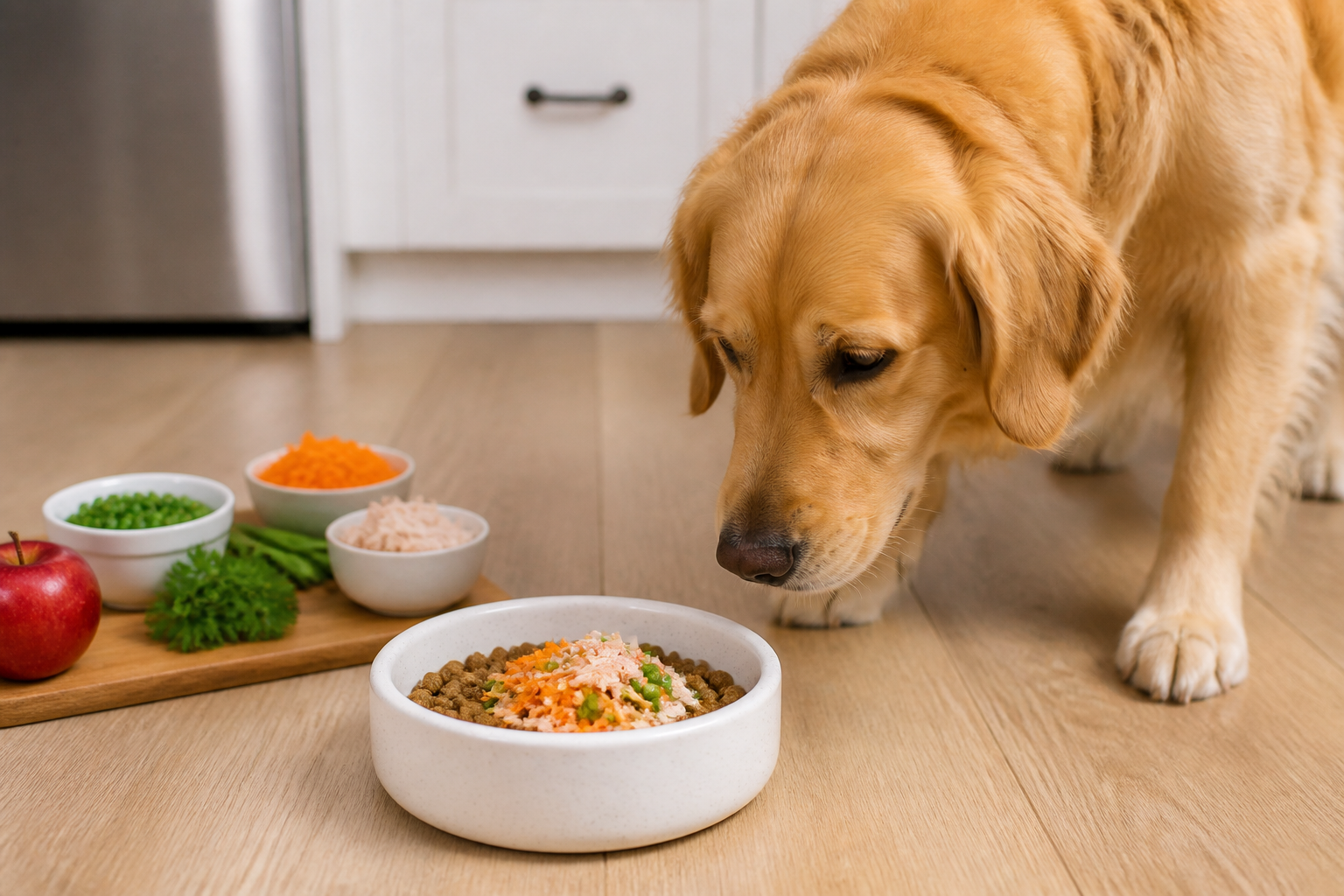
You are standing in the kitchen, looking at your dog as they nudge their bowl of plain kibble with a sigh. It is a familiar scene for many pet owners. While dry dog food is a convenient and nutritionally complete base, it can sometimes feel a bit repetitive for your furry friend. You might wonder if there is a safe way to add more flavor, better texture, or a boost of fresh nutrients without ruining their balanced diet.
At BaxterBoo, we know that mealtime is the highlight of your dog's day. We believe that adding fresh, whole-food toppers is one of the best ways to keep your dog excited about their food while supporting their overall wellness. This post covers the safest and most effective mix-ins to improve your dog's dry food. We will explore everything from common kitchen staples to specialized boosters that can help with specific health goals.
Quick Answer: You can safely add high-quality proteins like eggs and plain meats, hydrating liquids like bone broth, or nutrient-dense produce like pumpkin and blueberries to dry dog food. These additions should generally make up no more than 10 percent of your dog's daily caloric intake to maintain a balanced diet.
The Rule of Ten Percent
Before you start raiding the refrigerator, it is important to understand the balance of your dog's nutrition. Most high-quality commercial kibble is formulated to be a complete diet. This means it has the precise ratio of vitamins, minerals, and calories your dog needs to thrive. When you add toppers, you are essentially adding "extras."
The golden rule for pet nutrition is that treats and toppers should not exceed 10 percent of your dog's total daily calories. If you go beyond this, you risk unbalancing their diet. For example, adding too much of one ingredient might interfere with how your dog absorbs other essential nutrients. It can also lead to unwanted weight gain.
If your dog is already at a healthy weight, you should decrease their portion of dry food slightly to account for the calories in the topper. If your dog is managing a health condition or is on a prescription diet, always check with your veterinarian before introducing new foods. Our pet pharmacy category carries many prescription diets like Royal Canin and Farmina Vet Life, which are specifically formulated for sensitive needs.
Key Takeaway: Treat all kibble additions as part of your dog's daily calorie count. Keep mix-ins to 10 percent or less of the total meal to avoid nutritional imbalances.
High-Quality Animal Proteins
Protein is the most exciting addition for most dogs. It provides essential amino acids that support muscle growth, immune function, and skin health.
1. Eggs
Eggs are often called nature's multivitamin. They are highly digestible and packed with protein, vitamin A, and fatty acids. You can serve them scrambled, hard-boiled, or even raw if you are confident in the source. Cooking the egg white makes the protein more bioavailable and eliminates the risk of salmonella.
2. Lean Muscle Meats
Small amounts of cooked chicken, turkey, or lean beef can transform a bowl of kibble. Ensure the meat is plain and unseasoned. Never use meat cooked with onions, garlic, or heavy salt. Avoid fatty cuts or skin, as high fat content can lead to digestive upset or even pancreatitis in sensitive dogs.
3. Canned Fish
Sardines, mackerel, and pink salmon are excellent toppers. Look for fish packed in water rather than oil. These are rich in Omega-3 fatty acids, which are fantastic for brain health and a shiny coat. Just one or two small sardines are enough for a medium-sized dog.
4. Organ Meats
Liver and heart are nutrient powerhouses. They contain high levels of B vitamins and iron. Because organ meats are very rich, you only need a very small amount. A few tiny pieces of freeze-dried liver or lightly cooked heart can make dry food irresistible to a picky eater.
Hydrating Liquids and Broths
Kibble is very low in moisture. Adding liquid can make the food easier to chew and help keep your dog hydrated.
5. Bone Broth
Pet-safe bone broth is a favorite at BaxterBoo because it is rich in collagen and amino acids. It supports joint health and gut function. You can buy pre-made toppers from brands like our selection of The Honest Kitchen products or make your own at home. Ensure any broth you use is free from onions, garlic, and excessive sodium.
6. Goat's Milk
Often referred to as a universal milk, goat's milk is much easier for dogs to digest than cow's milk. It is loaded with probiotics, electrolytes, and enzymes. It is an excellent way to rehydrate dry kibble while adding a creamy flavor that dogs love.
7. Plain Water or Warm Water
If you want to keep things simple, just adding warm water can help. It releases the natural aromas of the kibble, making it more appealing. It also creates a light gravy as the starches in the food break down. If you want a deeper dive into this approach, our guide to wetting dry dog food explains the basics in more detail.
Vet Tip: If your dog is older and has dental issues, soaking kibble in warm bone broth for ten minutes before serving can make eating much more comfortable. Always consult your vet if your dog suddenly stops wanting to eat dry food, as this can be a sign of dental pain.
Produce and Plant-Based Toppers
Many dogs enjoy the crunch and sweetness of fruits and vegetables. These add fiber and antioxidants without many extra calories.
8. Canned Pumpkin
Plain canned pumpkin (not pumpkin pie filling) is a staple for many dog owners. It is high in fiber and can help regulate digestion. Whether your dog has loose stools or occasional constipation, a tablespoon of pumpkin often helps. It is also very low in calories, making it a great "filler" for dogs on a weight management plan.
9. Fresh or Steamed Vegetables
Green beans, carrots, and broccoli are excellent choices. If you feed them raw, it is best to finely grate or puree them. Dogs have short digestive tracts and struggle to break down the tough cell walls of whole raw vegetables. Steaming them slightly makes the nutrients easier to absorb.
10. Berries and Fruit
Blueberries, strawberries, and raspberries are full of antioxidants. They are small and easy to toss right on top of a meal. Apples are also great, but you must remove every seed and the core. Never feed grapes or raisins, as these are highly toxic to dogs.
11. Sweet Potato
Cooked, mashed sweet potato is another great source of fiber and vitamin A. Like pumpkin, it is very soothing for the digestive system. Just make sure it is served plain without any butter or brown sugar.
Specialized Toppers and Supplements
Sometimes you want your mix-ins to do more than just taste good. You might want to support specific health goals like joint mobility or skin health.
12. Freeze-Dried Raw Morsels
If you want the benefits of raw food with the convenience of kibble, freeze-dried toppers are a great middle ground. Brands like our selection of Stella & Chewy's products or Open Farm offer morsels that you can crumble over the food. They provide a concentrated burst of animal protein and enzymes.
13. Healthy Oils
A pump of salmon oil or a teaspoon of coconut oil can do wonders for a dry coat. Salmon oil is particularly rich in EPA and DHA, which help reduce inflammation. We carry several high-quality oils and supplements in our dog food supplement category. If your dog has chronic skin issues or allergies, you might also consider a prescription solution through our pharmacy partnership.
14. Probiotic Powders
If your dog has a sensitive stomach, adding a probiotic powder can help balance their gut microbiome. This is especially useful for dogs who experience gas or bloating after eating. Our digestive health category is a smart place to look for more support.
15. Fermented Dairy
Plain, unsweetened yogurt or kefir can provide a natural dose of probiotics. Most dogs tolerate yogurt well in small amounts. Always check the label for Xylitol (also listed as birch sugar). This artificial sweetener is found in some "low sugar" yogurts and is deadly to dogs.
Introducing New Toppers Safely
When you decide to change up your dog's meal routine, slow and steady is the best approach. Even healthy additions can cause an upset stomach if introduced too quickly.
Step 1: Choose one single ingredient. Do not add multiple new things at once.
Step 2: Start with a very small amount. A teaspoon is plenty for most dogs.
Step 3: Monitor your dog for 24 hours. Look for any changes in energy, gas, or stool consistency.
Step 4: Gradually increase the amount if they tolerate it well, staying under the 10 percent rule. If you want more guidance on portions, our dry food feeding guide is a helpful next read.
Bottom line: Start small and introduce only one new topper at a time to ensure your dog's digestive system handles the change well.
What to Avoid
Not everything in your pantry is safe for your dog. Some human foods can cause serious illness or even be fatal.
- Onions, Garlic, and Leeks: These can damage a dog's red blood cells.
- Grapes and Raisins: These can cause sudden kidney failure.
- Chocolate and Caffeine: These are toxic to the heart and nervous system.
- Xylitol: This sweetener is often found in peanut butter and yogurt. It causes a dangerous drop in blood sugar and liver failure.
- Cooked Bones: Never toss a cooked bone from your dinner plate onto your dog's food. Cooked bones become brittle and can splinter, causing internal punctures.
- Excessive Salt and Spices: Many seasonings found in human food can lead to salt poisoning or stomach irritation.
Managing Picky Eaters
If you are looking for things to put on dry dog food because your pet has become a picky eater, it is worth looking at the "why" behind the behavior. Sometimes, a dog is holding out for the "good stuff" because they know a topper is coming. Other times, pickiness can be a sign of a medical issue.
If your dog is healthy but bored, rotating through different safe toppers can provide the mental stimulation they need. You can also try using a slow feeder or a snuffle mat. These tools make the meal into a game. Adding a splash of warm bone broth to a slow feeder can keep a dog engaged for much longer than plain kibble in a standard bowl. For more ideas on pairing dry food with moisture, see our dry food hydration guide.
For dogs with ongoing health concerns, managing their diet becomes even more critical. Our BaxterBoo team works closely with Pet's Choice to provide access to the medications and prescription diets your vet might recommend for chronic conditions. Whether your dog needs joint support or a special diet for kidney health, we are here to help you navigate those choices.
Benefits of Variety
Providing variety in your dog's bowl does more than just stop boredom. It exposes them to a wider range of phytonutrients and antioxidants that might be processed out of standard kibble. Fresh foods contain live enzymes that support digestion and metabolic health.
You might notice that after adding a little fresh produce or high-quality oil, your dog's coat becomes shinier or they have more energy during walks. These small changes can add up to a significant improvement in their quality of life.
Shopping for the Best Toppers
When you are ready to stock up, look for brands that prioritize transparency and high-quality sourcing. We carry a curated selection of over 500 brands, including names you can trust like Kong, Zesty Paws, and our selection of The Honest Kitchen products.
If you find a topper your dog absolutely loves, our Autoship programme is a great way to ensure you never run out. You can save on your first order and earn points through our MVP Rewards programme. This is especially helpful for items you use daily, like salmon oil or freeze-dried mixers.
Summary of Healthy Mix-ins
| Category | Best Options | Primary Benefit |
|---|---|---|
| Protein | Eggs, Sardines, Lean Beef | Muscle support and Amino acids |
| Hydration | Bone Broth, Goat's Milk | Kidney health and Palatability |
| Produce | Pumpkin, Blueberries, Carrots | Fiber and Antioxidants |
| Healthy Fats | Salmon Oil, Coconut Oil | Skin and Coat health |
Key Takeaway: Variety is the spice of life for dogs, too. Adding rotating, healthy toppers can provide a broader range of nutrients than kibble alone.
Conclusion
Feeding your dog does not have to be a chore of scooping plain brown pellets into a bowl. By adding safe, healthy toppers like eggs, pumpkin, or bone broth, you can improve your dog's nutrition and make mealtime a joy. Always remember the 10 percent rule to keep their weight in check and their nutrients balanced.
If you ever notice a sudden change in your dog's appetite or digestion, reach out to your veterinarian for guidance. For those managing long-term health needs, the BaxterBoo pharmacy partnership with Pet's Choice is a reliable way to get the prescription foods and medications your pet requires.
Are you ready to give your dog's bowl a boost? Explore our full food topper collection today to find your dog's new favorite flavor.
FAQ
Is it okay to mix wet and dry dog food every day?
Yes, mixing wet and dry food is a very common and safe practice. It provides extra hydration and can make the meal more appealing to dogs who find dry kibble boring. Just ensure the total amount of food matches your dog's daily caloric needs so they do not gain weight.
Can I put raw eggs on my dog's dry food?
Most healthy dogs can handle raw eggs without any issues, as their digestive systems are designed to process bacteria differently than ours. However, cooking the egg whites slightly makes the protein easier to digest and eliminates the small risk of salmonella. If you have a puppy, a senior dog, or a dog with a compromised immune system, it is safer to stick with cooked eggs.
How much pumpkin should I add to my dog's kibble?
A general rule of thumb is one tablespoon of plain canned pumpkin per day for every 20 pounds of body weight. Because pumpkin is very high in fiber, starting with a smaller amount is wise to see how your dog's stomach reacts. Ensure you are using 100 percent pure pumpkin and not a pie mix containing sugar or spices.
Will adding toppers make my dog a picky eater?
It can if you are not careful. If you only add a topper after your dog refuses to eat their plain kibble, you are teaching them that "holding out" leads to a better reward. To avoid this, mix the topper thoroughly into the kibble so they cannot just pick out the treats. Alternatively, establish a consistent routine where the topper is part of the meal from the beginning.






