
 Save 15% on your 1st Autoship learn more

 Email us
 Live Chat
 FAQs
FAQs





Introduction
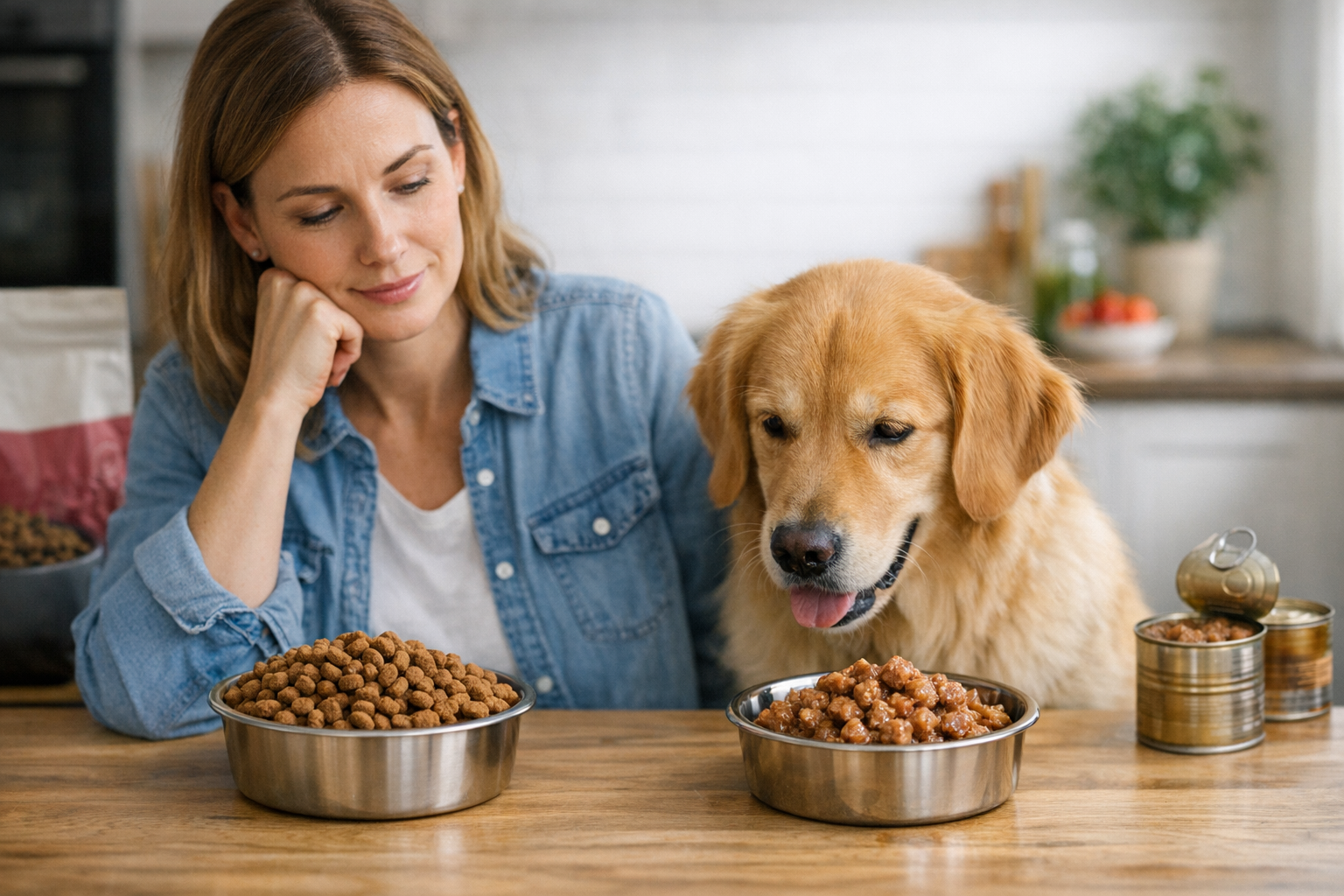
Standing in the dog food aisle or scrolling through endless pages of bags and cans can feel like a full time job. You want to make the right choice for your dog's health and happiness. You might see one brand boasting about the crunch of their kibble while another highlights the gourmet aroma of their stew. At BaxterBoo, we have helped thousands of pet parents navigate these exact choices since 2006. We know that every dog is an individual with unique needs. This post explains the differences between dry and wet dog food to help you decide which is best for your home. If you want to compare options as you read, start with our dog food category. We will cover the nutritional profiles, the benefits for specific health conditions, and the practical pros and cons of each format. The goal is to give you a clear path to a healthy bowl every single day.
Understanding the Basics of Dog Food Processing
The main difference between dry and wet dog food starts long before it reaches your dog's bowl. It begins with how the food is made and preserved. Both types can be nutritionally complete and balanced. This means they meet the standards set by the Association of American Feed Control Officials. However, the way they get to that point is very different.
Dry dog food is made through a process called extrusion. Manufacturers take meat, grains, vitamins, and minerals and grind them into a dough. This dough is cooked under high pressure and temperature. It is then pushed through a machine that cuts it into specific shapes. After the kibble pieces are formed, they are dried to remove almost all moisture. Finally, they are often sprayed with fats or oils to make them taste better. This process creates a shelf stable product that stays fresh in a bag for a long time.
Wet dog food follows a different path. The ingredients are mixed and cooked inside a sealed container. This is usually a can, a pouch, or a plastic tray. The cooking happens at high temperatures to kill any bacteria. Because the food is sealed while it is hot, it stays sterile without needing many chemical preservatives. The final product contains a lot of water. This results in a texture that looks and smells much more like real meat.
Quick Answer: Both dry and wet dog food can provide a complete and balanced diet. Dry food is processed through extrusion to create shelf stable kibble, while wet food is cooked and sterilized in sealed cans or pouches to maintain high moisture levels.
The Advantages of Dry Dog Food
Many pet owners choose dry food because it fits easily into a busy lifestyle. It is the most common choice in the United States for several practical reasons.
Convenience and Storage
Kibble is easy to handle. You can scoop it out and put it in a bowl without any mess or strong smells. It does not require refrigeration after you open the bag. As long as you keep the bag sealed or use an airtight container, it stays fresh for weeks. This makes it perfect for people who like to buy in bulk to save money. You can also leave dry food out for dogs that prefer to graze throughout the day. It will not spoil or attract flies as quickly as wet food will.
Dental Health Benefits
One of the most cited benefits of dry food is its effect on teeth. The hard texture of the kibble requires a dog to chew. This mechanical action helps scrape away some of the plaque and tartar that builds up on the teeth. While it is not a replacement for regular brushing, it can be a helpful part of a dental care routine. Some specialized dental diets are even designed to be extra crunchy to maximize this cleaning effect.
Use in Enrichment Toys
Dry food is the ideal choice for mental stimulation. You can easily put kibble into puzzle feeders, snuffle mats, or treat dispensing toys. This forces your dog to work for their food. It slows down fast eaters and provides a brain workout. These activities are great for reducing anxiety and boredom in high energy dogs. For even more ways to keep your dog busy, explore our dog toys collection.
- Buying in bulk saves money over time.
- Bags are easier to store than dozens of cans.
- Kibble works perfectly in automatic feeders.
- It creates less waste since it does not require individual cans or pouches for every meal.
Bottom line: Dry food is the most convenient and cost effective option, offering benefits for dental health and mental enrichment.
The Benefits of Wet Dog Food
Wet food is often seen as a treat, but it can be a healthy staple for many dogs. It offers unique biological advantages that dry food simply cannot match.
Superior Hydration
The most significant benefit of wet food is its moisture content. Dry kibble usually contains about 10 percent water. In contrast, wet food is often 75 to 80 percent water. This is a huge difference for dogs that do not drink enough from their water bowls. Proper hydration supports kidney function and urinary tract health. It can also help prevent the formation of certain types of bladder stones. If hydration is a concern, take a look at our dog healthcare category.
Higher Palatability for Picky Eaters
If your dog turns their nose up at dinner, wet food might be the solution. It has a much stronger aroma than dry food. This is because the moisture helps carry the scent of the meat. For older dogs whose sense of smell is fading, this can be the difference between eating and skipping a meal. The texture is also much closer to real meat, which most dogs find more appealing than hard pellets.
Helping with Weight Management
It might seem counterintuitive, but wet food can help some dogs lose weight. Because it is so high in water, it has fewer calories per cup than dry food. This means your dog can eat a larger volume of food without consuming too many calories. A full stomach helps them feel satisfied. This reduces the begging and searching for snacks between meals.
Easier for Seniors and Dental Issues
As dogs age, they often develop dental problems or lose teeth. For these seniors, crunching on hard kibble can be painful. Wet food is soft and requires almost no chewing. It allows them to get the nutrition they need without physical discomfort. It is also an excellent way to hide medications or supplements. You can easily stir a pill or powder into the gravy, and most dogs will gulp it down without noticing.
Vet Tip: If your dog has a history of urinary issues or kidney disease, a wet food diet can be a great way to increase their daily water intake. Always consult your veterinarian before making major changes to a dog's diet when they have a chronic health condition.
A Nutritional Comparison
When you compare the labels of wet and dry food, the numbers can look confusing. You might see a dry food that says it has 25 percent protein while a wet food says it has only 8 percent. This does not mean the dry food has more protein. It simply means the wet food has more water.
The Dry Matter Basis
To compare the two fairly, you have to look at them on a dry matter basis. This means you imagine removing all the water from both and then comparing what is left. When you do this calculation, you often find that wet foods are higher in protein and fat and lower in carbohydrates than dry foods. This is because dry kibble needs starches like grains or potatoes to hold its shape during the extrusion process. Wet food does not need these binders.
Ingredient Quality
Both categories offer premium and budget options. You can find high quality brands like Acana, Orijen, and Stella and Chewy's in both dry and wet formats. We carry over 500 brands at BaxterBoo, and we carefully select them based on ingredient integrity. Look for foods that list a specific meat as the first ingredient. Avoid those that use vague terms like animal byproduct or artificial colors.
Health Considerations and Prescription Diets
Sometimes the choice between wet and dry is not about preference. It is about medical necessity. Some dogs require specific formulations to manage health conditions. These might include food allergies, digestive issues, or organ support.
For these situations, we offer a specialized pet pharmacy for dogs. This allows you to access FDA approved medications and prescription pet foods. If your veterinarian recommends a specific diet for a condition like chronic kidney disease or severe allergies, we can help you fulfill those needs. Our pharmacy offers the convenience of home delivery for foods that are not available in a standard grocery store.
When to Choose Wet for Health
- Chronic urinary tract infections.
- Kidney disease (to support hydration).
- Recent dental or oral surgery.
- Sudden loss of appetite due to illness.
When to Choose Dry for Health
- Mild plaque and tartar buildup.
- Need for a high calorie diet in a small volume (for working dogs).
- Sensitive stomachs that react poorly to rich, wet gravies.
Key Takeaway: While both food types are healthy for a normal dog, specific medical conditions like kidney disease or dental decay may make one format significantly better for your pet's longevity.
The Best of Both Worlds: Mixing and Topping
You do not have to choose just one. Many pet parents find that a combination is the perfect solution. This is often called topping or mixing. You can use dry food as the base for the calories and cost savings, then add a spoonful of wet food for flavor and moisture.
Benefits of Mixing
Mixing adds variety to your dog's life. It keeps mealtime exciting and prevents them from becoming bored with their food. It also ensures they get the dental benefits of the crunch and the hydration benefits of the wet food. If you have a dog that needs to take daily supplements for joint health or anxiety, mixing them into a wet topper is a stress free way to ensure they get the full dose. If you like using toppers and mixed meals, browse our selection of Stella & Chewy's products.
Managing the Calories
The most important thing to remember when mixing is the calorie count. Adding wet food on top of a full portion of dry food will lead to weight gain. You must reduce the amount of kibble to account for the extra calories in the wet food. Your veterinarian can help you calculate the exact portions. This is especially important for small breeds where even a few extra calories can make a difference.
Step 1: Determine the total daily calories your dog needs based on their weight and activity level. Step 2: Decide what percentage of the meal will be dry and what will be wet. Step 3: Measure the dry food using a standard measuring cup. Step 4: Add the measured amount of wet food or topper. Step 5: Mix them thoroughly to ensure the dog does not just lick the wet food off the top.
Bottom line: Mixing wet and dry food provides a balance of nutrition, hydration, and dental benefits while keeping mealtime interesting for picky eaters.
Cost and Practicality for the Owner
We know that budget is a real concern for many families. Feeding a large dog exclusively on high quality wet food can be very expensive. A 70 pound dog might need four or five cans of food every single day. This can cost significantly more than a bag of premium kibble that lasts a month.
Dry food is also better for the environment in some ways. It requires less packaging per pound of food. Cans are recyclable, but the weight of shipping wet food increases the carbon footprint. At BaxterBoo, we offer programs like our MVP Rewards programme to help you save on both formats. Our Autoship programme also makes it easier to keep your pantry or closet stocked with your dog's favorite meals.
How to Transition Your Dog to a New Food
Whether you are switching from dry to wet or just changing brands, you must do it slowly. A sudden change in diet can cause an upset stomach, gas, or diarrhea. This is because the bacteria in your dog's gut need time to adapt to new ingredients and different moisture levels.
A safe transition should take about 7 to 10 days. Start by mixing 25 percent of the new food with 75 percent of the old food. Every few days, increase the amount of new food and decrease the old food. By the end of the week, your dog should be eating 100 percent of the new diet. Watch their stool consistency and energy levels during this time. If you notice any issues, slow the process down. For a related walk-through, see how to switch from dry to wet dog food.
Vet Tip: Always have fresh, clean water available regardless of which food you choose. Even dogs on a 100 percent wet food diet still need to drink water to stay healthy.
Storing and Handling Different Food Types
How you handle the food after you buy it is just as important as the food itself. Contaminated food can make your dog sick.
For dry food, keep it in its original bag if possible. These bags are designed to keep out moisture and light. You can place the entire bag inside a plastic or metal bin. This prevents pests from getting in and keeps the fats from going rancid. Wash the bin every time you finish a bag to remove old oils.
For wet food, unopened cans should be stored in a cool, dry place. Once you open a can, it must be refrigerated. Use a silicone can cover or plastic wrap to keep it airtight. Most wet food should be used within three days of opening. If your dog does not eat all the wet food in their bowl within 30 to 60 minutes, you should throw the leftovers away. Bacteria grow quickly in wet food left at room temperature. If you want more tips on meal prep and moisture, read our guide to wetting dry dog food.
Conclusion
Choosing between dry and wet dog food does not have to be a source of stress. Dry food offers incredible convenience, value, and dental support. Wet food provides vital hydration, high protein, and an aroma that can tempt even the pickiest eaters. Many owners find that a combination of both provides the most balanced experience for their pets.
At BaxterBoo, we are here to support your journey as a pet parent. Whether you are looking for a premium kibble from brands like NutriSource or a specialized prescription diet through our pet pharmacy for dogs, we have the expertise and selection to help. Our warehouse in Vernon Hills is staffed by people who genuinely love animals and want to see them thrive.
- Evaluate your dog's current health and dental status.
- Consider your daily schedule and budget.
- Try mixing both to see how your dog responds.
- Consult your vet for personalized nutritional advice.
Key Takeaway: There is no single right answer for every dog. The best food is the one that meets your dog's health needs, fits your budget, and makes them run to the bowl at dinnertime.
To start your dog on a better nutritional path, explore our dog food category or set up an Autoship order to ensure you never run out of their favorites.
FAQ
Can I mix wet and dry food in the same meal?
Yes, mixing both is a popular way to give your dog the benefits of both formats. It can help picky eaters enjoy their kibble and provides extra hydration. Just make sure to adjust the total portions so you are not overfeeding your dog and causing weight gain.
Is wet food worse for my dog's teeth than dry food?
Wet food does not provide the scraping action that dry kibble does, which can allow plaque to build up faster. However, neither food is a replacement for actual dental care like brushing or professional cleanings. If you feed wet food, you should be extra diligent about your dog's dental hygiene.
How long can I leave wet food out in the bowl?
You should not leave wet food out for more than an hour. Unlike dry kibble, the high moisture content in wet food makes it a perfect breeding ground for bacteria. If your dog hasn't finished it within 60 minutes, throw it away and wash the bowl thoroughly.
Is wet food better for puppies or senior dogs?
Wet food is often better for puppies who are transitioning to solid food because it is soft and easy on developing teeth. It is also excellent for seniors who may have dental pain or a decreased sense of smell. However, many puppies and seniors do perfectly well on dry food that has been softened with a little warm water.






