
 Save 15% on your 1st Autoship learn more

 Email us
 Live Chat
 FAQs
FAQs





Introduction
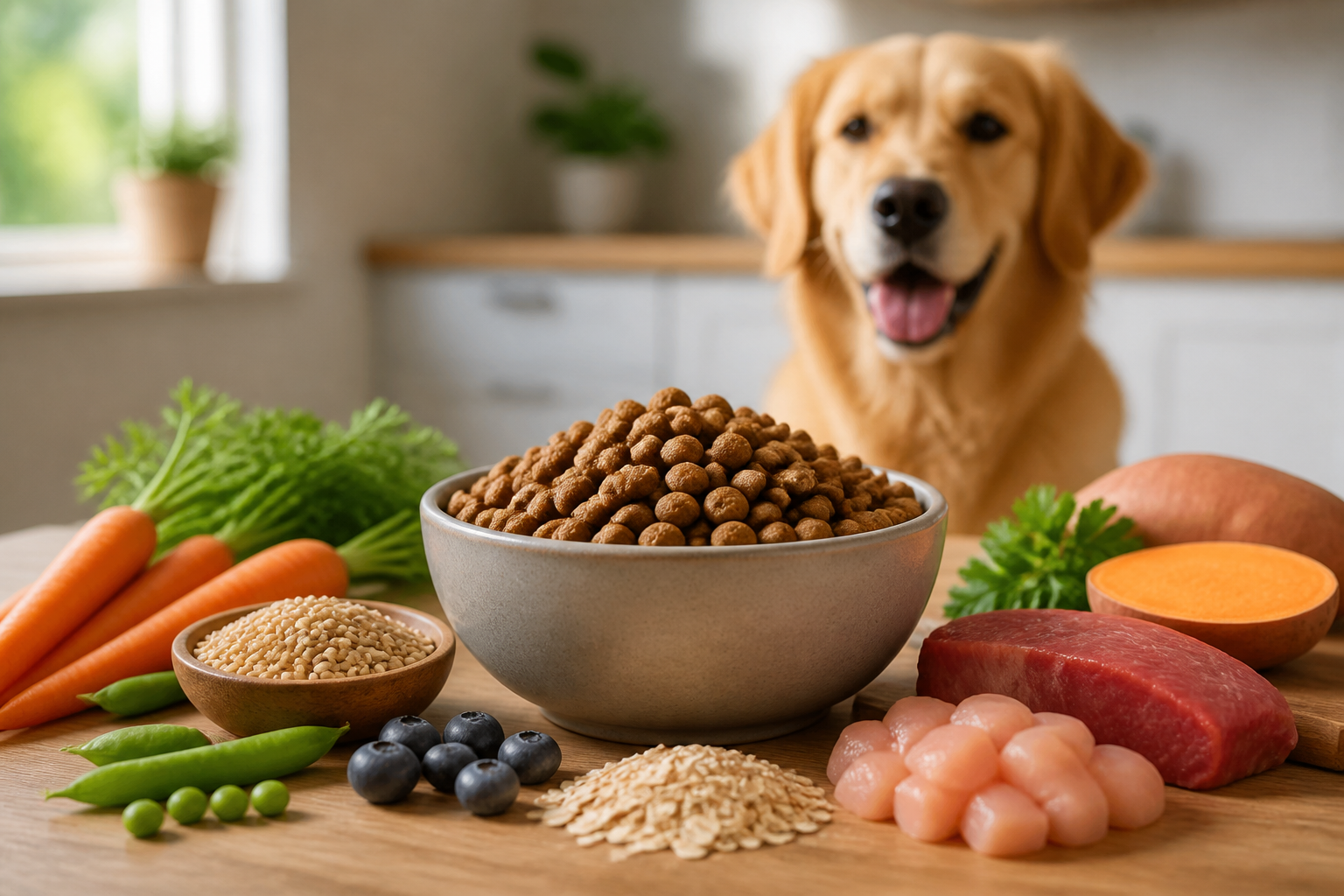
You are standing in the pet food aisle, surrounded by dozens of colorful bags. You might look at the small, brown, crunchy pieces of kibble and wonder how they actually provide everything your dog needs to stay healthy. It is a common question we hear at BaxterBoo. While every bag of dry dog food looks relatively similar, the recipes inside can vary wildly between brands. This article explains the raw ingredients used in dry dog food, how those ingredients are processed, and what you should look for on a label to ensure your dog gets high quality nutrition. We will look at the role of proteins, the necessity of binders, and the science behind the manufacturing process. Understanding what goes into the bag helps you make the best choice for your dog's long term wellness.
The Core Components of Dry Dog Food
Dry dog food is a carefully engineered product designed to be shelf stable and nutritionally complete. To achieve this, manufacturers use a specific balance of macronutrients. Most kibble recipes are built around a handful of primary categories. These include proteins, carbohydrates, fats, and fiber. You can compare formulas in our dry dog food category.
Proteins are the most important part of any dog food. They provide the amino acids your dog needs for muscle repair and immune function. Carbohydrates serve two purposes. They provide energy and act as a binder to give the kibble its shape. Fats are added for energy and skin health. Finally, a blend of vitamins and minerals is added to meet the nutritional standards set by the Association of American Feed Control Officials (AAFCO).
Quick Answer: Dry dog food is made from a blend of animal proteins, carbohydrates like grains or legumes, fats, and essential vitamins. These ingredients are mixed into a dough, cooked under pressure through a process called extrusion, and then dried to make them shelf stable.
Understanding Animal Protein Sources
When you look at the back of a bag, the first few ingredients usually list animal products. However, not all animal proteins are the same. You will often see terms like fresh meat, meat meals, and by-products.
Fresh Meat and Poultry
Ingredients like deboned chicken, beef, or lamb are considered high quality. These are fresh muscle tissues that contain a lot of moisture. While they are great for nutrition, they lose a significant amount of weight during the cooking process because the water is removed. This is why many premium brands use a combination of fresh meat and concentrated meals.
Meat and Poultry Meals
A meat meal is a concentrated protein source. It is created through a process called rendering. During rendering, the meat is cooked at high temperatures to remove the water and fat. The result is a dry, protein rich powder. For example, chicken meal contains much more protein by weight than fresh chicken because the water is already gone. At BaxterBoo, we carry many brands like NutriSource and Stella & Chewy's that use high quality, named meat meals to ensure a protein dense recipe.
By-Products and Generic Meals
You should be cautious of generic terms. If a label says "meat meal" instead of "lamb meal," it could come from various unnamed sources. By-products are the parts of the animal that are not used in the human food chain, such as organs or necks. While organs like liver and kidney are nutritionally dense, generic by-product meals can be less consistent in quality.
Key Takeaway: Look for named animal proteins like "chicken meal" or "beef" rather than generic terms like "animal fat" or "meat meal" to ensure you know exactly what your dog is eating.
The Role of Carbohydrates and Binders
Kibble needs to be crunchy. To get that specific texture, the recipe must include starch. Without starch, the dough would not expand or hold its shape during the manufacturing process.
Grain-Inclusive Recipes
Many traditional dry dog foods use grains as their primary carbohydrate source. Common grains include brown rice, barley, oatmeal, and sorghum. These provide fiber and energy. Some budget brands use corn or wheat, which are often considered fillers. However, whole grains can be a healthy part of a dog's diet unless the dog has a specific grain sensitivity.
Grain-Free Recipes
In grain-free foods, manufacturers replace grains with other starches. These usually include legumes like peas, chickpeas, or lentils. They can also use tubers like sweet potatoes or tapioca. These ingredients perform the same binding function as grains. If your dog has a sensitive stomach, a grain-free option from a brand like Stella and Chewy's or Zesty Paws might be a good fit.
Healthy Fats and Essential Fatty Acids
Fats make dog food taste good. They are also necessary for the absorption of certain vitamins. Most manufacturers spray a coating of fat onto the kibble after it has been cooked and dried.
The source of the fat matters. Chicken fat is a high quality source of Omega-6 fatty acids. Fish oils, such as salmon oil, provide Omega-3 fatty acids like EPA and DHA. These are vital for brain development in puppies and joint support in senior dogs. Avoid generic "vegetable oil" or "animal fat," as these are often lower quality and highly processed.
Vet Tip: If your dog is struggling with itchy skin or a dull coat, check the fat sources in their food. High levels of Omega-3 fatty acids from fish oil can support skin barrier health. If symptoms persist, consult your veterinarian to rule out food allergies or environmental triggers.
Vitamins, Minerals, and Supplements
Even the best meat and vegetables can lose some nutritional value during high heat cooking. To ensure the food is "complete and balanced," manufacturers add a premix of vitamins and minerals.
You will often see a long list of chemical sounding names at the end of the ingredient list. These are usually synthetic vitamins. Some premium brands also add beneficial extras like probiotic and joint-support supplements:
- Probiotics: Live beneficial bacteria for gut health.
- Glucosamine: To support joint cartilage.
- Antioxidants: From blueberries, cranberries, or spinach to support the immune system.
- Chelated Minerals: Minerals attached to amino acids for easier absorption.
The Manufacturing Process: From Dough to Kibble
Most dry dog food is made using a process called extrusion. This is the same technology used to make many human breakfast cereals. It is efficient, safe, and creates a shelf stable product.
Step 1: Grinding and Mixing
The dry ingredients are ground into a fine flour. This includes the meat meals, grains, and vitamin premixes. They are then mixed in giant vats to ensure every bite has the same nutritional profile.
Step 2: The Pre-conditioner
The dry mix is moved to a pre-conditioner where water and steam are added. This hydrates the ingredients and begins the cooking process. This is often where fresh meats are added to the mix.
Step 3: Extrusion
The wet dough enters the extruder. A large screw pushes the dough through a long barrel under intense heat and pressure. This is the "kill step" that eliminates pathogens like Salmonella. At the end of the barrel, the dough is forced through a die plate. A rotating knife cuts the dough into the familiar kibble shapes.
Step 4: Drying and Cooling
The kibble is still wet and soft when it leaves the extruder. It travels through a large dryer to remove moisture. Reducing the moisture content to around 10 percent is what prevents the food from spoiling or growing mold on the shelf.
Step 5: Coating and Packaging
Once dry, the kibble enters a revolving drum. Here, it is sprayed with fats and natural flavor enhancers to make it appealing to dogs. Finally, the food is cooled and placed into bags.
Identifying Quality on the Label
Reading a dog food label can feel like learning a new language. However, a few simple rules can help you determine what the food is actually made of. For additional guidance, read how to choose the best dry dog food.
- Check the First Five Ingredients: These make up the majority of the food's weight. At least two or three of these should be named animal proteins.
- Look for the AAFCO Statement: This confirms the food meets the basic nutritional requirements for a specific life stage, such as "Growth" for puppies or "Adult Maintenance."
- Note the Preservatives: Look for natural preservatives like mixed tocopherols (Vitamin E) or rosemary extract. Avoid artificial ones like BHA, BHT, or ethoxyquin.
- Analyze the "Crude" Percentages: The Guaranteed Analysis tells you the minimum protein and fat levels. For most active dogs, a protein level above 25 percent is ideal.
Bottom line: High quality dry dog food starts with named animal proteins and uses recognizable carbohydrates and natural preservatives.
Safety and Shelf Life
One of the biggest advantages of dry dog food is its convenience. Because it has very low moisture, it does not require refrigeration. Most bags are designed with special liners to keep oxygen and light out, which prevents the fats from going rancid.
We recommend keeping the food in its original bag rather than pouring it into a plastic bin. The bag provides a barrier that plastic often lacks. It also keeps the batch information and expiration date handy in case there is ever a product concern. Most dry foods stay fresh for about six weeks after the bag is opened.
When Your Dog Needs Something Different
While standard kibble works for many pets, some dogs have specific medical needs. If your dog is dealing with chronic issues like kidney disease, severe allergies, or urinary crystals, a standard bag of dry food might not be enough.
In these cases, a veterinarian may recommend a prescription diet. These diets are formulated with very specific ingredient ratios to manage health conditions. Through our partnership with Pet's Choice, the BaxterBoo pet pharmacy carries a range of FDA-approved medications and prescription pet foods. This allows you to get specialized nutrition delivered to your door with the same convenience as your regular orders.
Vet Tip: Always transition your dog to a new food slowly over 7 to 10 days. Mix a small amount of the new food with the old food, gradually increasing the ratio. This prevents digestive upset and helps your dog adjust to the new ingredient profile. For another transition approach, see how to switch from dry to wet dog food.
Summary of Ingredient Quality
When evaluating what your dog's food is made of, use this simple checklist:
- Protein: Is the first ingredient a named meat or meat meal?
- Carbs: Are the grains or legumes whole and recognizable?
- Fats: Does it use named fats like chicken fat or salmon oil?
- Extras: Does it include probiotics or joint support?
- Avoid: Does it lack artificial colors, flavors, and generic "meat" terms?
Conclusion
Dry dog food is a complex blend of science and nutrition. It starts with a dough of proteins, starches, and fats that is cooked and dried to create a convenient meal for your pet. While the manufacturing process is similar across most brands, the quality of the raw materials makes all the difference. By looking for named meats, avoiding empty fillers, and ensuring the food is AAFCO compliant, you can provide your dog with the foundation for a healthy life. If you want to make sure you never run out of your favorite high quality kibble, consider our Autoship programme. It saves you money on your first order and provides a free MVP Gold membership, ensuring your dog's favorite food arrives right when you need it.
Key Takeaway: What dry dog food is made of determines your dog's energy levels, coat quality, and long term health. Choosing brands with transparent ingredient lists is the best way to support your pet.
FAQ
What is the "kill step" in dog food manufacturing?
The kill step occurs during the extrusion process when the dough is heated to very high temperatures under pressure. This process is designed to eliminate harmful bacteria and pathogens like Salmonella or E. coli. It ensures that the final dry kibble is safe for both the pets who eat it and the owners who handle it.
Why is there more than one type of protein in some dry dog foods?
Many manufacturers use multiple protein sources to provide a wider profile of amino acids. For example, a recipe might use beef for iron and fish for essential fatty acids. This variety can make the food more nutritionally complete and more palatable for picky eaters who enjoy different flavors.
Are meat by-products safe for my dog to eat?
Meat by-products are generally safe and are regulated by the FDA. They consist of the parts of the animal that humans typically do not eat, such as organs, necks, and feet. While these parts are very high in certain nutrients like Vitamin A and taurine, many owners prefer to stick to "named" meat meals for better quality control.
How do I know if my dog's food has too many fillers?
Fillers are ingredients that provide little to no nutritional value and are mostly used to bulk up the food. If you see ingredients like "corn gluten meal," "wheat gluten," or "cereal by-products" as the first few ingredients, the food may be lower in quality. High quality foods will prioritize animal proteins and whole carbohydrates like sweet potatoes or brown rice.






