
 Save 15% on your 1st Autoship learn more

 Email us
 Live Chat
 FAQs
FAQs





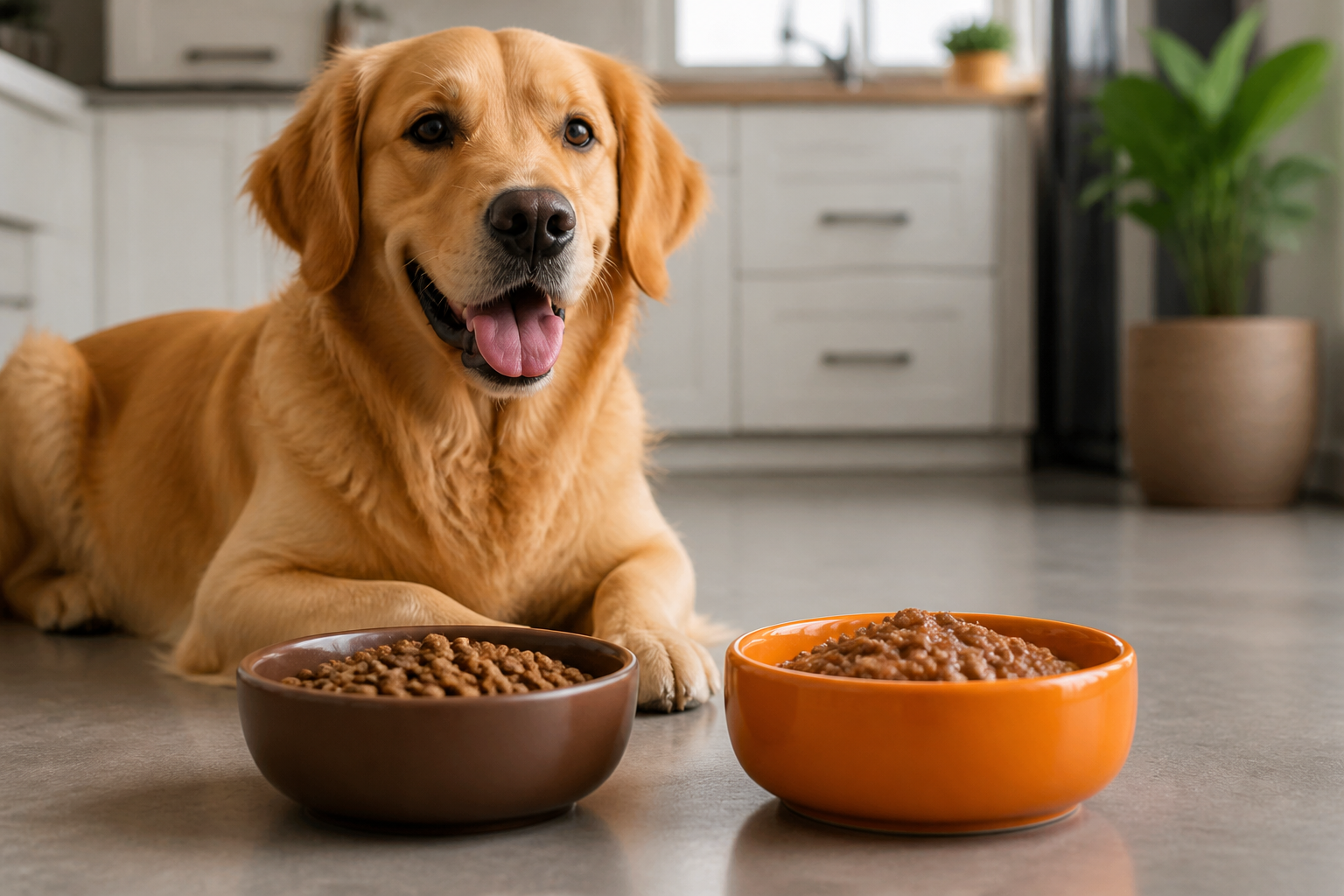
Introduction
You are standing in the pet food aisle or browsing our website and feeling a bit stuck. You see a large bag of crunchy kibble on one side and a row of savory canned stews on the other. Both claim to be complete and balanced. Both have pictures of happy, healthy dogs on the label. You want the best for your pet but the sheer number of choices can feel overwhelming.
At BaxterBoo, we talk to pet owners every day who are navigating this exact choice. Deciding between wet and dry dog food is one of the most basic but important decisions you will make for your dog's health. This article explores the physical differences, nutritional pros and cons, and lifestyle factors of each food type. We want to help you feel confident that the food in your dog's bowl is the right fit for their unique needs.
How Dry Dog Food Is Made
Dry dog food is also commonly known as kibble. It is the most popular choice for dog owners in the United States. The process of making it is called extrusion. Manufacturers start by grinding up ingredients like meat, grains, and vegetables into a consistent dough. This mixture is then cooked under high pressure and temperature.
The dough is pushed through a machine that cuts it into specific shapes. After the shapes are formed, they go through a drying process to remove most of the water. Finally, the kibble is often sprayed with fats and vitamins to make it taste better and ensure it meets nutritional standards. Brands like NutriSource and Acana use high quality ingredients in this process to create energy dense meals.
The Process Behind Wet Dog Food
Wet dog food has a very different journey from the warehouse to your kitchen. It starts with fresh or frozen meat sources that are ground up and mixed with a liquid gravy or jelly. This mixture often includes vitamins, minerals, and sometimes grains or vegetables.
Once the ingredients are combined, the food is put into cans, pouches, or plastic trays. The containers are sealed and then heated to a high temperature. This heat cooks the food and kills any bacteria. This process is why unopened wet food can sit on a shelf for a long time without needing preservatives. It results in a soft, moisture rich meal that dogs often find irresistible.
The Moisture Gap
The single biggest difference between these two food types is water content. Dry dog food usually contains only 10 percent moisture. In contrast, wet dog food is typically 75 to 80 percent water. This gap changes how your dog gets their daily hydration.
Quick Answer: The main difference is moisture. Dry food has about 10 percent water while wet food has nearly 80 percent. This affects how the food is stored, its price, and how it helps your dog stay hydrated.
If your dog is a poor drinker, wet food can be a great way to sneak extra water into their diet. This is often helpful for dogs with certain health histories. For example, dogs prone to urinary tract issues or kidney concerns often benefit from the extra fluids. However, if you feed only dry food, you must ensure your dog has constant access to a clean bowl of fresh water.
Nutritional Density and Calorie Counts
Because dry food has the water removed, it is much more concentrated. This means kibble has a higher caloric density. One cup of dry food will almost always have more calories than one cup of wet food. You do not have to feed as much volume when you use dry food.
Wet food is less calorie dense because of the high water content. This can be a major benefit for dogs that need to lose weight. They can eat a larger portion of food without taking in too many calories. This helps them feel full and satisfied. If you have a very large dog with a high activity level, feeding them exclusively wet food can become difficult. They would need to eat several cans a day to meet their energy needs.
Bottom line: Kibble provides more energy in smaller portions while wet food allows for larger portions with fewer calories.
Palatability and the Picky Eater
If you have a dog that turns up their nose at mealtime, you know the struggle of finding a food they like. Wet dog food is generally much more palatable than dry food. It has a stronger, meatier aroma that appeals to a dog's sense of smell.
The texture of wet food is also closer to fresh meat. This makes it a popular choice for senior dogs whose sense of smell might be fading. It is also great for dogs that are feeling under the weather and have a reduced appetite. Many owners use brands like Stella and Chewy's or Farmina wet recipes as a special treat or a topper to encourage their dogs to eat their dry meals. Browse our wet dog food category to compare available recipes.
Dental Health and the Crunch Factor
One of the most cited benefits of dry dog food is its impact on dental health. The crunchy texture of kibble requires more chewing than soft food. As the dog bites down, the mechanical action of the kibble can help scrape away some of the plaque on the teeth.
However, kibble is not a replacement for a toothbrush. While it may help reduce tartar buildup compared to soft food, most dogs still need regular dental care. Some dry foods are specifically shaped to maximize this cleaning effect. If you are worried about your dog's breath or tooth health, our dog dental care category offers products to supplement their diet.
Convenience and Storage Factors
Dry food is the clear winner when it comes to convenience. You can buy a large bag and store it for weeks as long as it is kept in a cool, dry place. It is easy to measure out with a scoop. You can also leave dry food in a bowl for several hours without it spoiling. This is ideal for "grazers" who like to snack throughout the day.
Wet food requires more attention. Once a can is opened, it must be refrigerated. Any unused portion should be used within three days. You also cannot leave wet food out in a bowl for more than an hour or two. It will attract pests and can grow bacteria quickly. For busy families or those who travel with their dogs, the ease of kibble is often the deciding factor.
Cost and Value Comparison
Budget is a real factor for every pet owner. Generally speaking, dry dog food is much more cost effective. Because it is concentrated, you are paying for nutrients rather than water. A single bag of high quality kibble can last a medium sized dog a month or more.
Wet food is usually more expensive per serving. Since you have to feed a higher volume of food to meet nutritional needs, the cost adds up quickly. Many owners find that a 100 percent wet food diet is only feasible for small breed dogs. For larger breeds, wet food is often used as a supplement rather than the primary meal.
Life Stage Needs: Puppies and Seniors
Your dog's age plays a huge role in which food is better. Puppies have small mouths and very high energy needs. While they can eat dry kibble, some owners prefer wet food or soaked kibble during the weaning process. This makes it easier for them to chew with their baby teeth.
Senior dogs often face dental issues like missing teeth or gum disease. For these dogs, hard kibble can be painful to eat. Switching to a soft wet food or adding a significant amount of warm water to their kibble can make mealtime much more comfortable. Additionally, the extra hydration in wet food supports kidney function, which is a common concern in aging pets.
Vet Tip: If your senior dog suddenly stops eating their dry food, it might be due to dental pain. Consult your veterinarian to check their teeth and gums. They may recommend transitioning to a softer diet or a prescription formula for aging pets.
For more ideas, read Should Senior Dogs Eat Wet or Dry Food?.
Comparing the Two Options
| Feature | Dry Dog Food (Kibble) | Wet Dog Food (Canned) |
|---|---|---|
| Moisture Content | Low (approx. 10%) | High (approx. 75-80%) |
| Shelf Life (Opened) | 4-6 weeks in airtight container | 3 days in refrigerator |
| Cost | Generally lower per serving | Generally higher per serving |
| Preparation | Very easy; scoop and serve | Easy; requires a can opener/fridge |
| Dental Impact | Helps scrape plaque | No dental benefit; can cling to teeth |
| Aroma | Mild | Strong and enticing |
| Best For | Convenience, budget, grazers | Picky eaters, hydration, seniors |
Mixing Wet and Dry Dog Food
You do not always have to choose just one. Many pet owners find that a combination of both provides the best results. Mixing wet food into kibble can make the meal more exciting for your dog while keeping costs manageable for you.
When mixing, it is important to watch the total calorie count. You cannot simply add a can of wet food on top of a full portion of dry food. This will lead to weight gain. You should replace a portion of the dry food with an equivalent caloric amount of wet food.
For additional guidance, read Is It Good to Mix Wet and Dry Dog Food?.
How to Transition to a Mixed Diet
If you want to start adding wet food to your dog's routine, follow these steps to avoid an upset stomach:
Step 1: Start with a small amount.
Add just a tablespoon of wet food to their regular kibble.
Step 2: Monitor their digestion.
Watch for any changes in their stool or any signs of gas over the next 48 hours.
Step 3: Gradually adjust the ratio.
Slowly increase the amount of wet food while decreasing the dry food over 7 to 10 days.
Step 4: Keep it consistent.
Try to stick to a consistent schedule and brand to help their digestive system stay balanced.
If you are changing foods, our guide to switching from dry to wet dog food offers another gradual transition plan.
Health Conditions and Prescription Diets
Sometimes the choice of food is dictated by a medical need. Certain health conditions require specific nutrient levels that are hard to find in standard retail foods. This is where our pet pharmacy can help.
Through our partnership with Pet's Choice, we offer a wide range of FDA approved prescription pet foods and medications. If your vet has diagnosed your dog with a condition like kidney disease, diabetes, or severe food allergies, they may prescribe a therapeutic diet.
- Weight Management: Wet foods from ranges like Farmina Vet Life can help dogs feel full while losing weight.
- Urinary Health: Prescription diets often come in wet forms to increase water intake and flush the bladder.
- Kidney Support: These diets are carefully balanced for protein and minerals and are available in both formats through our pharmacy.
Key Takeaway: While retail foods are great for healthy dogs, those with chronic conditions may need a prescription diet. Our pharmacy carries these specialized foods to support your dog's ongoing health management.
Enrichment and Feeding Style
How you feed your dog is almost as important as what you feed them. Dry food is perfect for enrichment toys. You can put kibble inside a Kong or a puzzle feeder. This forces your dog to work for their food, which provides mental stimulation and slows down fast eaters.
Wet food can also be used for enrichment. You can smear it inside a toy or on a lick mat and freeze it. This creates a long lasting challenge that can help calm an anxious dog. If your dog gets bored easily, rotating between these two methods can keep them engaged.
Storage Tips for Freshness
To get the most value out of your dog food, you must store it correctly. For dry food, keep it in the original bag. These bags are designed to keep out moisture and air. You can place the entire bag inside an airtight plastic or metal bin for extra protection.
For wet food, always check the "best by" date before opening. Once you open a can, use a silicone lid to seal it tightly before putting it in the fridge. If your dog does not finish a can within three days, it is safer to throw it away. Never leave an open can at room temperature for an extended period.
Checklist for Choosing the Right Food
Before you make your next purchase, consider these five questions:
- Does my dog drink enough water throughout the day?
- Does my dog have any dental issues or missing teeth?
- Am I dealing with a picky eater who skips meals?
- How much time do I have for meal prep and cleanup?
- What is my monthly budget for pet nutrition?
Conclusion
The choice between wet and dry dog food really comes down to your dog's individual health and your personal lifestyle. Dry food offers unmatched convenience, value, and a satisfying crunch. Wet food provides essential hydration, high palatability, and a softer texture for those who need it. Many owners find that a hybrid approach gives their dogs the best of both worlds.
Whether you choose a premium kibble or a savory canned recipe, the most important thing is that the food is complete and balanced. We invite you to explore our dog food and treat collection to find the perfect match for your pup. If your dog has a specific health concern, remember to talk to your vet about our pharmacy options for specialized care.
You can also save time on repeat food orders with our Autoship programme.
Bottom line: There is no single "correct" choice, only the choice that keeps your dog healthy, happy, and excited for mealtime.
FAQ
Is it okay to feed my dog only wet food?
Yes, it is perfectly healthy to feed a dog only wet food as long as it is labeled as a complete and balanced meal. You will need to feed a larger volume compared to kibble and pay closer attention to their dental hygiene. Wet food is often a great choice for small breeds, seniors, or dogs with urinary issues.
Can I mix different brands of wet and dry food?
You can generally mix different brands, but it is best to do so carefully. Changing brands or protein sources too quickly can cause digestive upset for some dogs. If you find a combination that works well for your dog's digestion and energy levels, try to stick with it for consistency.
Does dry dog food really clean a dog's teeth?
Dry food can help reduce the accumulation of plaque through the mechanical action of chewing. However, it is not a complete dental solution. Most dogs still require regular tooth brushing and professional dental cleanings by a veterinarian to prevent gum disease and tooth loss.
How do I know if my dog needs a prescription diet from the pharmacy?
You should consult your veterinarian if your dog has chronic health issues like skin allergies, frequent upset stomach, or kidney problems. A vet can diagnose the underlying condition and determine if a specialized prescription diet from our pharmacy is necessary. These diets are specifically formulated to manage medical conditions through precise nutrition.






