
 Save 15% on your 1st Autoship learn more

 Email us
 Live Chat
 FAQs
FAQs





Introduction
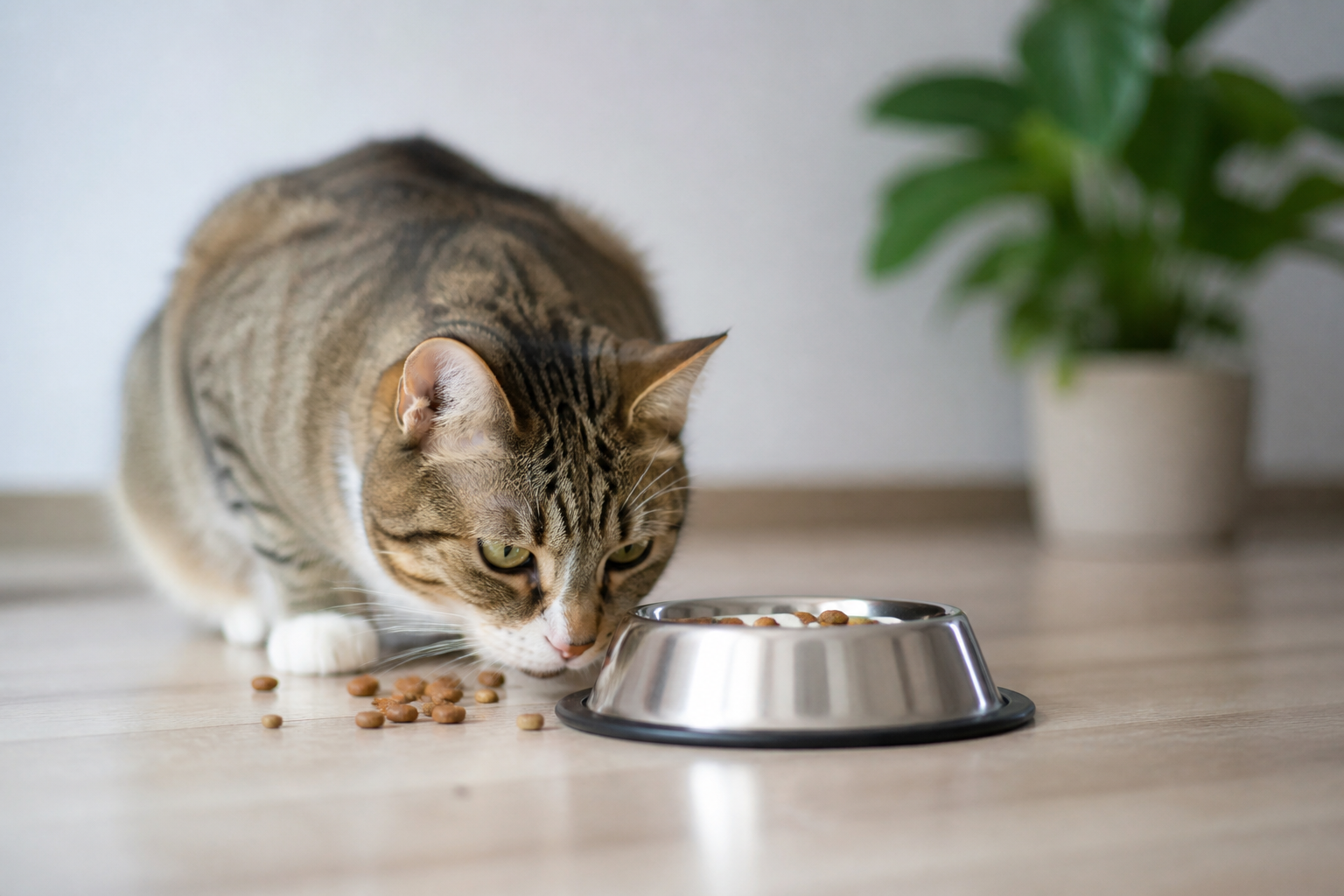
You might be standing in your kitchen, watching your cat casually crunching on kibble from the dog's bowl. Or perhaps you just realized you are out of cat food and are wondering if a scoop of the dog's dry food will suffice for the night. It is a common worry for many multi-pet households. At BaxterBoo, we talk to owners every day who manage the dietary needs of both dogs and cats under one roof. While a few bites of dog food generally will not cause immediate harm, using it as a meal replacement is a different story. This post explains the nutritional gaps between the two species and the risks of long term feeding. We will also look at how to handle a pet who refuses to stay in their own lane during mealtime.
Quick Answer: A small amount of dry dog food will not typically hurt a healthy cat in the short term. However, dog food lacks the specific amino acids and high protein levels cats need to survive. Long term feeding of dog food can lead to serious health issues like heart disease and vision loss.
Why Cats Cannot Live on Dog Food
Cats and dogs have fundamentally different biological requirements. A dog is an omnivore, which means they can thrive on a variety of animal and plant based ingredients. Cats are obligate carnivores. This means their bodies are physically designed to process animal protein as their primary energy source. They cannot simply adapt to a diet designed for an omnivore without facing health consequences.
When you look at the back of a bag of dry food, the ingredient list might look similar. You will see meats, fats, and some carbohydrates. However, the ratios and the specific synthetic additives are vastly different. Dog food is formulated with lower protein and fat levels than what a feline requires. If a cat eats dog food exclusively, they are essentially starving for specific nutrients even if their belly is full of calories.
Crucial Nutrients Missing in Dog Food
The Association of American Feed Control Officials (AAFCO) sets different standards for each species. Dog food manufacturers do not include certain nutrients that cats must get from their diet because dogs can make those nutrients inside their own bodies.
Taurine
Taurine is an essential amino acid for cats. Most mammals can synthesize taurine from other amino acids, but cats cannot. They must eat it. Dog food rarely contains added taurine in the amounts a cat needs. A deficiency in taurine is devastating for a feline. It can lead to dilated cardiomyopathy, a condition where the heart becomes enlarged and weak. It also causes retinal degeneration, which leads to permanent blindness.
Vitamin A
Dogs can convert beta carotene from plants like carrots into Vitamin A. Cats lack the enzyme to make this conversion. They require preformed Vitamin A, which is usually found in animal liver or as a specific supplement in cat food. Without it, a cat will suffer from poor coat quality, skin issues, and weakened night vision.
Arachidonic Acid
This is an essential fatty acid that cats must ingest. Dogs can produce it themselves, so it is not a required additive in dog food. It is vital for a cat's inflammatory response and proper digestive function.
Protein Density
Cats require a much higher percentage of protein to maintain their muscle mass and energy. While a standard adult dog food might contain 18 to 22 percent protein, an adult cat food typically starts at 26 percent and often goes much higher. High quality brands like Orijen or Acana often provide even higher protein levels to mimic a natural diet. You can compare feline formulas in our cat food selection.
Key Takeaway: Dog food is not toxic to cats, but it is nutritionally incomplete for them. The absence of taurine and preformed Vitamin A makes dog food a dangerous choice for long term feline feeding.
Short Term vs. Long Term Effects
If your cat sneaks a few pieces of kibble once a week, you likely will not see any symptoms. The danger grows with the frequency of the snacking.
Immediate Reactions
Some cats have very sensitive stomachs. Eating a food they are not used to can cause:
- Vomiting
- Diarrhea
- Gassiness
- General lethargy
If your cat experiences persistent vomiting or refuses to eat their own food after a dog food snack, it is time to call your veterinarian.
Long Term Risks
When dog food becomes a regular part of a cat's diet, the body begins to break down. Malnutrition in cats does not always look like weight loss. A cat can look a healthy weight but be suffering from organ strain. Over months or years, a cat fed dog food may develop:
- Heart failure (due to lack of taurine)
- Blindness
- Weakened immune system
- Liver issues
Vet Tip: If you notice your cat is constantly trying to eat dog food, it might indicate they are not satisfied with their current diet or have an underlying metabolic issue. Always consult your vet if your cat's eating habits change suddenly.
What to Do in an Emergency
We have all been there. You reach for the bag of cat food at 10:00 PM and realize it is empty. If you cannot get to the store, a single meal of dog food is better than letting your cat go hungry, provided they do not have a known allergy or a condition like kidney disease.
However, there are often better alternatives in your own refrigerator. Plain, cooked chicken or turkey is an excellent short term substitute. Scrambled eggs (without salt or butter) or a bit of plain canned tuna in water can also bridge the gap.
If your cat has a chronic health condition, you must be more careful. Many cats require prescription diets for urinary health or kidney support. Our pharmacy for cats provides FDA approved prescription diets through our partnership with Pet's Choice. If you find yourself running low on these critical foods often, consider using our Autoship program to ensure you never run out of the specific formula your cat needs.
Transitioning Back
Once you have cat food back in the house, return to it immediately. You do not need to do a slow transition like you would when changing brands. Since the dog food was an accidental or emergency interruption, getting them back to their balanced feline nutrition is the priority.
- Check for any signs of GI upset for 24 hours.
- Ensure they have plenty of fresh water.
- Monitor their energy levels.
Bottom line: One meal of dog food will not kill a cat, but it should never be a recurring solution for a missing bag of cat food.
How to Stop a Cat from Eating Dog Food
Cats are notoriously curious. Some cats prefer the larger kibble size or the smell of certain dog foods. If your cat is a frequent "bowl hopper," you need a strategy to protect their health.
Step 1: Use elevated feeding surfaces. / Cats can jump, but many dogs cannot or will not. Placing the cat's bowl on a counter or a sturdy cat tree keeps their food safe and keeps them away from the floor level dog bowl.
Step 2: Schedule mealtimes. / Free feeding is the easiest way for pets to steal each other's food. Feed both animals at the same time in separate rooms. Close the door and give them 20 minutes to eat, then pick up any leftover kibble.
Step 3: Invest in technology. / Microchip feeders are a lifesaver in multi-pet homes. These feeders only open for a specific pet's microchip or RFID collar tag. This ensures your cat only eats their own protein rich food and your dog stays out of the cat's bowl too. For additional multi-pet feeding ideas, read our guide to keeping pets on separate diets.
Step 4: Offer high value cat treats. / If your cat is scavaging because they are bored, try interactive toys or treats designed for cats. Brands like PureVita or Stewart offer freeze dried treats that are highly palatable and provide the animal protein cats crave. Browse our cat treats collection for feline-friendly alternatives.
Identifying Quality Cat Food
When shopping for your cat, look for labels that state the food is "complete and balanced" for felines. This ensures it contains the taurine and vitamins we discussed. BaxterBoo carries over 500 brands, including many that specialize in high protein, meat first recipes like Stella and Chewy's or Tiki Cat. You can start comparing those options in our cat food category.
Avoid generic foods that use vague terms like "meat by-products" as the primary ingredient. Look for specific animal proteins like chicken, salmon, or beef. A high quality diet will keep your cat feeling full and less likely to hunt for leftovers in the dog's dish.
Prescription and Health Needs
Some cats need more than just standard kibble. If your cat has been stealing dog food and you are worried about their heart or eye health, a vet visit is essential. Our cat pharmacy offers medications and therapeutic diets for cats managing chronic conditions. Whether it is a heart medication or a specialized food for senior cats, we help you manage those needs conveniently online.
Key Takeaway: Proper feline nutrition is about more than just calories. It is about the specific chemical building blocks that a cat's body cannot produce on its own.
The Role of Supplements
If your cat has a history of sneaking dog food, they might have missed out on some essential nutrients. While you should never guess when it comes to supplements, your vet might recommend a taurine or multivitamin boost. We carry a wide range of supplements like Cosequin for joints or Zesty Paws for general wellness. Always talk to your vet before adding supplements to ensure you aren't overdoing certain vitamins, as Vitamin D toxicity can be a risk for cats. For more ideas about choosing feline snacks, see this guide to organic cat treats.
Conclusion
While dry dog food will not immediately hurt a cat in small amounts, it is not a safe or sustainable diet. The lack of taurine, Vitamin A, and sufficient protein puts your cat at risk for life altering health conditions. Keeping your pets' bowls separate and sticking to high quality feline formulas is the best way to ensure your cat lives a long, healthy life.
- Dog food lacks taurine, which is vital for a cat's heart and eyes.
- Cats are obligate carnivores and need more protein than dog food provides.
- Occasional snacking is usually fine, but watch for signs of stomach upset.
- Use scheduled feedings or microchip feeders to prevent food theft.
The best next step for your multi-pet household is to check out our selection of premium cat food and treats to keep your feline satisfied. If your pet has specific health needs or requires a prescription diet, visit our pharmacy section to see how we can help you manage their care through our Pet's Choice partnership.
FAQ
Can I feed my cat dog treats?
Occasional dog treats are generally not harmful, but they are not ideal. Dog treats are often larger and contain more carbohydrates and fillers than cat treats. It is much better to provide treats formulated for cats to ensure they are getting appropriate nutrition and to avoid choking hazards.
What should I do if my cat accidentally ate a lot of dog food?
If your cat ate a significant amount of dog food in one sitting, watch for signs of gastrointestinal distress like vomiting or diarrhea. If they seem uncomfortable, bloated, or lethargic, contact your veterinarian. For a one-time event in a healthy cat, they will likely be fine once the food passes through their system.
Why does my cat seem to prefer dog food over cat food?
Cats are often attracted to the smell or novelty of something different. Sometimes the larger size of dog kibble provides a different texture that they enjoy. However, preference does not equal safety. You should continue to redirect them to their own food to prevent nutritional deficiencies.
Is wet dog food safer for cats than dry dog food?
Neither is safe as a long term diet. While wet dog food might have higher moisture content, it still lacks the necessary taurine and vitamin levels required for felines. The nutritional imbalance exists in both wet and dry formats of dog food.






