
 Save 15% on your 1st Autoship learn more

 Email us
 Live Chat
 FAQs
FAQs





Introduction
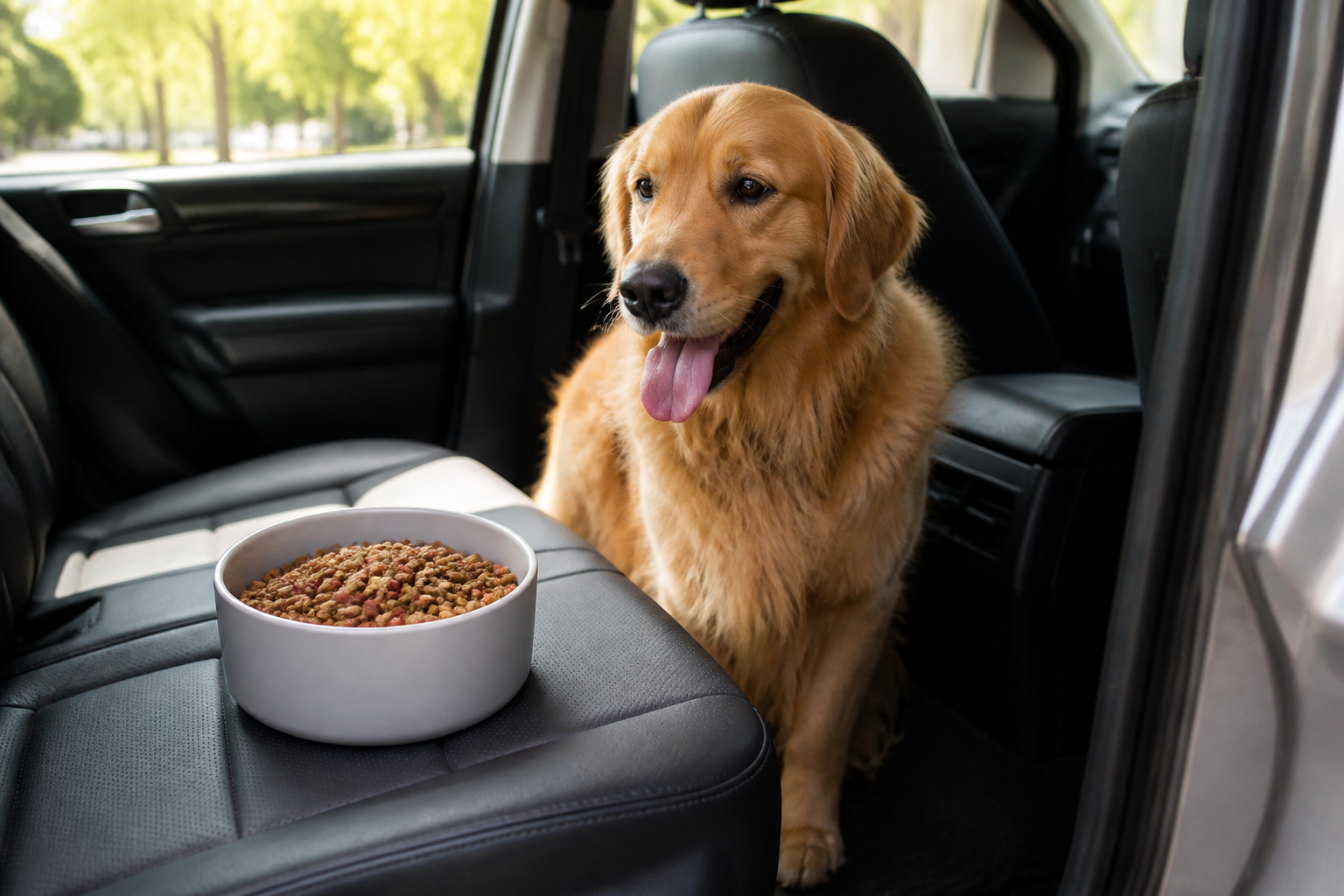
It happens to the best of us during a busy weekend. You stop at the pet store to grab a fresh bag of kibble. Then you realize you still have three more stops to make. The sun is out, and the temperature is climbing. You wonder if that bag of food will be okay in the trunk for an hour. At BaxterBoo, we know that your dog’s nutrition is the foundation of their health. While dry kibble seems rugged, it is actually quite sensitive to extreme temperatures. Leaving dog food in a hot car can cause rapid spoilage and nutrient loss. This post explains how heat affects kibble, how to spot spoiled food, and how to transport your pet’s meals safely. Our goal is to help you keep your dog’s dinner fresh and safe.
Quick Answer: Dry dog food should not be left in a hot car for more than 30 to 60 minutes. High temperatures cause fats to turn rancid and destroy essential vitamins. This can lead to digestive upset or long term nutritional deficiencies for your dog.
The Greenhouse Effect in Your Vehicle
Most people know that a car gets hot, but the speed of the temperature rise is often surprising. On a mild 70 degree day, the interior of a car can reach 100 degrees in just twenty minutes. If it is 90 degrees outside, your car can easily hit 140 degrees within an hour. This creates a greenhouse effect that traps heat inside the cabin and the trunk.
Dry dog food is formulated to be stable at room temperature. Most manufacturers recommend storing food in a cool, dry place below 75 degrees. When you move that food into a 120 degree car, you are far exceeding the recommended storage conditions. The heat acts as a catalyst for chemical reactions that wouldn't normally happen.
Trunks are often even worse than the main cabin. They lack ventilation and are surrounded by metal that absorbs the sun’s energy. A bag of food sitting in a dark trunk is essentially sitting in an oven. This environment quickly begins to break down the preservatives designed to keep the food fresh.
Why Heat is the Enemy of Dog Food
To understand the risk, you have to look at what makes up a piece of kibble. It is a dense mixture of proteins, carbohydrates, and fats. It also contains a delicate balance of vitamins and minerals added after the cooking process. If you are comparing formulas, browse our dog food category.
Fat Oxidation and Rancidity
Fats are the most vulnerable part of dog food. High quality brands often include animal fats, fish oils, or vegetable oils. These provide essential fatty acids like Omega-3 and Omega-6. When these fats are exposed to high heat and oxygen, they begin to oxidize.
Oxidation is the process that causes fats to go rancid. Rancid fat does not just taste bad to your dog. It can actually be toxic. Consuming rancid fats can lead to immediate diarrhea and vomiting. Over time, it can contribute to more serious issues like vitamin E deficiency or cellular damage.
The Breakdown of Essential Vitamins
Many vitamins are "heat-labile." This means they lose their potency when they get too hot. Vitamins A, D, E, and the B-complex group are especially sensitive. If a bag of food sits in a hot car for several hours, the nutritional value on the label is no longer accurate.
If your dog eats this food regularly, they might experience subtle health declines. Their coat might lose its shine. Their energy levels might drop. These are signs that the "complete and balanced" meal you bought has become nutritionally incomplete due to heat damage.
| Outside Temperature | Interior Car Temp (1 Hour) | Risk Level for Dog Food |
|---|---|---|
| 70°F | 115°F | Moderate - Limit to 60 mins |
| 80°F | 125°F | High - Limit to 30 mins |
| 90°F | 140°F+ | Extreme - Do not leave food |
The Danger of Moisture and Mold
Dry dog food usually has a moisture content of about 10 percent. When a bag gets hot, that moisture doesn't just stay put. It begins to move. This is called moisture migration. The heat turns the moisture into vapor inside the bag.
As the car eventually cools down, that vapor condenses back into liquid. This often happens on the inside walls of the bag or in the center of the kibble pile. These damp spots are the perfect breeding ground for mold. You might not see the mold right away, but it can produce mycotoxins. These are invisible and can make a dog very sick.
Heat also encourages the growth of bacteria like Salmonella. While most kibble is tested for bacteria at the factory, any small amount of contamination can explode in a warm environment. A hot car provides the exact incubation temperature that harmful bacteria need.
Key Takeaway: High heat causes fats to oxidize into toxic compounds and destroys the vitamins your dog needs to stay healthy. Even an unopened bag is not protected from the chemical changes caused by extreme temperatures.
How to Tell if the Food Has Gone Bad
If you realize you left the food in the car too long, do not just pour it into the bowl. You need to do a thorough inspection first. Dogs have a sense of smell that is much stronger than ours. However, some dogs will eat spoiled food anyway, which makes your role as the gatekeeper very important. For additional guidance, read how to tell if dry dog food has gone bad.
The Sniff Test
Fresh kibble should have a mild, meaty, or grainy scent. Open the bag and take a deep breath. If you smell anything sour, metallic, or "off," it is a bad sign. Rancid fat often smells like old paint or wet cardboard. If the smell makes you wrinkle your nose, it is probably not safe for your dog.
The Texture Check
Reach in and feel the kibble. It should feel dry and slightly oily. If the kibble feels "sweaty," sticky, or unusually greasy, the fats have likely migrated to the surface due to heat. Clumping is another major red flag. If the pieces are sticking together, moisture has gotten into the bag and mold may be starting to grow.
Check for Condensation
Look at the inside lining of the bag. If you see droplets of water or any dampness, the food is compromised. Even if the food looks okay at the top, mold could be growing at the bottom where the moisture settled.
Watch Your Dog's Reaction
If your dog is usually excited for mealtime but suddenly walks away from the bowl, trust their instincts. They can often smell rancidity long before we can. Never try to "mask" the smell with toppers to get them to eat it. Their refusal is a safety mechanism. You can also review how long dry dog food stays fresh after opening.
Vet Tip: If your dog accidentally eats food that was left in a hot car and begins vomiting or having diarrhea, contact your veterinarian immediately. They can help manage dehydration and check for signs of food poisoning or bacterial infection.
Steps for Safer Transport
You can still run errands with your dog food if you plan ahead. Follow these steps to ensure the food stays at a safe temperature until you get it home to your pantry.
Step 1: Make it your last stop. / Plan your route so that the pet store is the very last place you go before heading home. This minimizes the time the bag spends in the car.
Step 2: Use the cabin, not the trunk. / The main part of the car stays cooler than the trunk, especially if you have the air conditioning running. Place the bag on the floor of the backseat where it is shaded.
Step 3: Use an insulated blanket. / If you know you have a long drive, keep a thermal moving blanket or a reflective sunshade in your car. Wrap the bag tightly to provide an extra layer of insulation against the heat.
Step 4: Check the bag temperature. / When you get home, feel the outside of the bag. If it feels hot to the touch, the internal temperature has likely reached a dangerous level. Open it immediately to let any trapped heat escape while you perform your inspection.
When Heat Damage Leads to Health Needs
Sometimes, even with the best intentions, a dog might eat compromised food. This can lead to sensitive stomach issues or chronic digestive upset. In these cases, your vet might recommend a specific prescription diet to help their system recover.
Through our partnership with Pet's Choice, the BaxterBoo pharmacy offers a wide selection of prescription pet foods. These diets are specifically formulated for dogs with gastrointestinal sensitivities or allergies. If your dog needs a specialized diet for long-term health management, our pet pharmacy makes it easy to get those FDA-approved foods delivered to your door. You simply provide your vet's information, and we handle the rest.
We also carry a variety of supplements that support digestive health. If your dog has a minor upset, probiotics can help restore the natural balance of their gut. You can find these in our dog food supplement collection.
Proper Home Storage for Longevity
Once the food is safely inside your home, the job isn't over. Proper storage ensures that the food stays fresh until the very last scoop. Most people make the mistake of dumping the food out of the bag and into a plastic bin. For more storage guidance, read how long dry dog food lasts.
We recommend keeping the kibble in its original bag. The bags are designed with specific liners to protect the fats from oxidation. You can place the entire bag inside an airtight container if you want to keep pests out. This provides a double layer of protection.
Make sure your storage area is climate-controlled. A garage or a laundry room can get very humid or hot, which brings back the same risks as the car. A cool pantry or a kitchen cabinet is usually the best spot.
Bottom line: Keep your dog food in its original packaging and store it in a room where the temperature stays consistently below 75 degrees.
Maximizing Value and Safety with BaxterBoo
Managing your pet's food supply requires consistency. To avoid the "emergency trip" to the store that leads to food sitting in a hot car, consider our Autoship program. You can set a schedule that works for your household, and we will deliver fresh bags of food right to your porch. This saves you money on your first order and ensures you never run out at the last minute.
Our MVP Rewards program also helps you earn points on every food purchase. These points can be used for future discounts on treats, toys, or grooming supplies. For those who buy the same brand consistently, our Frequent Buyer Program offers free products on participating brands. This is a great way to get high-quality nutrition while staying on a budget.
BaxterBoo has been serving pet owners since 2006. We carry over 500 trusted brands like Royal Canin, Farmina, and The Honest Kitchen. Every product in our warehouse is handpicked by people who truly care about animals. We want to make sure the food you buy stays as healthy as the day it was bagged.
Conclusion
Leaving dry dog food in a hot car is more than just a minor mistake. It is a safety risk that can lead to rancid fats, lost nutrients, and mold growth. Your car can reach dangerous temperatures in less than half an hour, turning a fresh bag of food into a potential health hazard.
To keep your dog safe, remember these points:
- Limit car time to under 60 minutes in mild weather.
- Avoid leaving food in the car entirely if it is over 80 degrees outside.
- Always perform a sniff and texture test if the bag got warm.
- Store food in a cool, indoor spot in its original bag.
If you are worried about your dog's digestion after a food incident, please consult your veterinarian. They are the best resource for diagnosing health issues and prescribing the right nutrition. For all your other pet care needs, from supplements to prescription diets, we are here to help.
Key Takeaway: Your dog’s health depends on the quality of their food. Protecting that food from heat is one of the simplest ways to prevent digestive issues and ensure they get the nutrients they need to thrive.
FAQ
Can I still use dog food if the bag was hot but it smells okay?
Even if the smell is fine, heat can destroy vitamins that have no odor. If the bag was in a car over 120 degrees for more than an hour, the nutritional value is likely compromised. It is safer to use that bag quickly or discard it if your dog has a very sensitive stomach.
Is an unopened bag of dog food safe in a hot car?
An unopened bag provides a seal against moisture and pests, but it does not block heat. Heat is energy that transfers through the packaging easily. The chemical process of fat oxidation will still happen inside a sealed bag if it gets hot enough.
What are the signs that my dog ate spoiled food?
The most common signs are vomiting, diarrhea, and a sudden loss of appetite. Some dogs may also act lethargic or show signs of abdominal pain, like stretching or bloating. If you see these symptoms, you should contact your veterinarian right away for advice.
Does the type of bag matter for heat resistance?
Foil-lined bags offer slightly more protection against light and moisture, but they still heat up quickly in a car. Paper bags are the most vulnerable because they allow more oxygen and humidity to enter. No matter the material, no dog food bag is designed to withstand the extreme heat of a parked vehicle.






