
 Save 15% on your 1st Autoship learn more

 Email us
 Live Chat
 FAQs
FAQs





Introduction
You finally found a high quality dog food that your pup loves, so you decide to buy the largest bag available to save money and trips to the store. A few weeks later, you notice the kibble does not smell quite as fresh, or perhaps your dog has started turning their nose up at the bowl. It is a common frustration for pet owners who want to provide the best nutrition without wasting expensive supplies. At BaxterBoo, we know that keeping food fresh is just as important as choosing the right ingredients. You might be wondering if you can freeze dry dog food yourself or if putting it in the freezer is the right move for long term storage. This article covers the differences between freezing and freeze drying, how to store your pet food properly, and why specialized freeze dried diets are a great option for freshness.
Freezing vs. Freeze Drying: Clearing Up the Confusion
There is often a bit of a mix up when people talk about these two processes. Freezing involves placing food in a standard freezer at temperatures around zero degrees Fahrenheit. This stops the growth of bacteria and mold by turning the moisture in the food into ice. It is a simple way to extend the life of your kibble, but it does not remove the water.
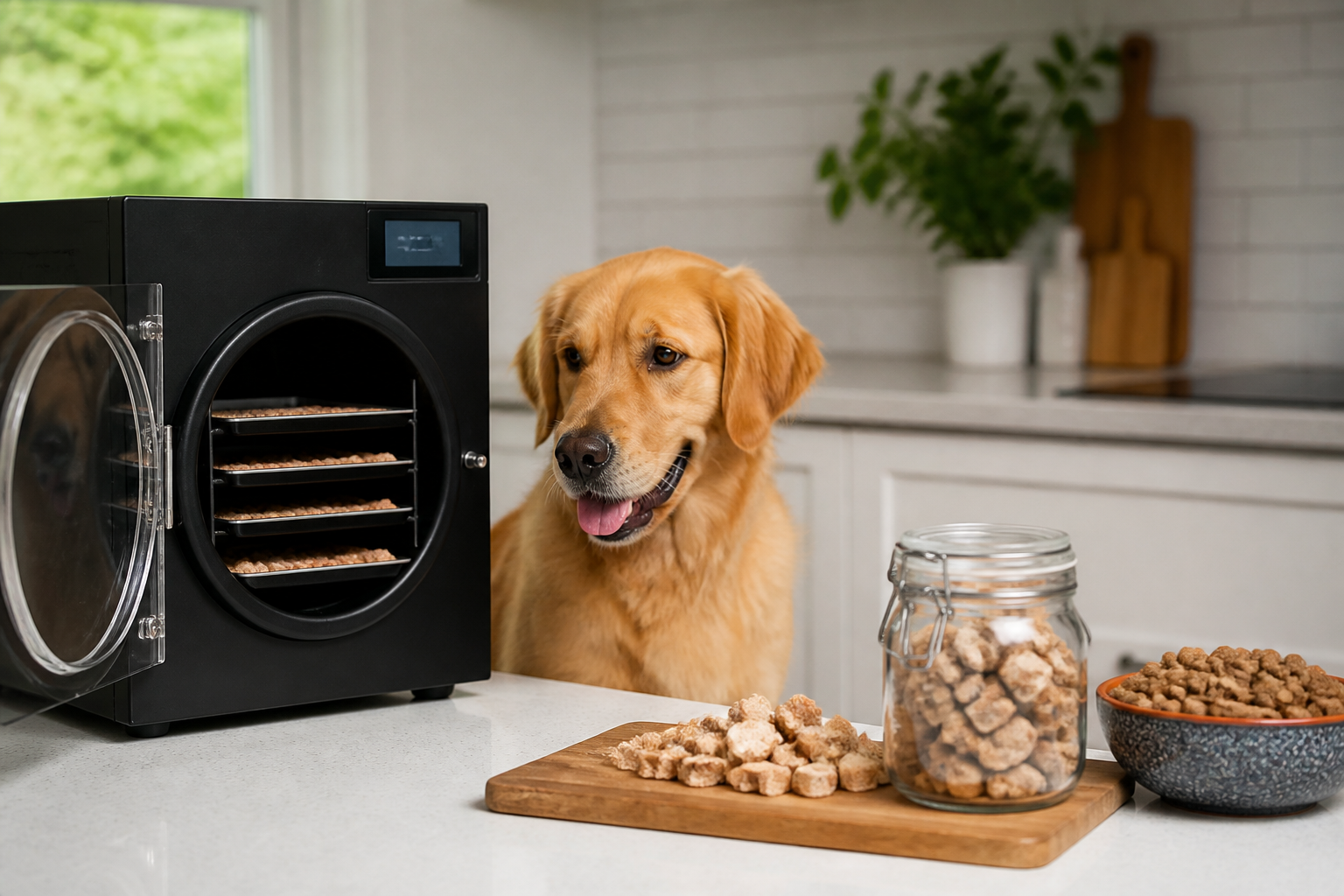
Freeze drying is a much more complex industrial process. It involves freezing the food and then placing it in a vacuum. The ice is turned directly into vapor through a process called sublimation. This removes nearly all the moisture while keeping the cellular structure of the food intact. While you can buy a home freeze dryer, they are very expensive and take up a lot of space. For most pet owners, "freezing" is the practical home solution, while "freeze dried" refers to the premium bags of food you buy at the store.
Quick Answer: You can freeze dry kibble at home if you own a specialized freeze drying machine, but most owners find it more practical to simply freeze their dog food in airtight bags. Standard freezing helps keep fats from going rancid, while purchasing pre-made freeze dried food offers the longest shelf life and maximum nutrient retention.
Can You Put Dry Kibble in the Freezer?
Yes, you can absolutely put dry dog food in the freezer. In fact, it is one of the best ways to keep large quantities of kibble from spoiling if you do not plan to use the whole bag within a month. Dry dog food contains fats and oils that can become rancid when exposed to oxygen and heat over time. Freezing slows this oxidation process down significantly.
When you freeze dry kibble, it does not change the texture much because the food is already low in moisture. Your dog can even eat it straight from the freezer as a crunchy, cold snack. This is especially helpful during the hot summer months in Illinois when you want to give your dog a way to cool down. For more ideas about preserving freshness, read our guide to how to keep dry dog food fresh after opening.
The Benefits of Freezing Your Dog's Food
Freezing provides several advantages beyond just stopping the food from going bad. It is a tool for both health and convenience.
- Pest Prevention: Some bags of dry food can contain microscopic storage mites. These mites thrive in grain based environments. Freezing the food for 48 hours kills these mites, which is a huge help for dogs with skin allergies.
- Bulk Buying Savings: You can take advantage of sales or the Frequent Buyer Program without worrying about the food expiring before you can use it.
- Nutrient Preservation: While heat can break down vitamins, cold temperatures help keep the nutritional profile of the food stable for much longer.
- Summer Enrichment: You can soak kibble in water, stuff it into a rubber toy, and freeze it. This creates a long lasting mental challenge for your dog.
Key Takeaway: Freezing is an effective way to kill storage mites and prevent oils from going rancid, making it a smart choice for bulk buyers and owners of allergic dogs.
Step-by-Step: How to Freeze Dog Food Properly
If you decide to freeze your dog's food, you should not just throw the open bag into the freezer. Moisture from the freezer can cause the kibble to get mushy or develop freezer burn.
Step 1: Divide the food into portions. / Use gallon sized freezer bags to create one week portions of food. This prevents you from having to open and close a large container every day, which introduces moisture.
Step 2: Remove as much air as possible. / Squeeze the air out of the bags before sealing them. This prevents oxygen from touching the kibble and reduces the risk of freezer burn.
Step 3: Label the bags. / Write the date of purchase and the date of freezing on the bag. This helps you follow a first in, first out rotation.
Step 4: Place the bags in a secondary container. / If you have the space, put your sealed bags inside a plastic bin in the freezer. This adds another layer of protection against odors from your own food.
Vet Tip: Always thaw frozen food in the refrigerator or use it immediately. Never leave thawed kibble on the counter for long periods, as the moisture from condensation can encourage mold growth.
Why Buy Freeze Dried Dog Food Instead?
If your goal is the ultimate freshness and nutrition, you might want to look at our freeze-dried dog food collection. These foods are different from standard kibble because they have never been cooked at high temperatures. Brands like Stella and Chewy's, Open Farm, and Primal Pet Foods use the freeze drying process to preserve raw ingredients safely.
Because the moisture is removed through sublimation, these foods are shelf stable for a very long time. They offer the nutritional benefits of a raw diet with the convenience of a dry food. You do not have to worry about the oils going rancid as quickly as you do with traditional kibble because the freeze drying process is so thorough. You can also compare available options in our freeze-dried dog food category.
The Science of Rehydration
One of the best things about freeze dried dog food is how it interacts with water. When you buy a bag of Stella and Chewy's patties or Nulo freeze dried raw, the food is very light and crisp. To serve it, you simply crumble the food and add warm water or bone broth.
This rehydration process is excellent for dogs that do not drink enough water. It turns a dry meal into a moisture rich feast that is easy on the digestive system. You can also use these freeze dried pieces as high value treats or toppers to entice a picky eater. For additional serving guidance, see our article about how to feed freeze-dried dog food.
Identifying Spoiled Dog Food
Whether you freeze your food or keep it in the pantry, you must know how to tell if it has gone bad. Your dog's nose is much more sensitive than yours, so if they suddenly refuse a brand they usually love, pay attention.
- The Smell Test: Rancid fats have a very distinct sour or "paint-like" odor. If the bag smells sharp or off, throw it away.
- Check for Moisture: If the kibble feels damp or sticky, mold may be starting to grow even if you cannot see it yet.
- Look for Pests: Check the bottom of the container for small insects or webbing.
- Visual Changes: Any signs of white, green, or black fuzz are an immediate reason to discard the entire bag.
Bottom line: Trust your dog's instincts and your own nose; any sour smell or change in texture is a sign that the food is no longer safe.
The Role of Storage in Managing Pet Allergies
Many dogs suffer from environmental allergies that are actually triggered by what is living in their food. Storage mites are tiny arachnids that can multiply in bags of dry food that have been open for more than a few weeks. If your dog is constantly itching, has red paws, or suffers from chronic ear infections, the way you store your food might be part of the problem.
Freezing your kibble for at least 48 hours after opening can drastically reduce the number of live mites. However, some dogs are allergic to the mites even after they are dead. In these cases, moving to a freeze dried diet or a prescription diet from our dog pharmacy might be necessary. If your dog's itching does not resolve with better food storage, a visit to the veterinarian is the essential next step to determine if they need allergy medication or a specialized diet.
Organizing Your Pet Food Pantry
Even if you do not use the freezer, you can maximize freshness by following a few simple rules in your pantry. Most people make the mistake of pouring new food on top of old food in a plastic bin. This is a recipe for spoilage.
The best way to store kibble is to keep it inside the original bag. These bags are designed with special liners to keep oils in and oxygen out. Place the entire bag inside an airtight plastic or metal container. This gives you the benefit of the manufacturer's packaging plus the pest protection of a hard bin.
Always store food in a cool, dry place. Temperatures over 100 degrees Fahrenheit will quickly break down the nutrients and cause the fats to spoil. Avoid storing pet food in garages or sheds where the temperature fluctuates wildly.
Key Takeaway: Keeping kibble in its original bag inside an airtight bin is the gold standard for pantry storage.
Understanding Shelf Life Dates
Every bag of food has a "best by" or expiration date. This date refers to how long the food will stay fresh while it is still sealed. Once you open the bag, that date usually no longer applies. Most manufacturers recommend using a bag of kibble within six weeks of opening.
Freeze dried foods have a much longer shelf life. An unopened bag of freeze dried patties can last for a year or more. Once opened, they still stay fresh longer than kibble, though you should aim to use them within thirty days for the best flavor and nutrient density. For another perspective on the process, read how to make freeze-dried dog food.
- Unopened Kibble: 12 to 18 months.
- Opened Kibble: 4 to 6 weeks.
- Frozen Kibble: Up to 6 months.
- Freeze Dried (Unopened): 12 to 24 months.
Practical Tips for Using Frozen Treats
If you are freezing food to make treats, you can get creative. Many owners use their BaxterBoo orders of Kong toys or West Paw Zogoflex toys as the base.
Step 1: Soak a handful of kibble in warm water or low sodium chicken broth until it becomes soft. / This usually takes about twenty minutes.
Step 2: Mash the softened food into a paste. / You can add a spoonful of canned pumpkin or plain yogurt to help it stick.
Step 3: Stuff the mixture into the toy. / Use a small spoon or your fingers to pack it tightly.
Step 4: Freeze for at least four hours. / This creates a solid core that your dog will have to lick and chew to finish.
This is a great way to use up the "crumbs" at the bottom of the bag that your dog might otherwise ignore. It provides mental stimulation and helps keep them occupied when you have guests over or need to get some work done.
Quality Ingredients and Better Storage
At the end of the day, the quality of the food you start with matters just as much as how you store it. Brands like Farmina, Acana, and Orijen use high quality natural preservatives like tocopherols (Vitamin E) rather than harsh chemicals. While these natural preservatives are better for your dog, they do not last forever.
By combining premium food with smart storage techniques like freezing, you ensure that your dog gets every bit of nutrition you paid for. If you find that you are constantly throwing away the bottom of the bag, consider switching to a smaller bag size or signing up for our Autoship programme. This allows you to receive smaller, fresher bags on a regular schedule so the food never has a chance to sit and get stale.
Managing Specialty Diets
For dogs with specific health needs, such as kidney disease or urinary issues, the freshness of their food is critical. Prescription diets often have different fat contents that may spoil faster or require more careful handling. Our dog pharmacy offers a wide range of specialized products.
If your vet has prescribed a specific diet, talk to them about the best way to store it. Some prescription canned foods can be frozen into small portions if your dog only eats a small amount at a time, but you should always confirm this with a professional first.
Vet Tip: If your dog is on a prescription diet for a medical condition, always consult your veterinarian before freezing or altering the food in any way, as some therapeutic nutrients can be sensitive to extreme temperature changes.
Conclusion
Keeping your dog's food fresh does not have to be a guessing game. Whether you choose to freeze your kibble in small batches or invest in high quality freeze dried options like those from Stella and Chewy's, the goal is to protect those vital nutrients and keep the flavor your dog loves. Remember to keep food in its original packaging, use airtight containers, and never be afraid to use your freezer as a tool for long term freshness. If you are looking to simplify your routine, our Autoship programme is a great way to ensure you always have a fresh bag on hand without needing to store huge quantities. You can also explore our medical and mobility section or our pharmacy for any specific health needs your dog may have.
FAQ
Can I freeze dry dog food in a regular kitchen freezer?
You can put dry dog food in a regular freezer to keep it fresh, but this is not the same as freeze drying. Freeze drying requires a vacuum chamber to remove moisture, while a standard freezer simply turns the existing moisture into ice. To keep kibble fresh in a kitchen freezer, place it in airtight bags with the air squeezed out to prevent freezer burn.
How long does freeze dried dog food last once the bag is opened?
Once a bag of freeze dried dog food is opened, it is generally best to use it within 30 days for maximum freshness. While it lasts longer than traditional kibble because the moisture has been removed, exposure to oxygen will eventually affect the taste and nutrition. Always reseal the bag tightly and store it in a cool, dry place.
Does freezing dog food kill the nutrients?
Freezing is actually one of the best ways to preserve nutrients because it stops the degradation process without using high heat. Most vitamins and minerals remain stable in the freezer for several months. It is much more effective at preserving nutrition than leaving a bag of food in a warm pantry where the oils can go rancid.
Should I rehydrate freeze dried dog food before serving?
While you can feed freeze dried food dry as a treat, it is usually best to rehydrate it with warm water or broth for full meals. Rehydrating the food helps with digestion and ensures your dog is getting enough moisture in their diet. Most dogs also prefer the texture and aroma of the food once water has been added.






