
 Save 15% on your 1st Autoship learn more

 Email us
 Live Chat
 FAQs
FAQs





Introduction
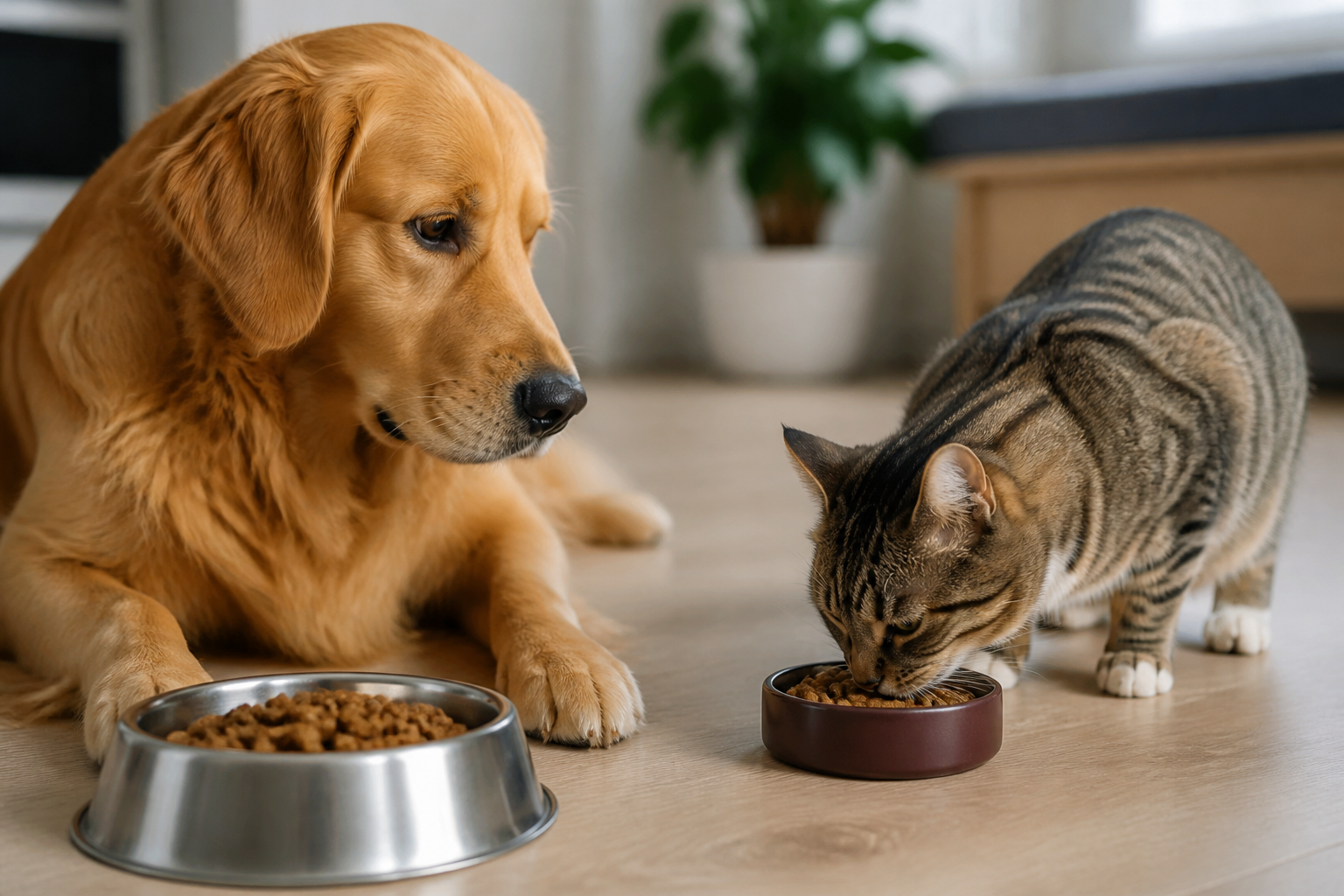
You are in the kitchen and hear a familiar crunching sound coming from the laundry room. When you look around the corner, you find your dog buried head-first in the cat’s bowl. Most dogs find the rich, meaty scent of cat kibble impossible to resist. At BaxterBoo, we hear from pet owners every week who are worried because their dog just polished off a bowl of feline dinner. You might be wondering if it is safe as a one-time snack or if you can use it as a budget-friendly substitute for dog food. While an occasional stolen bite is usually not a medical emergency, feeding cat food to dogs as a regular meal is a different story. This guide explains the nutritional differences and health risks involved. We will also look at how to keep your dog out of the cat’s dish for good.
Why Dogs Crave Cat Kibble
Dogs are opportunistic eaters. They are often attracted to anything that smells strongly of animal fat and protein. Because cats are obligate carnivores, their food is formulated to be much higher in meat-based ingredients than standard dog kibble. This creates a potent aroma that acts like a magnet for dogs.
If your dog is a picky eater, they might ignore their own balanced meal in favor of the cat’s dry food. To a dog, cat food tastes like a concentrated treat. It is calorie-dense and packed with the savory flavors they love. However, just because they want to eat it does not mean their bodies are designed to handle it.
Quick Answer: Yes, a healthy dog can technically eat dry cat food in small amounts without immediate danger. However, it is not a nutritionally complete or safe long-term diet for dogs because it contains too much protein and fat.
The Major Nutritional Differences
The main reason we advise against feeding cat food to dogs is the biological difference between the two species. Cats must eat meat to survive. Their bodies require specific amino acids that are only found in animal tissue. Dogs are omnivores. They have evolved to digest a wider variety of ingredients, including plant-based carbohydrates and fiber.
Cat food is designed to be very high in protein and fat to meet a cat's metabolic needs. If a dog eats this high-density food regularly, they are getting way more than their body requires. Here is a look at the minimum nutrient requirements set by the Association of American Feed Control Officials (AAFCO).
| Nutrient | Adult Dog Minimum | Adult Cat Minimum |
|---|---|---|
| Crude Protein | 18% | 26% |
| Crude Fat | 5.5% | 9% |
| Vitamin A | 5,000 IU/kg | 3,332 IU/kg |
| Taurine | Not Required | 0.1% |
While these are minimums, most commercial cat foods far exceed them. A dog eating cat food is essentially eating a diet designed for a different biological engine.
Protein and Fat Levels
Most dog food options contain a balance of protein, healthy fats, and fiber from grains or vegetables. Dry cat food often skips the fiber and heavy carbohydrates in favor of more meat. For a dog, this extra fat is hard on the digestive system. It can lead to rapid weight gain or more serious internal inflammation.
Essential Amino Acids and Vitamins
Cats cannot produce their own taurine or arachidonic acid. They must get these from their food. Dog food usually contains lower levels of these because dogs can synthesize some of them internally. On the flip side, cat food often has higher levels of Vitamin A. While cats process this easily, excessive Vitamin A can eventually become toxic to dogs if they eat it every day.
Key Takeaway: Dogs and cats have different nutritional blueprints. Feeding the wrong food leads to an imbalance that can affect everything from organ function to energy levels.
Health Risks of Giving Cat Food to Dogs
The most immediate problem with a dog eating dry cat food is gastrointestinal upset. Because the food is so rich, it can cause a sudden bout of diarrhea or vomiting. This is especially true for dogs with sensitive stomachs. If your dog gets into the cat food, keep a close eye on their bathroom habits for the next 24 hours.
Pancreatitis Risks
This is the most significant short-term danger. The pancreas helps digest fat. When a dog suddenly consumes a high-fat meal like cat kibble, the pancreas can become severely inflamed. This condition is called pancreatitis. It is extremely painful and often requires a visit to the veterinarian.
Symptoms of pancreatitis include:
- Hunched back or signs of abdominal pain
- Repeated vomiting
- Loss of appetite
- Fever or lethargy
- Diarrhea
For additional information about this concern, read our guide to whether dry cat food is bad for dogs.
Kidney and Liver Strain
High protein levels are not always a good thing. For senior dogs or those with underlying health issues, excessive protein can put a heavy strain on the kidneys and liver. These organs have to work overtime to filter the extra nitrogen produced by protein metabolism. If your dog is older, it is even more important to keep them away from the cat’s bowl.
Obesity and Weight Gain
Dry cat food is a calorie bomb for dogs. Even a small handful of cat kibble can contain significantly more calories than the same amount of dog food. If your dog snacks on cat food daily, you will likely notice the scale creeping up. Obesity in dogs leads to joint pain, heart issues, and a shorter lifespan.
Vet Tip: If your dog shows signs of severe abdominal pain or constant vomiting after eating cat food, contact your vet immediately. For dogs with chronic conditions like kidney disease, our pharmacy offers specialized prescription diets and medications.
What to Do if You Run Out of Dog Food
We have all had those nights where we realize the dog food bag is empty and the store is closed. In a pinch, a single bowl of dry cat food is generally better than letting your dog go hungry. A healthy adult dog can usually handle one meal of cat food without a disaster.
However, you should not make this a habit. If you are out of dog food, a better temporary solution might be plain boiled chicken and white rice. This is easier on their stomach than a bowl of high-fat cat kibble. If you do use cat food as an emergency meal, give them a smaller portion than you normally would. Since it is more calorie-dense, they do not need as much to feel full.
To avoid these late-night panics, many of our customers use our Autoship programme. This ensures your preferred food arrives on a regular schedule so you never have to reach for the cat's bag.
For more ways to reduce food-related emergencies, see our guide to feeding your dog for less.
Strategies to Stop the Bowl Raiding
If you live in a multi-pet household, you need a plan to keep the peace at mealtime. You cannot expect a dog to use willpower when a bowl of "gourmet" cat food is sitting on the floor.
Elevated Feeding
The easiest way to stop a dog is to use height. Cats love to climb, but most dogs are grounded. Try moving the cat's food bowl to a sturdy counter, a windowsill, or the top of a tall cat tree. This gives the cat a safe place to eat away from the dog’s reach.
Separate Rooms and Barriers
You can use baby gates or pet doors to create a "cat-only" zone. Many pet gates have a small cat door built into the bottom. This allows the cat to pass through to a laundry room or spare bedroom while the dog is left behind. You can also feed your pets at the same time in separate rooms with the doors closed.
High-Tech Solutions
If your dog is the same size as your cat, a gate might not work. In these cases, consider a microchip-activated feeder. These bowls only open when they detect your cat’s specific microchip or a special RFID tag on their collar. When the cat walks away, the lid closes, locking the dog out of the snacks.
Training the "Leave It" Command
While physical barriers are best, training is a great backup. Teach your dog a strong "leave it" command. When you catch them eyeing the cat's bowl, use the command and reward them with a healthy dog treat, like a piece of dehydrated meat from our Stella & Chewy's selection.
Better Alternatives for Picky Dogs
Some owners purposely give their dogs cat food because the dog refuses to eat anything else. If your dog is snubbing their kibble, don't reach for the cat food. Instead, try these healthier ways to make their own food more appealing.
- Add a Topper: Mix in a spoonful of wet dog food or a freeze-dried topper from The Honest Kitchen.
- Use Warm Water: Adding a bit of warm water or low-sodium bone broth can release the aroma of dog kibble.
- Rotate Proteins: Some dogs get bored. Switching from chicken to lamb or fish within the same brand can help.
- Check for Dental Issues: If a dog suddenly stops eating dry food, they might have a sore tooth. Consult your vet to rule out dental pain.
For more ideas, read what dry dog food is best for picky eaters.
Bottom line: Using cat food to entice a picky dog is a risky shortcut that can lead to obesity or digestive problems.
Choosing the Right Gear at BaxterBoo
Managing a multi-pet home is easier when you have the right tools. At BaxterBoo, we carry a wide range of products designed to make feeding time stress-free. Whether you need a tall cat tree for elevated feeding or a sturdy gate to section off the kitchen, we have you covered.
Our team handpicks every item we stock. We look for durability and practical design because we know what it is like to manage a busy household with both cats and dogs. If your dog has already managed to gain a few pounds from cat food raids, we carry weight management formulas and slow feeders to help them get back on track.
Transitioning Back to Dog Food
If your dog has become a "cat food junkie," you might need to transition them back to their own food slowly.
Step 1: Stop all access to the cat food immediately using the barriers mentioned above.
Step 2: Offer their regular dog food at set meal times.
Step 3: If they refuse, pick the bowl up after 15 minutes.
Step 4: Offer it again at the next scheduled meal time.
Step 5: Avoid giving extra treats during this period. Most healthy dogs will not starve themselves and will start eating their own food once they realize the cat food bar is closed.
Note: For puppies or dogs with medical conditions, never skip multiple meals without talking to your vet first.
For more guidance, read about helping your dog enjoy dry food.
Final Thoughts on Canines and Cat Food
Sharing your life with both a dog and a cat is a rewarding experience, but their dinner bowls should never be interchangeable. While a few kibbles stolen from the floor won't cause lasting harm to most dogs, cat food is simply too rich and unbalanced for the canine body. By setting up physical barriers and sticking to a high-quality dog diet, you are protecting your dog’s long-term health.
If you have concerns about your dog's weight or digestion after a cat food incident, your veterinarian is your best resource. For those managing long-term health needs, remember that our pharmacy is here to help with prescription diets and medications.
Quick Checklist for Multi-Pet Feeding:
- Move cat bowls to a high surface or a restricted room.
- Stick to a consistent feeding schedule for both pets.
- Monitor your dog for signs of stomach upset or lethargy.
- Use healthy dog-specific treats for rewards.
- Consider an Autoship subscription so you never run out of dog food.
FAQ
Can a dog die from eating cat food?
It is very unlikely for a dog to die from a single instance of eating cat food. However, it can happen if the high fat content triggers a severe case of pancreatitis that goes untreated. Long-term consumption can also lead to obesity and organ strain, which can shorten a dog’s life. Always watch for signs of severe pain or persistent vomiting.
Is wet cat food worse for dogs than dry cat food?
Both are problematic, but wet cat food is often even higher in fat and protein than dry kibble. This makes it more likely to cause immediate diarrhea or stomach upset. Wet food also lacks the fiber that many dogs need for healthy digestion. Neither should be used as a replacement for a balanced dog diet.
For a broader comparison of canine food formats, read our guide to dry versus wet dog food.
Why does my dog prefer cat food over their own?
Cat food is designed for obligate carnivores, so it has a much higher concentration of meat and animal fats. This creates a very strong, enticing smell that appeals to a dog’s natural scavenging instincts. To a dog, cat food is essentially a bowl full of high-value treats.
What should I do if my dog ate a whole bowl of cat food?
If your dog ate a large amount, you should monitor them closely for the next 24 to 48 hours. You may want to skip their next scheduled meal to give their digestive system a chance to rest. If they start vomiting, have bloody diarrhea, or seem to be in pain, call your veterinarian right away for guidance.






