
 Save 15% on your 1st Autoship learn more

 Email us
 Live Chat
 FAQs
FAQs





Introduction
You just finished a big shopping trip and loaded a fresh bag of premium kibble into the trunk. Then, a few more errands take longer than expected while the afternoon sun beats down on the parking lot. By the time you get back to the driver's seat, the interior of the car feels like an oven. Many of us at BaxterBoo have faced this exact moment. We know you want to provide the best for your dog, and seeing that expensive bag of food sitting in the heat can be worrying. This post covers the risks of heat exposure to dog food, how to identify spoilage, and the best ways to transport meals safely. Understanding how temperature affects kibble helps you protect your dog's health and your own peace of mind.
Quick Answer: It is not safe to leave dry dog food in a hot car for more than 30 to 60 minutes. High temperatures accelerate the oxidation of fats, leading to rancidity and the destruction of essential vitamins and nutrients.
The Greenhouse Effect and Your Car
Most people underestimate how quickly the temperature inside a vehicle climbs. On a mild 70 degree day, the interior can reach 100 degrees in less than twenty minutes. When the thermometer hits 85 or 90 degrees outside, your car's cabin or trunk can easily soar past 140 degrees. This creates a greenhouse effect that traps heat and moisture, which are the two biggest enemies of pet food stability.
Dry dog food is designed to be shelf stable at room temperature. Most manufacturers recommend storing kibble in a cool, dry place below 75 degrees. When you subject a bag of food to 120 or 130 degrees, you are essentially "cooking" the food in its own packaging. This triggers chemical reactions that the preservatives in the food are not equipped to handle for long periods.
The trunk is often the hottest part of the car because it lacks airflow and is surrounded by metal that absorbs solar energy. If you leave a bag of high quality food like Orijen or Acana in a dark trunk, the high protein and fat content in these premium recipes can begin to degrade almost immediately. The structural integrity of the nutrients starts to fail at a molecular level when exposed to these extremes.
Why Heat Destroys Dog Food Quality
To understand the danger, you have to look at what makes up a piece of kibble. Dry dog food is a complex blend of proteins, carbohydrates, and fats. It also contains a specific profile of vitamins and minerals. Heat acts as a catalyst, speeding up the natural breakdown of these ingredients.
The Problem with Fat Oxidation
Fats and oils are essential for your dog's skin, coat, and brain health. Many premium brands we carry at BaxterBoo use high quality animal fats and fish oils to provide Omega-3 and Omega-6 fatty acids. These healthy fats are highly sensitive to heat and oxygen.
When fats are exposed to high temperatures, they undergo a process called oxidation. This chemical reaction turns the fats rancid. Rancid fat does not just taste bad to your dog. It can actually become toxic. Consuming rancid fats can lead to chronic health issues over time or immediate digestive distress, including vomiting and diarrhea.
Nutrient Degradation
Many of the vitamins added to dog food are "heat labile," meaning they break down and lose their effectiveness when they get too hot. Vitamin A, Vitamin E, and the B-vitamin complex are particularly vulnerable. Even if the food does not smell "spoiled" yet, a few hours in a hot car can strip away the nutritional value your dog needs.
If you are feeding a puppy or a senior dog, these nutrients are even more critical. A puppy needs a specific balance of vitamins for growth, while a senior dog relies on them for immune support. Feeding heat damaged food regularly can lead to subtle nutritional deficiencies that affect your dog's energy levels and coat quality.
Key Takeaway: Heat changes the chemical structure of fats and destroys vitamins, making the food less nutritious and potentially harmful to your dog's digestive system.
The Hidden Danger of Moisture and Mold
Dry dog food usually has a moisture content of around 10 percent. This is low enough to prevent mold growth under normal conditions. However, when a bag is trapped in a hot car, the air inside the bag heats up and causes that internal moisture to turn into vapor.
When the car eventually cools down, that vapor condenses. This creates localized "hot spots" of moisture on the surface of the kibble or along the inner lining of the bag. Even if the rest of the bag feels dry, these tiny damp areas are the perfect breeding ground for mold and bacteria.
Mycotoxins and Bacterial Growth
Mold growth is not always visible to the naked eye in its early stages. Some molds produce mycotoxins, which are poisonous compounds. If a dog consumes mycotoxins, they can experience severe illness, including tremors, lethargy, and in extreme cases, liver failure.
Bacteria like Salmonella or Listeria also thrive in warm, humid environments. While the cooking process at the factory kills these bacteria, contamination can happen during the packaging or handling process. A hot car acts like an incubator, allowing any stray bacteria to multiply to dangerous levels.
Vet Tip: If your dog accidentally eats food that was left in a hot car and shows signs of vomiting, diarrhea, or unusual lethargy, consult your veterinarian immediately. For ongoing digestive support after such an incident, our pet pharmacy offers prescription diets and supplements through our partnership with Pet's Choice.
How to Tell if Your Dog Food Has Gone Bad
Before you serve a bowl of kibble that spent time in a hot car, you must perform a thorough inspection. Dogs have a much stronger sense of smell than we do, but some dogs will eat spoiled food anyway, especially if they are highly food motivated.
The Sniff Test
Fresh kibble should have a mild, nutty, or meaty aroma. Open the bag and take a deep breath. If you detect a sour, metallic, or "paint like" smell, the fats have likely gone rancid. Some people describe the smell of rancid dog food as similar to old wet cardboard or stinky feet. If it smells "off" to you, it is definitely off for your dog.
The Texture and Visual Check
Check the texture of the kibble. It should feel dry and slightly oily but not sticky or "sweaty." If the kibble feels damp or clumps together, moisture has likely migrated within the bag. Look for any fuzzy growth or discoloration, which are clear signs of mold. Also, check for condensation on the inside of the bag. If you see water droplets on the plastic lining, the food is no longer safe.
Your Dog's Reaction
Pay close attention to how your dog reacts to the food. If your usually excited eater sniffs the bowl and walks away, trust their instincts. They can often smell the early stages of rancidity or chemical changes that humans cannot detect.
For additional guidance, read our tips for telling whether dry dog food has gone bad.
Signs of Spoiled Dog Food:
- Sour, metallic, or "old paint" odor
- Sticky or damp texture to the kibble
- Clumping of the food inside the bag
- Visible mold or fuzzy spots
- Your dog refuses to eat or hesitates
Safe Ways to Transport Dog Food in Summer
Since we cannot always avoid buying food on hot days, we need better strategies for getting it home safely. A little bit of planning can prevent a total loss of your investment in your dog's nutrition.
Step 1: Make the pet store your last stop. Plan your errands so that picking up dog food is the very last thing you do before heading home. This minimizes the time the bag spends in the car.
Step 2: Keep the food in the cabin. Never put dog food in the trunk during the summer. Place the bag on the floor of the backseat where the air conditioning can reach it. The cabin is much better insulated and stays significantly cooler than the trunk.
Step 3: Use a thermal barrier. If you have a long drive home, consider bringing an old moving blanket or a thermal reflective sheet. Wrapping the bag in a thick blanket can help insulate it against the rising temperatures in the car for a short period.
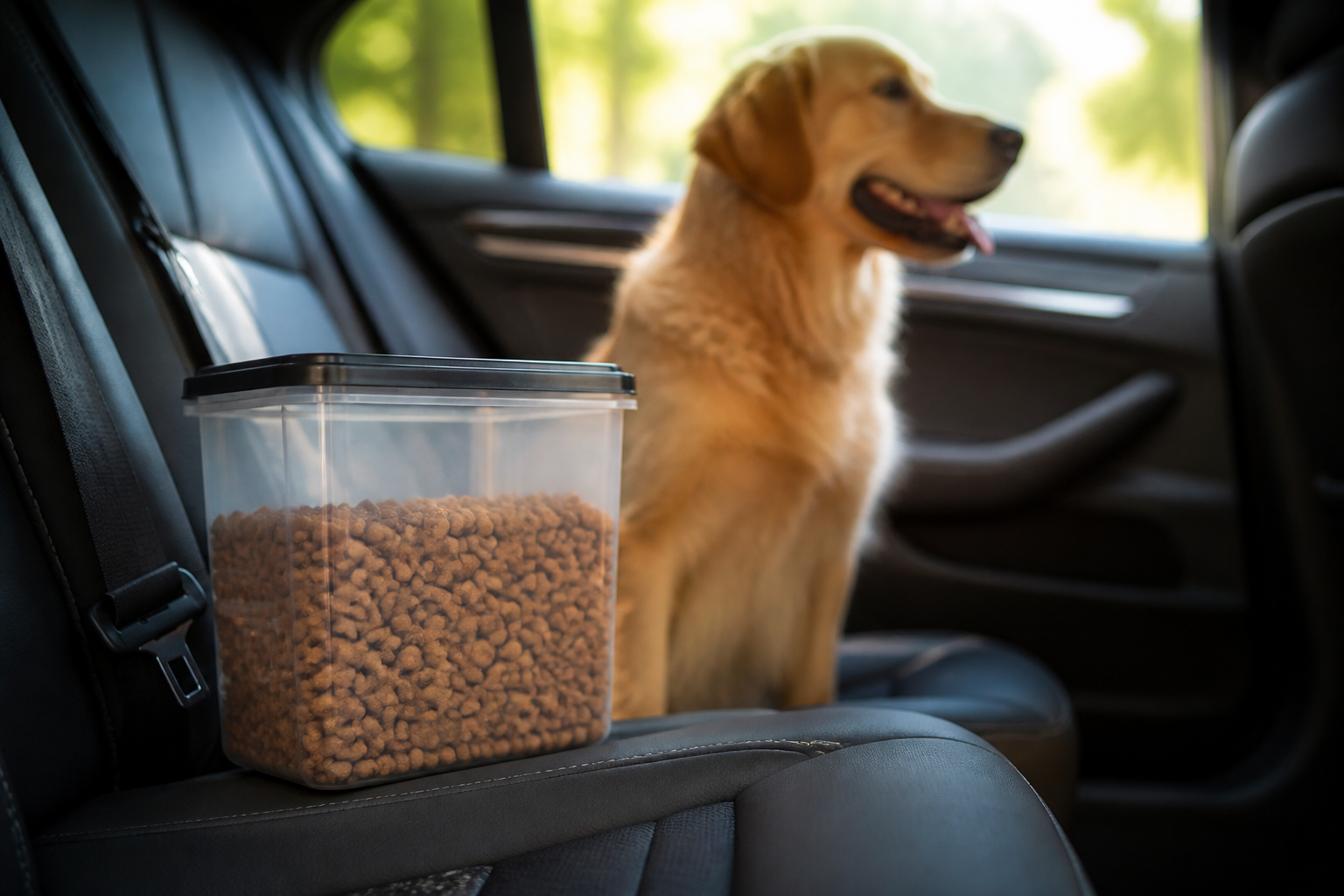
Step 4: Avoid clear containers for transport. If you are traveling with a smaller amount of food, do not use clear plastic bags or bins. Sunlight can penetrate clear plastic and further degrade the nutrients through UV exposure. Use original packaging or opaque, airtight containers.
Long Term Storage Solutions at Home
Once you get the food safely inside your home, the job is not done. Proper storage is essential to keep the food fresh until the bottom of the bag. Many people make the mistake of dumping the kibble directly into a plastic bin.
Plastic can be porous and can absorb fats that eventually turn rancid. If you do not wash the bin thoroughly between every single bag, the old rancid fats can contaminate the new, fresh food. We recommend keeping the kibble inside its original bag and then placing the entire bag into a sealed container. This provides a double barrier against oxygen and pests.
For more storage guidance, see our dry dog food freshness tips.
If you find that you are frequently worried about food safety due to a busy schedule, consider using our Autoship program. This allows you to have fresh food delivered right to your door on a regular schedule, so you never have to worry about the "hot car" scenario during a long day of errands. Plus, Autoship customers get a free MVP Gold membership for extra savings.
When to Discard the Food
It is hard to throw away a bag of food that might have cost sixty or eighty dollars. However, the cost of a single emergency vet visit for food poisoning or a severe allergic reaction to mold will be much higher. If the bag was in a car over 100 degrees for more than two hours, the risk is simply too high.
If the food shows any of the signs of spoilage mentioned earlier, do not try to "save" it by mixing it with fresh food. This will only contaminate the new food and put your dog at risk. At BaxterBoo, we prioritize the health of your pets above all else, and we always suggest errant on the side of caution.
For more information about freshness timelines, read how long dry dog food stays fresh after opening.
Bottom line: Your dog's health depends on stable nutrition. If the food has been exposed to extreme heat for an extended period, it is safer to replace it than to risk a major health issue.
Supporting Your Dog's Digestive Health
If your dog has consumed food that might have been compromised by heat, keep a close eye on their behavior. Minor digestive upset can sometimes be managed with a bland diet and probiotics, but persistent symptoms require professional help.
Our BaxterBoo selection includes high quality supplements like Zesty Paws or Honest Paws that can support a healthy gut. For dogs with chronic sensitivities or those recovering from a bout of "garbage gut" from spoiled food, our pharmacy carries prescription diets like Royal Canin Veterinary Diet or Farmina Vet Life. These specialized formulas are designed to be gentle on the stomach and help restore balance to the digestive system.
For everyday nutritional support, explore our dog food supplement category.
Remember that any change in diet or the addition of new supplements should be discussed with your veterinarian. They can provide a proper diagnosis and ensure that you are using the right products for your dog's specific life stage and health needs.
Conclusion
Leaving dry dog food in a hot car is a common mistake, but it is one that can have serious consequences for your dog's wellbeing. Heat is a powerful force that destroys vitamins, ruins essential fats, and encourages the growth of mold and bacteria. By making the pet store your last stop and keeping the food in the air-conditioned cabin of your car, you can ensure the kibble stays fresh and safe.
If you ever find yourself in a situation where you are unsure about the safety of your pet's food, it is always best to start fresh. To make sure you always have a steady supply of high quality food without the stress of summer errands, explore our Autoship program. It is the easiest way to keep your pantry stocked with the best brands while earning rewards on every purchase through our MVP Rewards program.
FAQ
Can I feed my dog kibble if the bag was hot to the touch?
If the bag itself felt very hot to the touch, the internal temperature of the food was likely high enough to start the oxidation process. While a few minutes might be okay, if the bag was hot for an hour or more, the fats inside have likely begun to turn rancid. It is best to perform a sniff test and check for any sticky texture before deciding to use it.
Does unopened dog food stay safe longer in a hot car?
An unopened bag provides a barrier against outside moisture and pests, but it does not protect the food from heat. Heat is energy that moves through plastic and paper packaging easily. The chemical breakdown of fats and vitamins happens whether the bag is sealed or open once the internal temperature reaches a certain threshold.
Can heat cause a dog food bag to bloat or expand?
Yes, extreme heat can cause the air and moisture inside a sealed bag to expand, leading to a bloated appearance. This is a significant red flag. It indicates that the internal environment has reached high temperatures, and it may also suggest that gases are being produced by bacterial activity inside the bag.
Is wet dog food safer than dry food in a hot car?
Unopened canned food is generally more stable because it is heat processed and vacuum sealed. However, extreme heat can still cause the contents to expand and potentially break the seal of the can. Once a can of wet food is opened, it is highly perishable and should never be left in a warm environment for more than a few minutes.






