
 Save 15% on your 1st Autoship learn more

 Email us
 Live Chat
 FAQs
FAQs





Introduction
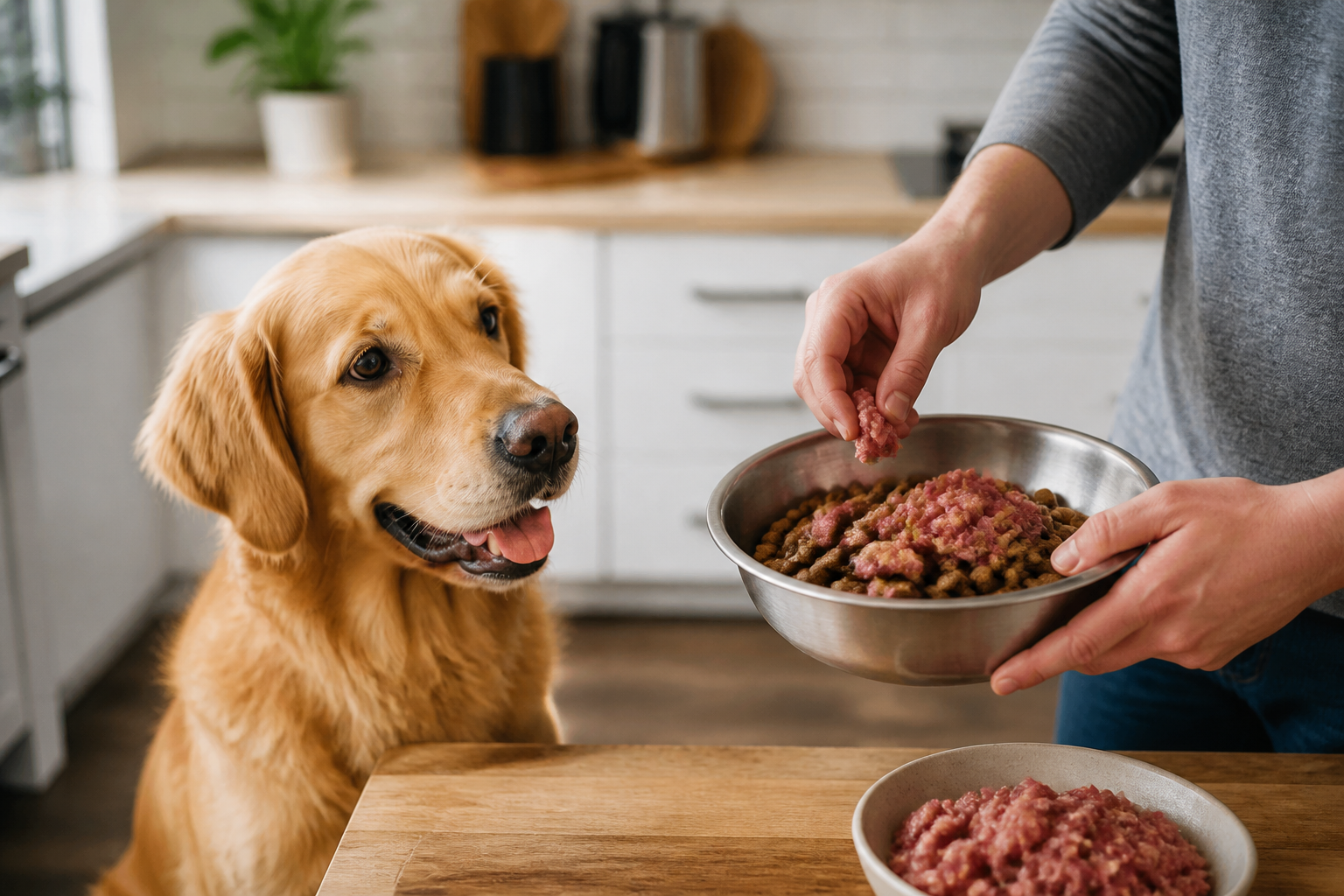
You are standing at the kitchen counter preparing dinner when you feel a familiar pair of eyes on you. Your dog has smelled the ground beef and is now sitting perfectly still, hoping for a taste. It is a common scene in many homes. You might wonder if adding a bit of that meat to their dry kibble would be a healthy treat or if it might cause an upset stomach. Mixing fresh protein into a dry diet is a popular way to entice picky eaters and add nutritional variety.
At BaxterBoo, we have helped pet parents find the best ways to nourish their dogs since 2006. We know that mealtime is more than just calories. It is about health, happiness, and the bond you share. This article covers the benefits of beef, safety tips for preparation, and how to avoid common mistakes like overfeeding or using dangerous seasonings. Adding ground beef to kibble can be a safe way to level up your dog's bowl when you follow a few simple rules.
The Benefits of Adding Ground Beef to Kibble
Dry dog food is designed to be a complete and balanced meal. However, adding fresh, high quality protein can offer several advantages. Beef is a complete protein source. This means it contains all the essential amino acids your dog needs for muscle maintenance, tissue repair, and immune system health.
Many dogs find dry kibble boring after a few months. The rich aroma of beef can stimulate the appetite of a senior dog or a pup that has become disinterested in their food. This increased palatability makes it much easier to ensure your pet is getting the calories they need to stay active. For more ideas, read our guide to what you can add to dry dog food for better nutrition.
Fresh beef also provides a natural source of iron and B vitamins. These nutrients are vital for healthy red blood cells and energy metabolism. While commercial foods like Royal Canin or NutriSource include these in their formulas, adding fresh meat provides them in a highly bioavailable form.
Quick Answer: Yes, you can mix ground beef with dry dog food as long as it is lean, cooked, and unseasoned. It should only act as a topper and should not exceed ten percent of your dog's total daily calories.
Improved Hydration and Texture
Even if you cook the beef thoroughly, it retains more moisture than a dry biscuit. When you mix the meat into the kibble, some of that moisture transfers to the dry pieces. This can make the food easier to chew for older dogs with dental sensitivities. It also provides a small boost in hydration, which is always beneficial for kidney and urinary tract health. You can also learn more about wetting dry dog food for better digestion and hydration.
Support for Active Dogs
If you have a high energy dog that spends hours running or playing, they may benefit from the extra protein boost. Amino acids like leucine and valine help repair muscle fibers after exercise. A small amount of beef mixed with their regular food can help them recover faster and maintain their lean muscle mass.
Choosing the Best Ground Beef for Your Dog
Not all beef you find at the grocery store is suitable for a dog bowl. When you are shopping, the label on the package is the most important thing to check. You should always look for the leanest option available. For balanced dry food to use as your dog's foundation, explore our dog food category.
Fat content is the biggest concern when feeding beef to dogs. While humans might enjoy a juicy burger made with 80/20 ground beef, that level of fat is far too high for most pets. High fat intake is a primary trigger for pancreatitis. This is a painful and potentially life threatening inflammation of the pancreas.
Vet Tip: Always choose ground beef that is at least 90 percent lean. If your dog has a history of digestive issues or is prone to weight gain, look for 93 percent or 95 percent lean options instead.
Understanding Fat Ratios
When a label says 80/20, it means the meat is 20 percent fat. For a dog, this is very dense in calories and difficult to digest. 90/10 beef is a much safer choice. Even then, you should still drain the fat after cooking to keep the meal as lean as possible.
Grass Fed vs. Grain Fed
If your budget allows, grass fed beef is a great choice. It often contains higher levels of Omega 3 fatty acids compared to grain fed beef. These healthy fats support skin and coat health and can help manage inflammation. However, standard lean ground beef is still a healthy and protein rich addition that most dogs will enjoy.
The Importance of Cooking Ground Beef
The debate over raw feeding is a large one in the pet community. For most household dogs, cooking the beef is the safest and most reliable path. Raw ground beef carries a significantly higher risk of bacterial contamination.
Pathogens like Salmonella, E. coli, and Listeria can be present in raw meat. These bacteria do not just pose a risk to your dog. They can also spread to the human members of your family through licked faces or contaminated kitchen surfaces.
Why Cooking is Safer
Cooking ground beef to an internal temperature of 160 degrees Fahrenheit effectively kills these harmful bacteria. This makes the meal safer for your pet and your household. Furthermore, cooking allows you to render out and remove excess fat that would otherwise end up in your dog's stomach.
Better Digestion
Many dogs find cooked meat easier to digest than raw meat. This is especially true for puppies or senior dogs who may have more sensitive digestive tracts. Cooking breaks down some of the tougher fibers in the meat, allowing your dog's body to absorb the nutrients more efficiently. If your dog has digestive sensitivities, our article about dog food for sensitive stomachs offers additional guidance.
Key Takeaway: Cooking ground beef removes dangerous bacteria and allows you to drain away excess fat. This protects your dog from foodborne illness and digestive upset.
Hazardous Ingredients to Avoid
When you prepare beef for yourself, you likely use salt, pepper, garlic, or onions. You must avoid all of these when cooking for your dog. Many common kitchen staples are toxic to dogs or can cause significant internal distress.
The Danger of Onions and Garlic
Onions and garlic belong to the Allium family. They contain compounds that can damage a dog's red blood cells. This can lead to a condition called hemolytic anemia. Even small amounts of garlic powder or onion flakes used in seasonings can be dangerous if fed over time.
Salt and Sodium Risks
Dogs do not need added salt in their diet. Their commercial kibble is already formulated with the exact amount of sodium they require. Excess salt can lead to dehydration, increased blood pressure, or even salt poisoning in extreme cases.
Oils and Butter
Do not use oil or butter in the pan when browning the beef. Ground beef has enough natural moisture to cook without sticking. Adding extra fats only increases the calorie count and raises the risk of a pancreatitis flare up.
How to Prepare Ground Beef for Your Dog
Preparing the meat correctly ensures that your dog gets the benefits without the risks. Follow these steps to create a safe and healthy topper for their kibble.
Step 1: Place the lean ground beef in a skillet over medium heat. Do not add any oil, butter, or seasonings.
Step 2: Break the meat into small crumbles as it cooks. This makes it easier to mix evenly with the dry food later.
Step 3: Cook the meat until it is browned all the way through. Ensure there is no pink left in the center.
Step 4: Once cooked, place the beef in a colander. Rinse it with warm water to remove any remaining surface fat.
Step 5: Let the meat cool completely before adding it to the dog's bowl. Mixing hot meat into dry food can make the kibble soggy and unappealing.
Bottom line: Serve the beef plain and thoroughly cooked to keep your dog's digestive system happy.
Maintaining the Ten Percent Rule
One of the biggest mistakes pet parents make is overfeeding. It is very easy to scoop a large portion of beef into the bowl without realizing how many calories you are adding. If you do not adjust the amount of kibble, your dog will quickly start to gain weight.
Most veterinarians recommend that toppers and treats make up no more than ten percent of a dog's daily calorie intake. The other 90 percent should come from a nutritionally complete and balanced dry food. This ensures your dog still gets the vitamins and minerals they need for long term health.
Calculating the Portions
If you add 100 calories of beef to the bowl, you must remove 100 calories of kibble. This keeps the total energy intake the same.
- Small dogs (10 to 20 lbs): 1 to 2 tablespoons of beef per day.
- Medium dogs (30 to 50 lbs): 3 to 4 tablespoons of beef per day.
- Large dogs (60 to 90 lbs): 1/4 to 1/2 cup of beef per day.
Avoiding Nutritional Imbalance
If ground beef becomes a large portion of the diet, it can throw off the ratio of calcium to phosphorus. Commercial dog foods are carefully balanced to keep bones and joints healthy. Using beef as a small topper prevents these imbalances from occurring.
Potential Risks and Health Considerations
While ground beef is generally safe, it is not the right choice for every dog. You should always consider your pet's specific health history before making changes to their diet.
Allergic Reactions
Beef is one of the more common food allergens for dogs. If you notice your dog scratching more often, developing ear infections, or having loose stools after eating beef, they may have a sensitivity. If these symptoms occur, stop feeding the beef and consult your veterinarian.
Pancreatitis
As mentioned earlier, fat is the enemy of the pancreas. Dogs that are overweight or have a history of digestive issues are at a higher risk. If your dog becomes lethargic, starts vomiting, or has a painful abdomen after eating beef, seek veterinary care immediately.
Weight Management
Beef is calorie dense. If your dog is already struggling with their weight, adding beef might not be the best idea. We carry specialized weight management foods like Farmina Vet Life that are formulated to help dogs shed pounds safely. Our pharmacy can also fulfill prescriptions for weight management diets through our partnership with Pet's Choice.
Vet Tip: If your dog has a chronic health condition like kidney disease or food allergies, always talk to your vet before adding fresh meat to their diet. They can help you determine if the extra protein is safe for your dog's specific needs.
Alternatives to Fresh Ground Beef
If you do not have time to cook fresh beef every day, there are other ways to give your dog the protein they crave. We carry many high quality treats and toppers that offer the same benefits with more convenience. Browse our dog treats collection for convenient options.
Dehydrated and Air Dried Toppers
Brands like Stella and Chewy's or The Honest Kitchen offer freeze dried or air dried beef toppers. These provide the nutritional benefits of raw or fresh meat in a shelf stable format. You simply crumble them over the kibble or rehydrate them with a little water.
Beef Based Chews
For dogs that love the flavor of beef, bully sticks or beef collagen chews are excellent options. These satisfy the natural urge to chew while providing a high protein snack. They are also great for dental health as they help scrape away plaque and tartar.
Single Ingredient Treats
Look for treats from brands like Vital Essentials or Real Meat Co. These often feature 100 percent beef without any fillers or artificial preservatives. They are perfect for training or as a small reward between meals.
Transitioning to a Mixed Diet
Whenever you introduce a new food, you should do so slowly. A sudden change in diet can cause gas, bloating, or diarrhea. This is true even for healthy additions like lean beef. For additional transition guidance, see how to switch from dry to wet dog food.
Start by adding just a teaspoon of cooked beef to your dog's regular meal. Watch them for 24 hours to see how they react. If their energy levels and stools remain normal, you can slowly increase the amount over the next week until you reach the desired portion.
Managing Picky Eaters
If your dog starts picking out the beef and leaving the kibble behind, try mashing the beef into the dry food. You can also add a tablespoon of warm water or low sodium beef broth to create a light gravy. This coats the kibble in the beef flavor, making it harder for your dog to be picky.
Consistency is Key
Try to keep the feeding schedule and the amount of beef consistent. Dogs thrive on routine. Frequent changes to the type of protein or the amount of food can lead to digestive sensitivity.
The BaxterBoo Difference
We believe that every pet deserves high quality nutrition tailored to their needs. Whether you are looking for premium kibble from Orijen and Acana or specialized supplements for joint health, we have you covered. Our warehouse in Vernon Hills is stocked with over 500 brands that we have carefully selected for their quality and safety.
If your dog needs more than just a diet change, our pharmacy offers a wide range of FDA approved medications and prescription foods. Through our partnership with Pet's Choice, we make it easy to manage chronic conditions or allergies. You can have your vet's prescriptions delivered right to your door alongside your regular food and treats.
Our MVP Rewards program allows you to earn points on every purchase, helping you save money while providing the best for your pet. We also offer an Autoship program. This ensures you never run out of your dog's favorite food and gives you extra savings on recurring orders.
Summary of Feeding Ground Beef Safely
Adding ground beef to dry dog food is an excellent way to improve the taste and nutritional profile of your dog's meals. By choosing lean meat, cooking it thoroughly, and avoiding seasonings, you can provide a healthy treat that your dog will love. Remember to keep the portions small and adjust their kibble intake to prevent weight gain.
- Choose 90 percent lean ground beef or higher.
- Cook meat to 160 degrees Fahrenheit to kill bacteria.
- Drain and rinse the beef to remove excess fat.
- Never add onions, garlic, salt, or oils.
- Keep beef toppers to less than ten percent of the total diet.
- Monitor your dog for signs of allergies or digestive upset.
Bottom line: Mixing plain, cooked ground beef into kibble is a safe and nutritious way to reward your dog and help them stay excited about mealtime.
FAQ
Can I feed my dog raw ground beef mixed with kibble?
While some people advocate for raw diets, we recommend cooking ground beef thoroughly. Raw meat carries risks of Salmonella and E. coli, which can be dangerous for both your dog and your family. Cooking also allows you to drain off excess fat, making the meal easier on your dog's pancreas.
How much ground beef should I add to my dog's food?
You should follow the ten percent rule for all treats and toppers. This means the beef should not make up more than ten percent of your dog's daily calorie intake. For most medium sized dogs, this is about three to four tablespoons of cooked meat per day.
Can mixing ground beef with kibble cause diarrhea?
Yes, any sudden change in diet can lead to digestive upset. To prevent this, introduce the beef very slowly, starting with just a teaspoon. If your dog has a sensitive stomach, ensure the meat is extra lean and thoroughly rinsed to remove all traces of fat.
Is it okay to give my dog ground beef every day?
It is safe to provide a small amount of cooked beef daily as long as you balance it with their regular food. You must reduce the amount of kibble you serve to account for the calories in the beef. This prevents unhealthy weight gain and ensures your dog still gets the nutrients from their balanced dry food.






