
 Save 15% on your 1st Autoship learn more

 Email us
 Live Chat
 FAQs
FAQs





Introduction
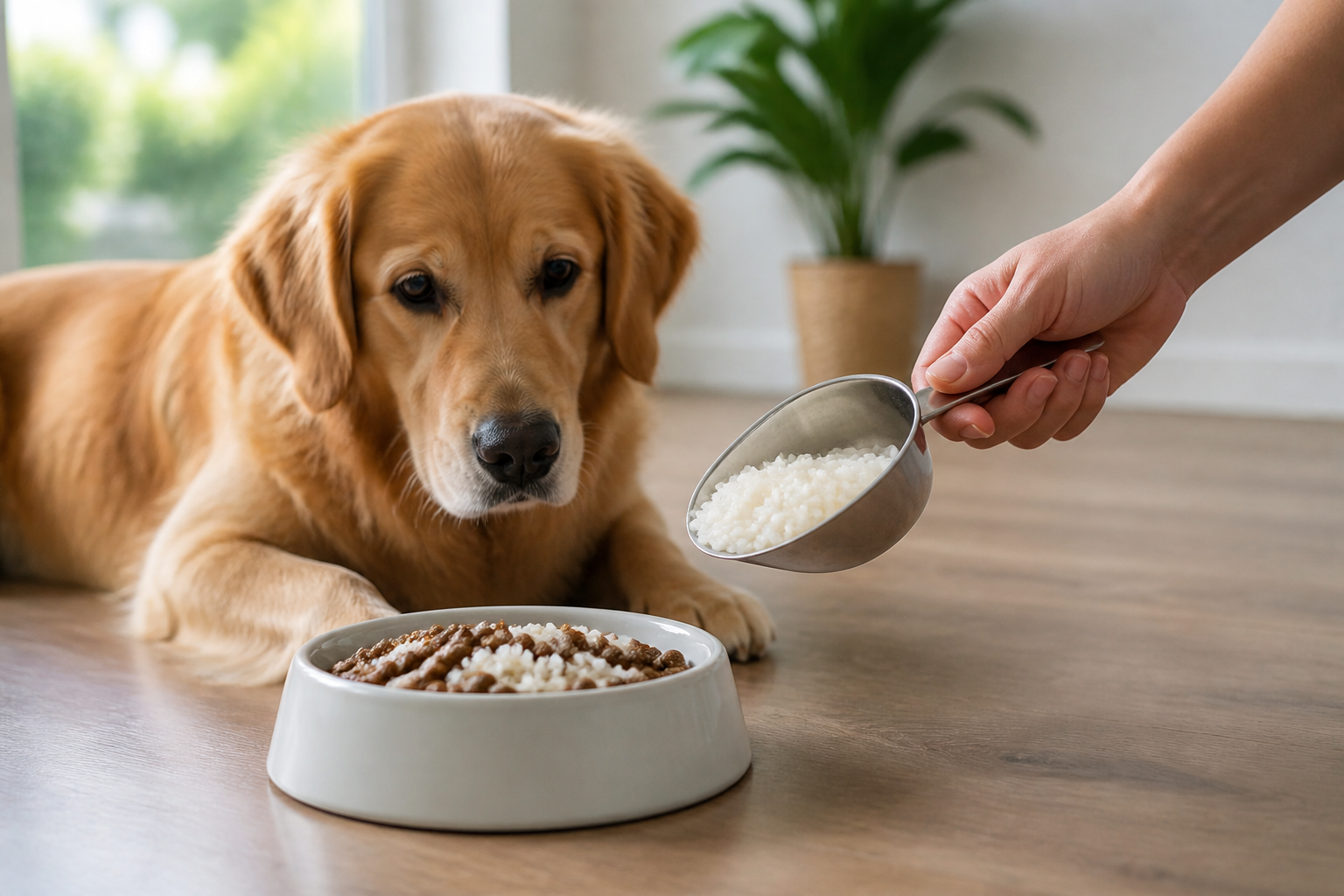
You might be standing in your kitchen right now, looking at a bag of rice and then at your dog's half-empty food bowl. Perhaps your pup has had a rumbly stomach lately, or maybe they have suddenly decided their regular food is not exciting enough. Using rice as a mixer is a common practice for many pet owners. It is a staple in many human diets and is generally safe for our canine companions.
At BaxterBoo, we know that what you put in the bowl matters for your dog's long-term health. While rice can be a helpful addition, it is important to understand how to balance it with their regular meals. This post covers the benefits of mixing rice with dry dog food, the differences between white and brown rice, and how to keep the meal nutritionally complete. Mixing rice into dry food is safe when done correctly and can provide a needed boost during digestive transitions.
Why Mix Rice with Dry Dog Food?
There are several reasons why you might consider adding rice to a bowl of dry kibble. Most owners use it as a short-term solution for specific health or behavioral needs. Understanding these reasons will help you decide if rice is the right choice for your dog today. You can also compare balanced formulas in our dog food category.
Soothing an Upset Stomach
The most common reason for feeding rice is to help with digestive upset. If your dog has a bout of diarrhea or a mild stomach bug, their digestive system needs something easy to process. Rice is very low in fat and high in starch. This combination helps bind the stool and provides a gentle source of energy without taxing the gut. Many veterinarians recommend a bland diet of rice and boiled chicken for a few days to help a pet recover. For additional guidance, read our tips for handling a dog's upset stomach.
Encouraging Picky Eaters
Some dogs go through phases where they lose interest in their dry food. This might be due to age, weather changes, or simply a desire for something new. Adding a spoonful of warm, cooked rice can change the texture and aroma of the meal. This small change is often enough to entice a picky eater to finish their bowl. It is a simple way to add variety without switching to a completely new brand of food, which could cause further stomach issues. If your dog regularly refuses kibble, our guide to dry food for picky eaters offers more ideas.
Helping Weight Management
Rice is often used as a filler to help a dog feel full. If your dog is on a calorie-restricted diet, they might feel hungry between meals. Adding a small amount of rice can provide volume and fiber. This helps them feel more satisfied while keeping the overall fat content of the meal low. However, you must be careful not to overdo the carbohydrates, as excess carbs can lead to weight gain rather than weight loss.
Key Takeaway: Rice is best used as a temporary tool for digestive health or as a small flavor enhancer. It should not replace the balanced nutrition of high-quality kibble.
White Rice vs. Brown Rice: Which is Best?
Not all rice is the same when it comes to your dog's nutrition. The choice between white and brown rice depends on your dog's current health status and why you are adding it to their diet.
The Benefits of White Rice
White rice has had the outer husk, bran, and germ removed. This makes it much lower in fiber than brown rice but also much easier to digest. Because it is highly processed, it has a high glycemic index. This means it can cause a quick spike in blood sugar levels.
White rice is the gold standard for dogs with active diarrhea or vomiting. It is very bland and provides immediate energy. If your dog has a sensitive stomach or is recovering from surgery, white rice is usually the safer choice. Most prescription diets for digestive health use white rice as a primary carbohydrate source.
The Benefits of Brown Rice
Brown rice is a whole grain. It still has the outer bran layer, which is where most of the nutrients and fiber live. It contains more vitamins and minerals, such as Vitamin D and B vitamins, compared to white rice.
Because of the high fiber content, brown rice is harder to digest. It is not a good choice for a dog with an upset stomach, as the fiber can actually make diarrhea worse. However, for a healthy dog with a strong digestive system, brown rice is a great daily addition. It helps maintain bowel regularity and keeps them feeling full for longer periods. Dogs with recurring digestive sensitivities may benefit from reviewing our guide to dog food for sensitive stomachs.
| Feature | White Rice | Brown Rice |
|---|---|---|
| Digestibility | Very High | Moderate |
| Fiber Content | Low | High |
| Nutritional Value | Lower | Higher |
| Glycemic Index | High | Low |
| Best Use Case | Upset Stomach | Daily Supplement |
How to Prepare Rice for Your Dog
If you decide to mix rice with dry dog food, the preparation is critical. What makes rice tasty for humans can be very dangerous for dogs. You must follow specific rules to ensure the meal is safe.
Keep it Completely Plain
Never add salt, butter, oil, or seasonings to your dog's rice. Ingredients like garlic and onions are toxic to dogs and can cause serious blood disorders. Even a small amount of onion powder can be harmful. Butter and oils add unnecessary fat, which can lead to pancreatitis in sensitive dogs. Cook the rice in plain water or a dog-safe, low-sodium bone broth.
Cook it Thoroughly
Undercooked rice is difficult for dogs to process. It can cause gas, bloating, and further stomach distress. Ensure the rice is soft and fully hydrated. For white rice, you typically use a two-to-one ratio of water to rice. Brown rice usually requires more water and a longer cooking time to soften the bran layer.
Let it Cool
Dogs often gulp their food without checking the temperature. Serving hot rice can lead to burns in the mouth or throat. Always allow the rice to reach room temperature before mixing it with the kibble. You can cook a large batch and store it in the refrigerator for up to three days, making it easy to add a spoonful to each meal.
Vet Tip: If you are preparing a bland diet for a sick dog, use a ratio of two parts rice to one part lean protein. Consult your veterinarian if your dog's digestive symptoms last longer than 24 to 48 hours.
The Importance of Nutritional Balance
Adding rice to a meal is not just about adding bulk. It changes the nutritional profile of the entire bowl. Commercial dry dog foods are formulated to be "complete and balanced." This means they contain the exact ratios of protein, fat, vitamins, and minerals your dog needs. When you add rice, you are adding carbohydrates without adding those other essential nutrients. For more help evaluating balanced formulas, read our guide to choosing dry dog food.
The 10% Rule for Extras
Most veterinarians recommend that "extras" or toppers should make up no more than 10% of your dog’s total daily calories. If you add rice, you must reduce the amount of kibble you serve. If you simply add rice on top of a full serving of dry food, your dog will likely gain weight over time.
Managing Portions
Because rice is energy-dense, a little goes a long way. Use a measuring cup rather than a random spoon to keep track of what your dog is eating. This is especially important for small breeds where even an extra tablespoon of rice can represent a large percentage of their daily caloric intake.
Step 1: Calculate the daily calorie needs. / Talk to your vet to find out exactly how many calories your dog should eat based on their age and activity level.
Step 2: Measure the rice. / Decide on the portion size, ensuring it stays under that 10% threshold for daily extras.
Step 3: Subtract the kibble. / Reduce the amount of dry food by a corresponding amount of calories to keep the meal balanced.
Step 4: Mix thoroughly. / Stir the rice into the kibble so your dog cannot pick out only the rice and leave the nutritious dry food behind.
Potential Risks and Considerations
While rice is a safe food for most dogs, there are specific situations where you should be cautious. Not every dog reacts to grains the same way.
Diabetic Dogs
Rice is a carbohydrate that breaks down into sugar. For a dog with diabetes, white rice can cause dangerous spikes in blood glucose. If your dog is diabetic or pre-diabetic, you should never add rice to their food without a direct recommendation from your vet. They may suggest a high-fiber, low-glycemic alternative instead.
Weight Gain and Obesity
Carbohydrates that are not used for energy are stored as fat. If your dog is already overweight, adding rice can worsen the problem. Obesity in dogs leads to joint issues, heart disease, and a shorter lifespan. If you use rice to help a dog feel full, you must be very precise with the calorie trade-off.
Grain Allergies and Sensitivities
Although rice is generally considered hypoallergenic compared to wheat or corn, some dogs still have sensitivities to grains. If you notice your dog itching, developing red skin, or having increased gas after eating rice, they may have an intolerance. In these cases, you might look for grain-free toppers or alternative binders like canned pumpkin.
Key Takeaway: Always monitor your dog for changes in weight, energy, or skin condition when introducing a new ingredient like rice.
When Rice Isn't Enough: Prescription Diets
Sometimes, a simple bowl of rice and kibble is not enough to manage a dog's health. For chronic conditions like severe food allergies, kidney disease, or persistent digestive issues, your dog may need a specialized prescription diet. These foods are formulated with precise ingredients to manage specific medical concerns.
Our dog pharmacy carries a wide range of prescription pet medications and products. Through our partnership with Pet's Choice, we offer trusted brands like Royal Canin, Farmina Vet Life, and Hill's. These diets often use highly processed rice or alternative starches that are even easier to digest than home-cooked rice.
If your vet suggests a prescription diet, you can easily manage the transition through us. We carry over 500 brands and offer a variety of ways to save on your pet's ongoing health needs. For regular items like prescription food or monthly preventatives, our Autoship programme provides recurring delivery with savings on your first order. This ensures you never run out of the specific food your dog needs to stay healthy.
Bottom line: While home-cooked rice is a great short-term fix, chronic health issues often require the clinical precision of a prescription diet from a professional pharmacy.
Maintaining Consistency in the Feeding Routine
Dogs are creatures of habit. Their digestive systems function best when they eat the same thing at the same time every day. Rapid changes to their diet can actually cause the very stomach upset you are trying to fix. For more information about gradual food changes, see our guide to switching from dry to wet dog food.
Gradual Transitions
If you plan to make rice a regular part of your dog's diet, introduce it slowly. Start with just a teaspoon for small dogs or a tablespoon for larger dogs. Watch their stool consistency over the next 48 hours. If everything looks normal, you can slowly increase the amount until you reach the desired portion.
Quality Matters
The quality of the dry food you are mixing the rice with is just as important as the rice itself. We carry premium brands like NutriSource, Stella and Chewy's, and Open Farm. These brands use high-quality proteins and avoid unnecessary fillers. When you start with a nutrient-dense base, adding a little rice as a topper is much safer for the dog's overall health.
Vet Tip: Keep a "food diary" for your pet. Note any additions like rice and track how their energy and digestion change. This information is incredibly helpful for your vet during annual checkups.
Shopping for Your Dog's Needs
Whether you are buying a fresh bag of high-protein kibble or looking for supplements to support your dog's joints, we are here to help. We have been operating since 2006, and our warehouse in Vernon Hills is stocked with products handpicked by people who genuinely care about pets.
If you are looking for ways to get the most value out of your purchases, consider joining our MVP Rewards program. You can earn up to 5% back on your purchases, which helps make high-quality pet care more affordable. For those managing long-term health issues that require more than just a rice-and-kibble mix, our partnership with FIGO Pet Insurance can provide extra peace of mind for unexpected vet visits.
Summary Checklist for Mixing Rice
- Use white rice for upset stomachs.
- Use brown rice for healthy dogs needing extra fiber.
- Always cook rice plainly with no salt, oil, or seasonings.
- Ensure rice is fully cooked and cooled to room temperature.
- Keep rice portions under 10% of total daily calories.
- Reduce the amount of kibble to prevent weight gain.
- Consult a vet if digestive issues persist for more than two days.
Conclusion
Mixing rice with dry dog food is a practical and safe way to handle minor digestive issues or entice a picky eater. By choosing the right type of rice and preparing it without harmful additives, you can support your dog's health right from your own pantry. Remember that balance is the most important factor. Always adjust the amount of dry food to account for the extra calories from the rice.
At BaxterBoo, we want to make sure you have everything you need for every stage of your dog's life. From premium kibble to FDA-approved medications from our pharmacy, we offer the expertise and selection to keep your pet thriving. If you are a new customer, don't forget to take advantage of our $10 reward on your first order of $39 or more when you sign in at checkout. Our goal is to provide the products and guidance you need to be the best pet parent possible.
FAQ
How much rice can I safely add to my dog's dry food?
Most veterinarians recommend that rice and other toppers should not exceed 10% of your dog's daily caloric intake. For a medium-sized dog, this is often around a quarter to a half cup of cooked rice per day. Always remember to reduce the amount of kibble you serve to compensate for the calories in the rice.
Is it okay to feed my dog rice every day?
While rice is safe, feeding it every day can lead to a nutritional imbalance if not managed carefully. Rice is high in carbohydrates and lacks the essential proteins and minerals found in a complete dog food. If you want to feed rice daily, ensure it is a small portion and that your dog is maintaining a healthy weight.
Can I add salt or butter to the rice for my dog?
No, you should never add salt, butter, oils, or seasonings to rice intended for your dog. Salt can lead to dehydration, and butter adds unnecessary fats that can cause digestive issues like pancreatitis. Always serve the rice completely plain and boiled in water.
What should I do if my dog still has diarrhea after eating rice?
Rice is a helpful tool for mild cases, but it is not a cure for serious illness. If your dog's diarrhea persists for more than 48 hours, or if they show signs of lethargy and vomiting, you must contact your veterinarian. They may need to prescribe a specific medication or a prescription diet from a pharmacy to resolve the underlying issue.






