
 Save 15% on your 1st Autoship learn more

 Email us
 Live Chat
 FAQs
FAQs





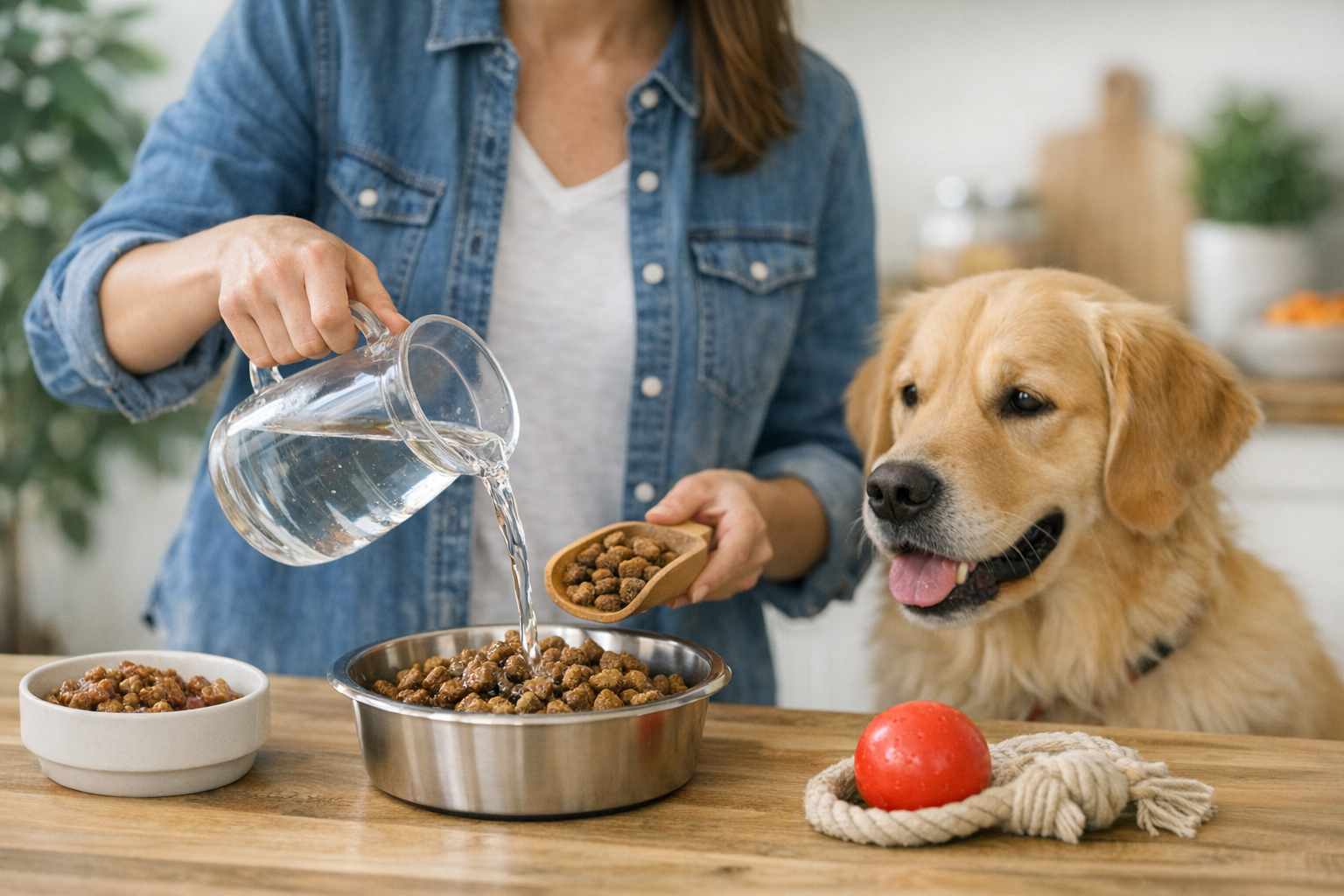
Introduction
You stand over your dog's bowl and look at the pile of dry, crunchy nuggets. Maybe your dog is a fast eater who gulps every meal. Perhaps you have a senior pet who seems to struggle with the hard texture. You might even have a picky eater who sniffs the bowl and walks away. This leads many pet owners to a simple question: can you add water to dry dog food? At BaxterBoo, we hear this question often from customers looking to improve their pet's mealtime experience.
Adding moisture to kibble is a common practice that can offer significant health and behavioral benefits. This article covers why you might want to hydrate your dog's food, the potential risks involved, and the correct way to do it. We will also look at how this small change affects digestion, dental health, and weight management. Understanding these factors helps you decide if a splash of water is the right move for your dog's specific needs.
Quick Answer: Yes, you can and often should add water to dry dog food. It improves hydration, enhances aroma for picky eaters, and makes kibble easier to chew for seniors or puppies.
Why Hydration Matters for Dogs
Most dry dog foods contain only about 10 percent moisture. In the wild, a dog's ancestors would eat a diet consisting of fresh prey, which is naturally high in water. While modern kibble is nutritionally complete, it is very low in fluids. This means your dog must drink significantly more water from their bowl to stay properly hydrated. If you want to compare meal options, start with our dog food category.
When a dog does not get enough fluids, their body has to work harder to process food. Water is the foundation for almost every bodily function. It helps with nutrient absorption, temperature regulation, and joint lubrication. If a dog is chronically slightly dehydrated, it can put extra stress on their internal organs. Adding water directly to the food ensures they get a baseline of moisture with every single meal.
Supporting Kidney and Urinary Health
The kidneys are responsible for filtering waste from the blood and excreting it through urine. This process requires a steady supply of water. Dogs who eat strictly dry food without enough supplemental water may be at a higher risk for urinary tract issues or kidney stones.
By adding water to dry food, you increase the volume of urine your dog produces. This helps flush the bladder and kidneys more effectively. For dogs with a history of crystals or recurring infections, this extra moisture is a simple and effective preventative measure. If your vet recommends a therapeutic diet, our pet pharmacy is a helpful place to look.
Vet Tip: If your dog has a history of urinary or kidney issues, consult your veterinarian about their specific hydration needs. Our pharmacy carries FDA-approved prescription diets and medications through our partnership with Pet's Choice that can help manage these chronic conditions.
Enhancing Palatability for Picky Eaters
If your dog turns their nose up at their dinner, the problem might be the smell. Dogs experience the world primarily through their noses. Dry kibble has a relatively mild scent because the fats and proteins are locked inside a hard, processed pellet.
When you add warm water to dry food, it triggers a physical reaction. The heat and moisture release the fats and aromas within the kibble. This makes the meal smell much more like meat and less like a processed biscuit. For a picky eater or a dog with a reduced sense of smell due to age, this extra aroma can be the difference between an empty bowl and a full one. A simple topper can also make a difference, so our food topper collection is worth exploring.
The Science of Scent
Warmth helps volatile organic compounds in the food become airborne. These are the molecules that carry scent. By using warm water, you create a "gravy" effect that coats the kibble and spreads the flavor more evenly. This is especially helpful if you are trying to transition your dog to a new food or if they are recovering from an illness and have a low appetite.
Benefits for Senior Dogs and Puppies
Age plays a huge role in how a dog handles dry food. Puppies have small, sensitive teeth and developing jaws. Senior dogs often suffer from dental disease, missing teeth, or sore gums. For these dogs, crunching down on hard kibble can be physically painful.
Softening the Texture
Adding water softens the kibble until it has a sponge-like or mushy consistency. This eliminates the need for heavy chewing. For a puppy, this makes the transition from milk or wet food to solids much smoother. For a senior, it ensures they can still eat their favorite high-quality dry food without the discomfort of hard textures. If your dog also tends to gulp meals, our slow feed dog bowls can help slow things down.
Key Takeaway: Softening kibble with water is an excellent way to support pets with dental sensitivities, ensuring they receive proper nutrition without physical discomfort.
Digestion and Weight Management
How your dog eats is just as important as what they eat. Adding water can change the physical way your dog interacts with their meal, which leads to better digestive outcomes.
Preventing Bloat and Fast Eating
Many dogs, especially large breeds, tend to "inhale" their food. This fast eating can cause them to swallow excess air, which may contribute to digestive upset or a dangerous condition called bloat. Adding water to the bowl makes it impossible for a dog to gulp dry nuggets quickly. They have to lap up the water and navigate the softened food, which naturally slows down their eating pace. If you want more ideas for that problem, our guide to slow feed dog bowls is a practical next step.
Promoting Satiety
If your dog is on a weight loss plan, they might feel hungry even after eating their calculated calories. Dry food is very nutrient-dense and takes up little space in the stomach. Adding water increases the physical volume of the meal without adding a single calorie. This helps the dog feel "full" or satisfied, which can reduce begging and searching for scraps between meals. For a deeper look at balancing moisture and portions, read How to Switch From Dry to Wet Dog Food.
Potential Drawbacks to Consider
While adding water is generally beneficial, it is not without risks. You must be mindful of how you handle hydrated food to keep your dog safe.
The Risk of Spoilage and Bacteria
Dry kibble is designed to be shelf-stable at room temperature. Once you add water, you have created a moist environment that is perfect for bacterial growth. If you leave watered-down kibble out for hours, it can spoil. This is a significant concern in warm weather or in homes with high humidity.
Impact on Dental Health
There is a long-standing belief that dry kibble helps clean a dog's teeth by scraping away plaque. While most modern kibble is too brittle to provide much "brushing" action, some dental-specific diets are designed for this purpose. If your dog is on a prescription dental diet, adding water will likely negate the mechanical cleaning benefits of the food. For more oral-care ideas, see 10 Best Dental Chews for Dogs.
Bottom line: Hydrated kibble must be treated like wet food and should never be left out for more than 45 to 60 minutes.
How to Correctly Add Water to Dry Dog Food
To get the most benefit, you should follow a specific process when hydrating your dog's meal. Simply dumping a gallon of cold water on the food right before serving is not the best approach.
Step-by-Step Transition
Step 1: Determine the ratio. / Start with a small amount of water. A good rule is one part water to two parts kibble. For example, use a half-cup of water for every cup of dry food.
Step 2: Choose the temperature. / Use warm water, not boiling. Boiling water can destroy some of the heat-sensitive vitamins and minerals in premium brands like Farmina or Royal Canin. Warm water is best for releasing aromas.
Step 3: Allow time to soak. / Let the food sit for 2 to 5 minutes. This allows the water to penetrate the center of the kibble. If you want a complete mush, you may need to wait 10 minutes.
Step 4: Serve and monitor. / Give the bowl to your dog and see how they react. Some dogs prefer a "soup" consistency, while others like a slightly softened crunch.
Step 5: Clean the bowl. / Once your dog finishes, wash the bowl with soap and water. Dried-on mush is difficult to clean and can harbor bacteria for the next meal.
Exploring Other Hydration Options
Water is the most accessible choice, but it is not the only way to add moisture to a dog's diet. At BaxterBoo, we carry a wide variety of mixers and toppers that can provide even more nutritional value. If you like premium mix-ins, browse our selection of Stella & Chewy's products.
Bone Broths and Goat Milk
Instead of plain water, you can use pet-safe bone broth. This adds collagen and amino acids that support joint health. Unsalted, onion-free bone broth is a high-value treat that makes kibble irresistible. Goat milk is another popular option, providing probiotics that can help with sensitive stomachs.
Mixing with Canned Food
If your budget allows, mixing dry food with a high-quality canned food from brands like Tiki Cat or Stella and Chewy's is a great middle ground. This provides the moisture of a wet diet with the convenience and cost-effectiveness of kibble. This method is often called "topper feeding." For another helpful angle, read Can You Mix Dry Dog Food With Wet?.
Health and Safety Precautions
Before you change your dog's feeding routine, there are a few safety steps to keep in mind. Every dog is an individual, and what works for a neighbor's dog might not work for yours.
Consulting Your Veterinarian
If you are adding water because your dog is lethargic, refuses to eat, or seems dehydrated, you must visit a vet first. These can be signs of serious underlying health issues. While adding water helps with general wellness, it is not a cure for medical conditions.
Monitoring Digestive Response
Some dogs have very sensitive stomachs. A sudden change in the texture or moisture content of their food can lead to loose stools. When you first start adding water, do it gradually over several days. This allows their digestive system to adjust to the increased fluid intake. If you are shopping for repeat meals, our Autoship programme can make it easier to stay stocked.
Vet Tip: Always consult your vet before making major changes to a dog's diet, especially if they are on a therapeutic or prescription food. Our pharmacy through Pet's Choice can provide these specialized diets if your vet recommends them.
Summary of the Hydration Method
Adding water to dry food is a simple, cost-free way to improve your dog's health. It addresses hydration, palatability, and physical comfort for older pets. As long as you follow basic safety rules regarding food spoilage and cleanliness, it is a very low-risk habit.
- Hydration: Supports kidney and urinary function.
- Palatability: Releases aromas that entice picky eaters.
- Comfort: Softens food for puppies and seniors.
- Safety: Slows down fast eaters and helps with weight management.
By paying attention to your dog's preferences and your veterinarian's advice, you can turn a boring bowl of dry kibble into a hydrating, flavorful meal. If you want to save on regular food purchases, the MVP Rewards programme is another smart option.
Conclusion
Deciding whether to add water to your dog's dry food depends on their unique needs. If you have a healthy dog who drinks plenty of water and enjoys their crunch, you might not need to change a thing. However, for those managing picky appetites, dental issues, or weight goals, moisture is a powerful tool. We recommend starting with a small amount of warm water to see how your dog reacts. If you find they enjoy the change, you can explore other options like bone broths or wet food toppers.
Remember that any significant change in eating habits or hydration should be discussed with a professional. Our team at BaxterBoo is here to help you find the best food, toppers, and even prescription medications through our pet pharmacy to keep your dog thriving. Visit our dog food category or check out How to Wet Dry Dog Food for Better Digestion and Hydration to keep learning.
FAQ
Does adding water to dry dog food cause it to spoil faster?
Yes, adding water creates a moist environment where bacteria can grow quickly. You should never leave moistened kibble out for more than an hour. If your dog does not finish the meal within that timeframe, you should discard the leftovers and wash the bowl thoroughly to prevent contamination.
Will adding water to my dog's food help them lose weight?
It can help by increasing the volume of the food, which makes your dog feel fuller. The water adds bulk to the stomach without adding calories, which can help satisfy a dog who is on a calorie-restricted diet. However, it only works if you are still feeding the correct amount of dry food for their target weight.
Can I use hot water to soften the kibble faster?
You should use warm water rather than hot or boiling water. Extremely hot water can break down some of the essential vitamins and nutrients that are sprayed onto the outside of the kibble. Additionally, hot water can cause painful burns to your dog's mouth or throat if they try to eat before it cools down.
Is it okay to add water to a puppy's dry food?
Adding water is often recommended for puppies who are transitioning from milk to solid food. Their small teeth and developing jaws can struggle with very hard pellets. Soaking the kibble makes it much easier for them to chew and digest, ensuring they get all the nutrients they need for growth.






