
 Save 15% on your 1st Autoship learn more

 Email us
 Live Chat
 FAQs
FAQs





Introduction
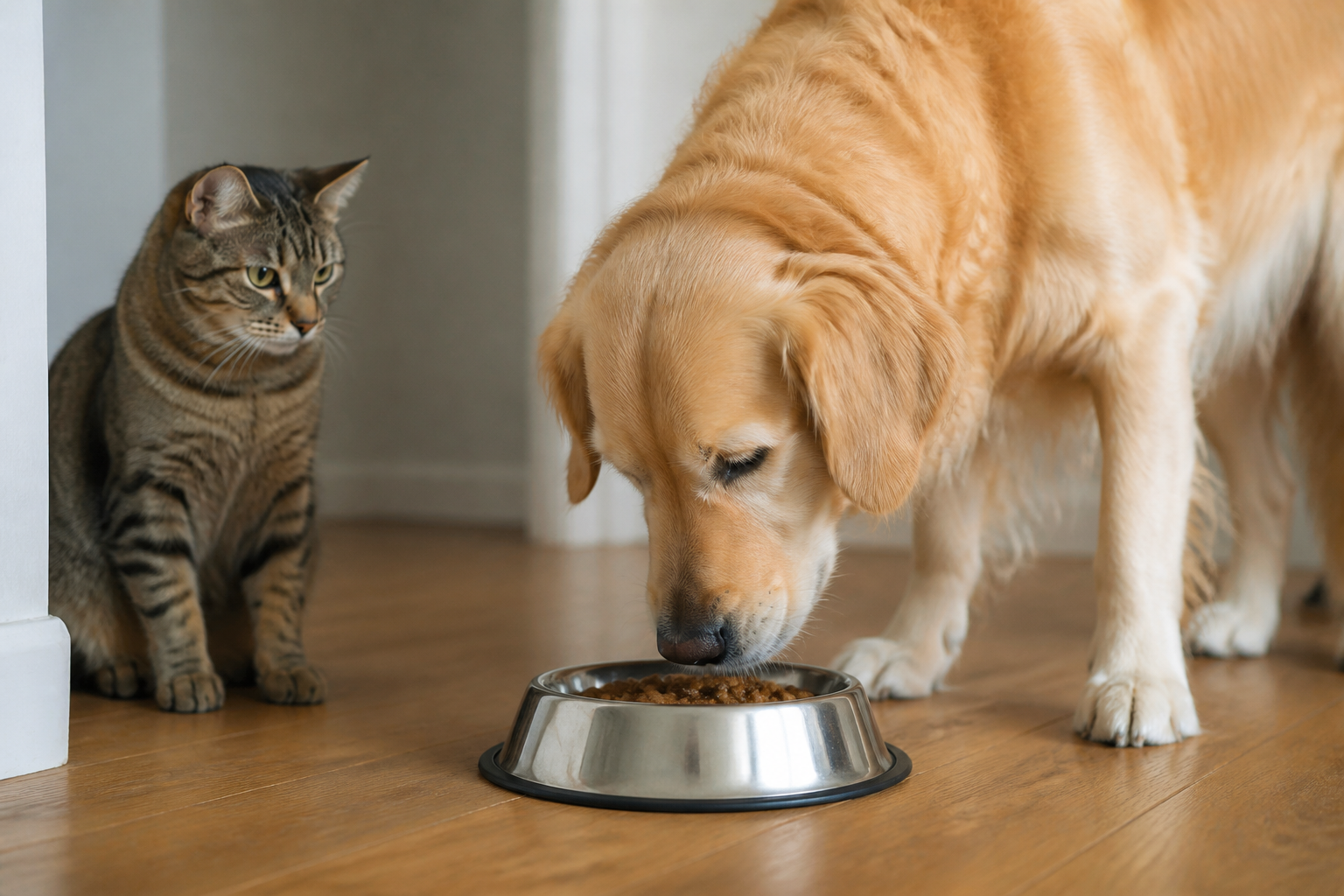
It happens to the best of us. You reach into the pantry only to realize the dog food bag is empty, but your cat has a full bowl of kibble. Or perhaps you have a sneaky pup who views the feline feeding station as an all you can eat buffet. At BaxterBoo, we know that managing a multi-pet household comes with unique challenges. While it might seem convenient to let them share, dogs and cats have very different nutritional needs. This article explores the risks of feeding cat food to dogs, the nutritional science behind the two diets, and how to keep your dog out of the cat bowl for good. While a single bite might not be a crisis, long term feeding can lead to serious health concerns.
The Nutritional Divide Between Dogs and Cats
The most important thing to understand is that dogs and cats belong to different biological categories regarding their diet. Cats are obligate carnivores. This means their bodies require nutrients that are only found in animal tissue. They have a strict biological necessity for high levels of protein and specific amino acids.
Dogs are classified as omnivores. While they love meat and thrive on animal protein, they are also designed to digest plant based materials and grains. Their bodies are much more flexible in how they convert nutrients into energy. Because of these differences, manufacturers formulate cat food and dog food with completely different chemical balances.
Protein and Fat Concentrations
Cat food is significantly more calorie dense than dog food. If you look at the labels of the brands we carry, such as Royal Canin or Farmina, you will notice a stark difference in the guaranteed analysis. Most adult dog foods require a minimum protein level of around 18 percent. Adult cat foods typically start at 26 percent or higher.
The fat content is also much higher in feline diets. Fat makes the food highly palatable, which is why your dog likely treats cat kibble like a high value reward. However, a dog's digestive system is not always equipped to handle that much fat on a regular basis.
Essential Amino Acids and Vitamins
There are several nutrients that cats cannot produce on their own, but dogs can. Taurine is a primary example. Cats must have taurine added to their diet to prevent heart and eye diseases. Most dogs can synthesize their own taurine, so dog food often contains different levels.
Vitamin A is another major factor. Cats cannot convert beta carotene from plants into Vitamin A, so they need preformed Vitamin A from animal sources. Dogs can convert plant based precursors. If a dog eats cat food regularly, they may end up with an excess of certain vitamins which can become toxic over time.
Key Takeaway: Dogs are omnivores and cats are obligate carnivores. This biological difference means cat food is too concentrated in protein and fat for a dog's daily needs.
Why Dogs Find Cat Food So Irresistible
If you have ever wondered why your dog ignores their own bowl to go after the cat's dish, the answer is simple. It tastes better to them. Because cat food is packed with animal fats and proteins, it has a much stronger aroma and a richer flavor profile. To a dog, cat kibble is the equivalent of a human eating a double cheeseburger instead of a salad.
The small size of cat kibble can also be appealing to some dogs. It is crunchy, easy to eat, and smells like a treat. This creates a behavioral problem. Once a dog realizes that the cat has the "fancy" food, they may start to become picky about their own meals. This can lead to a cycle of food refusal where the dog waits for a chance to raid the cat's bowl instead of eating their balanced dog food.
Short Term vs. Long Term Consequences
If your dog snags a few pieces of cat food that fell on the floor, there is generally no reason to panic. For a healthy adult dog, a small amount of cat food is unlikely to cause immediate harm. However, problems arise when the behavior becomes a habit or when a large amount is consumed at once.
Immediate Digestive Upset
The most common issue after a dog raids the cat food is gastrointestinal distress. Because the food is so rich, it can shock the dog's system. You might notice:
- Vomiting
- Loose stools or diarrhea
- Excessive gas
- Abdominal bloating
If your dog exhibits these symptoms, it is important to monitor them closely. Most minor cases of "garbage gut" or dietary indiscretion resolve within 24 hours. If the symptoms persist or your dog becomes lethargic, a visit to the veterinarian is necessary. For general products that support your pet's health needs, browse our dog healthcare category.
Long Term Health Risks
When cat food becomes a regular part of a dog's diet, the risks move from "upset tummy" to "chronic disease." The high calorie count in cat food almost inevitably leads to obesity in dogs. Weight gain puts extra stress on a dog's joints and can lead to mobility issues, especially in senior pets.
The high protein levels are also a concern for dogs with underlying health conditions. Dogs with kidney or liver disease need carefully managed protein levels. Excess protein can put a significant strain on these organs, potentially accelerating the progression of the disease. For more guidance on selecting everyday nutrition, read our guide to choosing the best dry dog food.
Vet Tip: If your dog has a history of sensitive stomach or organ issues, even a small amount of cat food can be dangerous. Always consult your veterinarian if your dog consumes something outside their prescribed diet.
The Danger of Pancreatitis
One of the most serious risks of a dog eating cat food is pancreatitis. This is an inflammatory condition of the pancreas that is often triggered by the consumption of high fat foods. Because cat food is so much higher in fat than dog food, it is a common culprit.
Pancreatitis can be acute or chronic. In acute cases, the dog may experience severe abdominal pain, repeated vomiting, and a "hunched" posture. This is a medical emergency. If left untreated, pancreatitis can be fatal or lead to lifelong digestive complications.
Our pharmacy at BaxterBoo offers various medications and prescription diets for dogs recovering from pancreatitis. Through our partnership with Pet's Choice, we provide FDA approved medications that your vet may prescribe to manage inflammation or nausea. If your dog is prone to these issues, having a reliable source for prescription care is vital.
What to Do If Your Dog Eats a Large Amount of Cat Food
If you come home to find an empty bag of cat food and a very round looking dog, take the following steps:
Step 1: Remove all remaining food. / Ensure the dog cannot access any more cat food or their own dinner for a few hours.
Step 2: Monitor for distress. / Watch for signs of heavy panting, pacing, or repeated vomiting. These can indicate bloat or severe indigestion.
Step 3: Skip the next meal. / Let your dog's digestive system rest. Skipping one meal helps the body process the excess calories and fat.
Step 4: Check their hydration. / Ensure they have plenty of fresh water, as the high salt and protein content can increase thirst.
Step 5: Call the vet if symptoms worsen. / If the dog cannot keep water down or seems to be in pain, do not wait.
Quick Answer: If a dog eats a large amount of cat food, they should skip their next meal to allow their stomach to settle. Monitor them for 24 hours for signs of vomiting or pain, and contact a vet if they seem lethargic.
How to Prevent Cat Food Raiding
The best way to handle the "can dogs eat cat food" dilemma is to prevent it from happening in the first place. You can use several strategies to keep your pets in their own lanes during mealtime.
Elevated Feeding Stations
Since cats are natural climbers, one of the easiest solutions is to move the cat's bowl to a higher surface. A sturdy counter, a dedicated cat tree, or a high shelf can keep the food out of reach for most dogs. This also gives the cat a sense of security while they eat, as they do not have to worry about the dog hovering over them.
Microchip and RFID Feeders
For households with dogs that are the same size as cats, or for dogs that are talented jumpers, technology can help. There are feeders available that only open when they sense a specific microchip or an RFID tag on a pet's collar. This ensures that only the cat can access the cat food. While these are an investment, they provide total peace of mind.
Scheduled Mealtimes
Free feeding (leaving food out all day) is the most common way dogs get into cat food. By switching to scheduled mealtimes, you can control the environment. Feed your dog in one room and your cat in another. Once the cat is finished, pick up the bowl immediately. This eliminates the temptation for the dog to go "vacuuming" for leftovers. Learn more about feeding routines with our article on dry and wet dog food.
Physical Barriers
Baby gates with small cat doors are excellent tools. These gates allow the cat to pass through to a laundry room or kitchen area while keeping the dog on the other side. This is particularly useful for senior cats who may move slower and need more time to finish their meals without being bullied by a hungry dog.
Better Alternatives for "In a Pinch" Situations
If you truly run out of dog food and cannot get to the store, there are better options than reaching for the cat kibble. Most people have ingredients in their kitchen that can make a safe, temporary meal for a dog.
- Plain boiled chicken (no skin, no bones, no seasoning)
- White or brown rice
- Canned pumpkin (plain, not pie filling)
- Boiled carrots or green beans
- Scrambled eggs (no butter or salt)
A mixture of chicken and rice is much gentler on a dog's stomach than the high fat concentration of cat food. It will keep them full until you can restock their regular food. To ensure you never run out again, we recommend our Autoship program. You can set your favorite brands like NutriSource or Stella and Chewy's to arrive at your door on a schedule. This saves you money and prevents the "emergency cat food" scenario entirely.
When Cat Food Might Be Recommended
In very rare cases, a veterinarian might actually suggest a small amount of cat food for a dog. This is usually seen in senior dogs or dogs battling terminal illnesses who have lost their appetite. Because cat food is so aromatic and flavorful, it can sometimes entice a dying pet to eat when nothing else works.
However, this should only be done under strict veterinary guidance. For a healthy dog, the goal should always be a balanced canine diet. If your dog is a picky eater, we carry a wide variety of meal toppers and wet foods that are designed for dogs and are much safer than switching to cat food. For additional nutrition ideas, see our article about whether dry food is enough for dogs.
Managing Your Pet's Weight After Dietary Mistakes
If your dog has been sneaking cat food for a while, they may have put on some extra weight. Canine obesity is a leading cause of diabetes and heart strain. At BaxterBoo, we offer a range of weight management solutions, including specialized diets like Farmina Vet Life.
Managing a pet's weight involves more than just cutting back on kibble. It requires a commitment to a consistent feeding schedule and avoiding high calorie table scraps or cat food treats. For more practical guidance, read this pet weight management guide.
Bottom line: While a single bite of cat food is not a medical emergency, the high fat and protein levels make it a dangerous long term choice for any dog.
Summary of Feeding Differences
| Nutrient | Dog Food Requirement | Cat Food Requirement | Why it Matters |
|---|---|---|---|
| Protein | Lower (approx. 18%) | Higher (approx. 26%) | Excess protein strains dog kidneys |
| Fat | Moderate | Very High | High fat triggers pancreatitis in dogs |
| Taurine | Not required (dogs make it) | Essential | Cats must have it for heart health |
| Vitamin A | Can convert from plants | Must come from animals | Excess can be toxic to dogs |
Expert Guidance and Quality Care
At BaxterBoo, we have been helping pet parents since 2006. We understand that every pet is an individual with specific needs. Our warehouse in Vernon Hills is stocked with over 500 brands because we believe in providing variety and quality. Whether you need a slow feeder to keep your dog busy while the cat eats, or you need to access our pharmacy for prescription medications, we are here to support you.
Our MVP Rewards program also helps you earn points on every purchase, making it easier to afford the high quality food your pets deserve. By choosing the right gear and the right nutrition, you can keep your home harmonious and your pets healthy.
Conclusion
Can you feed a dog dry cat food? The answer is a cautious "only in an emergency." While cat food is not toxic in the way chocolate or grapes are, its nutritional profile is fundamentally wrong for a dog's body. The high fat content poses a real risk of pancreatitis, and the calorie density leads to unhealthy weight gain. To keep your pup feeling their best, stick to high quality dog food and use physical barriers or elevated feeding to keep the cat's dinner safe.
- Separate pets during feeding time to prevent bowl raiding.
- Use elevated bowls or microchip feeders for feline meals.
- Monitor your dog for signs of GI upset if they sneak cat food.
- Consult your vet if your dog consumes a large amount of fatty food.
Key Takeaway: Consistent consumption of cat food leads to nutritional imbalances and serious health risks like pancreatitis. Protect your dog by keeping species-specific food in the right bowls.
If you are worried about your dog's digestion or weight after a few too many cat food raids, check out our dog food category for support. For those looking to stay stocked up on the right nutrition, consider joining our Autoship program for regular, discounted deliveries.
FAQ
Can a dog die from eating cat food?
It is very unlikely for a dog to die from a single encounter with cat food. However, it can happen if the high fat content triggers a severe case of acute pancreatitis. If your dog shows signs of intense pain, persistent vomiting, or a bloated abdomen after eating cat food, seek emergency veterinary care immediately.
Why does my dog prefer cat food over their own?
Cat food is formulated with much higher levels of animal protein and fat than dog food. This makes it smell stronger and taste much richer to a dog's palate. To your dog, cat kibble is a high value treat, which is why they often ignore their own balanced meal to try and sneak a bite from the cat.
Can I use cat treats as training rewards for my dog?
While a single cat treat won't hurt most dogs, it is not a good habit to start. Cat treats are very calorie dense and high in fat, which can contribute to obesity or digestive upset. It is better to use treats specifically designed for dogs, such as freeze dried liver or small training biscuits, which meet their nutritional needs.
What should I do if I run out of dog food and only have cat food?
If you are in a pinch, it is better to feed your dog a bland meal of boiled chicken and white rice rather than cat food. If you have no other choice, a single small serving of cat food is okay for one night. To prevent this from happening again, you can set up Autoship for your favorite dog food brands to ensure you always have a fresh bag on hand.






