
 Save 15% on your 1st Autoship learn more

 Email us
 Live Chat
 FAQs
FAQs





Introduction
You are standing over your dog’s bowl with a scoop of kibble in one hand and a can of wet food in the other. Perhaps your dog has become a bit picky lately. Or maybe you are looking for a way to help your senior dog stay hydrated without breaking your monthly budget on premium canned food. This common kitchen crossroads is one many pet owners face. At BaxterBoo, we talk to people every day who want to give their dogs the best possible mealtime experience while staying practical.
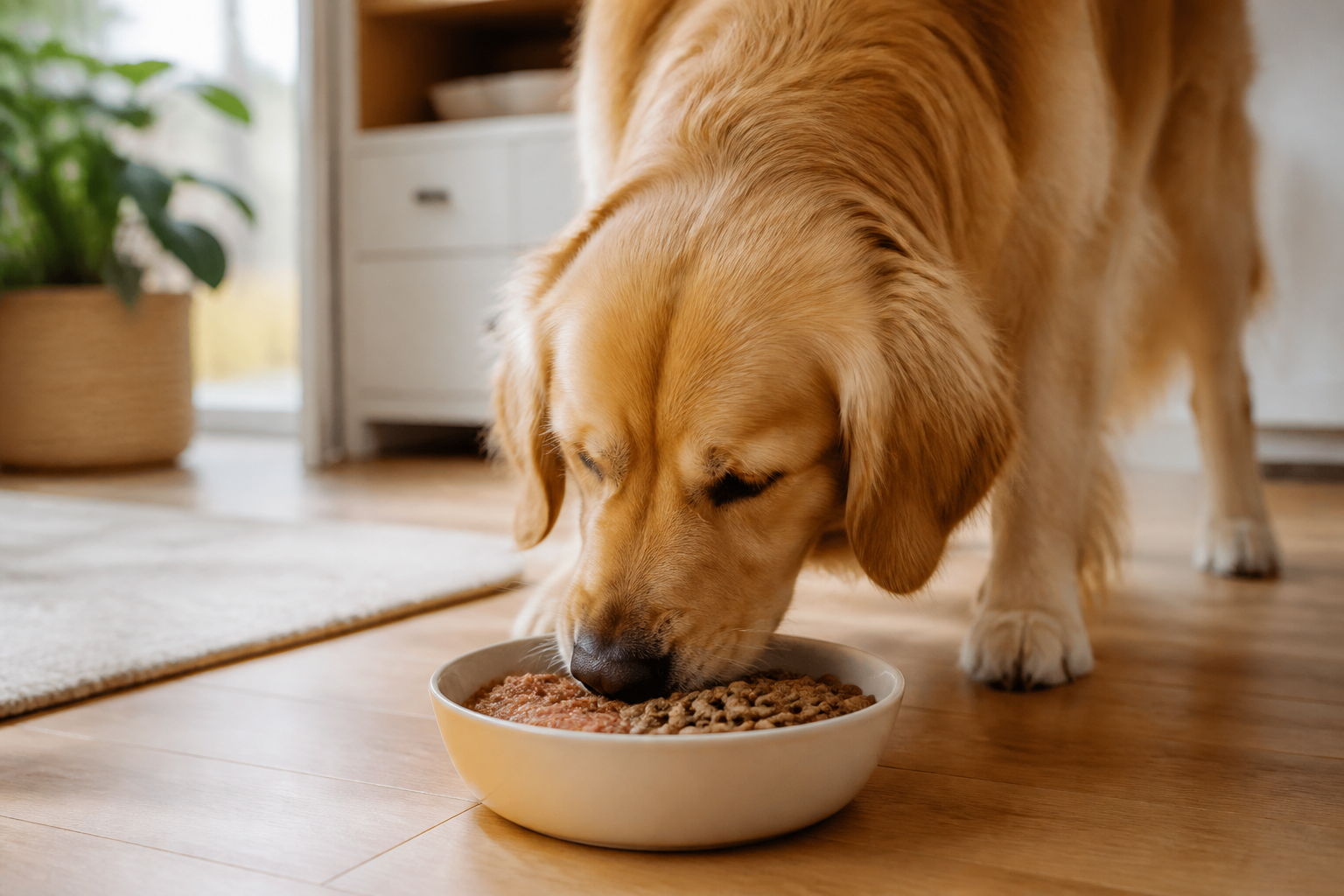
This article will cover the benefits of mixing these two formats, how to calculate the right portions, and the safety steps you need to follow. You will learn how a mixed diet supports hydration, dental health, and overall satisfaction. Mixing wet and dry food is a great way to offer variety, provided you balance the calories correctly.
Quick Answer: Yes, you can safely feed wet and dry dog food together as long as both are complete and balanced for your dog’s life stage. This practice, often called mixed feeding, improves hydration and palatability while remaining more cost-effective than an all-wet diet.
The Benefits of a Mixed Feeding Routine
Combining wet and dry food offers more than just a change in flavor. It brings together the unique nutritional and physical advantages of two different manufacturing processes. Dry kibble is known for its convenience and the mechanical scraping action that can help reduce plaque buildup. Wet food is prized for its high moisture content and intense aroma.
Most dry dog foods contain only about 10 percent to 12 percent water. In contrast, canned or pouch foods often consist of 75 percent to 80 percent moisture. For dogs that do not drink enough water from their bowls, adding wet food is a simple way to support kidney and urinary tract health. This is especially helpful during hot summer months or for active dogs that lose a lot of fluids. You can compare options in our dog food category.
The aroma of wet food is much stronger than that of dry kibble. This is because the canning process locks in the natural scents of meat and fats. If you have an older dog whose sense of smell is fading, a bit of wet food can spark an interest in eating that plain kibble cannot match. The softer texture also helps dogs with missing teeth or sensitive gums chew their meals more comfortably.
Why Texture and Variety Matter
Dogs experience the world through their senses. Eating the same hard pellets every day can lead to boredom for some pets. Adding a topper or mixing in a few spoonfuls of stew-style food provides different mouthfeels. You might find that your dog is more engaged with their meal when there are chunks of meat, gravy, and crunchy bits to navigate.
For more ideas about combining textures and serving styles, read our guide to mixing dry dog food with wet food.
Key Takeaway: Mixed feeding provides a balance of hydration from wet food and dental support from dry kibble. This combination can make meals more appealing to picky eaters and seniors with dental issues.
Calculating Portions and Calories
The biggest mistake pet owners make when mixing food is guessing the amounts. You cannot simply add a half-can of wet food to your dog’s normal serving of kibble. This will lead to significant overfeeding and weight gain. Wet and dry foods have very different caloric densities.
Kibble is a concentrated source of energy because the water has been removed. A cup of dry food might contain 400 calories. A similar volume of wet food might only contain 150 calories because so much of its weight is water. To keep your dog at a healthy weight, you must swap calories, not volume. Our guide to how much wet dog food equals one cup of dry can help you compare portions.
The 75/25 Rule of Thumb
A common starting point is the 75/25 ratio. This means 75 percent of the daily calories come from dry food and 25 percent come from wet food. Some owners prefer a 50/50 split. The choice often depends on your budget and your dog's specific needs.
Step 1: Determine your dog's total daily calorie requirement. You can find this on the back of your food bag or by asking your veterinarian.
Step 2: Decide what percentage of the meal will be wet food.
Step 3: Calculate the calories for that portion. If your dog needs 800 calories a day and you want 25 percent to be wet food, that is 200 calories of wet food.
Step 4: Find out how many calories are in one can of your chosen wet food. If a can is 400 calories, you would feed a half-can.
Step 5: Subtract those 200 calories from the 800-calorie total. You then feed 600 calories worth of dry kibble.
Vet Tip: If your dog is struggling with weight management or has a chronic condition like diabetes, consult your veterinarian before changing their feeding routine. They can help you calculate exact portions to ensure your dog stays within a safe caloric range.
Addressing Picky Eaters and Senior Needs
Picky eaters often hold out for "the good stuff." If you only feed kibble, they might walk away from the bowl. By mixing in wet food, you coat the kibble in a savory gravy. This makes it impossible for the dog to pick out only the wet bits. It ensures they get the full nutritional profile of both foods.
For senior dogs, the benefits are even more pronounced. Many older dogs suffer from early-stage kidney disease or dental decay. The extra moisture in wet food supports renal function. If your senior dog has lost some of the "crunch power" in their jaw, you can let the wet food sit on the kibble for a few minutes. This softens the hard pieces, making them easier to digest.
Our team at BaxterBoo often recommends this approach for dogs that have lost interest in their food during a recovery period. The high protein content and enticing smell of brands like Stella & Chewy's or Open Farm can jumpstart a sluggish appetite.
When Not to Mix Different Brands
While you can generally mix brands for a healthy adult dog, there are exceptions. If your dog is on a therapeutic or prescription diet, you should stay within the same brand and product line. These diets are formulated with very specific levels of minerals like phosphorus, sodium, and calcium.
If you mix a prescription dry food for urinary health with a grocery store wet food, you may negate the benefits of the medical diet. The grocery store food could contain minerals that encourage stone formation. Our pharmacy works closely with Pet's Choice to provide FDA-approved prescription diets and medications. If your vet has prescribed a specific food, always check if there is a matching wet version within that same therapeutic line. Browse our dog pharmacy when managing prescription needs.
Managing Food Sensitivities
If your dog has a sensitive stomach or known allergies, introducing a new format can be tricky. Even if the brand is the same, the ingredients in the wet version might differ slightly from the dry version. For example, the dry version might use chicken fat, while the wet version uses whole chicken. Always read the ingredient labels carefully if your dog reacts to specific proteins or grains.
- Check for hidden thickeners in wet food like carrageenan or guar gum.
- Look for limited ingredient recipes if your dog has skin issues.
- Stick to one protein source at a time (e.g., both foods are beef-based).
- Ensure both products are labeled for the same life stage.
Storage and Safety Best Practices
Dry food is very stable at room temperature. You can leave it in a bowl for the entire day without much worry. Wet food is the exact opposite. Once a can or pouch is opened, the food begins to oxidize and can attract bacteria or pests.
If you mix wet food into kibble, the 30-minute rule applies. If your dog has not finished the meal within half an hour, you should pick it up and discard the remains. You cannot leave mixed food out for "grazing" like you can with plain dry kibble. The moisture in the wet food will also make the dry kibble soggy and unappealing if left too long.
For additional guidance, see our tips for wetting dry dog food for better digestion and hydration.
Proper Refrigeration
Any unused portion of canned food must be covered and refrigerated immediately. Use a silicone can lid or transfer the food to an airtight glass container. Most wet foods should be used within three to five days of opening. If your dog is small and you only use a tablespoon at a time, consider buying smaller cans or pouches to ensure freshness.
When you take the food out of the fridge for the next meal, it will be cold. Many dogs prefer their food at room temperature or slightly warm. You can mix the cold wet food with a tiny bit of warm water before adding it to the kibble. This helps release the aromas and makes the meal more inviting.
Bottom line: Safety is paramount when handling wet food. Never leave a mixed meal out for more than 30 minutes, and always refrigerate open cans in airtight containers.
Transitioning to a Mixed Diet
Sudden changes in diet are the leading cause of loose stools and upset stomachs in dogs. Even if you are adding high-quality food, your dog’s digestive system needs time to adjust to the new moisture and fat levels. A slow transition over one to two weeks is the best way to avoid a mess. Our guide to switching from dry to wet dog food provides another transition framework.
Step 1: Start with a tiny topper. For the first two days, add just a tablespoon of wet food to the normal amount of kibble.
Step 2: Watch for changes. Check your dog’s stool consistency and look for signs of gas or discomfort.
Step 3: Begin the calorie swap. On day three, remove a small portion of kibble and replace it with an equivalent amount of wet food calories.
Step 4: Gradually increase. Every two days, increase the amount of wet food and decrease the kibble until you reach your target ratio.
If at any point your dog develops diarrhea, go back to the previous step. Stay there for a few more days before trying to increase the wet food again. Some dogs have very sensitive systems and may need a much slower transition than others.
Signs the Mix is Working
When a mixed diet is working well, you should see several positive signs. Your dog should be excited for mealtime. Their energy levels should remain stable. Most importantly, their coat should look shiny and their skin should be clear. If you notice your dog is gaining weight, you likely miscalculated the calories and need to reduce the dry food portion further.
- Consistent, firm stools.
- Improved hydration (less concentrated urine).
- Better appetite in picky eaters.
- Healthy weight maintenance.
The Role of the BaxterBoo Pharmacy
Maintaining your dog’s health often requires more than just a good diet. For dogs with chronic conditions like allergies, arthritis, or heart health needs, nutrition and medication go hand-in-hand. Our pharmacy offers a wide selection of FDA-approved medications through our partnership with Pet's Choice.
If your dog is on a prescription diet to manage a health issue, we can help you find the corresponding wet and dry versions. We carry trusted brands like Farmina Vet Life and Royal Canin. Using our pharmacy for your pet’s prescription food and medications allows you to manage everything in one place. This ensures you never run out of the specific formulas your dog needs to stay healthy.
Vet Tip: Always consult your veterinarian before mixing a prescription diet with any over-the-counter food. Even a small amount of "normal" food can interfere with the efficacy of a therapeutic diet designed to manage specific medical conditions.
Cost Considerations and Value
One of the main reasons pet owners choose a mixed diet is the cost. An all-wet diet for a large dog can be very expensive. However, an all-dry diet may not provide the hydration or palatability your dog deserves. Mixing the two provides a middle ground that is manageable for most budgets.
You can save money by using kibble as the nutritional foundation and wet food as the "flavor booster." Brands like NutriSource and PureVita offer high-quality kibble that pairs beautifully with wet toppers. By using a 75/25 ratio, a single case of wet food can last much longer. This allows you to buy higher-quality canned options than you could afford if you were feeding them exclusively.
At BaxterBoo, we also offer programs to help you save on your regular purchases. Our Autoship program provides savings on your first order and grants you a free MVP Gold membership. This is a great way to ensure you always have fresh wet food on hand without having to remember to reorder every week.
Summary of Mixed Feeding Success
Mixing wet and dry food is a practical way to enhance your dog's life. It offers the best of both worlds: the crunch of kibble and the rich moisture of canned food. As long as you are diligent about calorie counting and food safety, your dog can enjoy this variety at every meal.
Remember to keep the transition slow and watch your dog's weight. If you are managing a specific health condition, stay within the same brand for both food formats. And always keep fresh water available, even though the wet food provides extra hydration.
Key Takeaway: Success with mixed feeding comes down to calorie math and hygiene. Swap calories rather than adding them, and never leave wet food out to spoil.
Our team is here to help you navigate these choices. Whether you are looking for a new high-protein kibble or a specialized prescription diet through our pharmacy, we have the expertise to guide you. Providing your dog with a varied, balanced diet is one of the kindest things you can do for their long-term wellness.
Bottom line: Mixing wet and dry food is a safe, healthy, and budget-friendly way to improve your dog's mealtime experience.
FAQ
Can I mix wet and dry food from different brands?
Yes, for healthy adult dogs, you can mix different brands as long as both are labeled as "complete and balanced" by AAFCO standards. However, if your dog has a sensitive stomach or is on a prescription diet, it is better to stick to the same brand. This ensures the nutritional balance remains consistent and reduces the risk of digestive upset.
How do I know how much kibble to remove when adding wet food?
You must compare the calories per cup of the dry food to the calories per can of the wet food. Most labels list calories as "kcal/kg" or "kcal/cup." If you add 100 calories of wet food, you must remove exactly 100 calories of dry food from the bowl. Using a kitchen scale to weigh the portions is the most accurate way to prevent accidental weight gain.
Is it okay to feed dry food in the morning and wet food at night?
Yes, this is a perfectly acceptable way to provide variety. Some owners find this easier than mixing the two in the same bowl because it simplifies cleanup. Just ensure that the total calories provided across both meals do not exceed your dog’s daily requirement. This method also helps keep the kibble crunchy for the morning meal.
Does mixing wet food cause dental problems?
Feeding only wet food may contribute to faster plaque buildup because it lacks the abrasive texture of kibble. However, mixing the two or providing dental chews can help mitigate this risk. No matter what food you choose, regular tooth brushing and annual veterinary dental cleanings are the best ways to keep your dog's mouth healthy.






