
 Save 15% on your 1st Autoship learn more

 Email us
 Live Chat
 FAQs
FAQs





Introduction
If you have noticed your dog hesitating at their food bowl or struggling to crunch through hard kibble after a dental procedure, you might be looking for a simple solution. Perhaps you have a senior dog with few teeth or a picky eater who needs a bit of extra encouragement to finish a meal. Adding moisture to dry food is a common and effective way to change the texture and aroma of a meal. At BaxterBoo, we know that the right consistency can make all the difference for a pet’s comfort and hydration. This guide covers how to safely soak kibble, the benefits of adding liquids, and which mixers are best for your dog's health. You can easily transform dry meals into a soft, palatable feast that supports your dog's specific needs.
Quick Answer: You can certainly make dry dog food wet by adding warm water, bone broth, or wet food toppers. Let the kibble soak for 15 to 30 minutes until it reaches the desired softness or mash it into a pate for dogs with dental issues.
The Benefits of Adding Moisture to Dry Food
Most dry kibble contains only about 10 percent moisture. While this makes it convenient to store and serve, it does not provide much in the way of hydration. Many dogs do not drink enough water from their bowls to stay fully hydrated, especially during hot summer months or after heavy exercise. Adding water directly to their food ensures they take in extra fluid with every bite.
Texture is another major factor. Puppies transitioning to solid food or senior dogs with sensitive gums often find hard pellets difficult to manage. Soaking the food softens the exterior and makes it much easier to chew and swallow. This simple change can prevent the frustration that leads some dogs to skip meals entirely. For more options, browse our dog food category.
Enhanced aroma is a natural result of adding warm liquid. When you add warm water or broth to kibble, it releases the fats and oils sprayed on the outside of the food. This creates a much stronger scent that can jumpstart the appetite of a picky eater or a dog recovering from an illness.
Key Takeaway: Adding liquid to kibble improves hydration, makes chewing easier for dogs with dental issues, and releases aromas that entice picky eaters.
How to Safely Soak Dry Kibble
Soaking kibble is a straightforward process, but timing and temperature are important for safety. You do not want the food to sit out too long, as moisture can lead to rapid bacterial growth.
Step 1: Measure the meal. / Place your dog’s standard portion of dry food into a clean bowl.
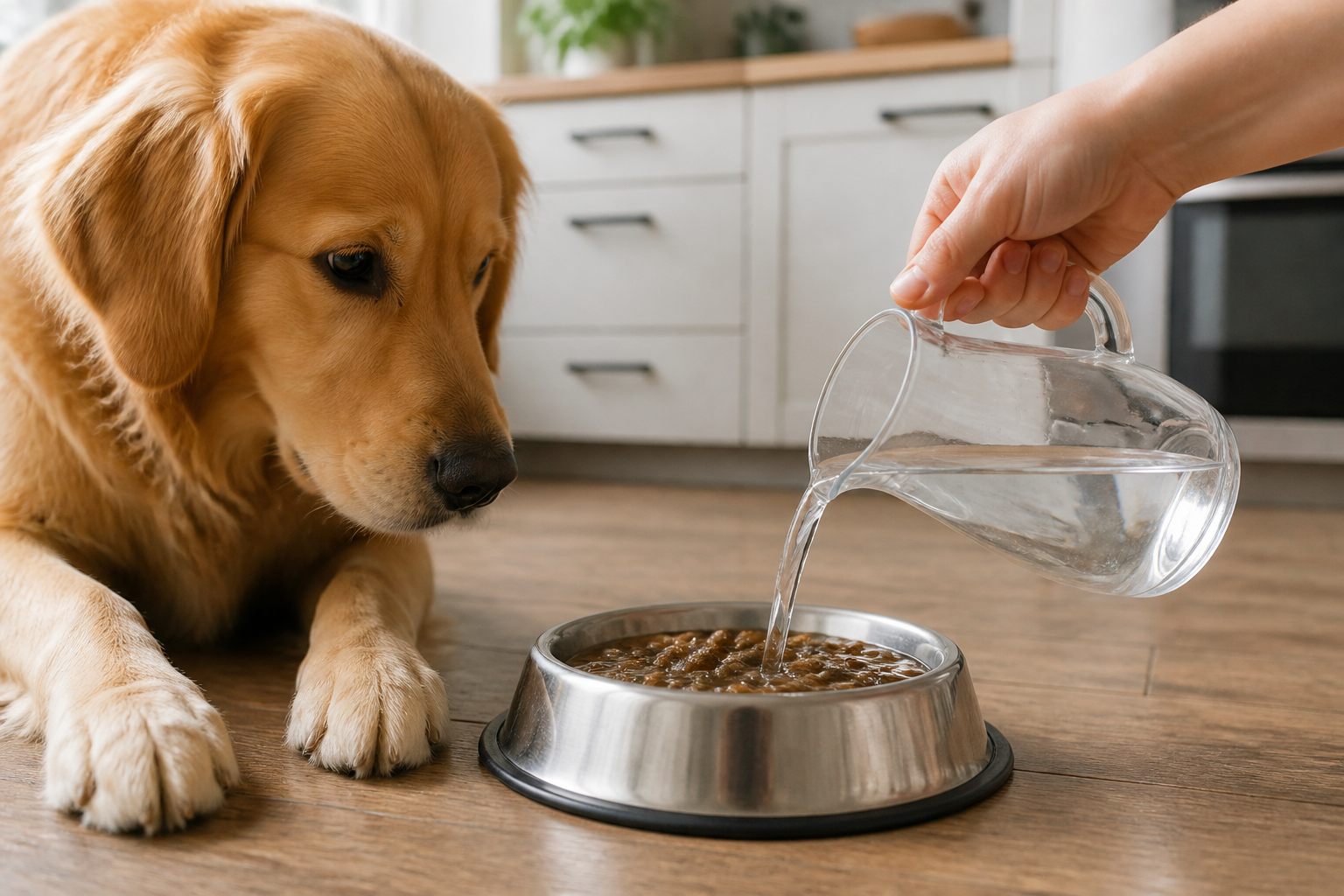
Step 2: Add the liquid. / Use a 1:1 ratio of liquid to food for a soft consistency. For a soupier texture, add a bit more.
Step 3: Wait for absorption. / Let the bowl sit for 15 to 20 minutes. Warm water works faster than cold water and helps release more flavor.
Step 4: Mash if necessary. / If your dog needs a pate-like consistency, use a fork or potato masher to break down the softened kibble into a smooth paste.
Recommended Soaking Times
If you are in a rush, a five-minute soak will soften the outer layer while leaving a bit of crunch in the middle. For a complete transformation, a 30-minute soak is usually required. Some pet owners prefer to soak food in the refrigerator overnight. This is a safe way to prepare meals in advance, but you should always keep the bowl covered and cold until serving time.
Using Warm vs. Cold Liquid
Warm water is generally better for encouraging a dog to eat. It mimics the temperature of fresh prey and smells more appealing. However, you must ensure the water is not hot. Scalding water can burn a dog's mouth or throat. If the water feels comfortable on the inside of your wrist, it is safe for your dog.
Beyond Water: Healthy Mixers and Toppers
While water is the most cost-effective option, it is not the only way to hydrate a meal. Using other liquids can add nutritional value and variety to the bowl. We carry a wide selection of healthy additions at BaxterBoo that can turn a basic meal into a gourmet experience. Explore our dog food supplement selection for toppers and mixers.
- Bone Broth: Specifically formulated for pets, bone broth is rich in collagen and amino acids. Brands like Caru offer versions without added salt or onions, which are dangerous for dogs.
- Goat Milk: Often called a universal milk, goat milk is easy to digest and packed with probiotics. This is an excellent choice for dogs with sensitive stomachs.
- Wet Food Toppers: Mixing in a few spoonfuls of canned food from brands like Stella and Chewy's or Tiki Dog provides a massive boost in protein and moisture.
- Freeze-Dried Raw: Crumbling a freeze-dried raw patty over the top and then adding water creates a nutrient-dense gravy that most dogs find irresistible.
Vet Tip: If you use broth, ensure it is made specifically for pets. Human-grade broths often contain high levels of sodium, onions, or garlic, all of which can be toxic to dogs.
When Soaking is a Medical Necessity
In some cases, making dry food wet is not just a preference but a health requirement. Dogs recovering from oral surgery or those managing chronic conditions often require a modified diet.
Post-Dental Surgery Care
If your dog has recently had teeth extracted, your veterinarian will likely recommend a soft food diet for one to two weeks. Switching to a completely different brand of canned food can sometimes cause digestive upset or diarrhea due to the sudden change in ingredients. By soaking your dog's regular dry food until it is mushy, you provide the necessary soft texture without the risk of a stomach ache.
Senior Dog Wellness
As dogs age, they may develop periodontal disease or lose teeth. This makes it painful to crunch through hard kibble. Soaking food allows senior dogs to continue eating the formulas they love without discomfort. For additional ideas, read our guide to choosing dog food for senior pets.
If your senior dog is also managing joint issues, you can mix in supplements like Cosequin during the soaking process to ensure they get their daily support. You can also compare senior dog food options for formulas suited to older pets.
Prescription Diets and the Pharmacy
Some dogs require specialized nutrition for kidney disease, urinary issues, or severe allergies. Brands like Royal Canin and Farmina Vet Life offer prescription kibble that is essential for managing these conditions. Our pharmacy provides access to these prescription pet foods through our partnership with Pet's Choice. If your dog is on a prescription diet, adding moisture is often recommended by vets to support kidney function and urinary health.
Bottom line: Using your dog's existing kibble to create a soft meal is often safer for their digestion than switching to a new wet food brand during recovery.
Important Safety and Storage Guidelines
Moisture and heat are the perfect ingredients for bacteria like Salmonella and Listeria. When you add water to dry food, you are essentially turning it into a perishable product. You cannot leave soaked kibble in a bowl all day like you might with dry food. Our guide on how to wet dry dog food safely offers another helpful overview.
- The One-Hour Rule: If your dog does not finish their soaked meal within 60 minutes, you should discard the leftovers.
- Clean the Bowl: Wash the food bowl with hot, soapy water after every meal to prevent biofilm and bacteria buildup.
- Avoid Overfeeding: Remember that adding wet food or high-calorie broths increases the total calorie count. Adjust the amount of dry kibble accordingly to prevent unwanted weight gain.
- Monitor Dental Health: Since soaked food does not provide the scraping action that dry kibble does, you may need to increase teeth brushing or provide dental treats to keep plaque at bay.
Transitioning Slowly
If your dog has always eaten dry food, their digestive system may need a few days to adjust to the extra moisture. Start by adding just a small amount of liquid and increase it over the course of a week. This helps prevent gas or loose stools as their body adapts to the change.
Managing Picky Eaters
Some dogs become picky because they are bored, while others have a decreased sense of smell as they age. Making dry food wet addresses both issues. The change in texture offers variety, and the increased aroma helps them locate their food more easily. If your dog is still uninterested, try rotating through different toppers like those from Open Farm or The Honest Kitchen to keep things interesting. Our guide to getting your dog to eat dry food offers additional mealtime ideas.
Key Takeaway: Proper hygiene and the "one-hour rule" are vital when serving moistened food to prevent bacterial growth and digestive upset.
Comparing Liquid Options for Kibble
| Liquid Type | Key Benefit | Best For |
|---|---|---|
| Warm Water | Hydration, Zero Calories | Daily Use, Budget Conscious |
| Pet Bone Broth | Joint & Gut Support | Seniors, Picky Eaters |
| Goat Milk | Probiotics, Easy Digestion | Puppies, Sensitive Stomachs |
| Canned Topper | High Protein, Flavor | Active Dogs, Very Picky Eaters |
| Unsalted Veggie Broth | Low Fat, Vitamins | Weight Management |
Common Mistakes to Avoid
One of the most frequent errors is using boiling water. This does more than just risk a burn; it can also degrade some of the heat-sensitive vitamins and probiotics that are sprayed onto the kibble during manufacturing. Always use lukewarm or comfortably warm water to preserve the nutritional integrity of the food.
Another mistake is forgetting to track calories. It is easy to think of a splash of goat milk or a scoop of wet food as "just a treat," but these additions can add up. If you are regularly making dry food wet with calorie-dense mixers, check the labels and reduce the dry portion slightly. Maintaining a healthy weight is one of the best ways to support your dog’s long-term mobility and health. For more context, read this guide to pet weight management.
Finally, do not forget about your dog’s dental hygiene. While the idea that dry food "cleans" teeth is sometimes overstated, soaked food definitely leaves more residue behind. If you make the switch to wet meals, be more diligent about regular brushing or use dental rinses to keep their breath fresh and gums healthy.
Conclusion
Making dry dog food wet is a practical way to help your dog through various life stages. Whether you are helping a puppy transition to solids, supporting a senior with dental pain, or simply trying to keep your pet hydrated in the heat, soaking kibble is a versatile tool. By using warm water or nutrient-rich toppers from BaxterBoo, you can improve the flavor and health benefits of every meal. Always remember to prioritize safety by discarding uneaten portions and consulting your veterinarian if your dog's appetite changes suddenly.
To keep your pantry stocked with the best mixers and toppers, consider signing up for our Autoship programme. You will save on your first order and earn a free MVP Gold membership, ensuring you never run out of the essentials your dog loves.
FAQ
Does soaking dry dog food cause dental problems?
Soaking food removes the slight abrasive quality of dry kibble, which may allow plaque to build up faster. If you feed softened food long-term, it is important to maintain a regular dental care routine. Brushing your dog's teeth or providing vet-approved dental chews can help compensate for the lack of crunch.
Can I make dry food wet for a dog with an upset stomach?
If your dog has a mild stomach upset, softening their food with warm water can make it easier to digest. However, if the vomiting or diarrhea is severe, you should consult your veterinarian before feeding them anything. They may recommend a specific prescription diet from our pet pharmacy to help soothe the digestive tract.
How much water should I add to a cup of dog food?
A common starting point is a 1:1 ratio, meaning one cup of water for every one cup of kibble. This creates a soft, spongy texture that most dogs enjoy. You can adjust this based on your dog's preference, using less water for a slight crunch or more for a soupier consistency.
Is it better to use broth or water to soak kibble?
Water is perfect for simple hydration and is calorie-free. Broth is a better choice if you are trying to entice a picky eater or want to add extra nutrients like collagen. Just ensure any broth you use is formulated specifically for pets to avoid dangerous ingredients like onions and high sodium.






