
 Save 15% on your 1st Autoship learn more

 Email us
 Live Chat
 FAQs
FAQs





Introduction
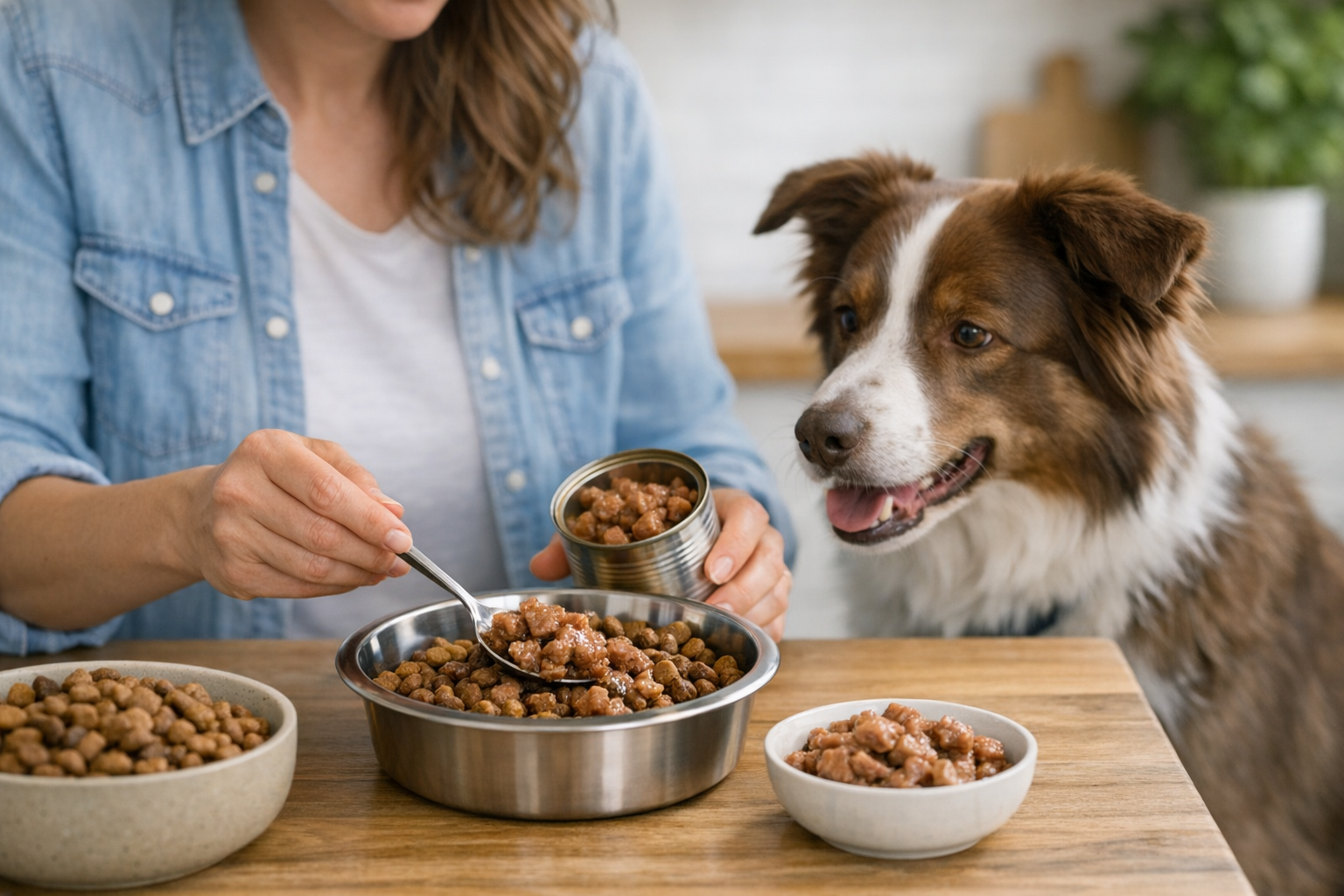
You stand in the kitchen with a bag of kibble in one hand and a can of savory wet food in the other. Your dog is watching every move with an expectant tail wag. You might wonder if combining these two textures is a good idea or if it might upset their stomach. At BaxterBoo, we hear this question frequently from owners who want to spice up mealtime without sacrificing nutrition. This post covers everything you need to know about combining textures, managing calories, and choosing the right ingredients. Mixing these food types is not only safe but often highly beneficial for your dog's hydration and appetite.
Quick Answer: Yes, you can mix dry and canned dog food. This practice is often called mixed feeding. It provides a balance of dental benefits from kibble and hydration benefits from wet food while making meals more appealing to picky eaters.
Understanding the Basics of Mixed Feeding
Mixed feeding is the practice of combining different food formats in a single meal. Most owners choose to mix dry kibble with canned wet food. This approach allows your pet to enjoy the crunch of dry food and the rich aroma of wet food. It is a practical way to provide variety without completely switching their diet.
Dry dog food typically contains less than 11 percent water. It is dense, easy to store, and cost-effective. The hard texture of kibble can also help scrape away a small amount of plaque as your dog chews. On the other hand, wet dog food is usually 75 to 80 percent water. It often features higher protein levels and fewer carbohydrates than dry food. If you are comparing options, start with our dog food category.
When we look at these two options, they both offer distinct advantages. Mixing them allows you to leverage the benefits of both worlds. You get the convenience and dental support of dry food along with the hydration and palatability of wet food.
The Nutritional Benefits of Combining Foods
Adding wet food to a dry diet does more than just change the flavor. It significantly increases your dog's daily moisture intake. This is particularly important for dogs that do not drink enough water on their own. Proper hydration supports kidney function and helps prevent urinary tract issues like bladder stones.
Wet food is also generally more palatable. It has a stronger scent and a meatier texture. This makes it an excellent tool for senior dogs that might be losing their sense of smell. It also helps dogs recovering from illness who have a suppressed appetite.
Key Takeaway: Mixing food types is a simple way to boost hydration and encourage eating in picky or aging pets.
Supporting Dental Health
While wet food is soft, the presence of dry kibble in the mix still provides some mechanical cleaning for the teeth. If you fed a strictly wet diet, your dog would lose that "crunch factor." By keeping dry food as a significant portion of the meal, you continue to support oral hygiene. We carry brands like Greenies that offer specific formulas focused on dental health which can be integrated into a mixed feeding plan.
Enhancing Flavor Without Excess Fat
Many owners use human food scraps to entice their dogs to eat. This can lead to pancreatitis or obesity. Mixing a high-quality canned food is a much safer alternative. Canned foods often use real meat chunks and gravies that provide intense flavor without the dangerous seasonings found in human meals.
How to Calculate the Right Portions
The most common mistake owners make is adding wet food on top of a full serving of dry food. This leads to overfeeding and weight gain. To keep your dog at a healthy weight, you must adjust the portions of both foods.
A general starting point is the 75/25 rule. This means 75 percent of the daily calories come from dry food and 25 percent come from wet food. However, you cannot just measure by volume. A cup of dry food has significantly more calories than a cup of wet food because wet food is mostly water.
Step 1: Check the calorie count (kcal) on both labels. / Look for the "per cup" or "per can" measurement.
Step 2: Determine your dog's total daily calorie needs. / Consult your veterinarian for this number based on their age and activity level.
Step 3: Calculate the 25 percent portion for wet food. / If your dog needs 1,000 calories, 250 should come from the can.
Step 4: Calculate the remaining 75 percent for dry food. / The remaining 750 calories should come from the kibble bag.
Step 5: Measure exactly. / Use a standard measuring cup or a kitchen scale for accuracy.
Vet Tip: Always consult your veterinarian before making significant changes to your dog's calorie intake. They can help you calculate exact portions to prevent unintended weight gain or loss.
Life Stage Considerations for Mixed Feeding
A dog's nutritional needs change as they age. Puppies, adults, and seniors all require different ratios of protein, fat, and minerals. When mixing foods, ensure both the dry and wet options are formulated for the same life stage.
Puppies and Growth
Puppies need a lot of energy to support their developing bones and muscles. Mixing wet and dry puppy food can help a weaning puppy transition to solid food. The moisture in the wet food softens the kibble, making it easier for small teeth to chew. Acana offers excellent puppy-specific formulas that work well together.
Senior Dogs and Mobility
Senior dogs often face dental pain or a decreased appetite. They may also need specific nutrients for their joints. Mixing in a canned food that is rich in Omega-3 fatty acids can support mobility. If your senior dog takes supplements like Cosequin or Zesty Paws, the wet food serves as a perfect "vehicle" to hide the supplement. The strong aroma of the wet food masks the scent of any added vitamins or medications.
Bottom line: Matching the life stage of both food types ensures your dog receives a consistent and balanced nutrient profile.
Managing Health Conditions with Mixed Feeding
If your dog has a chronic health condition, mixed feeding requires more precision. This is especially true for dogs on therapeutic or prescription diets. These foods are formulated with very specific levels of minerals, proteins, and fats to manage issues like kidney disease, food allergies, or urinary crystals.
Our BaxterBoo pharmacy offers a wide selection of prescription pet foods through our partnership with Pet's Choice. If your veterinarian has prescribed a specific diet, such as Farmina Vet Life for weight management or Royal Canin Veterinary Diet for skin sensitivities, you must stay within that specific product line.
Mixing Prescription Diets
Never mix a prescription food with a standard over-the-counter food. Doing so can dilute the therapeutic benefits of the prescription. For example, if your dog is on a low-protein diet for kidney support, adding a high-protein standard canned food could harm their organs. Most prescription brands offer both a dry and wet version of the same formula. It is safe to mix the dry and wet versions of the exact same prescription line.
Vet Tip: If your dog is on a therapeutic diet, only mix the dry and wet versions of that specific prescription formula. Consult with your vet to ensure the proportions remain effective for managing their condition.
The Importance of AAFCO Standards
When selecting your two food types, look for the AAFCO (Association of American Feed Control Officials) statement on the label. It should say the food is "complete and balanced." This means the food contains every single nutrient a dog needs in the correct proportions.
If you mix a "complete and balanced" dry food with a "supplemental" or "topper" wet food, you must be careful. Toppers are not designed to be a full meal. They should never exceed 10 percent of your dog's daily calories. If you are mixing two "complete and balanced" foods, you have more flexibility with the ratios because both products are nutritionally whole.
Reading the Label
- Look for a named protein source as the first ingredient (like beef, chicken, or lamb).
- Avoid foods with vague descriptions like "animal fat" or "meat by-products."
- Ensure the life stage matches your dog's current age.
- Check for the "Complete and Balanced" AAFCO statement.
Handling and Storage Safety
Mixing wet and dry food introduces new safety concerns regarding bacteria and spoilage. Dry food can sit in a bowl all day without much issue. Wet food, however, is a breeding ground for bacteria once it is exposed to air.
The 30-Minute Rule
Once you mix the wet food into the kibble, the clock starts ticking. The moisture from the wet food begins to soften the kibble and creates a damp environment. You should pick up and discard any uneaten food within 30 minutes. This prevents the growth of harmful bacteria and keeps your dog's feeding area hygienic.
Storing Leftover Canned Food
Most dogs will not eat a whole can in one sitting when you are mixing. You must store the remaining wet food properly to keep it fresh.
- Cover the can with a tight-fitting plastic lid or silicone cover.
- Store the opened can in the refrigerator immediately.
- Use the remaining food within two to three days.
- If your dog dislikes cold food, you can let it sit at room temperature for 15 minutes or add a splash of warm water before mixing.
Cleaning Bowls
A bowl used for mixed feeding needs to be washed after every single meal. The residue from the canned food can quickly turn rancid. Use hot, soapy water or a dishwasher to ensure the bowl is completely sanitized. Stainless steel or ceramic bowls are preferred over plastic, as they do not have microscopic scratches where bacteria can hide.
Transitioning to a Mixed Diet
If your dog is currently only eating dry food, do not switch to a 50/50 mix overnight. A sudden change in diet can cause diarrhea, gas, or vomiting. A slow transition allows the digestive system to adapt to the new ingredients and higher moisture content. For more help with this step, see our guide to switching from dry to wet dog food.
- Day 1-2: Add a small spoonful of wet food to the dry food (about 10 percent of the meal).
- Day 3-4: Increase to 15 percent wet food while slightly decreasing the dry food.
- Day 5-6: Move to 20 percent wet food.
- Day 7: Reach your target ratio of 25 percent wet and 75 percent dry.
Monitor your dog's stool during this week. If the stool becomes very soft, go back to the previous day's ratio for a few more days before trying to increase again.
Managing the Cost of Mixed Feeding
It is no secret that canned food is more expensive than dry kibble per calorie. However, mixing the two is much more budget-friendly than feeding a 100 percent wet diet. You can still provide the high-value experience of wet food while relying on dry kibble for the bulk of their nutrition.
At BaxterBoo, we offer several ways to save on these essentials. Our Autoship programme is a popular choice for mixed feeding. You can set up recurring deliveries for both your favorite kibble, like Acana or Orijen, and your preferred wet food, like Tiki Cat or Weruva. This ensures you never run out and often provides a discount on every order.
Additionally, our MVP Rewards program allows you to earn points on every purchase. These points can be redeemed for future savings, making it easier to afford premium canned foods to mix into your dog's diet.
Common Myths About Mixing Dog Food
There are several misconceptions floating around about combining food types. One common myth is that mixing foods causes "digestive confusion." In reality, most healthy dogs can handle a variety of textures and proteins as long as the transition is gradual.
Another myth is that wet food "rots the teeth." While wet food does not have the abrasive qualities of kibble, it does not actively cause decay any more than other foods. The key is maintaining a regular dental routine, including brushing and professional cleanings.
Some people believe that you should never mix brands. While sticking to one brand can make calorie counting easier, it is perfectly safe to mix a dry food from one brand with a wet food from another, provided both are high-quality and complete.
Key Takeaway: Variety is generally good for dogs, provided you maintain calorie balance and high-quality ingredient standards.
Troubleshooting Picky Eaters
If you started mixing food because your dog was picky and they still aren't eating, try these tips:
- Warm it up: Microwaving the wet food for 5 to 10 seconds (in a microwave-safe dish) enhances the aroma.
- The "Gravy" Method: Stir the wet food with a little warm water to create a sauce that coats every piece of kibble. This makes it impossible for the dog to pick out the wet chunks and leave the dry bits.
- Texture Variety: If they don't like pâté, try a "stew" or "shredded" texture. Brands like Orijen offer options that can entice different preferences.
- Topper Rotation: Occasionally change the flavor of the wet food to keep things interesting, while keeping the dry food base the same.
Summary of Mixed Feeding
Mixing dry and canned dog food is a practical strategy for most pet owners. It offers a balance of affordability, nutrition, and enjoyment for the dog. By following the AAFCO guidelines and carefully managing calories, you can enhance your dog's life without causing weight gain.
- Choose high-quality, complete and balanced foods for the correct life stage.
- Calculate calories to ensure you are not overfeeding.
- Transition slowly over 7 days to avoid stomach upset.
- Practice strict food safety by refrigerating leftovers and washing bowls.
- Consult your vet, especially for dogs with health conditions or prescription needs.
We carry over 500 trusted brands to help you find the perfect combination for your pet. Whether you need a high-protein kibble or a specialized prescription canned food from our pharmacy, we are here to support your journey in pet care. For more storage and freshness guidance, see our blog post on how dry dog food goes bad.
Bottom line: Mixed feeding is a safe, effective way to improve your dog's hydration and mealtime excitement.
FAQ
Can I mix two different brands of dog food?
Yes, you can mix different brands as long as both are labeled as "complete and balanced" by AAFCO. Many owners use a high-quality dry kibble from one brand and a flavorful wet food from another to provide variety. Just be sure to monitor your dog's digestion during the initial transition between brands.
How long can mixed food sit in the bowl?
Mixed food should be picked up after 30 minutes. The moisture from the canned food can cause the kibble to get soggy and creates an environment where bacteria thrive quickly. If your dog has not finished their meal within half an hour, discard the leftovers and wash the bowl thoroughly.
Does mixing wet food with dry food cause weight gain?
Mixing food only causes weight gain if you do not adjust the total calorie count. Because wet food is often more palatable, dogs might eat more than usual. You must reduce the amount of dry food you provide to compensate for the calories added by the canned food. If you want a deeper dive into portion planning, see our guide to how much dry dog food to feed a 15 pound dog.
Can I mix water with dry food instead of canned food?
Adding warm water to dry kibble is a great way to increase hydration and enhance the scent of the food. It is a more budget-friendly alternative to using canned food. While it won't provide the same protein boost or flavor variety as canned food, it is a very healthy practice for most dogs.






