
 Save 15% on your 1st Autoship learn more

 Email us
 Live Chat
 FAQs
FAQs





Introduction
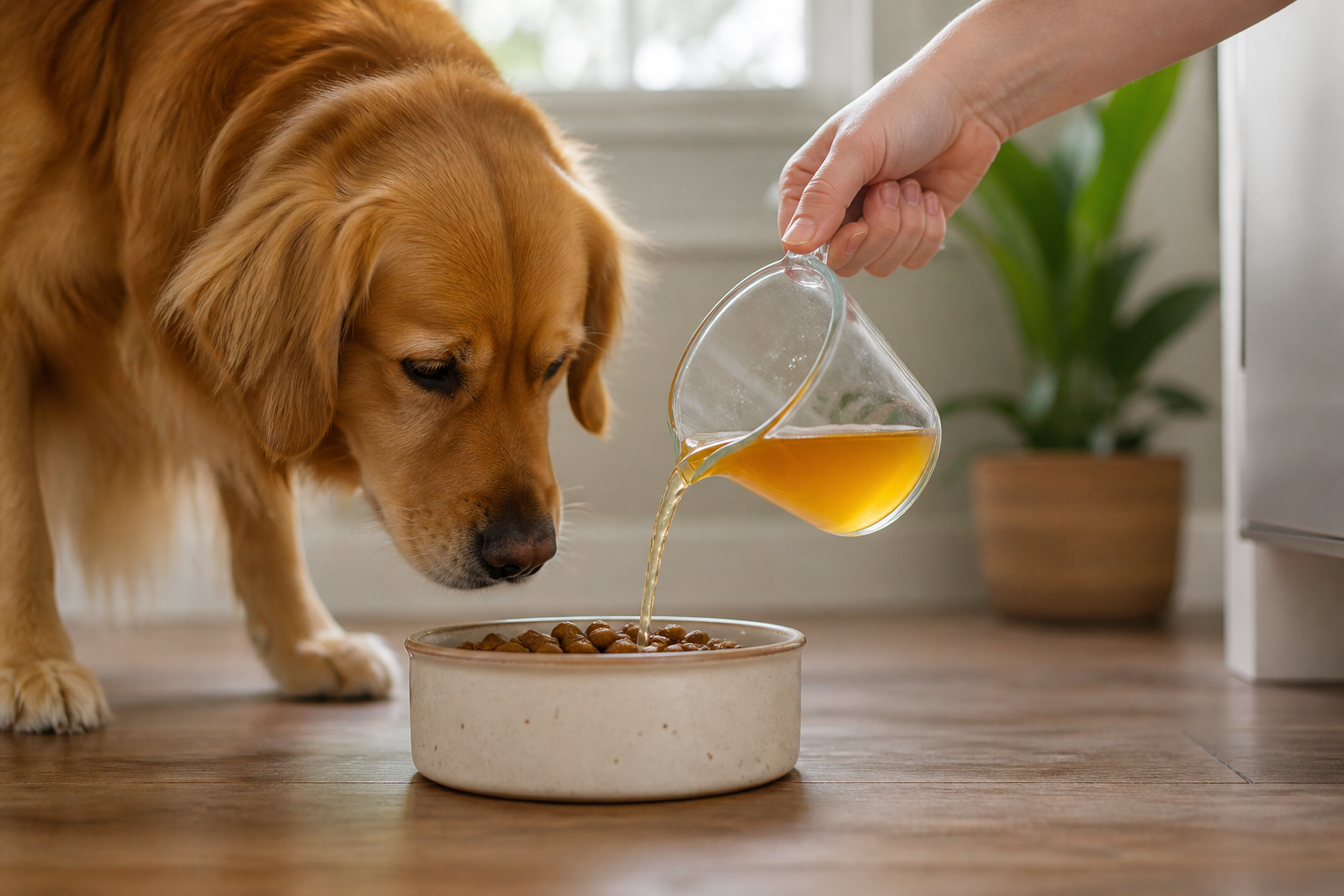
You stand in the kitchen watching your dog sniff at a bowl of dry kibble before walking away with a heavy sigh. It is a common scene for many pet owners. Maybe your dog is a picky eater who needs a little extra motivation. Perhaps you are worried about their hydration levels during a hot summer or a dry winter. Adding broth to dry dog food is a popular way to solve these problems. It turns a boring meal into a savory feast while providing a moisture boost.
At BaxterBoo, we see many pet owners looking for simple ways to improve their dog's nutrition and mealtime excitement. This post covers which broths are safe, the health benefits of liquid toppers, and how to prepare them safely at home. We will also look at when you should skip the broth and stick to a plain diet. Our goal is to help you upgrade your dog's bowl without accidentally adding hidden dangers like excess sodium or toxic ingredients.
Quick Answer: Yes, you can put broth on dry dog food to improve hydration and taste. You must ensure the broth is low-sodium and completely free of onions, garlic, and other toxic seasonings found in human food.
The Practical Benefits of Adding Broth to Kibble
Adding a liquid topper to a dry meal is about more than just flavor. It serves several functional purposes that can improve your dog's daily life. Most commercial dry dog foods contain only about 10 percent moisture. Dogs in the wild would typically consume much more water through their food. Broth helps bridge that gap.
Improving Daily Hydration
Many dogs do not drink enough water from their bowls. This is especially true for senior dogs or those with certain health conditions. When you add broth to kibble, the biscuits soak up the liquid like a sponge. This ensures your dog takes in moisture with every bite. Good hydration supports healthy kidney function and helps prevent urinary tract issues. It also keeps their skin and coat looking healthy from the inside out.
For more ways to support your dog's daily nutrition, explore our dog food selection.
Enticing the Picky Eater
Dogs have a sense of smell that is thousands of times stronger than our own. Their sense of taste is actually much weaker. This is why the smell of food is often more important to a dog than the flavor. When you add warm broth to kibble, the heat releases the fats and aromas in the food. This creates a much more powerful scent that can tempt a dog who has lost interest in their standard meal.
If your dog regularly ignores kibble, our guide on helping dogs enjoy dry food offers another mealtime idea.
Supporting Senior Dogs and Puppies
As dogs age, they often face dental challenges. Missing teeth or sore gums can make crunching through hard kibble painful. Puppies also go through a similar phase when they are losing their baby teeth. Adding broth to dry food softens the texture. You can let the food sit for about ten minutes until it reaches a soft, mash-like consistency. This makes it much easier for dogs with dental sensitivity to get the nutrition they need.
For additional puppy feeding guidance, read how much dry dog food to feed a puppy.
Key Takeaway: Broth acts as a functional topper that provides essential hydration while making dry food easier to chew and more fragrant for picky eaters.
Understanding the Hidden Dangers in Human Broth
You might be tempted to grab a carton of chicken or beef broth from your own pantry. However, human-grade broth is often dangerous for pets. The soup aisle is a minefield of ingredients that can cause serious health issues for dogs.
The Problem with Sodium
Most commercial broths made for humans are loaded with salt. Even "low sodium" versions often contain levels of salt that are far too high for a dog's smaller body. High sodium intake can lead to increased thirst and frequent urination. In severe cases, it can cause sodium ion poisoning. This is particularly dangerous for dogs with underlying heart or kidney conditions.
Toxic Aromatics: Onions and Garlic
Standard human recipes for broth almost always include onions, garlic, leeks, or shallots. These ingredients belong to the Allium family. They contain compounds that can damage a dog's red blood cells. This damage can lead to a condition called hemolytic anemia. Even if the pieces of onion are strained out, the toxins remain in the liquid. You must always check labels for onion powder or garlic extract.
Harmful Additives and Sweeteners
Some processed broths contain MSG, artificial colors, or preservatives that can upset a dog's stomach. A more serious concern is the use of Xylitol. This is an artificial sweetener sometimes used in flavored products. It is extremely toxic to dogs and can cause a rapid drop in blood sugar or liver failure. Always read the full ingredient list before sharing anything from your kitchen.
Vet Tip: If your dog has a history of heart disease or kidney issues, never add store-bought broth without consulting your veterinarian. The mineral and salt content can interfere with their medical management.
Choosing the Best Broth for Your Dog
If you want to start using a topper, you have three main paths. You can buy dog-specific products, look for specific human-grade labels, or make it yourself. Each option has pros and cons.
Dog-Specific Broths and Toppers
The safest option is to choose a product designed specifically for pets. Brands like Stella & Chewy's and Open Farm offer bone broths that are formulated without salt or toxic aromatics. These are often enriched with ingredients like turmeric for inflammation or collagen for joint health. Because they are made for dogs, you do not have to worry about reading the fine print for hidden onions or garlic.
You can also browse our dog food toppers and supplements when comparing broth-based options.
Finding Safe Human Broths
If you must use a broth from the grocery store, look for labels that say "No Salt Added." Do not settle for "Reduced Sodium." Even "No Salt Added" versions must be scrutinized for seasonings. If the ingredient list includes "spices" or "natural flavors," it is better to avoid it. These vague terms often hide onion or garlic components.
The Power of Bone Broth
Bone broth is different from standard meat broth. It is simmered for a much longer time, often up to 24 hours. This long cooking process extracts collagen, glucosamine, and chondroitin from the bones. These nutrients are excellent for supporting joint health in active dogs or aging seniors. It also contains amino acids like glycine, which supports a healthy gut lining.
Bottom line: While dog-specific broths are the most convenient and safe, "no salt added" human broth is an acceptable backup if the ingredient list is completely clean of seasonings.
How to Make Dog-Safe Chicken Broth at Home
Making your own broth is the most cost-effective way to provide a healthy topper. It also gives you total control over what goes into your dog's body.
Step 1: Select your protein. / Use plain chicken pieces or a whole carcass. Avoid rotisserie chickens from the store as they are often heavily seasoned with salt and garlic.
Step 2: Add dog-friendly vegetables. / Toss in a few carrots, stalks of celery, or green beans. These add vitamins and flavor without the risks associated with onions.
Step 3: Cover with water and simmer. / Put everything in a large pot and cover it with an inch of water. Bring it to a boil and then lower the heat to a simmer.
Step 4: Cook for several hours. / Let the mixture simmer for at least two to four hours. If you are making bone broth, you can use a slow cooker on low for 12 to 24 hours.
Step 5: Strain and remove bones. / This is the most important step. Use a fine-mesh strainer to remove every piece of bone. Cooked bones are brittle and can splinter, causing internal injuries if swallowed.
Step 6: Cool and skim the fat. / Place the liquid in the refrigerator overnight. The fat will rise to the top and harden. Scoop this layer off and throw it away. Feeding your dog too much fat can lead to digestive upset or a serious condition called pancreatitis.
Storing and Portioning
Homemade broth lasts for about four to five days in the refrigerator. To make it last longer, you can pour the broth into silicone ice cube trays and freeze it. This creates perfectly portioned "broth cubes." You can drop one onto warm kibble, and it will melt into a delicious gravy. This is also a great way to keep your dog hydrated during the summer.
- Freeze broth in ice cube trays for easy portioning.
- Store fresh broth in airtight glass jars.
- Label your jars with the date of preparation.
- Discard any broth that smells sour or develops mold.
For more food-storage advice, see how long dry dog food stays fresh.
Serving Ratios and Temperature Tips
How you serve the broth is just as important as what is in it. Adding too much liquid can make the food unappealing or cause a mess.
Finding the Right Balance
A good starting point is a 1:4 ratio. This means for every one cup of dry food, you add about a quarter cup of broth. You do not want the kibble to be swimming in liquid. The goal is to coat the pieces and provide a little extra moisture at the bottom of the bowl. If your dog prefers a softer texture, let the mixture sit for five to ten minutes before serving.
Getting the Temperature Right
Dogs generally prefer food that is near their natural body temperature. Cold broth straight from the fridge might be less appealing. You can gently warm the broth on the stove or in the microwave. Always stir it thoroughly and test it with your finger to ensure there are no hot spots. It should be warm, never hot.
Maintaining a Clean Feeding Area
Once you add liquid to dry food, the clock starts ticking. Wet kibble can grow bacteria quickly if left out in the open air. If your dog does not finish their meal within 20 to 30 minutes, you should pick up the bowl and throw the leftovers away. Wash the bowl thoroughly with soap and water after every meal to prevent slime and bacteria buildup.
Key Takeaway: Use a 1:4 broth-to-kibble ratio and serve it warm. Always discard uneaten wet food within half an hour to prevent bacterial growth.
Managing Weight and Nutrition
Broth is low in calories, but it is not calorie-free. If you are adding a significant amount of broth every day, you need to account for those calories in your dog's overall diet. This is especially important for dogs on weight-management plans.
Adjusting the Main Meal
If you notice your dog is gaining weight after starting a broth routine, try slightly reducing the amount of dry kibble you provide. Even a 5 or 10 percent reduction can make a difference. We recommend using a measuring cup for both the food and the broth. Guessing can lead to overfeeding, which puts unnecessary stress on your dog's joints and heart.
For more portion-planning guidance, read how much dry food to feed a dog.
Broth and Prescription Diets
If your dog is on a prescription diet for allergies or kidney disease, you must be very careful. Adding even a small amount of broth can ruin the therapeutic effects of these specialized foods. For example, if your dog is on a limited-ingredient diet for skin allergies, a chicken-based broth could trigger a reaction.
Our pet pharmacy offers a wide range of prescription pet foods and medications through our partnership with Pet's Choice. If your dog has a chronic health condition, always ask your vet before adding any toppers to their medical diet. They may suggest a specific, safe way to hydrate prescription kibble without compromising their treatment.
When Broth is Not the Answer
While broth is a great tool, it is not a fix for every problem. There are times when you should skip the topper and call the vet instead.
Sudden Loss of Appetite
If your dog has always been a good eater and suddenly stops, broth might hide a bigger issue. A loss of appetite can be a sign of dental pain, digestive blockage, or underlying illness. If your dog refuses food for more than 24 hours, even with broth added, they need a professional check-up.
Chronic Digestive Issues
If your dog frequently has diarrhea or vomiting, adding a rich broth might make the situation worse. The extra fat or new proteins can irritate a sensitive stomach. In these cases, a bland diet of plain boiled chicken and white rice is usually better. Once their stomach settles, you can ask your vet about gradually introducing a dog-safe broth.
Allergic Reactions
Keep an eye out for signs of a food allergy when you introduce a new type of broth. This can include:
- Excessive itching or scratching.
- Red, inflamed ears.
- Licking the paws constantly.
- Upset stomach or gas.
If you see these signs, stop using the broth immediately. You might need to switch to a different protein, such as beef or turkey broth, or avoid toppers altogether.
Conclusion
Putting broth on dry dog food is an easy and effective way to boost hydration and mealtime enjoyment. By choosing the right ingredients and avoiding dangerous additives like onions and salt, you can provide your dog with a healthy, flavorful treat every day. Whether you use a high-quality commercial topper or make your own bone broth at home, your dog will likely appreciate the extra effort.
Remember to keep an eye on portion sizes and maintain a clean feeding environment. If your dog has specific health concerns or is on a prescription diet, the BaxterBoo pharmacy is a great resource for finding the right medical supplies and foods. Always consult your veterinarian if you have concerns about your dog's appetite or weight.
For repeat-purchase items such as food and toppers, our Autoship programme can make regular deliveries easier.
Bottom line: Adding dog-safe broth is a simple way to support hydration and tempt picky eaters, provided you keep the ingredients clean and the portions balanced.
FAQ
Can I use store-bought beef broth for my dog?
You can use beef broth as long as it is labeled as "no salt added" and does not contain onions, garlic, or other seasonings. Many beef broths use more aromatics than chicken broth, so read the ingredient list very carefully. It is usually safer to choose a beef broth specifically formulated for dogs.
How much broth should I put in my dog's food?
A general rule is to use about two tablespoons of broth for every half-cup of dry kibble. This provides enough moisture to coat the food without making it too soggy. You can adjust this based on your dog's preference, but avoid making the food "swim" in liquid unless you are trying to soften it for a dog with dental issues.
Is it okay to give my dog chicken broth every day?
Yes, you can give your dog safe chicken broth every day as long as it is part of a balanced diet. Be sure to account for the extra calories if your dog is prone to weight gain. Regularly rotating the types of broth can also provide a variety of nutrients and keep your dog interested in their meals.
Can I put broth on my puppy's dry food?
Broth is a great way to help a puppy transition from milk or wet food to hard kibble. It softens the biscuits and makes them easier for small mouths to handle. Just ensure the broth is very simple and free of any salt or spices, as a puppy's digestive system is particularly sensitive.






