
 Save 15% on your 1st Autoship learn more

 Email us
 Live Chat
 FAQs
FAQs





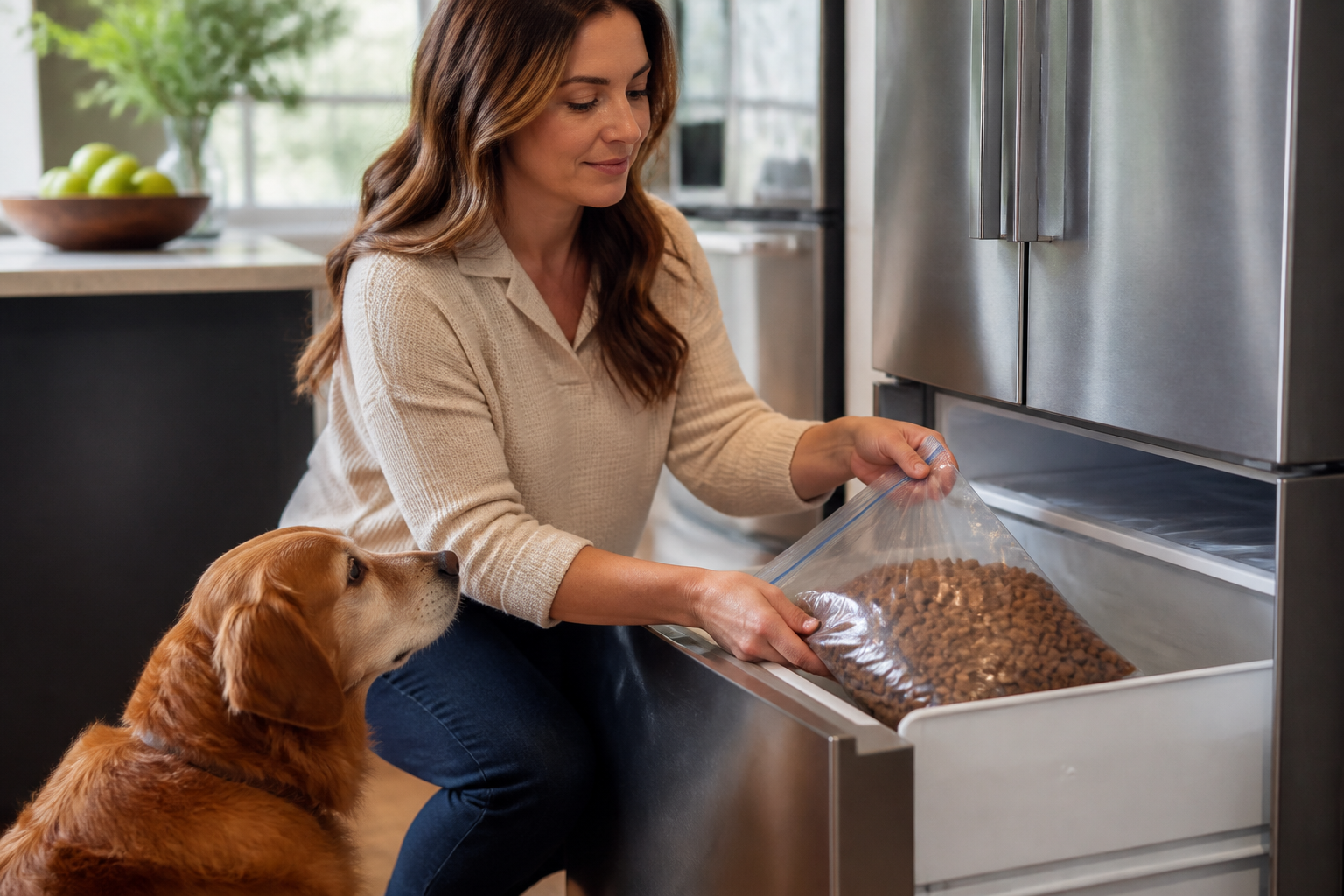
Introduction
You found a great deal on a bulk bag of premium kibble. Perhaps you prefer to stock up on brands like NutriSource or Open Farm to ensure you never run out during a busy week. However, as you look at that large bag, you might wonder if your dog can finish it all before it loses its nutritional punch. Most dry dog food stays fresh for only about 30 days once the bag is opened. This leads many pet owners to look toward their kitchen appliances for a solution. At BaxterBoo, we often hear from customers looking for the best ways to keep their pet supplies in peak condition.
Quick Answer: Yes, you can store dry dog food in the freezer to extend its shelf life. When kept in an airtight container or original packaging, frozen kibble can remain fresh and safe for six to nine months.
This post covers everything you need to know about freezing dog food. We will explain the best methods for sealing out moisture and how to safely thaw the food for your pup. Using the freezer can be a smart way to manage your pet's pantry while maintaining the quality of every meal.
Why Freezing Dry Dog Food Works
Dry dog food might seem like it has a permanent shelf life, but it is actually quite perishable. Most high quality kibbles are coated with fats and oils after the extrusion process. These oils provide the flavor and essential fatty acids your dog needs. When those oils are exposed to oxygen, heat, and light, they begin to oxidize. This process is called rancidity. Rancid fats do more than just make the food smell like old paint. They can actually lead to digestive upset or long term health issues if consumed regularly.
Freezing works by significantly slowing down the oxidation process. The sub zero temperatures keep the fats stable. It also prevents the growth of mold and keeps pantry pests like grain mites or weevils from infesting your supply. For owners who buy large quantities of specialty food, the freezer acts as a pause button on the natural aging of the ingredients.
Protecting Sensitive Nutrients
Certain vitamins and antioxidants are sensitive to room temperature storage. Heat is one of the fastest ways to degrade the nutritional profile of a diet. By moving a portion of your dog's food into the freezer, you preserve the potency of these ingredients. This is especially helpful if you are feeding a diet rich in natural preservatives like tocopherols (Vitamin E). Natural preservatives are great for your dog but they do not last as long as synthetic chemicals.
Managing Bulk Purchases
Bulk buying is a common strategy for saving money and reducing trips to the store. If you have a small dog but prefer the value of a 30 pound bag, freezing is almost a necessity. Without it, you would likely be feeding stale food by the time you reached the bottom of the bag. Freezing allows you to take advantage of sales and larger sizes without worrying about waste. You can compare formulas and bag sizes in our dog food category.
Key Takeaway: Freezing kibble stops the clock on fat oxidation and nutrient loss. It is the most effective way to store dry food for more than one month.
How to Properly Freeze Dry Dog Food
You cannot simply toss an open bag into the freezer and expect great results. Success depends on how well you protect the food from the freezer environment. The biggest threats in a freezer are moisture and freezer burn. If air reaches the kibble, it will draw out moisture and create ice crystals. This ruins the texture and can introduce bacteria when the food eventually thaws.
Step 1: Keep the original bag.
The original packaging is designed to be a barrier against oxygen and light. It also contains the lot number and expiration date. If there is ever a recall, you will need this information.
Step 2: Use an airtight secondary container.
Place the original bag inside a heavy duty plastic bin or a dedicated airtight pet food container. If the bag is too large, you can portion the food into smaller gallon sized freezer bags. Ensure you squeeze out as much air as possible before sealing.
Step 3: Portion for convenience.
Do not freeze the entire 30 pound bag as one solid block if you plan to use it gradually. Divide the food into one week portions. This prevents you from opening the main frozen supply repeatedly. Every time you open a frozen container, you let in humid air that turns into frost.
Step 4: Label everything.
Use a permanent marker to write the date you put the food into the freezer. While it can last up to nine months, it is best to use it within six for the best flavor.
Choosing the Right Storage Materials
Not all plastics are equal when it comes to the freezer. Look for BPA free containers that are specifically labeled as freezer safe. Some plastics become brittle and crack when they get too cold. Glass jars can work for small amounts of food, but leave at least an inch of headspace. Kibble does not expand like liquid, but the air inside the jar can cause pressure changes.
- Heavy duty freezer bags (double seal is best)
- Mylar bags with oxygen absorbers for very long term storage
- Vacuum sealer bags for the ultimate protection
- Freezer safe plastic bins with gasket seals
Vet Tip: If your dog has a history of allergies or a very sensitive stomach, talk to your veterinarian before making major changes to food storage. Sometimes the change in texture or temperature from previously frozen food can affect picky eaters.
The Risks of Improper Freezer Storage
While freezing is helpful, doing it incorrectly can lead to problems. Moisture is the primary enemy. If you put warm food into a freezer, condensation will form inside the bag. This moisture will eventually lead to mold growth once the food thaws. Always ensure the food is at room temperature before you seal it for the freezer. For more storage guidance, read our tips for keeping dry dog food fresh.
Freezer Burn and Palatability
Freezer burn happens when air reaches the surface of the food. It dehydrates the kibble and changes the protein structure. While freezer burned food is technically safe to eat, most dogs will find it unappealing. It loses its aroma, and since dogs rely heavily on their sense of smell to enjoy food, they may refuse to eat it.
Odor Contamination
Kibble is porous and absorbs odors easily. If you store dog food next to a tray of onions or a pungent fish dinner, the kibble will eventually taste like those items. Using a double barrier system (bag plus airtight bin) is the best way to keep the food tasting like its original recipe.
Bottom line: Proper sealing is the difference between fresh food and a wasted bag of moldy or smelly kibble.
Thawing and Serving Frozen Kibble
How you bring the food back to room temperature is just as important as how you froze it. You should never take kibble directly from the freezer and put it in your dog's bowl. Cold food can be difficult for some dogs to digest and may cause stomach cramps. Furthermore, the hard, frozen texture can be tough on the teeth of senior dogs.
The Refrigerator Method
The safest way to thaw dog food is in the refrigerator. Move a one week portion from the freezer to the fridge and let it sit for 24 hours. This slow transition prevents a massive buildup of condensation on the surface of the kibble. If moisture builds up too quickly, the kibble can become soggy and unappetizing.
Room Temperature Hazards
If you must thaw food on the counter, keep it in its sealed bag until it reaches room temperature. If you open the bag while the food is still frozen, moisture from the air will immediately cling to the cold kibble. This can lead to a sticky mess. Once the food is thawed, it should be treated like a fresh bag. Use it within a few days and do not let it sit out in a warm kitchen. For additional portion-planning help, see our guide to feeding dry food.
Can You Feed Frozen Kibble as a Treat?
Some owners like to give a few pieces of frozen kibble as a crunchy snack on a hot day. This is generally safe for healthy adult dogs with strong teeth. However, it should not be the primary way they eat their meals. Always monitor your dog when giving frozen items to ensure they do not choke or hurt their gums.
Key Takeaway: Always thaw kibble slowly in the refrigerator to maintain texture and prevent mold.
Storing Prescription Diets and Special Formulas
If you are managing a health condition with a prescription diet from our pet pharmacy, keeping that specialized food fresh is even more critical. Prescription diets often contain specific ratios of minerals and fats designed to support kidney health, urinary tract function, or weight management. Through our partnership with Pet's Choice, we offer a wide range of these FDA approved foods.
Because these formulas can be more expensive than standard kibble, you want to make sure none of it goes to waste. Freezing is an excellent option for prescription diets, especially if your vet has prescribed a specific amount that doesn't align with standard bag sizes.
- Store prescription diets in small, dated batches.
- Ensure no cross contamination occurs with other pet foods in the freezer.
- Check with the manufacturer if the food contains live probiotics, as extreme cold can sometimes decrease their viability.
Vet Tip: For dogs on prescription diets for chronic conditions, consistency is key. Ensure you thaw the food completely so the flavor remains consistent, which helps keep your dog interested in their therapeutic meals.
Alternatives to Freezing for Freshness
If your freezer is already full of human food, you can still keep your dog's kibble fresh using other methods. The goal is always to control the "Big Three" of spoilage: air, heat, and moisture.
The Original Bag Method
Many people think pouring kibble directly into a plastic bin is the best way to store it. This is actually a mistake. Plastic bins can develop tiny scratches over time that harbor bacteria and old fats. These rancid fats then contaminate the new food you pour in. Instead, place the entire bag inside the bin. This gives you two layers of protection and keeps the bin cleaner.
Temperature Control
Store your dog's food in a "climate controlled" part of your home. This means avoiding the garage, the attic, or the laundry room. These areas often experience high humidity and temperature swings. A pantry or a cool closet is the ideal spot. Temperatures should ideally stay below 80 degrees Fahrenheit at all times.
Using Technology
Vaccum sealers are not just for sous vide cooking. You can vacuum seal dry dog food in small portions and store them in a dark pantry. This removes almost all the oxygen, which is the primary cause of spoilage. This is a great middle ground if you do not have freezer space but want to buy in bulk.
- Keep food at least 6 inches off the floor to prevent pests.
- Use a bag clip every single time you close the bag.
- Wash your storage bins with soap and hot water between every bag of food.
Bottom line: If you cannot freeze, prioritize a cool, dark location and keep the food in its original packaging inside an airtight container.
Identifying Spoiled Dog Food
No matter how carefully you store your pet's food, you should always inspect it before feeding. Dogs cannot tell us if their food tastes "off," but they often show us through their behavior. Being able to spot the signs of spoilage can prevent a costly trip to the vet. For another look at freshness and spoilage signs, read our guide to whether dry dog food goes bad.
Physical Signs of Spoilage
Mold is the most obvious sign. It can appear as white, green, or black fuzz on the kibble. However, rancidity is harder to see. Look for a "shiny" or "sweaty" appearance on the kibble, which indicates that the fats are seeping out and breaking down. If the food looks darker than usual or has a lot of "dust" at the bottom of the bag, it may be old.
The Smell Test
Fresh dog food usually has a mild, grainy, or meaty scent. Spoiled food will smell sour, musty, or like chemicals. Some people describe the smell of rancid fat as similar to old cardboard or wet paint. If the smell makes you wrinkle your nose, do not feed it to your dog.
Changes in Your Dog
Your dog's nose is much more sensitive than yours. If a normally enthusiastic eater suddenly refuses their bowl, check the food. They may be detecting rancidity long before you can. If your dog does eat spoiled food, watch for these signs:
- Vomiting or dry heaving
- Loose stools or diarrhea
- Increased gas or bloating
- Lack of energy
Vet Tip: If your dog accidentally consumes moldy food, contact your veterinarian immediately. Certain molds produce mycotoxins that can cause tremors or seizures in pets.
Conclusion
Storing dry dog food in the freezer is a practical way to ensure your pet always has a fresh, nutritious meal. By protecting the food from oxygen and moisture, you can extend the life of your favorite brands and save money by buying in bulk. Whether you are storing standard kibble or a specialized diet from our pharmacy, the key is using airtight barriers and proper thawing techniques.
- Freezing extends kibble shelf life to 6-9 months.
- Always use the original bag inside an airtight container.
- Portion the food before freezing to avoid constant temperature changes.
- Thaw slowly in the refrigerator to prevent mold.
Key Takeaway: Proper storage protects your pet's health and your wallet by preventing food waste and nutrient loss.
To get the most out of your pet's nutrition, consider setting up our Autoship programme for your favorite dry food. This ensures you receive fresh bags exactly when you need them, reducing the need for long term storage. You can also browse our Medical and Mobility section for high quality supplements and prescription diets that keep your dog feeling their best.
FAQ
How long can dry dog food stay in the freezer?
Dry dog food can safely stay in the freezer for six to nine months without losing significant nutritional value. To ensure the best quality, try to use the food within six months and always use airtight packaging to prevent freezer burn.
Does freezing dog food kill nutrients?
Freezing does not kill the essential nutrients in dog food; in fact, it helps preserve them. Cold temperatures slow down the degradation of vitamins and fats that would otherwise occur at room temperature, making it an excellent way to maintain a food's nutritional profile.
Can I put the whole bag of dog food in the freezer?
Yes, you can put the whole bag in the freezer, provided it is small enough to fit and you place it inside another airtight container. For large bags, it is usually more practical to portion the food into smaller freezer bags to make thawing easier and more organized.
Should I thaw dog food before feeding it?
You should always thaw dog food before feeding it to your dog. Serving frozen kibble can be hard on a dog's teeth and may cause digestive discomfort, so it is best to let it reach at least refrigerator temperature before mealtime.






