
 Save 15% on your 1st Autoship learn more

 Email us
 Live Chat
 FAQs
FAQs





Introduction
You stand in the aisle at the pet store or scroll through the options at BaxterBoo. You see the 5 pound bag and the 40 pound bag. The price per pound on the larger bag is a steal, but you worry. Will your dog finish all that kibble before it goes stale? No one wants to feed their best friend food that smells like old paint or has lost its nutritional punch. This common dilemma leads many pet owners to wonder if their kitchen vacuum sealer is the answer.
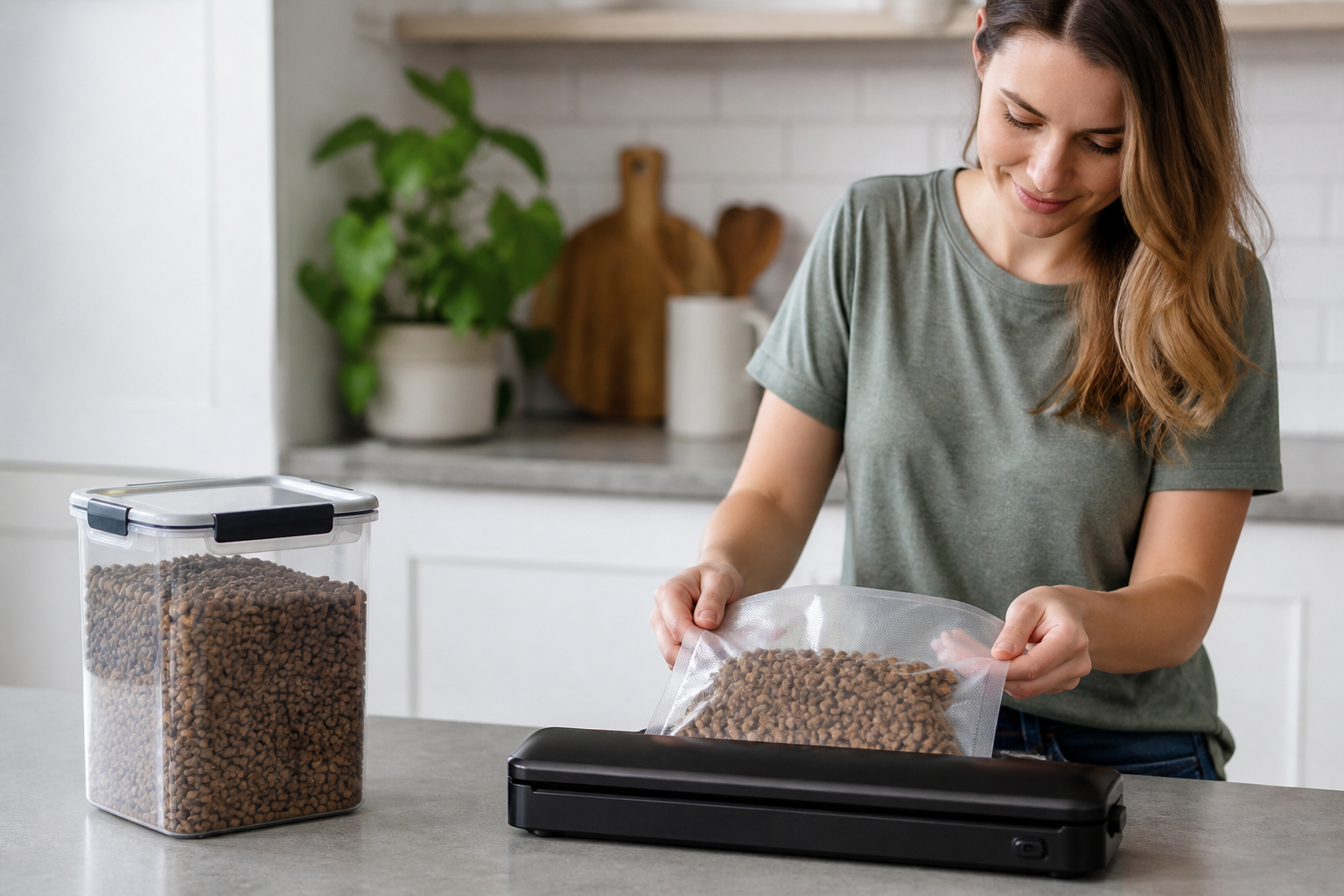
Vacuum sealing is a popular way to keep human food fresh, and it can work for your pet as well. We want to help you understand the science of food storage so you can save money without sacrificing your dog's health. This article covers the benefits, risks, and best practices for vacuum sealing dry dog food. We will also look at alternative storage methods that might better suit your daily routine.
Quick Answer: Yes, you can vacuum seal dry dog food to extend its shelf life by several months. It helps prevent fat oxidation and keeps moisture out, but you must use thick bags to prevent punctures from sharp kibble.
The Science of Why Dog Food Goes Bad
To understand why vacuum sealing works, you need to know what makes dry food spoil. Dry kibble is not a dead, inert product. It is a complex mixture of proteins, carbohydrates, and fats. Most high quality dog foods use natural fats and oils for flavor and energy. These ingredients are the most vulnerable to the environment.
Oxidation is the biggest threat to your dog's dinner. The moment you open a factory sealed bag, oxygen hits the kibble. This starts a chemical reaction called lipid oxidation. This process breaks down the fats and makes them rancid. Rancid fats do more than just smell bad. They can lead to digestive upset or even long term health issues if consumed over time.
Moisture is the second enemy. Kibble is designed to be very dry. If it absorbs humidity from the air, it can become a breeding ground for mold and bacteria. This is especially true in humid climates or if you store food in a garage or basement.
Heat is the final factor. High temperatures speed up the oxidation process. This is why a bag of food kept in a hot pantry will go bad much faster than one kept in a climate controlled room. Vacuum sealing removes the air, which slows down oxidation and keeps moisture out. However, it does not protect against heat.
For more guidance on food freshness, read our article on how long dry dog food stays fresh after opening.
The Benefits of Vacuum Sealing Your Kibble
If you are a bulk buyer or a prepper, vacuum sealing offers several distinct advantages. It is one of the most effective ways to maintain the integrity of the food over a long period.
Maximum Freshness and Palatability
Dogs have a sense of smell that is significantly more powerful than ours. They can smell rancidity long before we can. By removing the oxygen, you preserve the original scent and taste of the food. This is particularly helpful for picky eaters who might reject a bag of food that has been open for more than a month.
For additional ideas, see our guide to getting dogs to eat dry food.
Nutrient Preservation
Oxygen does not just spoil fats. It also degrades certain vitamins, such as Vitamin A and Vitamin C. When you vacuum seal the food, you lock those nutrients in. This ensures that the last bowl of food from the bag is just as nutritious as the first.
Pest and Insect Prevention
Insects like weevils, moths, and ants are attracted to the smell of grain and protein. Standard plastic bins are often not as airtight as they seem. Vacuum sealed bags are thick and completely odorless to the outside world. This makes it impossible for pests to find or get into your dog's food supply.
Portability for Travel and Hiking
Vacuum sealing is a great way to pack for a trip. Instead of bringing a bulky container, you can seal individual meal portions. These flat, airtight "bricks" of food take up very little space in a suitcase or a hiking pack. It also ensures the food stays dry even if your gear gets wet.
Potential Risks and Challenges
While vacuum sealing is effective, it is not without its hurdles. You should be aware of these issues before you seal your entire stock of kibble.
Sharp Kibble Punctures
Many types of dry dog food are shaped with sharp edges or stars. When the vacuum pulls the plastic tight, these edges can easily poke tiny holes in standard bags. Once a bag is punctured, the seal is gone. You may not even notice it happened until you go to use the food weeks later.
Crushing the Kibble
High power vacuum sealers can apply a lot of pressure. If the kibble is porous or "air puffed," the machine can crush it into powder. Most dogs do not enjoy eating a bowl of dust. It can also make the food feel greasy as oils are squeezed out of the kibble and onto the surface.
Fat Migration
Under intense pressure, the oils in the kibble can migrate to the outside of the nuggets. This can change the texture of the food. While this is not usually a safety concern, it can make the food less appealing to some dogs.
Key Takeaway: Vacuum sealing is ideal for long term storage but requires careful handling to avoid punctures and crushing the kibble.
Step by Step: How to Vacuum Seal Correctly
If you decide to use this method, follow these steps to ensure the best results. A little extra care during the sealing process will save you a lot of frustration later.
Step 1: Use heavy duty bags. / Purchase bags specifically designed for vacuum sealing. Look for "mil" ratings that indicate thickness. If your kibble is particularly sharp, consider using a double bag or placing a clean piece of paper over the top of the food before sealing.
Step 2: Portion the food. / Do not seal 20 pounds of food in one bag. The goal is to keep the food sealed until you are ready to use it. Portion the food into one week or even one day increments. This limits the exposure to air once you open a bag.
Step 3: Use the pulse setting. / If your machine has a manual or pulse mode, use it. Instead of letting the machine run until it stops automatically, pulse the vacuum until the air is mostly gone. Stop before the bag starts to crush the kibble or squeeze out the oils.
Step 4: Check for leaks. / After 24 hours, check the bags. If any of them feel soft or have air inside, the seal has failed. This usually means there was a tiny puncture or a fold in the seal. Use these bags first and re-seal the others.
Step 5: Label and store. / Write the date of the seal and the original expiration date on the bag. Store the sealed portions in a cool, dark place. A plastic bin in a pantry is a good secondary layer of protection against light and temperature swings.
Comparing Storage Methods
Vacuum sealing is not the only way to keep food fresh. Depending on your needs, another method might be more practical for your household.
| Method | Best For | Pros | Cons |
|---|---|---|---|
| Original Bag | Daily use | Designed for food safety, includes all info | Not airtight once opened, prone to pests |
| Plastic Bin | Convenience | Easy to open and close, stacks well | Plastic can absorb odors, not truly airtight |
| Vacuum Sealing | Long term storage | Stops oxidation, pest proof | Requires equipment and time |
| Freezing | Long term storage | Stops bacterial growth and oxidation | Takes up freezer space, requires thawing |
For more storage ideas, read our guide to keeping dry dog food fresh.
Vacuum Sealing Prescription and Specialty Diets
If your dog is on a prescription diet or has severe allergies, food freshness is even more critical. These specialty foods often contain specific fatty acids or delicate ingredients that are vital for managing a health condition. We carry many of these specialized brands, such as Farmina Vet Life, through our pharmacy partnership with Pet's Choice.
When you are managing a chronic condition, the last thing you want is for the food to lose its potency. Vacuum sealing can help you buy these often expensive diets in larger quantities while maintaining their efficacy. However, you should always check with your veterinarian before changing how you store prescription food.
Vet Tip: Always consult your veterinarian before bulk buying prescription diets. Some medical foods have specific storage requirements to maintain their therapeutic properties. Our pharmacy team through Pet's Choice is also a great resource for questions about prescription food handling.
The Role of the Original Bag
It might surprise you to learn that the original bag your dog food comes in is actually a high tech piece of packaging. Manufacturers spend a lot of money developing bags that block light, moisture, and oxygen. Many bags are treated with antioxidants on the inner lining to help preserve the food.
One of the best ways to store food is to keep it inside the original bag and then place that bag inside an airtight plastic or metal bin. This gives you the benefits of the manufacturer's packaging plus an extra layer of protection. If you choose to vacuum seal, you are essentially creating your own version of this high tech packaging.
Using Autoship to Manage Freshness
One way to avoid the need for long term vacuum sealing is to manage your supply more efficiently. Our Autoship program allows you to set a schedule for your food deliveries. This ensures you always have a fresh bag arriving just as you need it.
When you use Autoship, you do not have to worry about buying massive 50 pound bags that might sit open for months. You can buy smaller, fresher bags and still save money. Plus, you get an extra discount on your first order and a free MVP Gold membership. This is often more convenient than spending hours vacuum sealing individual portions of kibble.
Signs Your Dog Food Has Gone Bad
Regardless of how you store your food, you must know how to spot spoilage. Never rely solely on a vacuum seal or an expiration date. Your eyes and nose are your best tools.
- The "Off" Smell: Rancid fat has a very specific scent. It can smell sour, like old oil, or even like chemical paint or metallic coins.
- The Texture Change: If the kibble feels damp, sticky, or unusually oily, it may have absorbed moisture or undergone fat migration.
- Visible Mold: Any white, green, or black fuzzy spots are a sign of mold. Throw the entire bag away immediately.
- Refusal to Eat: If your dog, who usually loves their food, suddenly turns their nose up at it, pay attention. They can often smell spoilage that we cannot detect.
- Digestive Issues: Sudden diarrhea or vomiting after eating can be a sign of food that has turned.
For a closer look at spoilage signs, read how to tell whether dry dog food has gone bad.
Bottom line: If you have any doubt about the freshness of the food, it is safer to discard it than to risk your dog's health.
Storing Food for Emergencies
Many people look into vacuum sealing because they want to build an emergency kit for their pets. This is a great idea. In a disaster, pet food may be hard to find. Having a two or three week supply of vacuum sealed food can provide peace of mind.
For an emergency kit, vacuum sealing is superior to freezing because it does not require power. It is also superior to plastic bins because it is much more compact. Make sure to rotate your emergency stash every six months. Even a vacuum seal is not permanent. Using the oldest food and replacing it with fresh kibble ensures your emergency kit is always ready to go.
Managing Your MVP Rewards
Whether you are buying bulk bags to vacuum seal or opting for smaller, more frequent purchases, being an MVP Rewards member helps you get the most value. You can earn up to 5% back on every purchase. We also have a Frequent Buyer Program for many of the brands we carry. This allows you to earn free bags of food faster, making it even easier to keep your dog's bowl full of fresh, high quality nutrition.
Conclusion
Vacuum sealing dry dog food is an excellent way to save money and maintain freshness for long term storage. It is especially useful for travel, emergency kits, or when you find a great deal on a large bag of premium kibble. By removing oxygen, you protect the fats and vitamins that your dog needs to stay healthy. Just remember to use thick bags and avoid crushing the kibble during the process.
For your daily routine, consider using a combination of original packaging and airtight bins. If you want to skip the labor of sealing bags, our Autoship program is a great way to ensure a steady supply of fresh food delivered right to your door. At BaxterBoo, we are dedicated to helping you find the best food and storage solutions for your pets.
Key Takeaway: Use vacuum sealing for back stock or travel, but rely on high quality airtight containers and frequent fresh purchases for daily feeding.
FAQ
How long does vacuum sealed dog food last?
When stored in a cool, dark place, vacuum sealed dry dog food can remain fresh for up to a year beyond its manufacture date. However, for the best nutritional quality, it is usually recommended to use it within six months. Always check for signs of spoilage before feeding your dog.
Does vacuum sealing crush the kibble?
It can if you are not careful. High power vacuum sealers often have enough suction to break apart porous or lightweight kibble. Using the "pulse" or manual setting on your machine allows you to remove the air without applying enough pressure to crush the nuggets.
Can I vacuum seal prescription dog food?
Yes, you can vacuum seal prescription diets to help maintain their freshness and nutritional value. This is especially helpful if the food is expensive and you want to buy it in bulk. Always consult your vet to ensure that the specific ingredients in your dog's prescription food will not be affected by the process.
Is vacuum sealing better than freezing dog food?
Both methods have pros and cons. Freezing is very effective at stopping spoilage but takes up a lot of freezer space and requires a thawing period. Vacuum sealing is more space efficient and does not require a power source for storage, but it does not protect against heat like a freezer does.






