
 Save 15% on your 1st Autoship learn more

 Email us
 Live Chat
 FAQs
FAQs





Introduction
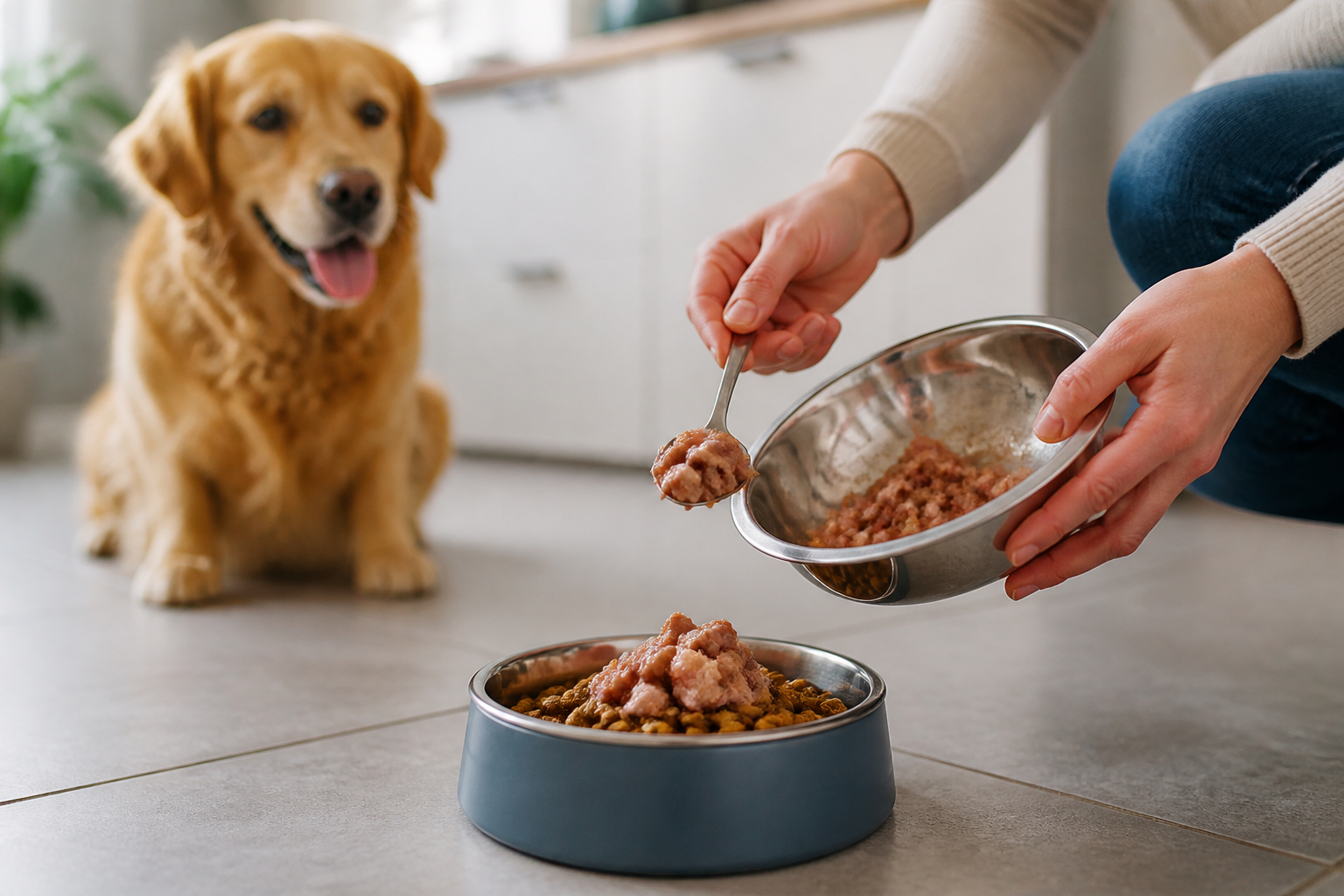
Standing in the kitchen with a bag of kibble in one hand and a pull-tab can in the other is a familiar scene for many of us. You might wonder if it is okay to combine them or if you should stick to just one. At BaxterBoo, we see this question often from owners looking to improve mealtime for picky eaters or senior dogs. This guide covers the safety, nutritional balance, and practical steps for mixing wet and dry food. We want to help you make informed choices that keep your dog healthy and excited for every meal. Mixing these textures can offer the best of both worlds in terms of hydration and dental health.
Quick Answer: Yes, you can safely mix wet and dry dog food if both products are high quality and labeled complete and balanced. This feeding method improves palatability and increases moisture intake for your dog.
The Benefits of a Mixed Diet
Many owners choose to mix food types to provide variety. Dry kibble is convenient and cost-effective. It also helps scrape away some plaque as a dog chews. Wet food provides a much higher moisture content and a stronger aroma. Combining them can solve several common feeding issues at once. Browse our dog food category to compare options for your dog's routine.
One major benefit is hydration. Most dry dog foods contain only 10 to 12 percent water. Wet food can contain up to 78 percent water. For dogs that do not drink enough from their water bowl, adding wet food is an easy way to support kidney and urinary health. This extra moisture also helps dogs feel full faster. This can be a useful tool for weight management.
Palatability is another reason to mix. Some dogs lose interest in plain kibble over time. The rich smell of a wet stew or pate can entice a picky eater to finish their meal. This is helpful for dogs recovering from an illness or those with a naturally low appetite.
For additional ideas about improving texture, read how to wet dry dog food for better digestion and hydration.
Key Takeaway: Mixing food types provides a balance of texture and nutrition while significantly boosting your dog's daily water intake.
Safety and Nutritional Standards
Before you start mixing, you must look at the labels of both foods. The most important phrase to find is "Complete and Balanced." This means the food meets the standards set by the Association of American Feed Control Officials (AAFCO). If both the wet and dry food meet these standards, you can mix them without worrying about nutritional gaps.
Be careful with "toppers" or "mixers" that are not labeled as complete meals. Some products are meant only for supplemental feeding. If you replace a large portion of a balanced meal with a supplement, your dog might miss out on essential vitamins or minerals. Always ensure the bulk of the meal comes from a balanced source.
Life stage also matters. A puppy has different nutritional needs than an adult dog. If you are feeding a puppy, both the wet and dry food should be formulated for growth. Mixing a senior wet food with a puppy kibble can lead to imbalances in calcium and phosphorus. This is especially risky for large breed puppies.
Vet Tip: Check every label for the AAFCO statement of nutritional adequacy. This ensures your dog gets the correct levels of protein, fats, and minerals regardless of the food texture.
Managing Calories and Portions
The biggest risk of mixing wet and dry food is overfeeding. It is easy to add a "scoop" of wet food on top of a full serving of kibble. This quickly leads to unwanted weight gain. You must adjust the portions of both foods to keep the total calorie count correct.
A common rule of thumb is the 75/25 split. This means 75 percent of the calories come from dry food and 25 percent from wet food. This keeps the meal cost-effective while providing the benefits of the wet food. However, you cannot just measure by volume. A cup of dry food usually has many more calories than a cup of wet food.
Check the feeding guidelines on both packages. Most brands list the calories per cup or per can. You may need to do a little bit of math to find the right balance. Using a kitchen scale is the most accurate way to measure. This is better than using a measuring cup which can vary based on the size of the kibble.
For more guidance, see how much wet dog food equals one cup of dry food.
- Find the total daily calorie requirement for your dog.
- Decide on the percentage of wet versus dry.
- Calculate the weight or volume for each portion.
- Reduce treats to account for the extra palatability of the meal.
Bottom line: Accurate measurement is the only way to prevent weight gain when moving to a mixed feeding routine.
Mixing for Picky Eaters and Seniors
For owners of picky eaters, mixing is often a necessity. The aroma of wet food is much stronger than dry food. This stimulates a dog's sense of smell, which is closely tied to their appetite. You can even warm the wet food slightly to release more scent before mixing it with the kibble.
Senior dogs often face dental challenges. Missing teeth or sore gums can make chewing hard kibble painful. Adding wet food softens the dry pieces. This makes the meal easier to chew and swallow. It also helps older dogs who might have a declining sense of taste or smell.
When mixing for these groups, try different textures. Some dogs prefer chunks in gravy, while others like a smooth pate mixed thoroughly into the kibble. If your dog picks out the wet chunks and leaves the dry food, try mashing the wet food into a paste. Use it to coat every single piece of kibble so they cannot separate them.
Tips for Successful Mixing
- Stir the food thoroughly to coat all kibble.
- Add a splash of warm water or low-sodium broth to create a gravy.
- Experiment with different protein sources like beef, chicken, or lamb.
- Keep the transition slow to avoid stomach upset.
For more ideas, explore our selection of dog food toppers.
Therapeutic and Prescription Diets
If your dog is on a therapeutic diet for a health condition, you must be very careful. Dogs with kidney disease, urinary stones, or severe allergies are often on specific prescription foods. Mixing these with standard over-the-counter food can ruin the effectiveness of the treatment.
For example, a urinary diet works by carefully controlling the pH of the urine. Adding a different brand of wet food can change that pH. This may lead to the formation of new stones. If your dog needs a prescription diet, only mix within that specific product line. Most major brands like Royal Canin or Farmina Vet Life offer both wet and dry versions of their prescription formulas.
Our pet pharmacy offers FDA-approved medications and prescription diets through our partnership with Pet's Choice. If your vet has prescribed a specific food, we can help you find both the wet and dry versions. This ensures your dog stays on track with their medical treatment while still enjoying the variety of a mixed meal.
Vet Tip: Never mix a prescription food with a non-prescription food without consulting your veterinarian. Doing so can negate the benefits of the medical diet and potentially harm your dog's health.
Storage and Food Safety
Wet food is much more perishable than dry food. Once you open a can, the clock starts ticking. Bacteria can grow quickly at room temperature. You should never leave mixed food out for more than 30 minutes. If your dog does not finish their meal, you must throw the leftovers away.
Store unopened cans in a cool, dry place. Once opened, you should cover the can with a tight-fitting lid or plastic wrap. Keep it in the refrigerator for no more than three days. Cold food might be less appealing to your dog, so you can let it sit at room temperature for a few minutes before serving. Do not microwave the can itself.
Dry food should also be stored correctly to maintain its nutritional value. Keep it in the original bag and place that bag inside an airtight container. This protects the fats in the food from becoming rancid. When you mix the two, you are introducing moisture to the dry food. This starts the breakdown process, which is why immediate consumption is so important.
Transitioning Your Dog to a Mixed Diet
Sudden changes in diet can cause diarrhea or vomiting. Even if you are using high-quality brands like Stella and Chewy's or Open Farm, your dog's digestive system needs time to adjust. A slow transition over seven to ten days is the best approach.
For a detailed transition timeline, read how to switch from dry to wet dog food.
Step 1: Small additions. / Start by adding just a spoonful of wet food to the normal amount of kibble. Reduce the kibble slightly to compensate for the calories.
Step 2: Monitor the reaction. / Watch your dog's stool consistency and energy levels. If everything looks normal for two days, you can increase the amount of wet food.
Step 3: Reach the target ratio. / Gradually increase the wet food and decrease the dry food until you hit your desired 75/25 or 50/50 balance.
Step 4: Finalize the routine. / Once your dog is fully transitioned, keep the ratios consistent. Frequent changes in the ratio can still cause minor digestive upset in sensitive dogs.
Comparing Food Types
| Feature | Dry Kibble | Wet Canned Food | Mixed Feeding |
|---|---|---|---|
| Moisture Content | Low (approx. 10%) | High (approx. 75%+) | Moderate |
| Shelf Life (Open) | Weeks | 2-3 Days (Refrigerated) | 30 Minutes |
| Cost | Generally Lower | Generally Higher | Moderate |
| Dental Benefit | Some mechanical cleaning | Low | Moderate |
| Palatability | Moderate | High | High |
The Cost Factor of Mixing
Feeding a large dog entirely on wet food is expensive for most households. Mixing is an excellent way to provide high-quality nutrition without breaking the bank. By using a premium kibble as the base, you provide the necessary calories and structure. Adding a smaller portion of wet food provides the flavor and hydration.
We carry over 500 brands like NutriSource, Acana, and Orijen at BaxterBoo to help you find the right price point. You can save further by using our Autoship programme. This gives you a discount on your first order and ensures you never run out of food. It also includes a free MVP Gold membership for additional savings.
Many owners find that they can afford a higher quality of wet food when they are only using a small amount each day. This allows you to add premium proteins or specialized ingredients that might be too expensive for a full meal. It is a great way to provide a luxury experience for your pet on a realistic budget.
Summary of Best Practices
Mixing wet and dry dog food is a great way to improve your dog's quality of life. It provides better hydration, helps with weight management, and makes mealtime more exciting. As long as you maintain the correct calorie balance and choose complete and balanced products, it is a safe and effective feeding strategy.
Remember to keep the transition slow and watch for any signs of digestive upset. If your dog has a chronic health condition, always talk to your vet before changing their diet. They can help you calculate the exact calories and ensure the mix is safe for your dog's specific needs.
Key Takeaway: Success in mixing food comes down to three things: choosing balanced products, calculating calories accurately, and maintaining strict food safety habits.
Conclusion
Finding the right balance for your dog's bowl does not have to be complicated. Whether you are helping a senior dog chew more easily or trying to hydrate a stubborn drinker, mixing wet and dry food is a practical solution. We are here to support you with a huge selection of premium foods and a dedicated pharmacy for any medical needs. Consider joining our MVP Rewards programme to earn points on every bag and can you buy. This makes it easier to provide the variety your dog loves while staying within your budget.
FAQ
Can I mix different brands of wet and dry dog food?
Yes, you can mix different brands as long as both are labeled as complete and balanced by AAFCO. Many owners use a high-quality kibble from one brand and a flavored topper or wet food from another. Just ensure that both products match your dog's current life stage, such as puppy or senior.
Does mixing wet food with dry food cause dental problems?
Mixing wet food does not directly cause dental issues, but wet food lacks the crunchy texture that helps scrape away plaque. If you choose to mix, it is even more important to maintain a regular dental care routine. This can include professional cleanings at the vet and using dental treats or water additives at home.
How do I calculate how much to feed when mixing?
The easiest way is to look at the calorie count (kcal) per cup of dry food and per can of wet food. If you want to feed half of each, use half the recommended daily calories from the dry bag and half from the wet can. Always use your dog's ideal weight for these calculations rather than their current weight if they are overweight.
Should I add water to the mix as well?
Adding a little warm water can help create a gravy and further increase hydration. This is especially useful if the wet food is a thick pate. The warm water also helps release the aroma of the food, making it more appealing to picky eaters or senior dogs with a poor sense of smell.






