
 Save 15% on your 1st Autoship learn more

 Email us
 Live Chat
 FAQs
FAQs





Introduction
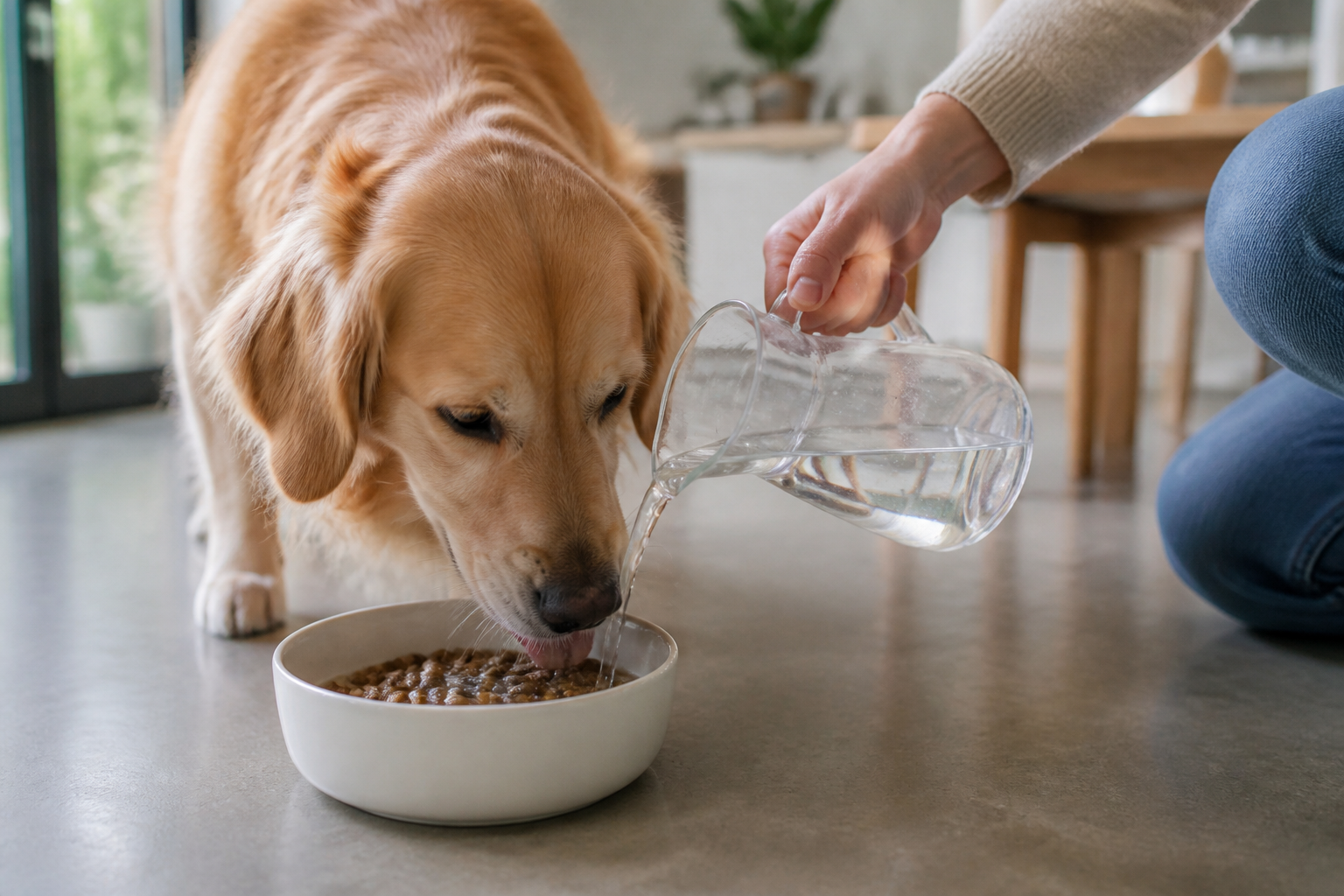
You pour the kibble into the bowl and your dog gives you a look that says they were hoping for something more. Or perhaps you have noticed your pup barely touches their water dish throughout the day. These are common moments for pet owners. At BaxterBoo, we often get asked if adding a splash of water to dry food actually does anything for a dog's health. The short answer is yes. Adding moisture can significantly change how your dog processes their meal. This post covers the benefits of hydration, how water assists the stomach, and when you should be careful with this method. Adding water can support better digestion while making mealtimes more exciting for your dog.
Quick Answer: Adding water to dry dog food helps digestion by pre-softening the kibble. This allows digestive enzymes to break down nutrients more effectively and prevents the body from pulling moisture away from other organs to process the meal.
How Water Supports the Digestive Process
Dry kibble is a convenient and calorie-dense option for most pets. However, most dry foods only contain about 10 percent moisture. Your dog's body requires significant fluids to break down these hard pellets. When a dog eats dry kibble, their stomach must produce powerful digestive juices to soften the food before nutrients can be absorbed.
By adding water to the bowl, you start this breakdown process before the food even hits the stomach. This pre-soaking makes it easier for the digestive tract to turn that kibble into energy. It also means your dog's body does not have to work quite as hard. When the food is already hydrated, the nutrients are more accessible for absorption in the small intestine. Explore our dog food category when comparing dry food options.
Helping Digestive Enzymes Work
Your dog's system relies on specific enzymes to process proteins, fats, and carbohydrates. These enzymes work best in a moist environment. If the stomach is too dry, these enzymes may not be as efficient. Adding slightly warm water can help activate these enzymes faster. This is particularly helpful for dogs with sensitive stomachs or those who seem to struggle with gas after eating.
Key Takeaway: Moisture is a critical component of the chemical breakdown of food. Adding water ensures your dog’s stomach has the necessary fluids to process dry kibble efficiently.
Boosting Hydration and Urinary Health
Many dogs are "lazy drinkers" who do not consume enough water from their bowls. This can lead to concentrated urine and a higher risk of urinary tract issues. When you add water to dry food, you are essentially sneaking extra hydration into their day.
This extra fluid helps the kidneys flush out toxins more effectively. It also supports the health of the bladder. For dogs prone to crystals or stones, maintaining high moisture intake is often a top recommendation from veterinarians.
- Supports healthy kidney function
- Dilutes urine to help prevent infections
- Keeps the lining of the digestive tract lubricated
- Helps maintain skin and coat elasticity
Vet Tip: If your dog has a history of urinary stones or chronic kidney issues, they may need a specific prescription diet. Our pet pharmacy carries FDA approved prescription pet foods to help manage these ongoing health conditions.
Benefits for Different Life Stages
The needs of a puppy are very different from the needs of a senior dog. Adding water can bridge the gap for pets at both ends of the age spectrum.
For Growing Puppies
Puppies often have sensitive teeth as they transition from milk to solid food. Hard kibble can be painful for their small mouths. Soaking the food makes it much easier for them to chew and swallow. It also helps their developing digestive systems handle the density of puppy-specific formulas. Our puppy supplies section offers age-appropriate essentials.
For Senior Dogs
Older dogs frequently deal with dental disease or missing teeth. They might also have a decreased sense of smell and taste. Warm water enhances the aroma of the kibble, which can entice a senior dog with a fading appetite to finish their meal. Additionally, seniors are more prone to dehydration, making the extra water in their food even more vital.
Addressing Bloat and Eating Habits
Some dogs eat as if every meal is a race. This rapid "gulping" of food can lead to them swallowing a lot of air. In large breed dogs, this is a risk factor for bloat, a life-threatening condition where the stomach twists. For more information, read our guide to dog breeds prone to bloat.
When you add water to kibble, it often slows the dog down. They have to "lap" up the moisture rather than just inhaling dry pellets. Softened kibble also takes up more volume in the stomach. This can help a greedy eater feel full faster, which may prevent overeating and help with weight management.
Key Takeaway: Adding liquid can act as a natural "slow feeder" for dogs that eat too quickly. This simple step supports safer eating habits and better portion satisfaction.
Potential Downsides and Safety Concerns
While adding water is generally great, there are a few things to keep in mind. The biggest concern is spoilage. Once you add water to dry food, you have essentially created wet food. Wet food cannot sit out all day like dry kibble can.
Moisture and warmth are the perfect environment for bacteria to grow. If your dog is a "grazer" who likes to take a few bites and come back later, adding water might not be the best idea. You should only add water if you know your dog will eat the meal within about 20 minutes. Our guide to mixing dry dog food with water covers additional mealtime considerations.
Dental Health Considerations
Some people believe that dry kibble helps clean a dog's teeth through abrasion. While the "crunch" can help a little, it is not a substitute for real dental care. If you switch to soaking your dog's food, you might notice more food debris sticking to their teeth. This just means you need to be more diligent with brushing or providing dental treats for dogs.
- Discard any uneaten soaked food after 30 to 60 minutes.
- Wash the food bowl thoroughly after every meal to prevent bacterial buildup.
- Monitor your dog's teeth for any increase in plaque.
Bottom line: Adding water is safe and beneficial as long as you maintain a strict cleaning routine and do not leave the food out to spoil.
How to Properly Add Water to Kibble
You do not need to turn the bowl into a soup unless your dog prefers it that way. A little goes a long way. Following a consistent routine will help your dog get used to the new texture. For another step-by-step approach, see how to wet dry dog food.
Step 1: Use warm water. Warm water releases more aroma than cold water. Never use boiling water, as this can burn your dog's mouth and destroy some of the vitamins in the food.
Step 2: Measure the amount. Start with about 1/4 cup of water for every cup of kibble. You can adjust this based on your dog's preference. Some dogs like a "gravy" consistency, while others prefer the kibble to stay slightly firm.
Step 3: Let it sit. Give the water about five to ten minutes to soak into the kibble. This ensures the center of the pellet is soft and the moisture is fully incorporated.
Step 4: Serve and observe. Watch how your dog reacts. If they seem hesitant, you can try using a low-sodium bone broth instead of plain water to add more flavor.
Alternatives to Plain Water
If your dog is particularly picky, plain tap water might not be enough to get them excited. There are several healthy liquids you can use to boost both flavor and nutrition.
- Bone Broth: This is packed with collagen and minerals that support joint health. Ensure it is made specifically for dogs and contains no onions or excessive salt.
- Goat's Milk: Often called "universal milk," goat's milk is easy to digest and full of probiotics that support gut health.
- Canned Food Toppers: Mixing a spoonful of wet food with water creates a flavorful gravy that most dogs cannot resist.
We carry a variety of these mixers and toppers at BaxterBoo to help make mealtimes more functional. Whether you use a goat's milk powder or a ready-to-pour broth, these additions can provide extra nutrients that plain water cannot. Browse our freeze-dried food hub for water-friendly meal options.
Summary of Digestion Benefits
Adding water to dry dog food is one of the easiest ways to improve your pet's daily routine. It supports the stomach, helps the kidneys, and makes food easier to eat for dogs of all ages.
- Increases overall daily hydration.
- Pre-softens kibble for easier mechanical digestion.
- Enhances flavor and aroma for picky eaters.
- May help prevent bloat by slowing down fast eaters.
Bottom line: Adding moisture to dry food is a low-cost, high-impact way to support your dog’s long-term wellness.
If your dog has persistent digestive issues like frequent vomiting, diarrhea, or a complete loss of appetite, water alone may not be the answer. In these cases, we always recommend consulting your veterinarian. They can help determine if your dog needs a change in diet or medical intervention. Our pharmacy is always here to help once you have a plan from your vet.
For your next bag of food or a new topper, consider setting up our Autoship programme. It ensures you never run out of your dog’s favorites and saves you money on every order.
FAQ
Does adding water to kibble cause dental problems?
It does not directly cause dental disease, but it removes the slight abrasive benefit of dry kibble. Because softened food can stick to teeth more easily, you should maintain a regular teeth-brushing routine. Using dental treats and toys can also help keep your dog's mouth clean while they enjoy softened food.
Can I add cold water to my dog's food?
Yes, cold water is safe, but it may not be as effective at releasing aromas. Warm water is generally preferred because it softens the kibble faster and makes the meal more appetizing. Always ensure the water is not hot enough to cause burns.
How long can I leave soaked kibble in the bowl?
You should treat soaked kibble like wet canned food. It should be picked up and discarded if it has not been eaten within 30 to 60 minutes. Leaving it out longer increases the risk of bacterial growth, especially in warm weather.
Does adding water help a dog lose weight?
It can help with weight management by increasing the volume of the food. The added water makes the dog feel full faster without adding extra calories. This can prevent your dog from begging for more food after they have finished their measured portion.






