
 Save 15% on your 1st Autoship learn more

 Email us
 Live Chat
 FAQs
FAQs





Introduction
You open a fresh bag of kibble and your dog immediately comes running. The smell is strong and the texture is slightly oily. Fast forward three weeks later. The kibble at the bottom of the bin seems dusty and dull. Your dog might even sniff the bowl and walk away. This change happens because dry dog food begins to degrade the moment it is exposed to the air.
At BaxterBoo, we know that high-quality nutrition is an investment in your dog’s long-term health. Storing that food correctly is just as important as choosing the right brand. In this article, we will explain why airtight storage is a requirement rather than a suggestion. We will also cover the best containers to use and how to spot signs of spoilage. Proper storage keeps the nutrients in the food and harmful bacteria out of your dog's stomach.
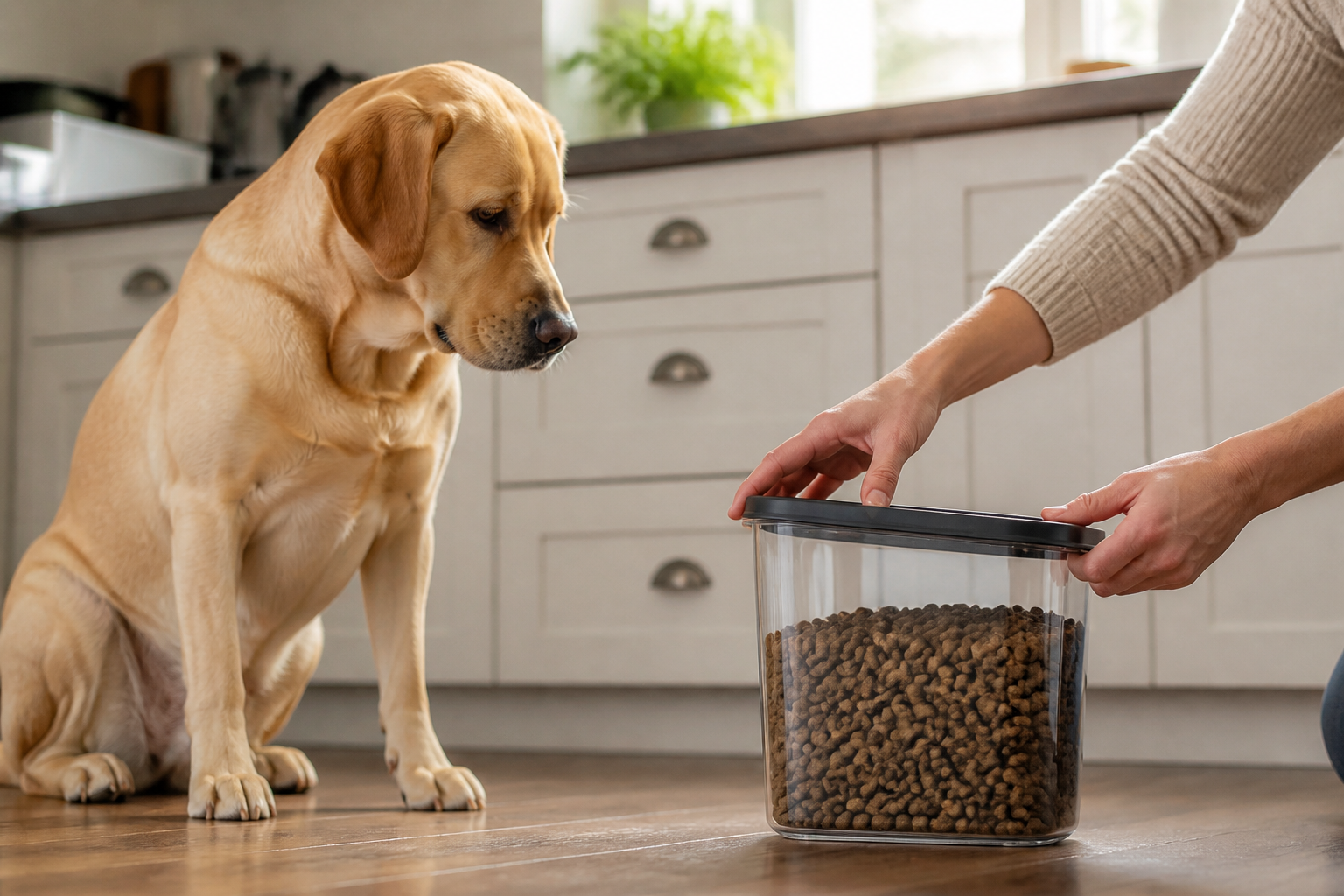
Quick Answer: Yes, dry dog food must be kept in an airtight environment. Exposure to oxygen causes fats to turn rancid and destroys essential vitamins. An airtight seal also prevents moisture from causing mold and keeps pests from contaminating the supply.
Why Dry Dog Food Must Be Airtight
Many people assume dry kibble is shelf-stable like a box of crackers. However, kibble is a complex product. It is often coated with fats and oils to make it taste better and provide energy. These fats are the first things to fail when they hit the air.
The Process of Oxidation
Oxidation is the scientific term for what happens when oxygen interacts with the fats in dog food. When these fats are exposed to air, they begin to break down. This process is called rancidity. Rancid fats do more than just smell bad. They can actually be toxic over time. They lose their nutritional value and can cause digestive upset or even more serious health issues if consumed regularly.
Preservation of Nutrients
Dog food manufacturers carefully balance vitamins, minerals, and fatty acids. Many of these nutrients are sensitive to light, heat, and air. Vitamin A and Vitamin E are particularly vulnerable. If you leave a bag of food open, the nutritional profile changes every day. By the time you reach the bottom of the bag, your dog may not be getting the balanced diet promised on the label.
Key Takeaway: Oxygen is the primary enemy of pet food freshness. An airtight seal slows down oxidation and protects the fats and vitamins your dog needs to thrive.
For more guidance on freshness timelines, read our article on how long dry dog food stays fresh after opening.
The Best Way to Store Kibble
How you store the food is just as important as the container you choose. There is a specific method that experts recommend to keep food at its peak.
Keep the Original Bag
One of the biggest mistakes owners make is pouring kibble directly into a plastic bin. We recommend keeping the food inside its original bag. Then, place that entire bag inside an airtight container. The original bags are designed with high-tech liners. These liners act as a grease barrier to keep the fats from soaking into the packaging.
Why the Bag Details Matter
The bag also contains vital information. It has the brand name, the "best by" date, and the lot number. If there is ever a product recall, you will need that lot number. It is much easier to have the bag on hand than to try to remember which batch you bought.
- Fold the top of the bag down tightly after every meal.
- Use a heavy-duty bag clip to secure the fold.
- Place the clipped bag inside a hard-sided, airtight bin.
- Keep the lid of the bin locked at all times.
If you are comparing food options, browse our dry dog food category.
Choosing the Right Container
Not all plastic bins are created equal. Look for containers that specifically state they have an airtight seal. Many of these use a foam or silicone gasket around the rim. This gasket creates a true barrier against the outside air.
| Container Material | Pros | Cons |
|---|---|---|
| BPA-Free Plastic | Lightweight and affordable. Often has a clear view. | Can develop micro-scratches that harbor bacteria. |
| Stainless Steel | Durable and very easy to sanitize. Non-porous. | Usually more expensive and heavier to move. |
| Original Bag Only | No extra cost. Has all label info. | Not pest-proof and can be easily ripped. |
For additional storage advice, see our guide to dry dog food storage and freshness.
Location Matters for Food Safety
You might have the perfect container, but if you put it in the wrong place, the food can still spoil. Environmental factors like heat and moisture play a huge role in food safety.
Avoiding Heat and Humidity
Store your dog's food in a cool and dry place. The temperature should stay below 80 degrees Fahrenheit. Many owners store food in the garage or a laundry room. This is often a mistake. Garages can get very hot in the summer. High heat speeds up the rancidity of fats. Laundry rooms often have high humidity. Moisture is the leading cause of mold growth in kibble.
Pest Prevention
An airtight container does more than just block air. It also blocks smells. Rodents and insects have an incredible sense of smell. They can detect a bag of dog food from a long distance. Once they find a way in, they can contaminate the entire bag with droppings or larvae. A locking, airtight lid is your best defense against unwanted visitors.
Vet Tip: If you notice your dog is suddenly refusing food they used to love, check the storage area. Moisture or heat may have caused a change in flavor or safety that you cannot see yet. Always consult your vet if your dog stops eating or shows signs of a sensitive stomach.
If your dog has broader wellness needs, explore our dog healthcare category.
Recognizing Spoiled Dog Food
It is not always obvious when dog food has gone bad. You need to use your senses to check the quality before every feeding.
Signs of Spoilage
Start by smelling the food. Fresh kibble usually has a nutty or meaty scent. Rancid food often smells like old paint, sour chemicals, or wet cardboard. Next, look at the texture. If the kibble feels sticky or excessively oily, the fats may be breaking down. Look for any signs of "dust" that moves. This could be a sign of grain mites.
For more warning signs, read about how to tell when dry dog food has gone bad.
Mold and Mycotoxins
Mold is not always green or fuzzy. Sometimes it looks like a white or grey film on the pieces of kibble. Eating moldy food can lead to mycotoxin poisoning. This is a serious medical condition. If you see even a small amount of mold, throw the entire bag away. Do not try to scoop out the "clean" parts. Mold spores spread easily through the whole container.
Bottom line: If the food smells off or looks different than usual, do not risk it. It is much cheaper to buy a new bag than to pay for an emergency vet visit.
Health Risks of Improper Storage
When food is not kept airtight, it becomes a breeding ground for problems. These problems can lead to significant health issues for your dog.
Bacterial Contamination
Salmonella and E. coli are not just concerns for human food. They can also grow in pet food that has been exposed to moisture or pests. These bacteria cause severe vomiting and diarrhea. If your dog is struggling with chronic digestive issues, the cause might be hidden in your food bin.
Digestive Support and Prescription Diets
Some dogs have very sensitive systems. They might react to even a slight change in food freshness. Our pharmacy carries FDA-approved prescription diets through our partnership with Pet's Choice. These diets are specifically formulated for dogs with allergies or digestive diseases. If your vet recommends a prescription diet, we can help you manage those needs through our pet pharmacy.
Step 1: Check the Best By Date. / Ensure the food is not already expired before you buy it.
Step 2: Inspect the Packaging. / Look for any small tears or holes in the bag at the store.
Step 3: Transfer to Airtight Storage. / Put the bag in a bin as soon as you get home.
Step 4: Monitor Your Dog. / Watch for any signs of lethargy or loss of appetite.
Cleaning and Maintenance Routine
You should never "top off" a food container. This means you should not pour a new bag of food over the crumbs of the old one. This practice mixes fresh food with old, oxidized fats and potential bacteria.
How to Wash Your Food Bin
Every time you finish a bag of food, you must wash the container. This is a critical step that many owners skip. Residual oils from the previous bag will stick to the walls of the bin. These oils will turn rancid and contaminate the next bag you put inside.
- Empty all crumbs and dust from the bin.
- Wash the inside and the lid with hot, soapy water.
- Use a sponge to scrub away any oily residue.
- Rinse thoroughly to ensure no soap remains.
- Dry the container completely. Even a tiny amount of trapped water can cause mold in the next bag.
For related feeding-area hygiene advice, read about cleaning your dog’s bowl and feeding station.
Inspecting the Gaskets
If your container has a rubber or silicone seal, check it for cracks. Over time, these seals can dry out and lose their effectiveness. If the seal is no longer soft and flexible, it is time to replace the lid or the entire container. A broken seal means the container is no longer airtight.
Summary of Best Practices
Keeping dry dog food airtight is the best way to ensure your dog stays healthy and happy. It protects the financial investment you make in their nutrition. It also prevents the heartbreak of a sick pet.
- Always use a container with a functional airtight seal.
- Keep the kibble inside its original bag within that container.
- Store the bin in a temperature-controlled room, not a garage.
- Wash the container between every single bag of food.
- Throw away any food that smells sour, looks moldy, or has attracted pests.
At BaxterBoo, we want to help you make pet care as simple as possible. Our Autoship programme is a great way to ensure you always have a fresh bag of food arriving right when you need it. This helps you avoid buying huge bags that sit open for too long. Plus, you can save on your orders and earn MVP Rewards on every purchase. Keeping your dog’s food fresh is one of the easiest ways to support their long-term wellness.
FAQ
How long does dry dog food stay fresh after the bag is opened?
Once you open a bag of dry dog food, you should aim to use it within 30 to 45 days. Even with airtight storage, the quality begins to decline slowly after exposure to air. If you have a small dog, consider buying smaller bags to ensure the food stays fresh until it is finished.
Can I just use a bag clip instead of an airtight container?
A bag clip is better than nothing, but it is not a perfect seal. Air can still seep through the folds of the bag. A clip does not protect the food from pests like mice or ants. For the best protection, use a combination of a tightly folded bag, a clip, and a hard-sided airtight bin.
Is it okay to store dog food in the refrigerator?
While refrigeration can slow down the oxidation of fats, it introduces the risk of moisture. Every time you take the container out of the fridge, condensation can form inside. This moisture can lead to mold growth. It is generally better to store dry food in a cool, dark pantry at room temperature.
Can I freeze dry dog food to make it last longer?
Yes, you can freeze dry dog food for up to six months. Ensure it is in a truly airtight, freezer-safe bag or container. When you are ready to use it, let it thaw completely at room temperature before opening the bag. This prevents condensation from forming on the cold kibble and causing spoilage.






