
 Save 15% on your 1st Autoship learn more

 Email us
 Live Chat
 FAQs
FAQs





Introduction
You finally made the switch to a high quality freeze dried raw diet for your dog. You might have picked up a bag of Stella and Chewy’s or Open Farm nuggets because you want the benefits of raw nutrition without the mess of a thawing freezer tray. Now that the bag is open, you are staring at those lightweight morsels and wondering if they belong in the pantry or the fridge. At BaxterBoo, we know that transitioning to raw feeding comes with a bit of a learning curve. Storing this food correctly is the only way to protect the delicate enzymes and nutrients your dog needs. This post covers everything from humidity control to the safe handling of rehydrated leftovers. Proper storage ensures your investment stays fresh and your dog stays healthy.
Quick Answer: Store freeze dried raw dog food in its original resealable packaging in a cool, dark, and dry place like a kitchen pantry. Once opened, it is best used within 30 days to maintain peak nutritional value and flavor. Only refrigerate the food after you have rehydrated it with water or broth.
The Science of Moisture and Shelf Stability
To understand why storage is so important, you have to understand how freeze dried food is made. Most traditional kibbles are cooked at high heat. This process kills bacteria but also destroys many natural enzymes. Freeze drying is different. The food is frozen and then placed in a vacuum chamber. Through a process called sublimation, the ice turns directly into vapor without becoming liquid. This leaves the structure of the meat, organs, and bone intact. It also keeps those "living" nutrients active.
Because the moisture is almost entirely removed, the food becomes shelf stable. Bacteria need moisture to grow. As long as the food stays dry, it stays safe. However, the moment you open the bag, the food is exposed to the air. Oxygen and humidity start to work against the freshness. If you live in a high humidity environment, this is even more critical. The porous nature of freeze dried nuggets means they can act like a sponge for any moisture in the air.
Key Takeaway: Freeze drying preserves nutrients by removing water. Keeping the food 100 percent dry is the primary goal of proper storage to prevent bacterial growth and spoilage.
Finding the Perfect Location in Your Home
You do not need to take up space in your freezer for freeze dried food. That is one of its biggest advantages over frozen raw diets. However, you cannot just leave the bag anywhere. The ideal storage spot is a cool, dark, and dry location. A kitchen pantry or a dedicated pet food cupboard works best.
For more information about selecting and serving these diets, explore our freeze-dried dog food category.
Avoid areas with high temperature fluctuations. Do not store the food in a cabinet above the stove or next to the dishwasher. The heat and steam from cooking can penetrate the packaging over time. Similarly, avoid storing the bag in an uninsulated garage or basement. These areas often have high humidity levels. Moisture is the biggest threat to freeze dried raw food. If the nuggets start to feel soft or spongy rather than crisp and light, they have absorbed too much moisture.
Temperature Control
Keep the storage area between 50 and 75 degrees Fahrenheit. While the food is shelf stable, excessive heat can cause the natural fats in the raw meat to oxidize. Oxidized fats smell rancid and lose their nutritional value. If your kitchen gets very hot during the summer, move the food to the coolest part of your home.
Light Exposure
Light can also degrade the quality of the ingredients. Many premium brands like Vital Essentials or Northwest Naturals use opaque packaging for a reason. UV light can break down vitamins and antioxidants. If you choose to move the food into a different container, ensure it is not clear. If you use a clear glass jar, keep it tucked away inside a dark cabinet.
The Original Packaging vs Storage Containers
One of the most common questions we get is whether to pour the food into a plastic bin. We generally recommend keeping freeze dried raw food in its original bag. Manufacturers spend a lot of money developing packaging that blocks out light, oxygen, and moisture. Most of these bags feature high quality zip locks or hook and loop closures.
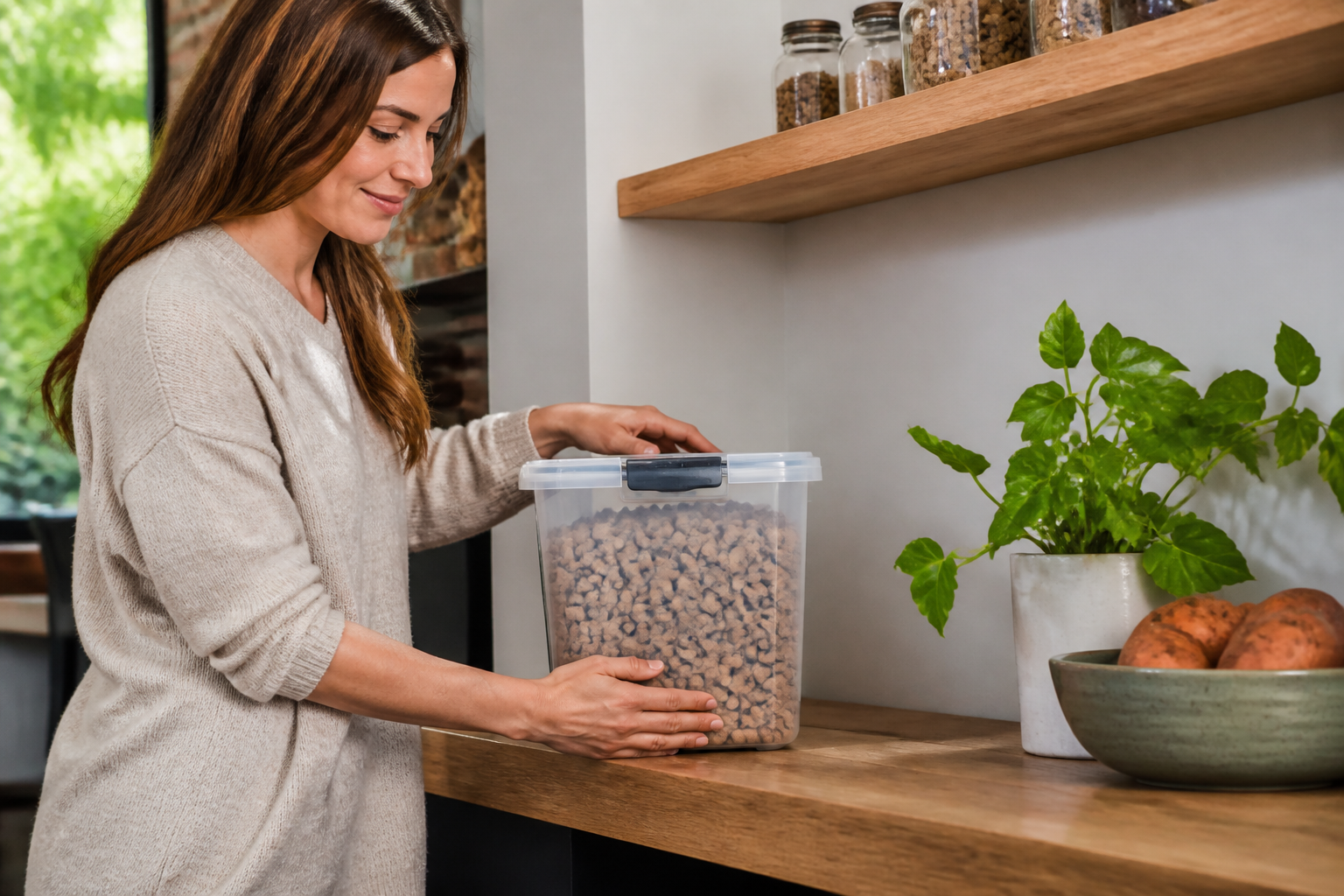
If you prefer using a secondary container for organization, place the entire bag inside the bin. This gives you an extra layer of protection. It also ensures you have the lot number and expiration date handy in case of a product recall. If you must pour the food out, choose a high quality airtight container.
- Mylar Bags: These are the industry standard for a reason. They provide a superior barrier against the elements.
- Airtight Plastic Bins: Ensure the seal is silicone and truly prevents air exchange.
- Glass Jars: These are excellent for blocking air, but they must be stored in the dark to prevent light damage.
Vet Tip: If your dog has a sensitive stomach or chronic health issues, keep the original packaging until the bag is finished. This allows your veterinarian to check the specific ingredients and batch information if your dog has an unexpected reaction. For dogs with ongoing prescription needs, our pet pharmacy carries a wide range of FDA approved medications through our partnership with Pet's Choice.
The 30 Day Freshness Rule
Even in the best container, freeze dried raw food starts to lose its peak flavor and aroma once exposed to oxygen. Most manufacturers recommend using the bag within 30 to 60 days of opening. For the best experience for your dog, aim for that 30 day window.
Freeze dried raw meat contains natural fats. When these fats meet oxygen, they slowly begin to break down. This does not always mean the food is "spoiled" in the sense of being dangerous, but it will taste less appealing to a picky eater. If you have a small dog and buy a very large bag to save money, the food may sit open for too long. In these cases, it is often better to buy smaller bags more frequently. You can use our Autoship programme to ensure a fresh bag arrives just as you are finishing the old one, which often includes a discount on your orders.
For additional guidance on freshness timelines, read how long dry dog food stays fresh once opened.
Managing Rehydrated Leftovers
The storage rules change completely the moment you add water, goat milk, or bone broth. Many owners prefer to rehydrate freeze dried food to ensure their dog stays hydrated. This is a great practice, but rehydrated food is no longer shelf stable. It is now essentially fresh raw meat.
If your dog does not finish their meal, you must treat the leftovers like fresh food. Do not leave rehydrated food sitting out at room temperature for more than 30 minutes. Bacteria can multiply rapidly once moisture is reintroduced.
- Store in the fridge: Place any uneaten rehydrated food in an airtight container.
- Label the date: Clearly mark when the food was rehydrated.
- Use quickly: Rehydrated food should be consumed within 3 to 5 days.
- Check the smell: If the food smells sour or off after being in the fridge, toss it.
Key Takeaway: Dry freeze dried food stays in the pantry. Rehydrated freeze dried food stays in the refrigerator. Never mix old rehydrated food with a fresh dry batch.
For more serving ideas, see this freeze dried dog food feeding guide.
Safety and Hygiene for the Owner
Storing freeze dried raw dog food also involves safely managing the storage area. While the freeze drying process often includes a pathogen reduction step like High Pressure Processing, it is still a raw product. You should handle it with the same care you use for raw chicken in your own kitchen.
Wash your hands thoroughly after every feeding. If you use a scoop, wash it daily with hot, soapy water. Avoid using the same scoop for kibble and raw food unless it is cleaned in between. Cross contamination can happen easily in a busy kitchen.
If you have young children or immunocompromised individuals in the home, be extra diligent. Store the food on a high shelf where kids cannot reach it. Ensure the bag is zipped tightly after every use to prevent any dust from the nuggets from settling on kitchen surfaces.
For more information about handling and serving freeze dried meals, read how much freeze dried dog food to feed your pet.
Signs of Spoilage to Watch For
Even with perfect storage, sometimes things go wrong. It is important to know what "bad" freeze dried food looks like. Because the food is already dry and often has a unique texture, it can be harder to tell than with canned food.
- The Smell Test: It should smell like dried meat or slightly nutty. If it smells like old oil, paint, or has a sour "wet dog" odor, the fats may have gone rancid.
- Texture Changes: The nuggets should be firm and crumble when squeezed. If they feel soft, rubbery, or damp, moisture has gotten into the bag.
- Visible Mold: This is rare in dry food but can happen if the bag was stored in a damp basement. Any white, green, or black fuzzy spots mean the whole bag must be discarded.
- Infestation: If the bag was not sealed correctly, pantry moths or beetles might find their way in. Check the bottom of the bag for any webbing or movement.
Bottom line: When in doubt, throw it out. Protecting your dog from foodborne illness is always worth the cost of a new bag.
For related storage advice, see how long dry dog food lasts.
Traveling with Freeze Dried Raw Food
One of the main reasons pet owners choose freeze dried diets is for travel. It is much easier than hauling a cooler of frozen meat on a camping trip. However, storage on the road can be tricky.
If you are traveling in a car, keep the food in the cabin with you rather than a hot trunk. Use a smaller, travel sized bag or a dedicated airtight container to save space. Avoid leaving the food in a tent or a vehicle where temperatures can skyrocket during the day. If you are hiking, keep the food in a waterproof dry bag inside your pack. This prevents rain or sweat from soaking through the packaging and ruining the meal.
Choosing the Right Bag Size
To make storage easier, match the bag size to your dog's appetite. While buying in bulk is often cheaper, it is only a value if the food stays fresh.
- Small Dogs (under 15 lbs): Stick to 5oz or 14oz bags. These will likely be finished within the 30 day freshness window.
- Medium Dogs (15-40 lbs): A 25oz bag is usually the sweet spot for a month of feeding.
- Large Dogs (over 40 lbs): You can safely purchase the largest bags available, as you will go through them quickly enough to avoid spoilage.
If you find that your dog is getting bored with their food toward the end of a large bag, it might be because the aroma has faded. Switching to smaller bags can keep the "nose" of the food sharp and enticing for your pet.
Environmental Factors and Regional Advice
Your geographic location plays a role in how you should store your BaxterBoo purchases. If you live in the Pacific Northwest or the Southeast, humidity is your constant enemy. You might need to be more aggressive with your storage.
In humid climates, consider using a moisture absorber packet (desiccant) inside your storage bin. Make sure the packet is taped to the lid or placed where your dog cannot accidentally eat it if you pour the food out. In very dry, desert climates like Arizona, the food will stay crisp longer, but you must be more careful about heat. Keep the food in the center of the home away from exterior walls that can radiate heat.
Why Quality Ingredients Impact Storage
Higher quality brands like Acana, Orijen, and Stella and Chewy’s use natural preservatives like tocopherols (Vitamin E). These are effective but they do not last forever. Unlike low quality kibbles that use chemical preservatives like BHA or BHT, natural diets have a shorter shelf life once opened. This is a good thing for your dog's health, but it puts more responsibility on you to manage the storage properly.
When you look at the ingredient list, notice the lack of fillers. Freeze dried raw food is nutrient dense. This density means there is more "real food" for bacteria to target if moisture is present. By following strict storage protocols, you are protecting the high quality protein and organ meats that you are paying for.
Vet Tip: If you are transitioning your dog to a freeze dried diet to manage allergies or skin issues, consistency is key. Proper storage prevents the growth of molds that could trigger an allergic reaction. If your dog's itching persists even on a clean raw diet, consult your vet about a specialized plan. Our pharmacy offers various allergy relief options through the Pet's Choice partnership.
Summary of Best Practices
Storing freeze dried raw dog food does not have to be complicated. If you treat it like a cross between a dry pantry staple and a fresh meat product, you will find the right balance.
- Keep it in the original Mylar bag whenever possible.
- Seal the bag tightly after every single meal.
- Store it in a cool, dark, and dry pantry.
- Never refrigerate dry nuggets, but always refrigerate rehydrated ones.
- Use the bag within 30 days for maximum flavor.
- Wash your hands and bowls after every feeding.
By following these steps, you ensure that every scoop of food provides the maximum benefit to your dog. You are providing them with a diet that supports their joints, coat, and digestion. Keeping that food fresh is the final step in being a responsible raw feeder.
FAQ
Does freeze dried dog food go bad if not refrigerated?
No, the dry nuggets do not need refrigeration as long as they stay dry and the bag is sealed. The freeze drying process removes the moisture that bacteria need to grow, making it shelf stable at room temperature. However, you must refrigerate the food immediately once you add water or other liquids to it.
How long does an unopened bag of freeze dried dog food last?
Most unopened bags have a shelf life of 12 to 18 months from the date of manufacture. You should always check the "Best By" date printed on the back or bottom of the bag. Store unopened bags in a cool, dry place to ensure they reach their full shelf life.
Can I store freeze dried dog food in the freezer to keep it fresh?
While you can store it in the freezer, it is usually unnecessary and can actually introduce moisture. When you take the cold bag out into a warm kitchen, condensation can form inside the bag. This moisture can cause the food to spoil faster. A cool, dry pantry is generally a better option.
Is it okay to mix freeze dried food with kibble in the same container?
It is better to keep them in their separate original bags. Kibble and freeze dried raw food have different moisture levels and fat contents. Storing them together in one bin can lead to the fats from the kibble affecting the freeze dried nuggets, or moisture from the raw food affecting the kibble. Mix them in the bowl at mealtime instead.






