
 Save 15% on your 1st Autoship learn more

 Email us
 Live Chat
 FAQs
FAQs





Introduction
You might find yourself standing in the pet food aisle, comparing a bag of standard kibble to a premium bag of air-dried food. The price difference is often striking. Many pet owners want the nutritional benefits of a raw diet but need the convenience and safety of a shelf-stable product. At BaxterBoo, we know that choosing the right food is one of the most important decisions you make for your dog. This guide explains the science behind air-drying, how the process works, and how you can even try it yourself at home. We will cover ingredient selection, safety protocols, and the best ways to store these nutrient-dense meals. Whether you want to improve your dog's coat or manage a picky appetite, understanding this slow-cooking method is the first step toward a healthier bowl.
What Is Air-Dried Dog Food?
Air-dried dog food is a unique category that sits between traditional kibble and raw feeding. Unlike kibble, which is made using high-heat extrusion, air-dried food is produced through a slow dehydration process. This method uses circulating warm air to gently remove moisture from raw ingredients over several hours. The result is a food that retains the natural enzymes and vitamins found in raw meat but has a texture similar to jerky.
The process is designed to be gentle on the ingredients. High heat can often denature proteins and destroy fragile vitamins. By keeping the temperature low, the nutritional integrity of the meat, organs, and vegetables remains intact. This means your dog gets more "living" nutrition in every bite. It is a calorie-dense option, so you typically feed much less than you would with standard dry food.
Most air-dried foods are made with a very high percentage of meat. Because the water is removed, the protein content becomes highly concentrated. This makes it an excellent choice for dogs who need high-energy fuel or those who have sensitivities to the fillers often found in mass-produced kibble. It provides the benefits of raw food without the mess of defrosting or the risk of rapid spoilage.
The Benefits of Low-Temperature Processing
The primary reason pet owners switch to air-dried options is the nutrient density. When food is cooked at high temperatures, many manufacturers have to add synthetic vitamins back into the mix to replace what was lost. Air-drying minimizes this need. The natural minerals and amino acids stay in their original state, which can make them easier for your dog’s body to absorb.
Digestibility is another major advantage. Because the food is less processed, the stomach can break it down more efficiently. Owners often notice that dogs on an air-dried diet have smaller, firmer stools. This is a sign that the body is utilizing more of the food and creating less waste. It is a practical benefit for both the dog's health and your backyard cleanup routine.
Key Takeaway: Air-drying preserves the natural enzymes and vitamins in raw ingredients by using low heat and constant airflow, resulting in a highly digestible and nutrient-dense meal.
For dogs with picky appetites, the smell and texture of air-dried food are often irresistible. It has a rich, meaty aroma that kibble simply cannot match. If you have a senior dog with a fading sense of smell or a puppy that turns its nose up at standard meals, air-dried nuggets can be a total lifesaver. You can use them as a full meal or as a high-value topper to encourage eating.
How Do You Air Dry Dog Food at Home?
If you are interested in making your own air-dried food, the process requires patience and the right equipment. You cannot simply leave meat out on the counter. You need a controlled environment that manages both heat and airflow. Most people use a dedicated food dehydrator, but a standard oven with a very low setting can also work.
The first step is selecting your proteins. You should look for lean cuts of meat. Fat does not dry well and can lead to the food going rancid much faster. Chicken breast, lean beef, or turkey are excellent starting points. You will also want to include organ meats like liver or heart to ensure a wide range of vitamins. Many DIY recipes follow an 80-10-10 rule: 80 percent muscle meat, 10 percent organ meat, and 10 percent fruits or vegetables.
Once you have your ingredients, you must prep them carefully. Slicing the meat into thin, uniform strips is essential. If the pieces are too thick, the outside will dry while the inside stays moist, which creates a breeding ground for bacteria. Some people prefer to grind the meat and vegetables together and then spread the mixture onto drying trays. This ensures that every bite is nutritionally balanced.
Step-by-Step Guide to the DIY Process
Preparing a batch of food takes time. Do not try to rush the process by turning up the heat. High heat will cook the meat rather than dry it, which defeats the purpose of preserving the enzymes.
Step 1: Clean and trim your meats. / Remove all visible fat and silver skin from the muscle meat. This ensures the finished product stays shelf-stable for as long as possible.
Step 2: Slice or grind the ingredients. / Aim for slices about an eighth of an inch thick. If grinding, mix in finely chopped vegetables like spinach or carrots at this stage.
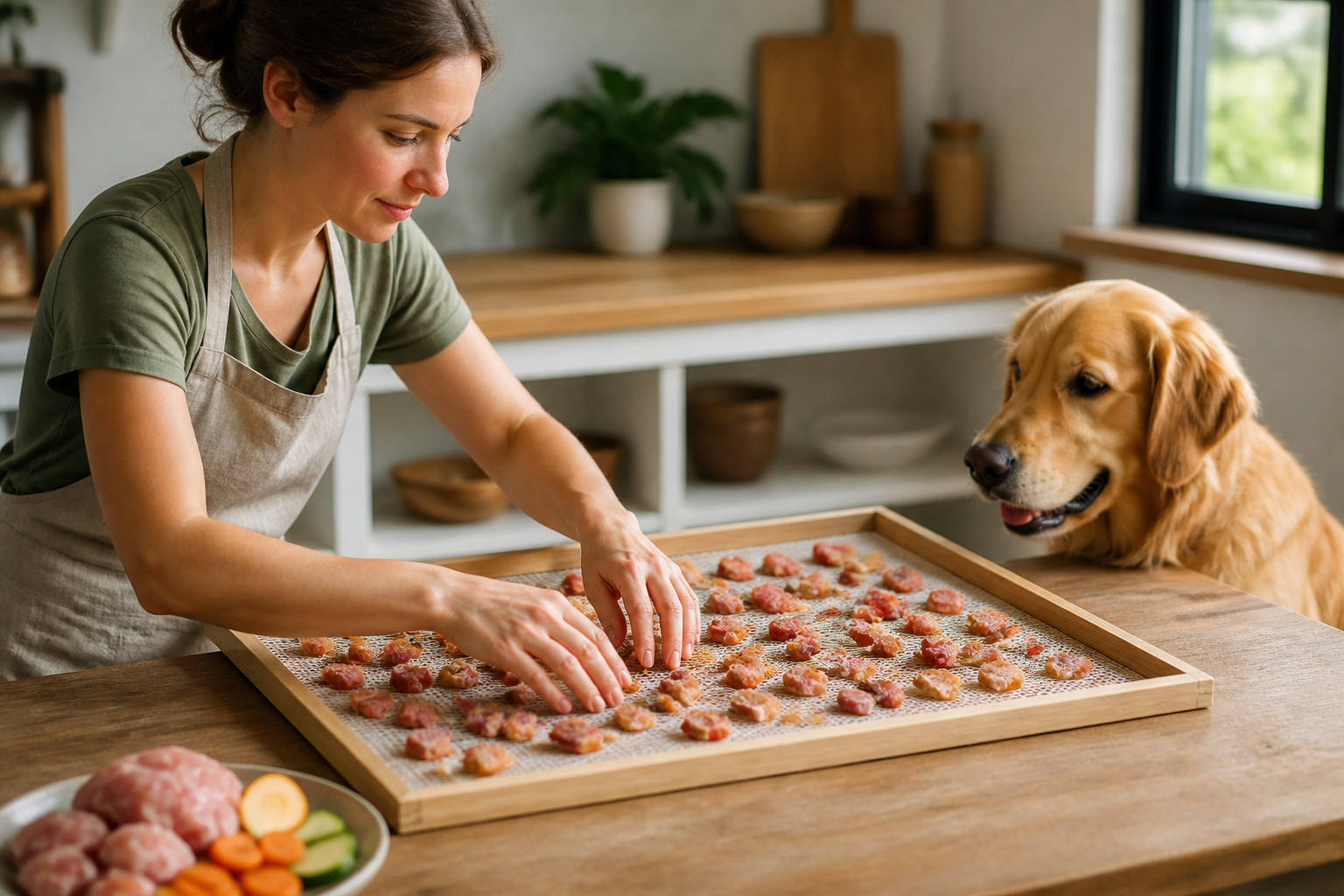
Step 3: Arrange on drying trays. / Place the pieces in a single layer with space between them. Do not overlap the pieces, as this prevents air from reaching all surfaces.
Step 4: Set the temperature and timer. / For safety, poultry should be dried at 165 degrees Fahrenheit. Beef and lamb can usually be dried at 145 to 155 degrees. The process will likely take 10 to 14 hours.
Step 5: Test for dryness. / The food should feel leathery and tough. It should not feel soft or squishy when you press on it. When you break a piece, there should be no visible moisture in the center.
Vet Tip: Always consult your veterinarian before switching to a fully homemade diet. They can help ensure your recipe meets all the nutritional requirements for your dog's specific life stage and health needs.
Essential Equipment for Air-Drying
While you can use a kitchen oven, a dedicated dehydrator is much more efficient. Ovens often struggle to maintain the very low temperatures required for air-drying. They also lack the consistent airflow that a dehydrator's fan provides. If you plan to make air-dried food regularly, a dehydrator with adjustable temperature controls is a worthwhile investment.
You will also need a high-quality chef's knife or a meat slicer. Consistent thickness is the secret to a successful batch. If you have some pieces that are thin and others that are thick, the thin ones will become brittle before the thick ones are safe to eat. A kitchen scale is also helpful for measuring your meat-to-vegetable ratios accurately.
At BaxterBoo, we carry a wide variety of high-quality treats and foods that follow these same principles. If the DIY process feels too time-consuming, you can find expertly prepared options from brands like Ziwi Peak or Stella and Chewy's. These brands use commercial-grade equipment to ensure safety and nutritional balance while maintaining that jerky-like texture dogs love.
Safety Protocols and Bacterial Risks
The biggest concern with air-drying at home is the risk of bacteria like Salmonella or E. coli. Because the food is not "cooked" in the traditional sense, the temperature must be high enough to kill pathogens but low enough to preserve nutrients. This balance is tricky to achieve in a home kitchen. Commercial manufacturers often use high-pressure processing or other safety steps to ensure their food is pathogen-free.
If you are air-drying at home, you must be extremely diligent about hygiene. Clean all surfaces and tools before and after use. Ensure your dehydrator is actually reaching the temperature displayed on the dial. You can use a separate oven thermometer to verify the internal heat.
Quick Answer: Air-drying dog food involves removing moisture from raw ingredients using low heat (145-165°F) and consistent airflow over 10 to 12 hours. This creates a shelf-stable, nutrient-dense meal that preserves natural enzymes better than traditional high-heat cooking.
If your dog has a compromised immune system or a very sensitive stomach, DIY air-dried food might not be the best choice. In these cases, a prescription diet or a professionally formulated air-dried food is much safer. Our pharmacy carries a range of specialized foods and medications through our partnership with Pet's Choice. If your vet recommends a specific prescription diet to manage a health condition, we can help you get those needs met safely.
Comparing Air-Dried to Freeze-Dried Food
It is easy to confuse air-dried food with freeze-dried food. While both aim to preserve nutrients and remove moisture, the methods are very different. Freeze-drying involves freezing the food and then placing it in a vacuum. The moisture is removed through a process called sublimation, where ice turns directly into vapor.
Air-dried food is generally denser and more "meaty" in texture. Freeze-dried food is often very light, porous, and brittle. Most freeze-dried foods require you to add water back in before feeding. Air-dried food is ready to serve right out of the bag or container. This makes air-dried options much more convenient for traveling or using as training treats.
For a closer look at how the two methods differ, read this freeze-dried dog food feeding guide.
In terms of cost, both are premium options. However, air-dried food is often slightly more calorie-dense per cup. This means a bag might last a little longer than a similarly sized bag of freeze-dried food. Both are excellent alternatives to kibble, but air-dried food wins on convenience for most busy pet owners.
Storage and Shelf Life
Proper storage is the only way to keep air-dried food safe. Moisture is the enemy. If even a small amount of humidity gets into the container, mold can grow very quickly. You should store your food in an airtight container in a cool, dark place. Glass jars or BPA-free plastic bins with silicone seals are ideal.
If you have made a large batch of DIY food, do not keep it all in the pantry. It is best to keep about a week's worth of food in a sealed container and freeze the rest. Air-dried food can last for several months in the freezer without losing its nutritional value. Just make sure to let the food reach room temperature before sealing it in a bag to prevent condensation.
- Use airtight containers with a strong seal.
- Keep the storage area cool and dry.
- Check the food weekly for any off-smells or fuzzy spots.
- Freeze any portions that will not be used within two weeks.
For additional storage ideas, see this guide to making freeze-dried dog food.
Feeding Guidelines and Portion Control
Because air-dried food has no water, it is extremely concentrated. It is very easy to overfeed your dog if you use a standard kibble measuring cup. Overfeeding can lead to rapid weight gain and digestive upset. Always look at the caloric content rather than the volume of the food.
When you first introduce air-dried food, do it slowly. Mix a small amount into your dog's current meal. Over the course of a week, gradually increase the amount of air-dried food while decreasing the old food. This gives the digestive system time to adjust to the rich protein and fat content.
For more guidance on portions, read how much freeze-dried dog food to feed your pet.
| Dog Weight | Suggested Daily Amount | Activity Level Adjustment |
|---|---|---|
| 5 - 15 lbs | 1/4 to 1/2 cup | Decrease for senior dogs |
| 16 - 30 lbs | 1/2 to 1 cup | Increase for active working breeds |
| 31 - 50 lbs | 1 to 1.75 cups | Monitor weight closely |
| 51 - 75 lbs | 1.75 to 2.5 cups | High density means less volume |
Using Air-Dried Food as a Topper
You do not have to feed a 100 percent air-dried diet to see the benefits. Many owners use it as a "booster" for standard kibble. This is a cost-effective way to improve your dog’s nutrition without the high price tag of a full air-dried diet. Adding a handful of air-dried nuggets can provide the extra protein and enzymes that processed kibble lacks.
It is also an excellent tool for giving medications. The jerky-like texture allows you to hide small pills inside a piece of meat. Because the food is so tasty, most dogs will gulp it down without a second thought. This can turn a stressful daily chore into a positive reward for your pet.
We see many customers use air-dried food for their senior dogs who have lost interest in eating. The strong scent can stimulate an appetite that has been dulled by age or illness. If you are managing a chronic condition, our pharmacy team can help you coordinate your pet’s medications alongside a high-quality diet. We work with Pet's Choice to ensure you have access to the FDA-approved treatments your vet prescribes.
Common Mistakes to Avoid
One of the most frequent mistakes people make when air-drying food is leaving too much fat on the meat. Fat does not dehydrate. Instead, it sits on the surface and becomes oily. This oil will go rancid, making the entire batch smell bad and potentially making your dog sick. Always choose the leanest cuts possible.
Another mistake is bagging the food while it is still warm. When you take the food out of the dehydrator, it needs to cool completely. If you put warm food into a plastic bag or container, it will create steam. That steam turns into water droplets, which will cause mold to grow within days. Let the food sit out on the counter for at least two hours before storing it.
Finally, do not skip the vegetables. While dogs are primarily meat-eaters, they benefit from the fiber and antioxidants found in plants. If you are doing a DIY version, make sure to steam or finely grind the vegetables. Dogs have short digestive tracts and cannot easily break down the cell walls of raw, whole veggies.
Bottom line: Success in air-drying depends on using lean meats, maintaining consistent low temperatures, and ensuring the food is completely cool and dry before storage.
Is Commercial Air-Dried Food Better?
While making your own food gives you total control over ingredients, commercial air-dried food offers a level of safety that is hard to replicate at home. Brands like Real Meat Co or Ziwi Peak use sophisticated testing to ensure their food is free from harmful bacteria. They also use precise formulations to ensure the food is "complete and balanced," meaning it contains every single nutrient a dog needs to thrive.
If you choose to buy commercial, you can save money by using our Autoship program. This allows you to get regular deliveries at a discount, so you never run out of your dog's favorite meals. Plus, you can earn points through our MVP Rewards program, which gives you up to 5 percent back on your purchases. It is a great way to provide premium nutrition while staying within a budget.
You can compare options in our air-dried dog food collection. BaxterBoo carries over 500 trusted brands, and our team handpicks every product we stock. We only carry foods that we would feel comfortable feeding to our own pets. Whether you want a single-protein lamb recipe for an allergic dog or a multi-protein beef and mackerel blend for a high-energy pup, we have options that meet those specific needs.
Managing Health with Quality Food
A high-quality diet is the foundation of good health. Many skin conditions, joint issues, and digestive problems can be improved by switching to a less processed diet. Air-dried food is often recommended for dogs with skin allergies because it lacks the grain fillers and artificial preservatives that can trigger itching and inflammation.
If your dog is already struggling with a health issue, a dietary change is often just one part of the solution. You might also need supplements for joint support or medications for allergy relief. Our pharmacy partnership allows us to provide a seamless experience for pet owners. You can pick up your air-dried food and your heartworm prevention or prescription meds all in one place.
Always remember that sudden changes in diet can be hard on a dog. If your pet has a history of pancreatitis or other digestive diseases, you must be very careful with high-protein, high-fat foods. A quick chat with your veterinarian can help you decide if an air-dried diet is the right move for your specific dog.
Transitioning Your Dog Successfully
When you are ready to start, go slow. The richness of air-dried food can be a shock to a system that is used to high-carb kibble. Start with just a few nuggets as treats. If your dog’s stool remains firm, you can begin replacing a small portion of their daily meal.
If you notice any vomiting or diarrhea, scale back. Some dogs take longer to adjust than others. It is helpful to keep a transition journal to note any changes in energy, coat quality, or digestion. Most owners start to see a real difference in coat shine and energy levels after about three to four weeks on a higher-quality diet.
For another perspective on changing diets, read how to transition your dog to freeze-dried food.
- Days 1-3: 25% air-dried, 75% old food.
- Days 4-6: 50% air-dried, 50% old food.
- Days 7-9: 75% air-dried, 25% old food.
- Day 10: 100% air-dried food.
Conclusion
Air-drying is a fantastic way to bridge the gap between raw feeding and the convenience of dry food. By using low temperatures and slow airflow, this method preserves the essential nutrients that your dog needs to stay healthy and active. Whether you decide to try the DIY route with a home dehydrator or choose a trusted commercial brand from BaxterBoo, the benefits of better digestibility and high nutrient density are clear. Remember to focus on lean proteins, maintain strict safety standards, and store your food in airtight containers to keep it fresh. If you are managing a specific health condition, don't forget that our pharmacy is here to support you with prescription diets and medications. Explore our selection of air-dried dog food today to give your pup the meaty, nutritious meals they naturally crave.
FAQ
Is air-dried dog food actually safe to feed?
Yes, air-dried dog food is safe as long as it is prepared or manufactured correctly. Commercial brands use rigorous testing and safety steps like high-pressure processing to eliminate pathogens. If you are making it at home, you must ensure the meat reaches a safe internal temperature and that you use lean meats to prevent rancidity.
Do I need to add water to air-dried dog food?
You do not have to add water, as air-dried food is designed to be fed as is. However, some pet owners like to add a splash of warm water or bone broth to increase hydration or make the food softer for senior dogs. If your dog doesn't drink much water on their own, adding moisture to the bowl is a great idea.
How long does air-dried dog food stay fresh?
Commercial air-dried food usually stays fresh for about four to eight weeks once the bag is opened, provided it is stored in a cool, dry place. Homemade versions have a shorter shelf life because they lack specialized packaging. It is best to use DIY air-dried food within two weeks or keep it in the freezer for longer storage.
Can I use air-dried food for a puppy?
You can feed air-dried food to a puppy if the product is labeled as "complete and balanced" for all life stages or specifically for growth. Puppies have very specific needs for calcium and phosphorus to ensure their bones grow correctly. Always check the AAFCO statement on the packaging or consult your vet before using a DIY recipe for a growing puppy.






