
 Save 15% on your 1st Autoship learn more

 Email us
 Live Chat
 FAQs
FAQs





Introduction
You stand in the kitchen and scoop a serving of crunchy brown nuggets into your dog's bowl. You might wonder how a mixture of meat, grains, and vegetables becomes a uniform, shelf-stable kibble that stays fresh for weeks. Most pet owners recognize the convenience of dry food, but the industrial journey from raw ingredients to the final bag is a complex process. At BaxterBoo, we believe that understanding this journey helps you make better choices for your dog's nutrition, and our dog food category is a great place to start. This post covers the science of extrusion, the importance of safety testing, and how different cooking methods affect the quality of your pet's meal. By learning how dry dog food is made, you can look past the marketing and choose a diet that truly supports your dog's health.
The Recipe and Ingredient Preparation
Every bag of dry dog food starts as a precise recipe. Nutritionists and food scientists formulate these recipes to meet specific nutritional levels. They ensure the food has the right balance of proteins, fats, carbohydrates, vitamins, and minerals. In the United States, these standards are often guided by the Association of American Feed Control Officials.
The process begins with sourcing ingredients. Manufacturers use a mix of dry and wet components. Dry ingredients often include grains like corn or rice, legume flours, and meat meals. Meat meals are concentrated protein sources made by cooking animal tissues and removing the moisture and fat. Wet ingredients include fresh meats, fats, and water.
Before anything is cooked, the dry ingredients go through a grinding process. Large hammer mills crush the grains and proteins into a fine, consistent flour. This ensures the dough will be smooth and the nutrients will be evenly distributed. If the particles are too large, the kibble might break or cook unevenly.
Once the ingredients are ground, they move to a giant mixer. This stage is like baking a massive batch of bread. The machines blend the dry flours with fats and water to create a thick dough. This dough is the foundation for the entire extrusion process.
Quick Answer: Dry dog food is primarily made through a process called extrusion. This involves mixing ingredients into a dough, cooking them under high pressure and heat, and then pushing them through a die to create specific shapes.
The Heart of the Process: The Extruder
The extruder is the most important piece of equipment in a dry dog food factory. It is a long, pressurized barrel with a rotating screw inside. Think of it as a giant, high-tech pasta machine that also acts as a pressure cooker.
The dough enters the extruder and moves along the barrel. As the screw turns, it creates immense friction and pressure. Steam and hot water are often injected into the barrel to raise the temperature. This heat serves a dual purpose. It cooks the starches, making them digestible for your dog, and it acts as a kill step for harmful bacteria like Salmonella.
The cooking happens very quickly, often in less than a minute. This rapid cooking helps preserve some of the more delicate nutrients that might break down if they were boiled for hours. However, the high heat can still impact certain vitamins, which is why manufacturers add a vitamin premix later in the process.
The Die Plate and Shaping
At the very end of the extruder barrel is a metal plate called a die. This plate has holes cut into specific shapes like stars, hearts, or simple rounds. As the pressurized dough is forced through these holes, it expands rapidly.
This expansion happens because the pressure inside the extruder is much higher than the air pressure outside. When the dough hits the open air, the moisture inside turns to steam and puffs up the kibble. A rotating knife at the face of the die plate cuts the long ribbons of dough into the small pieces we recognize as kibble.
Key Takeaway: The extrusion process uses heat and pressure to cook food quickly, which makes starches digestible and eliminates pathogens while creating the crunchy texture dogs enjoy.
Drying and Cooling the Kibble
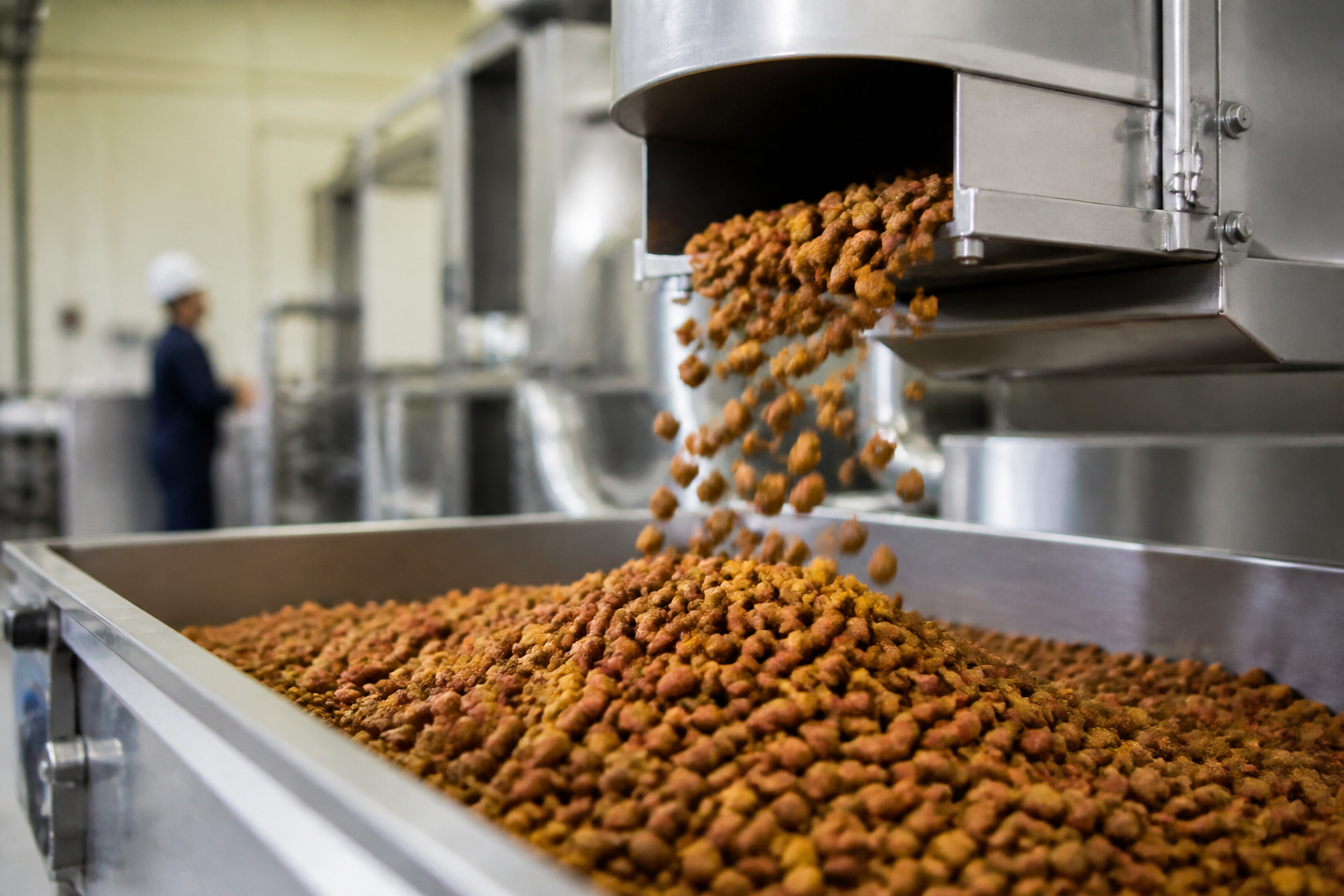
When the kibble first exits the extruder, it is soft and contains a lot of moisture. If it were bagged immediately, it would grow mold within days. To make it shelf-stable, the kibble must be dried.
The pieces move along a conveyor belt into a large industrial dryer. These dryers use hot, circulating air to remove the water. The goal is to bring the moisture level down to about 10 percent or less. This low moisture content is what prevents spoilage and gives the food its characteristic crunch.
After drying, the kibble is still very hot. It must be cooled gradually before it can be coated or packaged. If hot kibble is put directly into a bag, condensation will form. This moisture would ruin the food and lead to bacterial growth. Cooling stations use ambient air to bring the food down to room temperature.
Maintaining Freshness
Reducing moisture is the primary way dry food stays fresh. However, manufacturers also use antioxidants to prevent the fats in the food from going rancid. Many premium brands use natural preservatives like vitamin E or rosemary extract. These ingredients help the food stay safe and tasty until it reaches your dog's bowl. For more storage help, our dog food storage collection can help keep kibble protected at home.
The Final Touch: Coating and Enrobing
If you have ever touched a piece of kibble, you probably noticed it feels slightly oily. This is because of the coating process, also known as enrobing. After the kibble is dried and cooled, it enters a large revolving drum.
Inside this drum, the kibble is sprayed with liquid fats, oils, and flavors. These coatings are essential for several reasons:
- They add healthy fats like Omega-3 and Omega-6 fatty acids for skin and coat health.
- They make the food smell and taste appealing to dogs.
- They provide a way to add heat-sensitive vitamins and probiotics that would have been destroyed inside the extruder.
This step ensures that even if some nutrients were lost during the high-heat cooking phase, the final product is nutritionally complete. Once the coating is applied, the kibble is ready for its final inspection.
Vet Tip: While dry food is convenient, the high-heat extrusion process can reduce the natural moisture your dog needs. Always ensure your dog has access to plenty of fresh water, especially if they eat an entirely dry diet.
Quality Control and Safety Testing
Reliable manufacturers do not just bag the food and ship it out. There are multiple layers of safety checks. Every batch is tested to ensure it meets the nutritional guarantees listed on the label.
Safety testing is a top priority in the pet food industry. Our partners and the brands we carry at BaxterBoo follow strict protocols to prevent contamination. This includes testing raw ingredients for toxins before they even enter the building. Throughout the day, technicians take samples of the finished kibble to check for protein levels, fat content, and the absence of pathogens.
The facility design also plays a role in safety. Modern plants use stainless steel equipment and high-efficiency air filters. They maintain separate areas for raw ingredients and finished products to prevent cross-contamination.
- Check for consistent kibble size and color.
- Test for moisture levels to prevent mold.
- Screen for metal or foreign objects using magnets and X-rays.
- Analyze nutrient density to ensure the food is balanced.
Alternative Methods to Extrusion
While extrusion is the most common method, it is not the only way to make dry dog food. Some brands use alternative processes to cater to specific health needs or owner preferences.
Baked Dog Food
Baking is a much slower process than extrusion. The dough is rolled out, cut into shapes, and baked in an oven just like a cookie. Because baking uses lower pressure, the kibble does not puff up as much. This results in a denser, crunchier biscuit. Many people prefer baked food because it often retains more of the natural flavors of the ingredients without needing as much topical coating.
Air-Dried Food
Air-drying is a gentle preservation method. Instead of high heat, the food is exposed to cool, circulating air for a long period. This slowly removes the moisture. Because the temperatures are low, the proteins and vitamins stay closer to their natural state. This method is often found in premium, raw-inspired diets. It offers the convenience of kibble with the nutrient profile of a less processed food. If you want to compare texture options, our How to Wet Dry Dog Food for Better Digestion and Hydration post is a helpful next read.
Cold-Pressed Pellets
Cold pressing involves taking the ingredients and pressing them together at low temperatures for a very short time. This creates a dense pellet that dissolves quickly in the stomach. Owners of dogs with sensitive digestion often choose cold-pressed food because it does not swell in the stomach the way extruded kibble can.
Bottom line: Different manufacturing methods impact the density and nutrient retention of the food, giving owners options based on their dog's specific digestive needs.
Why Quality Ingredients Matter
The manufacturing process is important, but it cannot fix poor ingredients. A high-tech extruder cannot turn low-quality fillers into a premium meal. When you look at a bag of food, the first few ingredients tell the biggest story.
We look for brands that prioritize identifiable animal proteins. Ingredients like "chicken" or "lamb meal" are preferable to vague terms like "meat by-products." The way these ingredients are handled before they reach the factory matters too. Fresh meat must be transported in refrigerated trucks and processed quickly to maintain its nutritional integrity. If you like comparing brand philosophies, our selection of Farmina products is a smart starting point.
The carbohydrate sources also play a role in the extrusion process. Starches from grains, peas, or potatoes act as the "glue" that holds the kibble together. Without enough starch, the kibble would crumble into dust. High-quality recipes use these carbohydrates intentionally to provide energy and structure, rather than just as a cheap filler.
Understanding the Label
Reading a pet food label can feel like deciphering a code. However, the manufacturing process dictates much of what you see on that packaging. For example, the "Guaranteed Analysis" tells you the percentages of protein and fat in the finished, dried product.
Because dry food has the water removed, the protein percentage will look much higher than what you see on a can of wet food. To compare the two accurately, you have to look at them on a dry-matter basis. This means calculating the nutrients as if all the water were removed from both. For another useful breakdown, see our How Many Cups of Dry Dog Food Per Day for Your Dog guide.
You might also see "Natural Flavors" listed on the bag. These are often the coatings applied during the enrobing stage. When these flavors come from high-quality animal sources, they provide a boost of palatability that encourages picky eaters to finish their meals.
Key Takeaway: The ingredient list and the manufacturing method work together. High-quality ingredients require careful processing to ensure your dog receives the maximum nutritional benefit.
Packaging and Distribution
Once the kibble is coated, cooled, and tested, it moves to the packaging line. This is another critical step for food safety. The bags used for dry dog food are specially designed with multiple layers. These layers protect the food from oxygen, light, and moisture.
The bags are filled by weight and then sealed. Many manufacturers use nitrogen flushing during the sealing process. This involves replacing the oxygen inside the bag with nitrogen. Since oxygen causes fats to break down and go rancid, removing it helps the food stay fresh for a much longer time on the shelf.
Every bag receives a lot code and an expiration date. This allows for total traceability. If there is ever a question about a specific batch, the manufacturer can trace it back to the exact day it was made and the specific suppliers who provided the ingredients.
How to Keep Dry Food Fresh at Home
The way you store your dog's food at home is just as important as how it was made. Even though dry food is shelf-stable, it begins to degrade as soon as the seal is broken.
Oxygen is the enemy of freshness. When you open a bag of kibble, the fats inside begin to oxidize. To slow this down, we recommend keeping the food in its original bag. Those bags are designed to be a barrier against the elements. You can place the entire bag inside a plastic or metal bin for extra protection against pests.
Avoid pouring the food directly into a plastic bin. Over time, the oils from the kibble can seep into the plastic and go rancid. This can contaminate new batches of food you pour in later. By keeping the food in the bag and squeezing out as much air as possible before sealing, you help maintain the quality that the manufacturer worked hard to create.
- Store food in a cool, dry place.
- Keep the bag tightly sealed.
- Use the food within six weeks of opening the bag.
- Wash your storage containers and scoops regularly.
For more freshness tips, our expert storage guide for dry dog food is worth a look.
Choosing the Right Food at BaxterBoo
At BaxterBoo, we curate a selection of over 500 brands to ensure you have access to the best options for your pet. We carry everything from standard extruded kibble to baked and air-dried varieties. Our warehouse in Vernon Hills, Illinois, is stocked with trusted names like Farmina, Royal Canin, and Stella and Chewy's. You can browse our selection of Royal Canin products or explore our selection of Stella & Chewy's products to compare different approaches to dry food.
We know that every dog has different needs. A high-energy puppy needs a different nutrient density than a senior dog with joint concerns. Our team selects products based on the quality of their ingredients and the integrity of their manufacturing processes. We want you to feel confident that the scoop of food you serve every morning is safe and nutritious.
If your dog has specific health requirements that go beyond standard retail food, we can help there too. Our pet pharmacy offers prescription diets and FDA-approved medications for chronic conditions or allergies. This makes us a one-stop shop for your dog's complete health routine.
Conclusion
The journey of dry dog food from a raw recipe to a crunchy kibble is a marvel of food science. Through the extrusion process, manufacturers are able to create a product that is safe, digestible, and incredibly convenient. While the high heat and pressure are necessary for safety and texture, the addition of coatings ensures the food remains nutritionally complete. By understanding these steps, you can better evaluate the quality of the brands you buy. We recommend looking for foods with transparent sourcing and rigorous safety testing.
- Kibble is made using high-heat extrusion to ensure safety and digestibility.
- Drying and cooling are essential steps to make the food shelf-stable without heavy preservatives.
- Topical coatings add back necessary fats and flavors that dogs love.
- Proper home storage is key to maintaining the nutritional value of the food.
Bottom line: Knowing how your dog's food is made empowers you to choose a diet that matches your standards for quality and nutrition.
Ready to find the perfect meal for your pup? Browse our extensive dog food collection or sign up for our Autoship programme to save on every order and ensure you never run out of your dog's favorite kibble. You can also join the MVP Rewards programme to earn rewards on future purchases.
FAQ
Is the high heat used in making kibble bad for the nutrients?
While high heat can reduce some vitamins, manufacturers account for this by adding a vitamin premix after the cooking process. The heat is also necessary because it kills bacteria and makes the starches easier for your dog to digest. Most modern extrusion processes are very fast, which helps minimize the impact on protein quality.
Why is there a coating on the outside of dry dog food?
The coating, or enrobing, adds essential fats and flavors that make the food taste better to your dog. It also allows the manufacturer to add heat-sensitive nutrients like probiotics or certain vitamins that might have been damaged during the extrusion phase. This ensures the food is both palatable and nutritionally complete.
How does dry dog food stay fresh without refrigeration?
Dry dog food stays fresh primarily because its moisture content is very low, usually under 10 percent. Bacteria and mold need moisture to grow, so drying the food makes it naturally shelf-stable. Manufacturers also use antioxidants like Vitamin E to prevent the fats in the food from going rancid over time.
Can I get prescription dry dog food from BaxterBoo?
Yes, we offer prescription pet foods and medications through our pet pharmacy. If your veterinarian has prescribed a specific diet for a medical condition like kidney disease or food allergies, you can fulfill that order through us. We carry a variety of veterinary-exclusive brands to support your dog's specific health needs.






