
 Save 15% on your 1st Autoship learn more

 Email us
 Live Chat
 FAQs
FAQs





Introduction
You reach into the pantry and pull out a bag of kibble that has been sitting there for a while. Perhaps you bought the largest bag available to save money, or maybe your dog has been eating less lately. You might wonder if the food is still as nutritious and tasty as the day you first unzipped the seal. At BaxterBoo, we hear this question often from pet parents who want to ensure their dogs are getting the very best at every meal. Understanding the shelf life of opened kibble is not just about avoiding staleness. It is about protecting your dog from bacteria and ensuring they receive the full vitamin profile promised on the label. This post covers the timeline for freshness, the best ways to store your food, and how to spot the signs of spoilage.
Quick Answer: Most dry dog food stays fresh for about 4 to 6 weeks once the bag is opened. While the food might not look different after this point, the fats begin to oxidize and the nutritional value starts to decline.
The General Timeline for Opened Kibble
When you buy a bag of dry dog food, you will notice a "best by" or "use by" date printed on the packaging. This date is usually 12 to 18 months from the time of manufacture. However, that date only applies to bags that remain factory sealed. The moment you break that seal and expose the kibble to the air, the clock starts ticking much faster.
Most experts and manufacturers suggest that you should finish a bag of dry dog food within six weeks of opening it. Some higher quality brands that use natural preservatives might even recommend finishing it within four weeks. While the food might still be safe to eat at week seven or eight, the quality will have dropped significantly. The flavor becomes dull, the texture can change, and the essential fatty acids may begin to break down.
If you have a small dog, buying a 40 pound bag of food might seem like a great way to save money. If it takes your dog three months to finish that bag, the food they eat in the final month will likely be stale. It may also have lost a large portion of its vitamin potency. It is usually better to buy a size that your dog can comfortably finish in about 30 days. For help planning portions and bag sizes, see our guide to how much dry food to feed a dog.
Why Dog Food Goes Bad
Three main factors contribute to the degradation of dry dog food: air, moisture, and heat. When you understand how these elements interact with kibble, it becomes easier to see why proper storage is so important.
Oxidation and Rancidity
Dry dog food contains fats and oils that are essential for your dog's skin, coat, and brain health. When these fats are exposed to oxygen in the air, a chemical process called oxidation begins. This process eventually leads to rancidity. Rancid fats do not just taste bad. They can actually be harmful to your dog's long term health if consumed regularly. Manufacturers add antioxidants like vitamin E (tocopherols) or rosemary extract to slow this down, but they can only do so much once the bag is open.
Moisture and Mold
Kibble is processed to have a very low moisture content, usually around 10 percent. This low moisture is what prevents mold from growing. If you store your dog food in a humid environment or if water accidentally gets into the bag, mold can bloom quickly. Some molds produce mycotoxins, which are highly toxic to dogs. Even a small amount of moisture can turn a bag of expensive food into a health hazard.
Heat and Nutrient Loss
Heat accelerates the breakdown of vitamins and the oxidation of fats. If you store your dog food in a hot garage or near a sunny window, the nutritional value will plummet. High temperatures also provide a better environment for storage mites or other pests to thrive. Keeping the food in a temperature controlled area is the best way to maintain its integrity.
Key Takeaway: Oxygen, heat, and moisture are the primary triggers for food spoilage. Managing these three factors is the secret to keeping kibble fresh for the full six week window.
The Best Ways to Store Dry Dog Food
Many pet owners make the mistake of pouring the entire bag of dog food into a large plastic bin. While this looks neat, it is actually one of the worst things you can do for food freshness.
Keep It in the Original Bag
The bags used by premium pet food companies are specifically engineered to keep food fresh. They often have multi layer barriers designed to keep out oxygen and moisture. The inner liners are also grease resistant to keep the fats inside the kibble from soaking into the packaging.
When you pour food directly into a plastic bin, the oils from the kibble can seep into the plastic over time. These oils eventually turn rancid. Even if you wash the bin, the smell and the chemical residue can remain and contaminate the next batch of fresh food you pour in.
Use an Airtight Container as a Secondary Shield
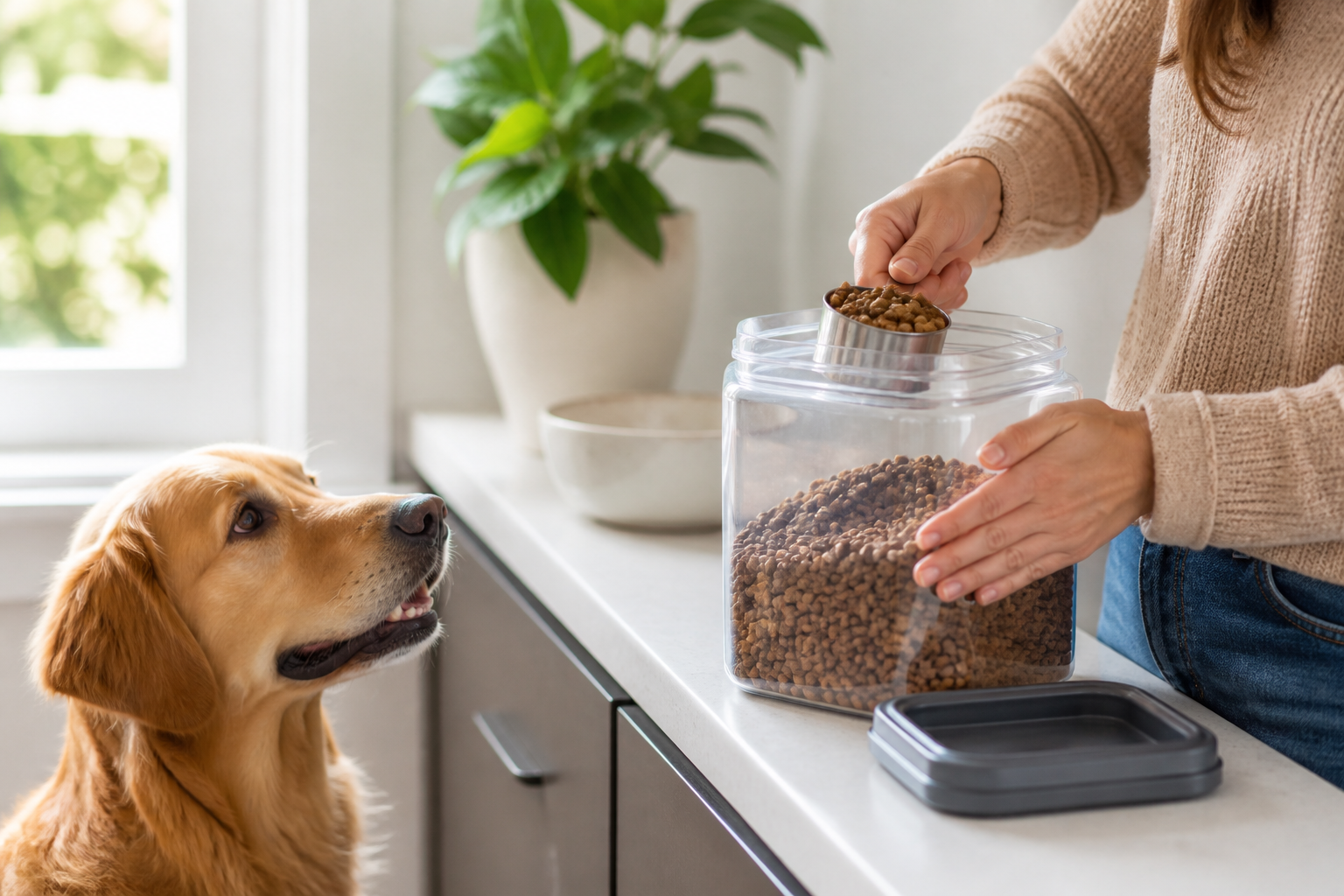
The best storage method is to keep the food inside its original bag, roll the top down tightly, and then place that entire bag inside an airtight plastic or metal container. This provides a double layer of protection against oxygen and keeps pests like ants or mice from being attracted to the smell. We recommend using a high quality container with a rubber gasket seal for the best results.
Store Off the Floor
Keeping your dog food container on a shelf or a pallet is better than leaving it directly on a cold or damp floor. Concrete floors can hold moisture and transfer temperature changes to the bottom of the container. A pantry or a kitchen cabinet is a much better location than a garage or a laundry room where humidity levels fluctuate. For more storage guidance, read dry dog food storage tips.
Steps for Better Storage
Step 1: Inspect the bag before purchase. Ensure there are no tiny tears or holes that could have let air in while the bag was at the store. Step 2: Seal the bag after every meal. Use a heavy duty bag clip or the built in zipper to remove as much air as possible. Step 3: Wash your storage bin regularly. If you do not use the "bag in bin" method, you must scrub the container with hot soapy water and let it dry completely before adding new food. Step 4: Label the opening date. Use a piece of masking tape to mark the day you opened the bag so you know exactly when the six week window is closing.
How to Tell if the Food Has Gone Bad
Your dog is often the best judge of food quality, but you should not rely on them entirely. Some dogs will eat almost anything, even if it is spoiled. You should perform a quick check of the food every few days to ensure it is still safe.
The Smell Test
Fresh dog food has a mild, grainy, or meaty scent. If you open the bag and get a whiff of something sour, musty, or like old paint, the fats have likely gone rancid. If the food smells "off" to you, it probably is. Trust your nose.
Visual Cues
Look for any signs of mold, which may appear as white, green, or black fuzzy spots. Also, look for signs of movement. Storage mites are tiny and hard to see, but you might notice a "dust" at the bottom of the bag that seems to move. If you see any insects or webbing, the food must be discarded immediately.
Texture Changes
Kibble should be crunchy and dry. If the pieces feel soft, spongy, or unusually oily to the touch, moisture has likely compromised the batch. If the food crumbles into dust easily, it may be significantly past its prime.
Your Dog's Behavior
If your dog is usually a "chow hound" but suddenly turns their nose up at their bowl, pay attention. Dogs have a much more sensitive sense of smell than we do. They can often detect rancidity or mold long before we can see or smell it. Do not force your dog to eat food they are rejecting. If your dog frequently refuses meals, our guide to dry food for picky eaters may offer helpful next steps.
Vet Tip: If your dog accidentally eats spoiled food and begins to vomit, has diarrhea, or seems lethargic, contact your veterinarian immediately. Food poisoning from mold or bacteria can escalate quickly and may require professional treatment.
Health Risks of Feeding Old Food
Feeding expired or poorly stored food is not just a matter of bad taste. It can lead to real health problems for your canine companion.
One of the biggest risks is the growth of bacteria like Salmonella or E. coli. These can thrive in food that has been exposed to moisture or pests. While a dog's digestive system is quite hardy, these pathogens can still cause severe gastrointestinal distress.
Another concern is the loss of nutritional value. Vitamins A, D, and E are particularly sensitive to oxidation. If your dog is eating food that is months old, they may not be getting the nutrients they need to support their immune system and organ function. This is especially dangerous for growing puppies or senior dogs with specific health needs.
For dogs with chronic conditions, the quality of their food is even more critical. Our pet pharmacy offers a range of prescription diets through our partnership with Pet's Choice. These specialized foods are formulated to manage specific health issues. Keeping these premium diets fresh is vital for their effectiveness. If your dog requires a prescription diet for kidney, heart, or urinary health, be extra vigilant about storage.
Buying Strategies for Maximum Freshness
Managing your dog's food supply can help you avoid waste and save money in the long run. It is tempting to buy the biggest bag possible, but smaller, more frequent purchases are often better for the dog.
Consider Your Dog's Size
A Great Dane will go through a large bag of food in two weeks, so buying in bulk makes sense. A Chihuahua might take two months to finish a medium bag. If you have a small dog, stick to the smaller bags even if the price per pound is slightly higher. You will save money by not having to throw away half a bag of stale food.
Use Subscription Services
One of the easiest ways to ensure your dog always has fresh food is to use an Autoship programme. By calculating how long it takes your dog to finish a bag, you can set up recurring deliveries. This ensures the food arriving at your door hasn't been sitting in your pantry for months. It also saves you from those last minute trips to the store where you might be forced to buy a bag that isn't your first choice.
Check the Bags
When shopping in person, look for bags at the back of the shelf. Retailers often practice "first in, first out" stocking, so the bags at the back may have a later "best by" date. Avoid any bags that look dusty, faded from sunlight, or have crushed corners.
The Role of Preservatives
When you read the label of your dog's food, you will likely see preservatives listed near the end of the ingredient list. There are two main types: synthetic and natural.
Synthetic preservatives like BHA, BHT, and ethoxyquin are very effective at preventing spoilage and can keep food fresh for a long time. However, many pet owners prefer to avoid these chemicals. Natural preservatives, such as mixed tocopherols (forms of Vitamin E), citric acid, and rosemary extract, are very popular in premium brands.
While natural preservatives are excellent, they do not last as long as synthetic ones once the bag is open. If you choose a brand with all natural ingredients, you must be even more disciplined about your six week timeline and storage habits.
Bottom line: The higher the quality of the food and the more natural the ingredients, the more sensitive the kibble will be to air and light.
Cleaning and Maintenance
If you use a dedicated storage bin, you must maintain it. Simply dumping new food on top of the "dust" and crumbs from the last bag is a recipe for quick spoilage. The old crumbs are already oxidized and may contain bacteria or mold spores that will immediately contaminate the fresh food.
Empty the container completely between every bag. Wash it with hot water and a mild detergent. If you use a plastic bin, check for scratches. Bacteria can hide in deep scratches in the plastic, making them hard to sanitize. If your bin is heavily scratched or smells like old oil even after washing, it is time for a new one.
Conclusion
Keeping your dog’s dry food fresh is a simple but vital part of being a responsible pet owner. By following the six week rule and keeping the kibble in its original bag inside an airtight container, you protect the nutrients your dog needs to thrive. Remember to store food in a cool, dry place and always trust your dog’s nose if they refuse a meal.
We carry over 500 trusted brands at BaxterBoo, providing you with plenty of high quality options for every life stage and breed. Whether you are looking for a standard premium kibble or a specialized diet, our team is here to help you find the right fit. For the best value and guaranteed freshness, consider joining our Autoship programme to have your pet's favorites delivered right when they need them.
FAQ
Can I store dry dog food in the garage to save space?
It is generally not recommended to store dog food in a garage because of the lack of temperature control. Extreme heat in the summer and humidity in the winter can cause the food to go rancid or grow mold much faster than it would indoors. A climate controlled pantry or kitchen closet is a much safer choice for maintaining nutritional value.
Is it safe to freeze dry dog food to make it last longer?
Yes, you can freeze dry dog food to extend its shelf life, but you must be careful about moisture. If you freeze kibble, seal it in airtight, freezer safe bags in small portions. When you take it out, let it reach room temperature before opening the bag to prevent condensation from forming on the food, which could lead to mold.
What should I do if I find bugs in my dog's food?
If you find insects, larvae, or webbing in the bag, you should dispose of the entire bag immediately. Do not try to sift the bugs out, as they may have left behind waste or eggs that can make your dog sick. Clean your storage container and the surrounding pantry area thoroughly to ensure the infestation does not spread to other food items.
Does grain free dog food spoil faster than food with grains?
The presence or absence of grains does not typically change the spoilage rate, but the fat content does. Many grain free or "high protein" diets have a higher percentage of fats and oils to provide energy. Because fats are the primary component that goes rancid, these rich diets may require even more careful storage and a stricter adherence to the six week rule.






