
 Save 15% on your 1st Autoship learn more

 Email us
 Live Chat
 FAQs
FAQs





Introduction
You reach for the plastic bin in the pantry and realize that large bag of kibble has been sitting there for quite a while. Maybe you bought the bulk size to save money or your dog has recently become a bit pickier about their meals. You might wonder if that crunch still packs the same nutritional punch or if it has started to turn. At BaxterBoo, we know that keeping your pet’s dinner fresh is about more than just taste. It is about preventing illness and ensuring your dog gets the vitamins they were promised on the label. If you are comparing options, start with our dry dog food category. This post covers exactly how long kibble stays safe once opened, the best ways to store it, and how to tell if it is time to toss the bag.
Quick Answer: Once a bag of dry dog food is opened, it generally stays fresh for about four to six weeks if stored properly. While unopened bags can last until their best-by date, exposure to air and moisture speeds up the degradation of fats and vitamins.
The Clock Starts When the Seal Breaks
Most dog owners rely on the date printed on the side of the bag. This best-by date is a helpful guide for how long the food stays at peak quality while it remains sealed. Manufacturers use specific packaging and nitrogen flushing to keep oxygen out. Once you pull that tab or snip the corner, the environment immediately begins to change the food.
The primary enemy of dry food is oxygen. When air hits the kibble, the fats and oils sprayed onto the surface begin to oxidize. This process makes the fats turn rancid. While your dog might still eat it, rancid fats can cause digestive upset and lose their nutritional value over time. Most experts recommend finishing a bag within six weeks of opening to ensure your dog is getting the best possible quality.
Factors That Influence Shelf Life
Several environmental factors determine how quickly your dog food will spoil in a container. If you live in a high-humidity area, your food may not last as long as it would in a drier climate.
Humidity and Moisture
Moisture is a catalyst for mold growth. Even a small amount of humidity trapped inside a storage bin can create a breeding ground for spores. This is especially true if you live in a coastal area or keep your food in a damp basement. Always ensure the container is bone dry before adding new food.
Temperature Control
Heat speeds up the chemical breakdown of nutrients. If your storage container is kept in a garage or a shed where temperatures fluctuate, the food will spoil much faster. Ideally, dry dog food should be kept in a climate-controlled area below 80 degrees Fahrenheit. Excessive heat can cause vitamins to degrade, leaving your dog with a meal that lacks the necessary minerals for their health.
Light Exposure
Sunlight can be just as damaging as heat. If you use a clear plastic container, keep it tucked away in a dark pantry or closet. Light can break down some of the antioxidants and preservatives used to keep the kibble stable.
The Best Way to Use Storage Containers
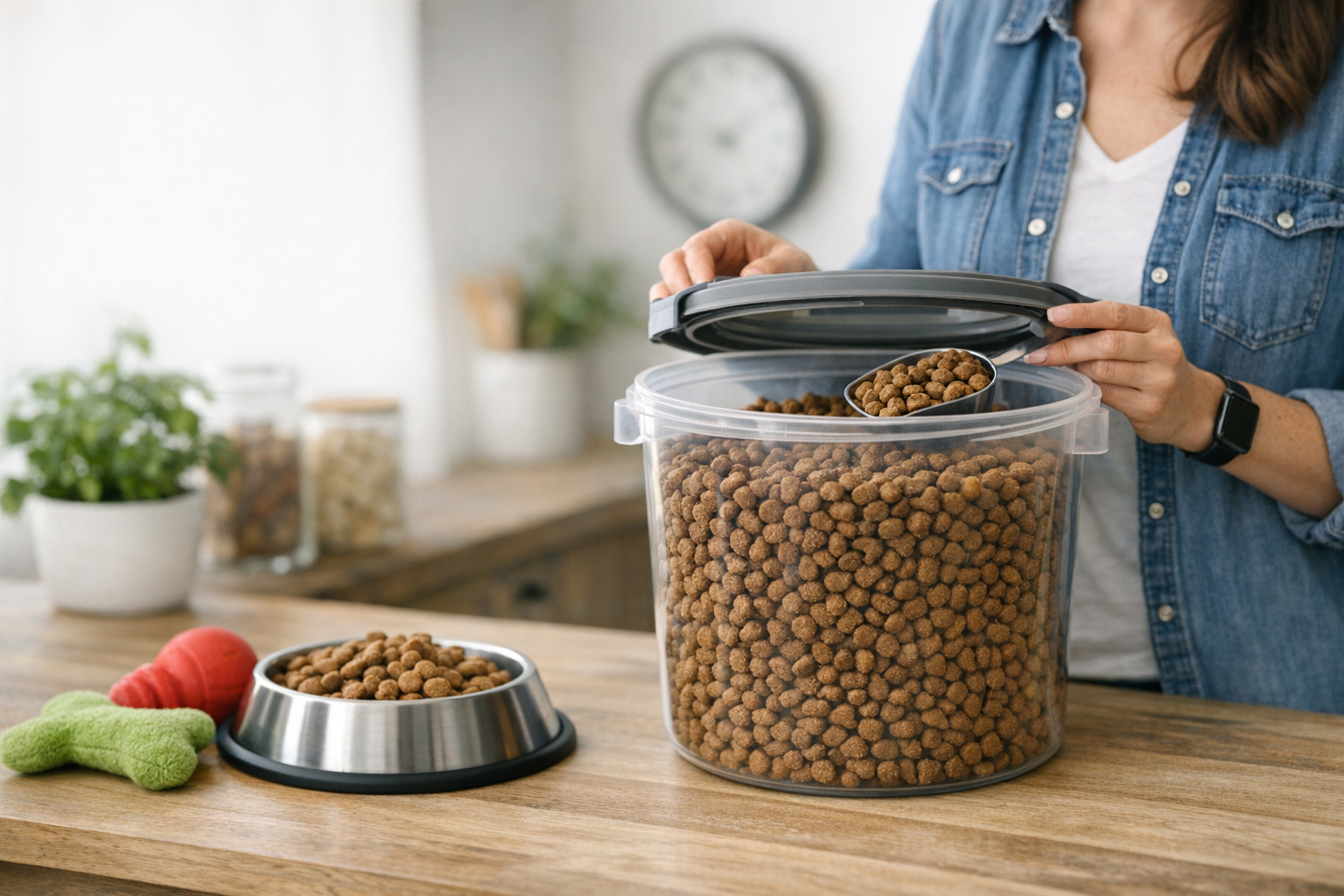
Many people make the mistake of pouring the kibble directly into a plastic bin. While this looks neat, it is actually not the best method for freshness. At BaxterBoo, we recommend the bag-in-bin method for the best results.
Keep the Original Bag
The bag your dog food comes in is a highly engineered piece of technology. These bags are often lined with grease-resistant materials designed to keep oils in and oxygen out. When you pour food directly into a plastic bin, the oils from the kibble can soak into the plastic over time. These old oils can turn rancid and contaminate every new batch of food you pour in.
Instead, fold the top of the original bag down tightly and use a heavy-duty clip to seal it. Then, place the entire bag inside your airtight container. This provides two layers of protection against air, moisture, and pests. For storage gear that can help, browse our dog food storage collection.
Clean Between Refills
If you do choose to pour food directly into a bin, you must wash it between every single bag. Use hot, soapy water and let it air dry completely. Never pour a new bag of food on top of the old crumbs at the bottom of the container. Those old bits are likely already oxidized and will spoil the fresh food much faster.
Key Takeaway: Storing the original bag inside an airtight container is the most effective way to preserve freshness and keep the storage bin clean.
How to Spot Spoiled Dog Food
Your dog cannot tell you if their food tastes off, so you have to be the detective. Checking the food every time you fill the bowl is a good habit to start.
- The Nose Test: Rancid fats have a very distinct, sour, or "paint-like" smell. If the bag smells sharp or unpleasant when you open it, trust your nose and throw it away.
- Texture Changes: Fresh kibble should feel dry and slightly oily but firm. If the pieces feel sticky, damp, or crumble too easily, moisture has likely compromised the batch.
- Visible Mold: This is an immediate red flag. Even if you only see mold in one corner, the microscopic spores have likely spread throughout the entire container.
- Bug Activity: Small moths or weevils can sometimes find their way into grain-based foods. If you see webbing or small crawling insects, the food is contaminated.
Vet Tip: If your dog suddenly stops eating or seems hesitant at mealtime, check the food for freshness. Pets have a much more sensitive sense of smell than we do and can often detect rancid fats before we can.
Health Risks of Expired or Spoiled Food
Feeding your dog spoiled food is more than just a matter of bad taste. It can lead to serious health complications. When fats turn rancid, they can cause long-term inflammatory issues or acute stomach upset.
Bacterial Contamination
Improperly stored food can become a host for bacteria like Salmonella or E. coli. This is a risk not just for your dog, but for the humans in your house who handle the food. If your dog shows signs of vomiting, diarrhea, or lethargy after eating, they may have a foodborne illness.
Loss of Nutrition
Even if the food does not make your dog sick immediately, expired food lacks the vitamins and minerals necessary for a healthy life. For puppies or senior dogs with specific health needs, this nutritional gap can be significant. If your vet has prescribed a specific diet for a health condition, maintaining the freshness of that food is even more critical.
If your dog needs a specialized diet, our pet pharmacy is the right place to look for prescription pet foods and related care items.
Buying the Right Amount
It is tempting to buy the 40-pound bag because the price per pound is lower. However, if you only have one small dog, that bag might last you three months. By the time you get to the bottom of the bin, the food will likely be stale and less nutritious.
Try to buy a bag size that your dog can finish within four to six weeks. This ensures that every bowl you serve is as fresh as possible. If you find a great deal on a large bag, consider freezing a portion of it in airtight, freezer-safe bags to pull out later. For help with planning portions, take a look at how much dry food to feed a dog for daily health.
Step-by-Step Food Transition
If you realize your current food has gone bad and you need to start a new bag, follow these steps to keep your dog’s stomach happy.
Step 1: Inspect the new bag. / Check for any rips or holes before you leave the store. Step 2: Compare the smell. / Use the scent of the fresh bag as a baseline for what the food should always smell like. Step 3: Monitor your dog. / Watch for any signs of digestive upset when starting a fresh batch of food.
Bottom line: Matching the bag size to your dog's actual consumption rate is the easiest way to prevent food from spoiling.
Long-Term Storage Solutions
For those who like to be prepared for emergencies, dry kibble is not the best candidate for multi-year storage. However, there are ways to extend its life slightly beyond the six-week mark if necessary.
Using Oxygen Absorbers
If you are storing food in a large bin, adding food-grade oxygen absorbers can help slow down the oxidation process. These small packets pull the extra air out of the container, which can keep the fats stable for a bit longer.
Freezing Kibble
Dry dog food can be frozen to extend its shelf life. If you have extra space in your freezer, portion the kibble into gallon-sized freezer bags. This stops the oxidation process and prevents mold growth. When you are ready to use it, let the bag thaw completely at room temperature before opening it to prevent condensation from forming on the food. For more storage basics, see how long dry dog food is good for after opening.
Maintaining the Storage Area
Where you keep the container is just as important as the container itself. Most people choose the kitchen or a pantry, which are usually the best spots. Avoid keeping dog food in the following locations:
- Under the sink: High risk of moisture and leaks.
- Near the oven: Frequent temperature spikes can degrade nutrients.
- The garage: Uncontrolled heat and humidity, plus easy access for rodents.
- The laundry room: High humidity from the dryer can seep into containers.
We want every meal your dog eats to be a highlight of their day. By following these storage tips, you ensure that the high-quality food you buy stays that way until the very last scoop. If you are trying to budget around bag size and feeding frequency, our how many cups in 24 pounds of dry dog food guide can help you plan ahead.
Summary of Best Practices
To keep your dog’s food fresh, remember these core rules:
- Use the bag-in-bin storage method.
- Aim to use opened bags within six weeks.
- Keep the storage area cool, dark, and dry.
- Wash the storage bin thoroughly between every bag of food.
Key Takeaway: Proper storage protects your investment and, more importantly, protects your dog from the risks of rancid fats and bacterial growth.
Conclusion
Understanding how long dry dog food lasts in a container helps you provide the safest and most nutritious environment for your pet. While a sturdy bin is a great start, the combination of the original packaging and an airtight seal is the gold standard for freshness. By paying attention to the scent, texture, and storage temperature, you can avoid the common pitfalls of food spoilage. Whether you are managing a picky eater or a dog with specific health needs, the quality of their food is the foundation of their wellness. We suggest checking out our collection of discounted dog food and high-quality kibble brands. For those looking for the ultimate convenience and freshness, our Autoship programme helps you get smaller, fresher bags delivered right when you need them.
FAQ
Is it okay to pour dog food directly into a plastic storage bin?
While you can do this, it is not the recommended method because oils from the food can soak into the plastic and turn rancid. If you do pour it in directly, you must wash the container with hot, soapy water and dry it completely before every new bag. The best method is to keep the food in its original bag and place that bag inside the airtight container.
Can my dog get sick from eating old dry food?
Yes, dogs can suffer from digestive upset, vomiting, and diarrhea if they eat food with rancid fats or mold. Over time, eating spoiled food can lead to more serious issues like bacterial infections or nutritional deficiencies. If your dog shows signs of illness after eating, you should consult your veterinarian immediately.
Should I store my dog food in the garage to save space?
Storing dog food in the garage is generally not recommended because of temperature fluctuations and humidity. High heat can cause the nutrients in the food to break down quickly, and the environment may attract pests like rodents or insects. It is much safer to keep the food in a cool, dry area inside your home, such as a pantry or a closet.
How do I know if my dog's food has gone rancid?
The most common sign of rancid food is a sharp, sour, or chemical-like smell that is different from the usual meaty scent of the kibble. You might also notice that the kibble feels excessively oily or has changed color. If your dog, who is usually a good eater, suddenly refuses their food, that is often a sign that the fats have turned and the taste is unpleasant.






