
 Save 15% on your 1st Autoship learn more

 Email us
 Live Chat
 FAQs
FAQs





Introduction
You are standing in your pantry. You are staring at a half-full bag of kibble that has been tucked away for a few months. Your dog is waiting for dinner. You find yourself wondering if the food is still safe or if it has lost its nutritional value. At BaxterBoo, we hear this concern from pet parents every day. While dry dog food is designed to be shelf stable, it does not last forever. Knowing the lifespan of your dog's food is about more than just avoiding a stale smell. It is about ensuring your pet gets the vitamins and minerals they need to thrive. This guide covers how long dry dog food stays fresh, how to spot spoilage, and the best ways to store it for maximum shelf life. For more options, start with our dog food collection.
Quick Answer: Unopened dry dog food generally lasts 12 to 18 months from the manufacture date. Once the bag is opened, you should aim to use the kibble within six weeks for optimal safety and nutrition.
The Difference Between Unopened and Opened Shelf Life
The clock starts ticking on dog food freshness the moment the manufacturing process ends. Most commercial dry foods are formulated to stay fresh for over a year if the seal remains intact. This is because the packaging is designed to keep out oxygen and moisture. These two factors are the primary enemies of food stability. For storage support, browse our dog food storage collection.
Once you break that seal, the environment begins to change the food. Oxygen enters the bag and starts a process called oxidation. This is when the fats in the food begin to break down. Moisture from the air can also seep in. This creates a breeding ground for mold or bacteria. While the "best by" date on the bag is a helpful guide for an unopened product, it is not a reliable timeline for a bag that is already in use.
The Six Week Rule
Most experts recommend finishing a bag of dry dog food within six weeks of opening it. After this point, the nutritional quality begins to drop significantly. The vitamins added during manufacturing can start to degrade. Even if the food does not look spoiled, it may no longer provide the complete and balanced nutrition promised on the label. If you are portioning meals, our guide on how much dry food to feed a dog is a helpful companion read.
If you have a small dog, buying a massive 40-pound bag might seem like a great way to save money. However, if that bag takes three months to finish, the last half of the bag is likely stale and nutritionally deficient. We suggest matching the bag size to your dog's eating habits so that you are always opening a fresh bag every month or so.
Understanding the Best By Date
Every bag of dog food should have a date stamped somewhere on the packaging. This is usually called a "best by" or "use by" date. It is important to remember that this is not a hard expiration date like you might see on a gallon of milk. Instead, it is the manufacturer's estimate of how long the food will maintain its peak quality and nutritional profile.
Why the Date Matters
Manufacturers conduct stability testing to see how long their specific recipe remains effective. Some ingredients, like natural preservatives, do not last as long as synthetic ones. If a bag is past its best by date, the fats may have started to turn rancid. The protein quality remains the same, but the essential fatty acids and vitamins A and E are often the first to disappear.
Key Takeaway: The "best by" date applies to unopened bags. Once opened, focus on the six-week window rather than the date printed on the package.
What Is in a Lot Number?
Near the best by date, you will often see a string of numbers and letters. This is the lot number. It tells the manufacturer exactly when and where that specific batch of food was produced. If there is ever a product recall or a quality concern, this is the information you will need. We always recommend keeping this information handy until the bag is completely finished.
Signs That Dry Dog Food Has Gone Bad
Your dog's nose is much more sensitive than yours. Often, a dog will refuse to eat their food because they can smell that the fats have turned. If your normally enthusiastic eater suddenly walks away from the bowl, take a closer look at the kibble. You can also compare what you notice with our recent guide to spoiled kibble.
Perform a Smell Test
Fresh kibble usually has a mild, grainy, or meaty scent. When dry food goes bad, it develops a sharp or sour odor. Some people describe the smell of rancid dog food as similar to old paint or chemicals. If the bag smells "off" to you, it is almost certainly past its prime.
Check for Texture and Appearance
Healthy kibble should be dry and crunchy. If the food feels oily or sticky to the touch, the fats may be leaching out and oxidizing. You should also look for:
- Visible mold or fuzzy growth on the kibble
- Clumping of the food, which indicates moisture has entered the bag
- The presence of grain mites or small beetles
- Dust or crumbles at the bottom of the bag that seem to be moving
Watch Your Dog's Reaction
Sometimes spoilage is not visible to the naked eye. If your dog experiences sudden digestive upset, it could be a sign of bad food. This might include vomiting or diarrhea shortly after eating. While these symptoms can be caused by many things, the freshness of the food should always be a primary suspect.
Health Risks of Feeding Expired Food
Feeding your dog food that is past its prime is not just about a bad taste. There are real health risks associated with expired or poorly stored kibble.
Nutritional Deficiencies
The primary risk is a lack of nutrition. If the vitamins in the food have degraded, your dog is not getting what they need to maintain their health. Over time, this can lead to a dull coat, low energy, and a weakened immune system. For puppies or senior dogs, these deficiencies can be even more serious.
Bacterial Contamination
Moisture in a dog food bag can lead to the growth of Salmonella or E. coli. These bacteria can make your dog very sick. They can also pose a risk to the humans in the house who handle the food. This is why keeping the food dry and sealed is so critical for the safety of your entire household.
Mycotoxins and Mold
Moldy dog food can contain mycotoxins. These are toxic substances produced by certain types of fungi. Ingesting mycotoxins can lead to severe illness or even long term organ damage. If you see any sign of mold, do not try to scoop out the bad part. Throw the entire bag away immediately.
Vet Tip: If your dog accidentally consumes moldy or rancid food and shows signs of lethargy, tremors, or persistent vomiting, contact your veterinarian immediately. For dogs with chronic health issues or sensitive stomachs, our pet pharmacy offers prescription diets and medications that can help manage recovery.
The Best Ways to Store Dry Dog Food
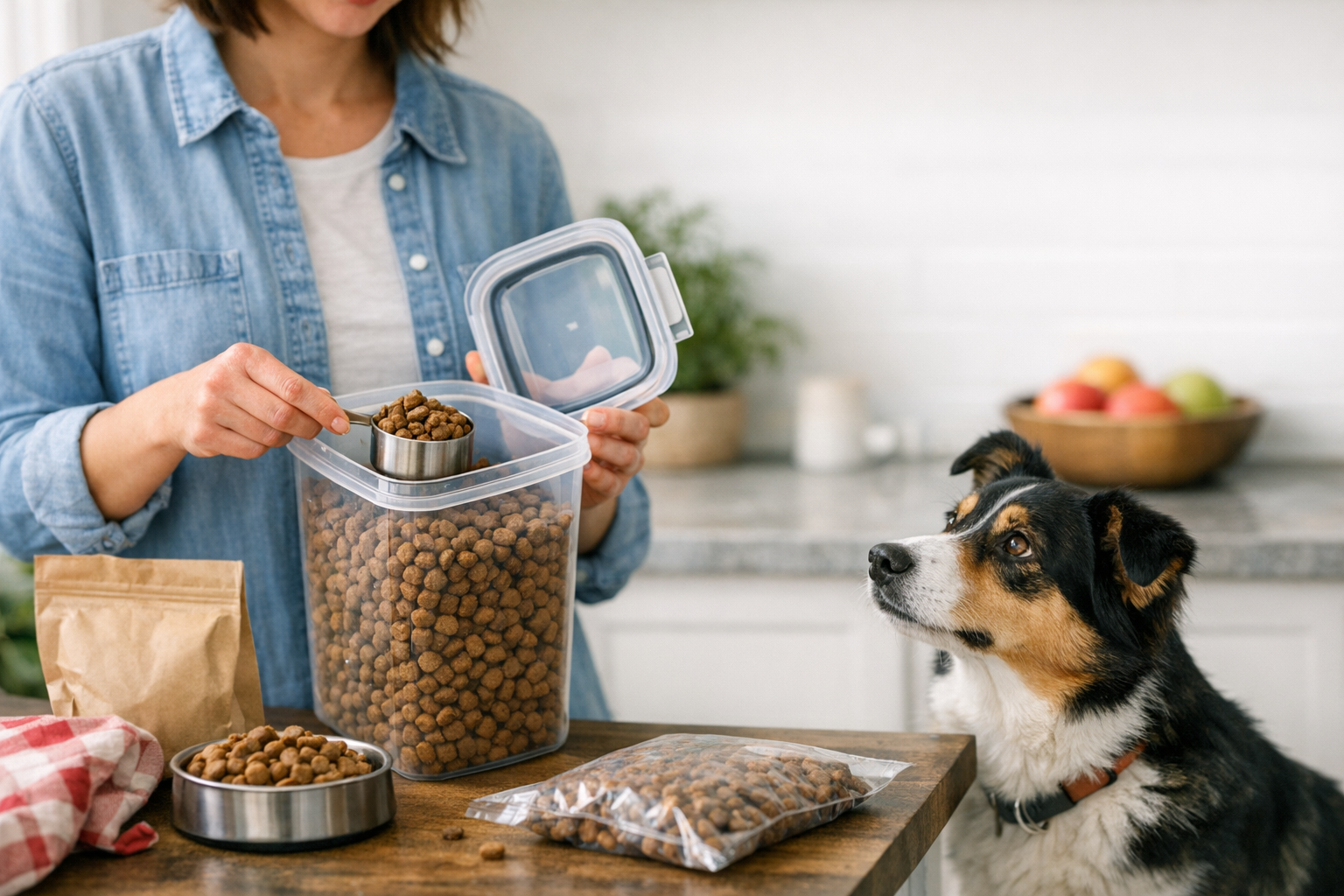
How you store your dog's food is just as important as the food itself. Most people make the mistake of dumping the kibble directly into a plastic bin. While this looks neat, it is actually one of the worst things you can do for freshness. If you are looking at premium options, our selection of Royal Canin products is a good place to compare formulas.
Keep It in the Original Bag
The bags used by premium brands like Royal Canin or Orijen are high tech. They are designed with specialized liners to act as a barrier against oxygen and moisture. When you pour food into a plastic bin, you lose that protection. Additionally, the fats from the food can soak into the pores of the plastic. These fats turn rancid and contaminate the next batch of food you pour in.
Use the "Bag in a Bin" Method
The best way to store kibble is to place the entire bag inside an airtight container. This gives you two layers of protection. Use a clip to seal the original bag tightly. Then, snap the lid shut on the outer container. This keeps the food fresh and prevents pests like ants or mice from getting a snack. If you want another storage-focused read, how to wet dry dog food for better digestion and hydration covers meal prep from a different angle.
Location Matters
Temperature and light play a huge role in how fast food spoils. You should store your dog's food in a cool, dry place. A pantry or a kitchen cabinet is usually ideal. Avoid storing food in the garage or a laundry room. These areas often have high humidity and extreme temperature swings. Heat is a major catalyst for oxidation. If the temperature in your storage area stays above 80 degrees, the food will spoil much faster.
Bottom line: Keep your dog food in its original bag, seal it with a clip, and store it in a cool, dry place inside an airtight bin.
Common Storage Mistakes to Avoid
Even well intentioned pet owners can fall into habits that shorten the life of their dog's food. Avoiding these common errors can save you money and keep your pet healthier.
Mixing Old and New Food
When the bag gets low, it is tempting to pour the last few scoops into the new bag. Do not do this. You are essentially "seeding" the fresh food with older, oxidized kibble. This can cause the new bag to spoil much faster. Always finish one bag completely and clean out your storage bin before starting a new one.
Leaving the Bowl Full
It is common for some owners to leave a bowl of dry food out all day for "free feeding." However, kibble starts to go stale the moment it hits the bowl. Saliva from your dog's mouth can also introduce bacteria to the bowl. If your dog does not finish their meal within 20 minutes, pick up the bowl. Store the remaining food or discard it.
Using Dirty Scoops
Think of your dog's food scoop like a kitchen utensil. It should be washed regularly with hot, soapy water. Fats and crumbs build up on the scoop over time. If left unwashed, these particles can go rancid and transfer to the fresh food in the bag every time you serve a meal. If budget is part of the equation, discounted dog food can help you shop smarter without overbuying.
Tips for Buying and Managing Your Food Supply
Managing your dog's food supply effectively can prevent waste and ensure they are always eating the freshest possible meals. At BaxterBoo, we emphasize quality and value, which means helping you get the most out of every purchase.
Buy for Your Dog's Size
It is often tempting to buy the largest bag available because the price per pound is lower. However, if you have a single small dog, a 30-pound bag might last three or four months. By the end of that period, the food is no longer fresh. It is better to buy a smaller bag that you can finish within four to six weeks.
Check Dates Before You Buy
When shopping at a warehouse or ordering online, always check the best by date. Ensure that the date is at least six months into the future. This gives you plenty of time to use the food before it begins to decline in quality.
Use an Autoship Program
Setting up a recurring delivery can help you time your food purchases perfectly. You can calculate exactly how long a bag lasts and have the next one arrive right as you are finishing the old one. Our Autoship programme also offers savings on your first order and a free MVP Gold membership, making it a practical choice for keeping fresh food on hand.
Step-by-Step: Transitioning to Fresh Food
If you realize your current bag is too old, you should replace it. However, if you are changing brands or even just moving to a fresh bag of the same formula, a quick transition can help prevent stomach upset.
- Inspect the new bag: Check the seal for any punctures or tears.
- Verify the date: Ensure the best by date is well in the future.
- Clean your storage area: Wipe down your airtight bin and wash your food scoop.
- Seal the bag: Use a heavy duty clip to keep the new bag closed between feedings.
- Monitor your dog: Watch for any changes in appetite or digestion over the first few days.
Special Considerations for Specific Diets
Not all dry foods are created equal. Some formulas have ingredients that affect their shelf life more than others.
Natural and Grain-Free Options
Many premium foods use natural preservatives like tocopherols (a form of vitamin E) or rosemary extract. While these are great for avoiding synthetic chemicals, they do not preserve food as long as artificial options. If you feed a natural or grain-free diet, being strict with the six-week rule is even more important. For another premium brand option, our selection of Orijen products can help you compare higher-protein choices.
Prescription and Health Diets
If your dog is on a specific diet for weight management, skin allergies, or kidney health, the nutritional balance is extremely precise. Any degradation of those nutrients can impact the effectiveness of the diet. For these dogs, freshness is a medical necessity. Our pet pharmacy carries a wide range of prescription pet foods, ensuring that you have access to the specific nutrition your vet recommends.
Key Takeaway: Precision diets and natural formulas are more sensitive to oxidation and should be handled with extra care regarding storage and timing.
Summary of Best Practices
To keep your dog’s dry food safe and nutritious, follow these simple steps:
- Use opened bags within six weeks.
- Keep the food in its original packaging.
- Store it in a cool, dry place under 80 degrees.
- Use an airtight bin around the bag for extra protection.
- Wash bowls and scoops daily.
- Buy bag sizes that match your dog's actual consumption.
Conclusion
Understanding how long dry dog food is good for is a vital part of being a responsible pet owner. By following the six-week rule for opened bags and practicing proper storage techniques, you can protect your dog from rancid fats and bacterial growth. Remember that the original bag is the best defense against the elements, and a cool, dry pantry is the best home for that bag. We want to help you provide the best care possible for your pets through expert guidance and quality products.
For a convenient way to ensure your dog always has fresh food, consider our Autoship programme. It takes the guesswork out of ordering and ensures you never have to worry about running out or feeding stale kibble. You can also earn rewards on every purchase through the MVP Rewards programme, helping you provide premium nutrition without compromise.
FAQ
Does dry dog food really expire?
Yes, dry dog food does expire, though it is usually labeled with a "best by" date rather than a hard expiration. This date indicates when the food will begin to lose its nutritional value and when the fats may start to turn rancid. After this date, the food is no longer guaranteed to provide complete and balanced nutrition for your dog.
Can I store dry dog food in the garage?
It is generally not a good idea to store dog food in a garage. Garages are prone to high humidity and extreme temperature changes, both of which accelerate the spoilage of the food. Heat is a major factor in causing fats to go rancid, so a temperature controlled area like a kitchen pantry is much safer.
How do I know if my dog's food has gone rancid?
The most common sign of rancidity is a change in smell; the food may develop a sour, chemical, or "old paint" odor. You might also notice that the kibble feels oily or sticky, or your dog may simply refuse to eat it. If the food smells different than it did when you first opened it, it is best to err on the side of caution and throw it away.
Is it safe to pour dog food into a plastic storage bin?
While you can use a plastic bin, it is best to keep the food inside its original bag and place the entire bag into the bin. Pouring the food directly into a plastic container allows oils to seep into the plastic, which can turn rancid and contaminate future batches of food. Keeping the bag also ensures you have access to the lot number and expiration date in case of a recall.






