
 Save 15% on your 1st Autoship learn more

 Email us
 Live Chat
 FAQs
FAQs





Introduction
You stand in your kitchen every morning with a plastic scoop in one hand and a hungry dog at your feet. You likely follow the instructions on the back of the bag and pour out exactly one cup. To your dog, that cup is the highlight of the day. To you, it seems like a consistent measurement. However, that simple scoop is more complicated than it appears. Most pet owners assume that one cup is a universal unit of weight. In reality, the weight of that food changes based on the brand, the shape of the kibble, and even the ingredients inside.
At BaxterBoo, we talk to pet owners every day who are trying to manage their pets' weight or health conditions. We know that precision matters when it's time for dinner. This post explains why one cup of dog food does not always weigh the same. We will help you understand the math behind the measurements and how to use weight for better health. Getting the portion right is the first step toward a long and happy life for your dog, and our dog food category is a great place to start.
The Difference Between Volume and Weight
The biggest confusion in pet nutrition starts with the word cup. In the United States, a cup is a measure of volume. This means it measures how much space something takes up. One standard measuring cup holds 8 fluid ounces of liquid. However, dry dog food is not a liquid. It is a solid with different shapes and air pockets. When you fill a cup with kibble, you are measuring volume, but your dog's body cares about the weight and the calories.
Think about a cup of feathers compared to a cup of lead pellets. Both fill the same space in the cup. However, the weight is drastically different. Dog food works the same way. A high-protein, dense kibble will weigh much more than a "light" or "weight management" formula that contains more air and fiber. If you switch brands but keep using the same scoop, you might be accidentally overfeeding or underfeeding your dog by a significant margin.
For a deeper breakdown, our guide to how many cups are in 24 pounds of dry dog food can help you see how volume and weight play out in real feeding math.
Quick Answer: On average, one cup of dry dog food weighs between 3 and 5 ounces. This variation happens because different kibble shapes and densities take up different amounts of space in a measuring cup.
Why 1 Cup Does Not Equal 8 Ounces
If you look at a kitchen scale, you might see that your one-cup scoop of kibble weighs 3.5 ounces. This is confusing because we are taught that a cup is 8 ounces. The 8-ounce rule only applies to water and other liquids. Most dry goods are much lighter than water. For example, a cup of all-purpose flour weighs about 4.2 ounces. A cup of sugar weighs about 7 ounces.
Most dry dog foods fall into the 3 to 4 ounce range per cup. This is why you cannot simply use a kitchen scale and stop at 8 ounces to get "one cup." If you weighed out 8 ounces of food on a scale, you would likely be giving your dog more than two actual cups of food. This mistake is a leading cause of pet obesity. Small errors in the morning and evening add up over a year. Even an extra 10 percent of calories daily can lead to noticeable weight gain in a small or medium dog.
Factors That Change the Weight of Your Dog Food
Not all kibble is created equal. Several physical factors change how much food actually fits into your measuring device.
Kibble Shape and Size
Large, triangular kibble pieces do not fit together tightly. They leave large gaps of air in your measuring cup. Because of these air gaps, a cup of large kibble often weighs less than a cup of tiny, round kibble. Small kibble pieces pack together closely. This fills the air gaps and increases the weight of the food in that same 8-ounce volume. If you want to compare a denser formula, take a look at our selection of Orijen products.
Ingredient Density
The ingredients themselves play a huge role. Foods that are high in meat meals and fats tend to be heavier. These ingredients are dense and carry a lot of weight in a small space. On the other hand, foods with high fiber content or those designed for weight loss are often "puffed" during the manufacturing process. This creates a lighter, airier kibble that helps the dog feel full without consuming too many calories.
Moisture Content
Dry dog food usually has a moisture content of around 10 percent. If a bag is left open in a humid environment, the kibble can absorb a small amount of moisture. This increases the weight without adding any nutritional value. Conversely, in very dry climates, kibble can lose moisture and weigh slightly less. While this change is usually small, it illustrates why weight can fluctuate.
Key Takeaway: Because kibble density varies so much, the only way to be 100 percent accurate with your dog's portions is to use a digital kitchen scale rather than a plastic scoop.
The Risks of Inaccurate Measuring
Inaccuracy in feeding is not just about a few extra kibbles. It has real consequences for your dog's long-term wellness. Most veterinarians agree that obesity is the most common preventable disease in dogs. Carrying extra weight puts massive stress on a dog's joints and heart.
If you are feeding a senior dog who already has stiff joints, every extra ounce of weight makes movement more painful. We often suggest supplements like Cosequin to support joint health, but the best supplement in the world cannot overcome the physical strain of being overweight. If your dog is struggling with their weight, it is important to talk to your vet. They can help you determine if a prescription diet is necessary. Our pet pharmacy offers prescription options for these specific needs.
Vet Tip: If your dog is gaining weight despite you following the bag's feeding guidelines, consult your veterinarian. They can provide a specific calorie goal based on your dog's ideal weight rather than their current weight.
How to Weigh Your Dog Food Accurately
Transitioning from volume to weight is the best way to ensure your dog stays healthy. It takes an extra 30 seconds at mealtime but provides peace of mind.
Step 1: Get a digital kitchen scale. / Most affordable scales can switch between grams and ounces. Grams are usually better for small dogs because they are more precise.
Step 2: Find the weight on the bag. / Many premium brands like Farmina or Royal Canin list the weight of a cup in grams on the back of the packaging. If it is not there, you will need to do a one-time calculation.
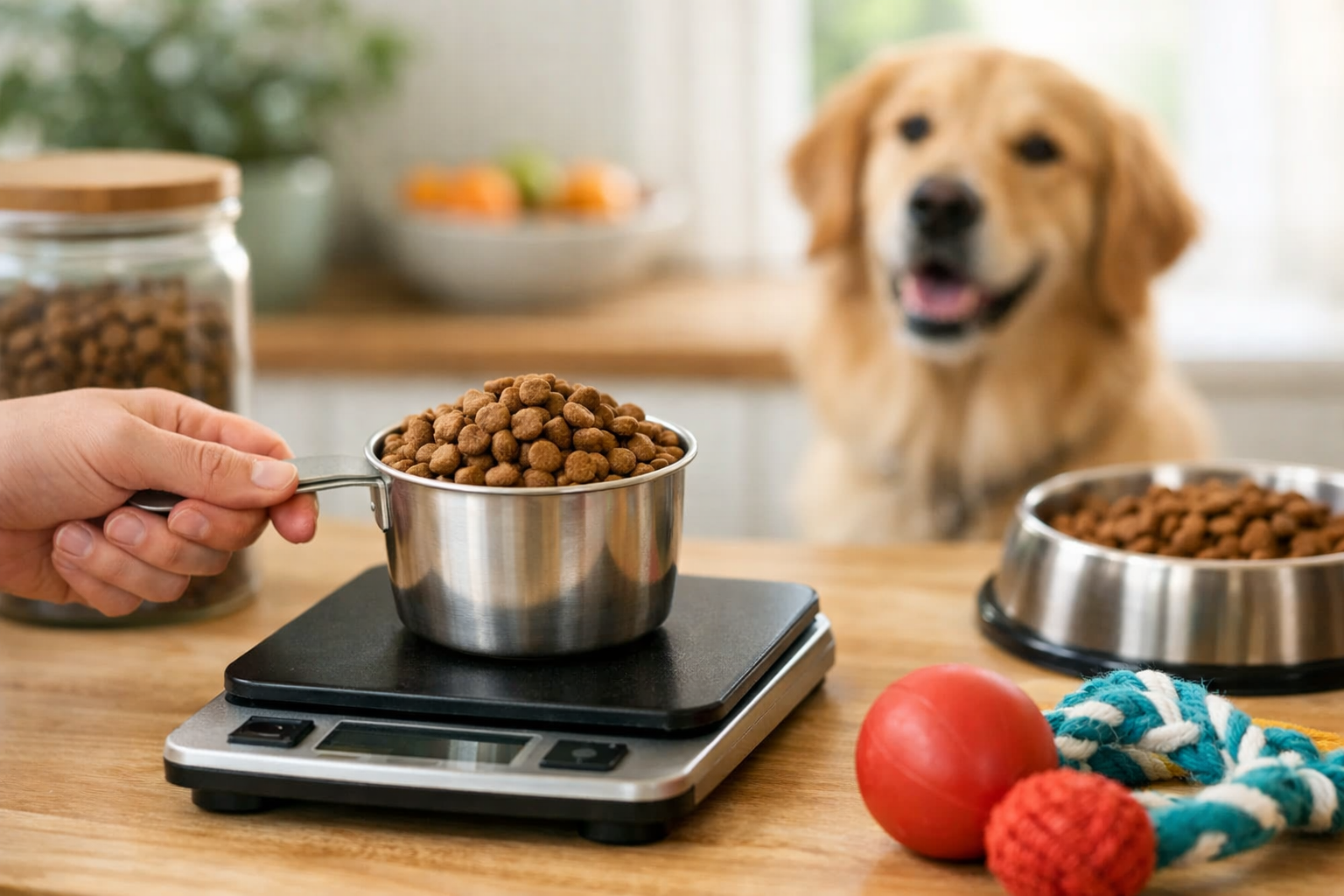
Step 3: Weigh your current scoop. / Place your empty measuring cup on the scale and press the "tare" or "zero" button. Fill it with a level scoop of food and record the weight.
Step 4: Monitor your dog’s body condition. / If your dog stays at a healthy weight, continue using that specific weight in grams every day. For more portion-planning help, our how many cups in 24 pounds of dry dog food guide is a useful follow-up.
Understanding the Math on the Label
Dog food labels are required by the Association of American Feed Control Officials (AAFCO) to provide certain information. One of these is the calorie content, often listed as ME (Metabolizable Energy). You will usually see this written as kcal/kg (kilocalories per kilogram).
This number tells you how much energy is in a specific weight of food. Because it is listed by weight (kilograms) rather than volume (cups), it is much more accurate. To figure out how many calories are in an ounce of your dog's food, you can divide the kcal/kg number by 35.27. For example, if a food has 3,500 kcal/kg, it has about 99 calories per ounce.
If you know your dog needs 400 calories a day, you can do the math. 400 divided by 99 equals roughly 4 ounces of food per day. You can then weigh out 2 ounces for breakfast and 2 ounces for dinner. This removes all the guesswork and ensures your dog gets exactly what they need. If you want a broader feeding reference, our daily dry food feeding guide can help you compare portions by activity and ideal weight.
Why Brand Consistency Matters
When you switch from one brand to another, you must re-evaluate your measurements. You cannot assume that one cup of Stella and Chewy's weighs the same as one cup of NutriSource. Even within the same brand, different recipes will have different weights. A grain-free chicken recipe might be denser than a limited-ingredient lamb recipe.
We see many owners make the mistake of switching foods and keeping the same scoop. This often leads to a dog suddenly losing weight or getting "the runs" because they are being overfed. Overfeeding is one of the most common causes of digestive upset in dogs. When the digestive system is overloaded with too much density at once, it cannot process the nutrients properly.
If you want to compare a brand lineup with a wide range of formulas, our selection of NutriSource products is a helpful place to browse.
Bottom line: Every time you open a new bag of a different formula, weigh one level cup to see if your portion size needs to change.
Using Technology and Tools for Better Feeding
While a simple scale is the gold standard, other tools can help. Some specialized scoops come with built-in digital scales. These are convenient because they allow you to scoop and weigh in one motion. If you prefer the convenience of recurring deliveries, our Autoship programme ensures you never run out of your dog's specific formula. This helps maintain consistency in their diet, which is vital for dogs with sensitive stomachs or chronic health issues.
For those managing more serious conditions like diabetes or kidney disease, precision is even more critical. These dogs often require prescription diets that must be measured to the gram to keep blood sugar or mineral levels stable. You can find these specialized diets in our pharmacy section, which provides access to prescription foods that are handpicked for quality.
A Practical Guide to Feeding by Life Stage
The weight of a cup of food matters differently depending on how old your dog is.
- Puppies: They need a high concentration of calories for growth. Because they eat more frequently, small errors in measuring can quickly lead to developmental issues or unnecessary fat gain.
- Adult Dogs: The goal is maintenance. Using weight ensures they don't slowly creep up in pounds as they age.
- Senior Dogs: Their metabolism slows down. They often need fewer calories but higher quality protein. Weighing food helps prevent the obesity that often complicates senior health issues like arthritis or heart disease.
If you are just starting with a new puppy or kitten, you can earn rewards on every bag of food through our MVP Rewards programme. This is a great way to save while ensuring you are buying the high-quality, dense nutrition your new pet needs.
The Role of Treats and Add-ins
If you add things to your dog's kibble, the weight of the dry food needs to be adjusted. A tablespoon of wet food or a handful of freeze-dried toppers adds calories. Many owners remember to measure the kibble but forget that the "extras" have weight and caloric density too.
If you use brands like Vital Essentials or Honest Paws for toppers, check the caloric density on those packages as well. A good rule of thumb is that treats and toppers should make up no more than 10 percent of your dog's daily intake. If you are adding 50 calories of toppers, you should remove about half an ounce of dry kibble to keep the balance. Our wet-and-dry feeding guide can help you adjust mealtime combinations without overdoing it.
Common Mistakes When Measuring by Volume
Even if you choose to stick with a measuring cup, there are ways to be more accurate. Avoid these common pitfalls:
- Using a coffee mug: Mugs are not standard sizes. They can hold anywhere from 6 to 14 ounces.
- The "heaping" scoop: A scoop that is rounded at the top can hold 20 to 30 percent more food than a level scoop. Always use a flat edge to level off the top.
- Leaving the scoop in the bag: Digging into the bag can crush some kibble at the bottom. These "fines" or small pieces pack more tightly in a cup, making that last scoop of the bag much heavier than the first scoop.
- Letting the kids feed the dog: Children often have different ideas of what a "full" cup looks like. If your family shares feeding duties, a digital scale is much easier for everyone to follow.
If you are trying to keep kibble fresh and consistent from bag to bag, our dry dog food freshness guide is a useful next step.
Summary of Feeding Weights
To give you a general idea of what to expect, here is a breakdown of common weights for different types of dry food.
| Food Type | Average Weight per Cup (Ounces) | Average Weight per Cup (Grams) |
|---|---|---|
| Standard Adult Kibble | 3.5 - 4.0 oz | 100 - 115 g |
| High-Protein/Active | 4.0 - 4.5 oz | 115 - 128 g |
| Healthy Weight/Senior | 3.0 - 3.5 oz | 85 - 100 g |
| Small Breed Kibble | 4.2 - 4.8 oz | 120 - 135 g |
Note that these are averages. Always check your specific bag for the most accurate information. If the bag doesn't list the weight per cup, reach out to the manufacturer or use your own scale to find the answer.
Final Steps for Your Dog's Nutrition
Taking control of your dog's portions is one of the most loving things you can do. It requires a small shift in your morning routine but offers a lifetime of benefits. By moving away from vague volume measurements and toward precise weights, you ensure your dog gets exactly what they need to thrive.
Whether you are feeding a premium brand like Acana or Orijen, or a specialized veterinary diet from our pharmacy, the weight is the key. Keep your scale handy, check your math, and watch your dog's energy and body condition improve. If you have questions about which food is right for your dog's specific weight goals, we are here to help. Our selection of Orijen products is one more place to explore as you narrow down the right fit.
FAQ
Is 1 cup of dog food the same as 8 ounces?
No, 1 cup of dog food is a measure of volume, while 8 ounces is a measure of weight. Most dry dog food is much lighter than water, so a standard cup usually weighs between 3 and 4.5 ounces. If you weigh out 8 ounces on a scale, you will likely be feeding double the intended amount.
Why does the bag say my dog needs 2 cups but he is gaining weight?
Feeding guidelines on the bag are just starting points and often lean toward the generous side. Your dog's individual metabolism, activity level, and age all play a role in how many calories they actually burn. If your dog is gaining weight on the recommended amount, try reducing the portion by 10 percent and weighing the food for better accuracy.
Can I use a regular liquid measuring cup for dog food?
You can use a liquid measuring cup to measure volume, but it is not the most accurate tool for dry solids. Dry measuring cups that allow you to level off the top are better, but a digital kitchen scale is the only way to get a truly precise measurement by weight.
How do I find out how many grams are in a cup of my specific dog food?
The best way is to weigh a level cup of the food yourself using a kitchen scale. You can also check the manufacturer's website or the back of the bag, as many premium brands now list the weight of a cup in grams next to the feeding instructions.






