
 Save 15% on your 1st Autoship learn more

 Email us
 Live Chat
 FAQs
FAQs





Introduction
You are standing in your kitchen with a plastic scoop in one hand and your dog dancing at your feet. You look at the feeding chart on the back of the bag and see a recommendation for two cups of kibble per day. It seems simple enough. However, you might notice that a cup of a dense, protein-heavy formula feels much heavier than a cup of a lightweight, air-puffed kibble. At BaxterBoo, we talk to pet owners every day who struggle to maintain their dog's ideal weight despite following bag instructions. This weight discrepancy happens because volume and weight are not the same thing. This article covers why kibble weight varies by brand, how to calculate the actual weight of your dog's meals, and why switching to a scale can improve your pet's health. Understanding the math behind the bowl is the first step toward better nutrition.
Quick Answer: On average, 2 cups of dry dog food weigh between 7 and 9 ounces (approximately 200 to 255 grams). This weight varies significantly based on the size, shape, and density of the specific kibble brand you use.
The Difference Between Volume and Weight
Most dog owners measure food by volume using a standard measuring cup. This is the same way you might measure flour for a cake or water for a pot of tea. In the world of pet nutrition, this can lead to big mistakes. Volume measures how much space the food takes up in a container. Weight measures the actual mass of the food.
If you fill a cup with large, star-shaped kibble, there is a lot of air between the pieces. If you fill that same cup with tiny, round pebbles of food, the pieces pack together tightly. The cup of small kibble will weigh much more than the cup of large kibble. Even though they both look like "one cup," the caloric content is very different. This is why 2 cups of one brand might weigh 7 ounces while another brand weighs nearly 10 ounces.
Key Takeaway: Measuring by weight is the only way to ensure your dog receives the exact amount of calories intended by the manufacturer.
Factors That Influence Kibble Weight
Several physical characteristics of dog food change how much 2 cups will weigh on a scale. Manufacturers create different shapes and sizes for different life stages and breed sizes.
Kibble Size and Shape
Small breed formulas often feature tiny, dense morsels. These pieces settle into the bottom of a measuring cup with very little air space. Large breed formulas often have much larger chunks to encourage chewing. These larger pieces create "void space" in the cup. This means 2 cups of small breed food almost always weigh more than 2 cups of large breed food.
Ingredient Density
The ingredients inside the kibble also impact its mass. Foods high in heavy protein meals and fats are often denser. Foods that use more plant-based fibers or "air-popped" processing techniques are lighter. Brands like Ziwi Peak or The Honest Kitchen produce very dense foods that weigh more per cup than a standard grocery store brand.
Moisture Content
Dry dog food is not completely dry. Most kibble contains about 10 percent moisture. If a bag has been left open and the food has absorbed humidity, the weight might increase slightly while the nutritional value stays the same. Conversely, very old food that has dried out further might weigh less.
Common Brand Estimates for 2 Cups
- High-protein/Dense brands (Orijen, Acana): 8.4 to 9.2 ounces
- Standard adult maintenance (NutriSource, Royal Canin): 7.8 to 8.5 ounces
- Weight management/High fiber: 6.5 to 7.5 ounces
Vet Tip: If your dog is struggling with weight gain or loss, consult your veterinarian to determine their exact daily caloric requirement. They can help you translate those calories into a specific weight in grams or ounces for the food you are currently using.
How to Calculate Weight from a Bag Label
Most pet owners do not realize that the information they need is already on the bag. You just have to look past the feeding chart. Most high-quality brands carried at BaxterBoo list the calorie content in two ways: kilocalories per kilogram (kcal/kg) and kilocalories per cup (kcal/cup).
If you want to know the weight of a cup, look at the kcal/kg number. There are 1,000 grams in a kilogram. If a food has 3,500 kcal/kg and the bag says there are 350 calories in a cup, you can determine the weight. In this example, one cup weighs exactly 100 grams. Therefore, 2 cups would weigh 200 grams, or about 7.05 ounces.
Step-by-Step Weight Calculation
Step 1: Locate the calorie statement. / Find the section on the bag that lists kcal/kg and kcal/cup.
Step 2: Divide the kcal per kilogram by 1,000. / This tells you exactly how many calories are in one gram of that specific food.
Step 3: Divide the calories per cup by the calories per gram. / This provides the weight of one cup in grams.
Step 4: Multiply by two. / This gives you the total weight for a 2-cup serving.
For another approach, read our guide to how many grams are in a cup of dry dog food for additional measurement tips.
The Risks of Inaccurate Measuring
Inaccurate measuring is one of the leading causes of pet obesity in the United States. Even a small error adds up over time. If you accidentally feed just 10 percent more food than your dog needs every day, they could gain several pounds over a year. For a small dog, that is a massive percentage of their body weight.
Overfeeding can lead to:
- Joint stress and mobility issues
- Increased risk of diabetes
- Heart and respiratory strain
- Decreased lifespan
Underfeeding is also a risk. If you use a cup that is smaller than a standard 8-ounce measuring cup, your dog might not get enough nutrients. This is common when owners use coffee mugs or old plastic scoops that are not calibrated.
Bottom line: Using an actual kitchen scale removes the guesswork and protects your dog from the health risks of portion errors.
Transitioning to Weighing Your Dog Food
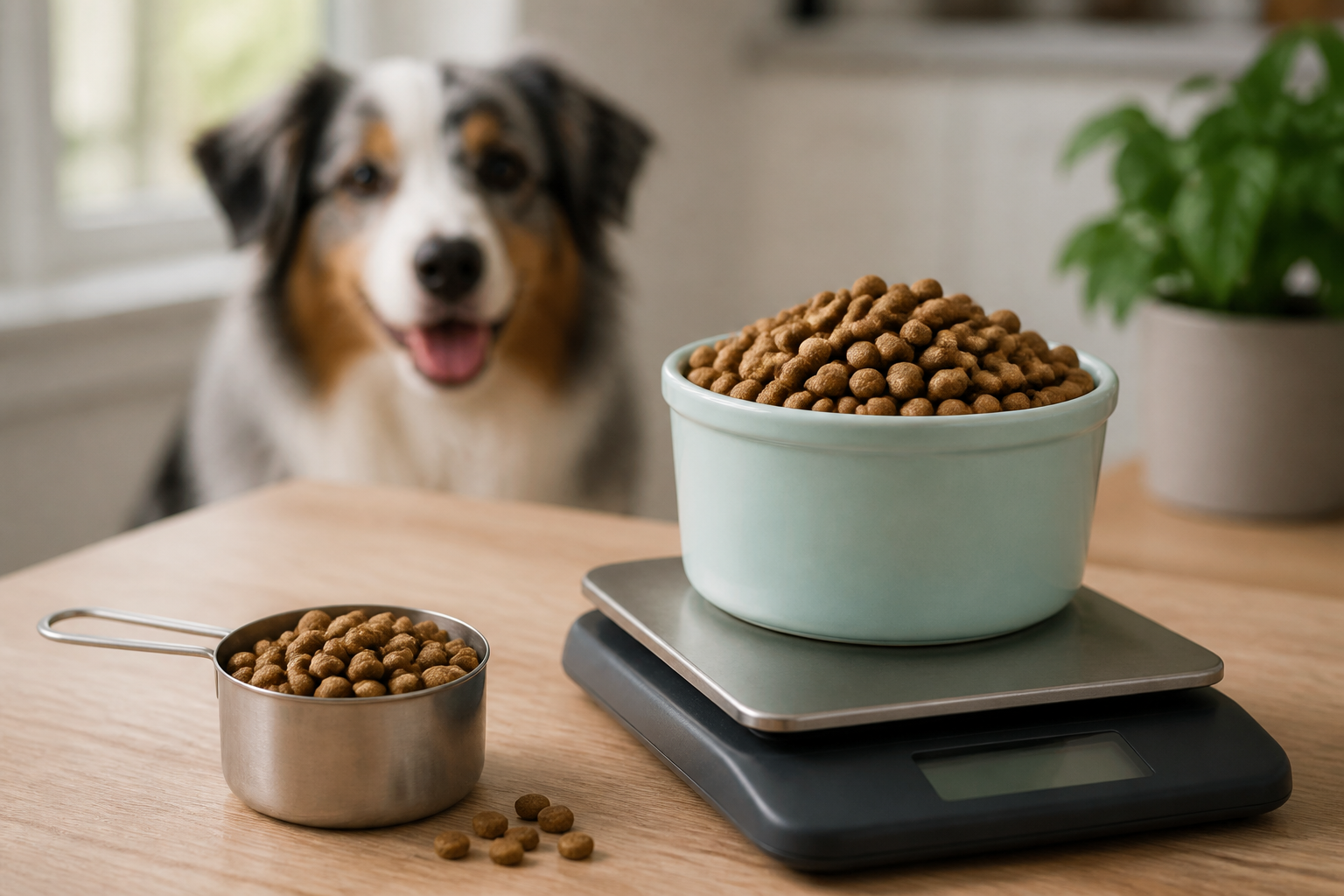
If you decide to stop using a volume cup and start using a scale, the process is simple. Most digital kitchen scales allow you to "tare" the weight of the bowl. This means you put the empty bowl on the scale, press a button to reset it to zero, and then add the food.
Recommended Steps for Accurate Feeding
- Buy a simple digital kitchen scale that measures in grams and ounces.
- Check your dog's food bag for the weight per cup or call the manufacturer.
- Calculate the weight of the daily portion recommended by your vet.
- Measure the food at the same time every day to maintain a routine.
We have found that owners who switch to weighing food often find they were overfeeding by as much as 20 percent. This is especially true with brands like Farmina or Stella and Chewy's, which are very nutrient-dense. A small amount of these high-quality foods goes a long way.
Note: If your dog requires a prescription diet for weight management or other health issues, our pharmacy offers FDA-approved prescription pet foods through our partnership with Pet's Choice. These specialized diets often have very specific feeding weights that must be followed strictly for the best results.
Understanding Bag Sizes and Cup Counts
Knowing the weight of 2 cups of food also helps you budget and plan your shopping. If you know that 2 cups weigh roughly half a pound, you can estimate how long a bag will last. This is helpful for setting up an Autoship order so you never run out of food.
| Bag Size (Pounds) | Total Ounces | Estimated Cups (at 4 oz per cup) | Days of Food (at 2 cups/day) |
|---|---|---|---|
| 5 lbs | 80 oz | 20 cups | 10 days |
| 15 lbs | 240 oz | 60 cups | 30 days |
| 30 lbs | 480 oz | 120 cups | 60 days |
These are estimates. A 30-pound bag of a very light, large-kibble food might only contain 100 cups. A 30-pound bag of a dense, small-kibble food might contain 140 cups. This is why we recommend checking the specific density of your chosen brand.
For more planning help, read our guide to how many cups are in 24 pounds of dry dog food.
Why Quality Brands Matter for Weight Control
At BaxterBoo, we curate our selection to include brands that provide clear nutritional labeling. Brands like Royal Canin and Open Farm provide detailed breakdowns that make it easier for you to calculate weights and portions. High-quality ingredients generally result in a more consistent kibble density. This means that from the top of the bag to the bottom, the weight of 2 cups should remain relatively the same.
In lower-quality foods, the kibble often breaks down into "fines" or dust at the bottom of the bag. This dust settles and packs tightly. If you measure a cup of the dust at the bottom of a cheap bag, it will weigh significantly more than the whole kibble at the top. This leads to accidental overfeeding as you reach the end of the bag.
Key Takeaway: Premium brands offer better consistency in kibble size and integrity, making weight-based measuring more accurate throughout the entire bag.
When to Adjust the Amount You Feed
The weight of 2 cups of food is just a starting point. Your dog's needs change based on their environment and activity level. If your dog spends the whole summer hiking, they might need more than 2 cups. If they spend the winter lounging by the fire, 2 cups might be too much.
You should adjust the weight of the food if:
- You can no longer easily feel your dog's ribs.
- Your dog's waistline disappears when viewed from above.
- Your dog is becoming less active due to age.
- Your dog has been spayed or neutered, which can lower their metabolic rate.
Always make these adjustments in small increments. Changing the weight of the meal by just 10 grams can make a difference over a few weeks. If you are unsure if your dog is at a healthy weight, your veterinarian can perform a body condition score.
Vet Tip: For dogs with chronic health conditions or those requiring specific weight management, consult your vet about prescription diets. Our pharmacy carries a variety of these specialized foods through our Pet's Choice partnership, ensuring your dog gets the precise nutrition their condition requires.
Tools to Make Measuring Easier
While a kitchen scale is the gold standard, there are other tools that can help if you prefer using a scoop. Some companies make specialized measuring scoops that are more accurate than a standard kitchen cup.
- Digital Scale Scoops: These are scoops with a built-in scale in the handle. They allow you to scoop and weigh at the same time.
- Collapsible Measuring Cups: These are great for travel but ensure they are calibrated to standard 8-ounce volumes.
- Leveling Tools: Use a flat edge to level off the top of your scoop. A "heaping" cup can add 20 percent more weight than a level cup.
Regardless of the tool you use, consistency is the most important factor. If multiple people in your household feed the dog, make sure everyone uses the same tool and the same method.
Using Technology for Better Feeding
Many modern pet owners are moving toward smart feeders. These devices can be programmed to dispense a specific weight of food at specific times. This is an excellent solution for dogs that need many small meals throughout the day. It also removes the human error of "generous" scooping.
If you use a smart feeder, you will still need to know the weight of the food to program it correctly. Most of these machines require you to input the weight in grams. Use the calculation method mentioned earlier to find the gram weight of your 2-cup serving.
Monitoring Results
Once you start measuring your dog's food by weight, keep a log for a few weeks. Note how much they weigh and how their energy levels seem. You may notice that your dog becomes more energetic once they are at their ideal weight.
If your dog still seems hungry after eating their weighed portion, you can add low-calorie fillers. Green beans or a little bit of plain canned pumpkin can add volume and fiber without adding significant weight or calories. This helps the dog feel full while maintaining a strict caloric intake.
For additional portion guidance, see our article on how many cups of dry dog food to feed your dog per day.
Bottom line: Accuracy in the kitchen leads to a healthier life in the yard, and it all starts with knowing the weight of what is in the bowl.
Conclusion
Measuring 2 cups of dry dog food by weight rather than volume is one of the most effective ways to manage your pet's health. While 2 cups usually weigh between 7 and 9 ounces, the exact number depends on the kibble's density and shape. By using a digital scale and checking the kcal/kg on your bag, you can provide your dog with consistent, precise nutrition every day. This precision prevents obesity and ensures your dog gets the nutrients they need to thrive.
Ready to upgrade your dog's nutrition? Explore our dry dog food category for premium options. Don't forget that the MVP Rewards programme lets you earn points on every bag of food you buy. For even more convenience, set up an Autoship order to save on your first delivery and keep your pet's favorite food arriving right on time.
FAQ
Does small breed dog food weigh more than large breed food?
Yes, small breed kibble is typically denser and has less air space between the pieces when measured in a cup. This means 2 cups of small breed food will usually weigh more than 2 cups of a large breed formula. To be safe, always check the weight in grams on the bag or use a kitchen scale.
Can I use a regular coffee mug to measure 2 cups of dog food?
You should avoid using coffee mugs or random household cups because they are not calibrated to standard measuring sizes. Most coffee mugs hold significantly more than 8 ounces, which leads to accidental overfeeding. Use a standard dry measuring cup or, ideally, a digital kitchen scale for the most accurate results.
Why does the same brand of food sometimes look different in the bag?
Kibble can vary slightly between batches due to the cooking process and the natural variation in raw ingredients. However, the nutritional density remains consistent. If the kibble looks significantly smaller or larger than usual, it may change the weight of a 2-cup volume, making it even more important to use a scale.
Is it better to measure dog food in grams or ounces?
Grams are generally better for measuring dog food because they are a smaller unit of measurement, which allows for greater precision. Small changes in weight are easier to track in grams than in fractions of an ounce. Most digital scales allow you to toggle between both, but grams are the standard used by veterinarians and nutritionists.






