
 Save 15% on your 1st Autoship learn more

 Email us
 Live Chat
 FAQs
FAQs





Introduction
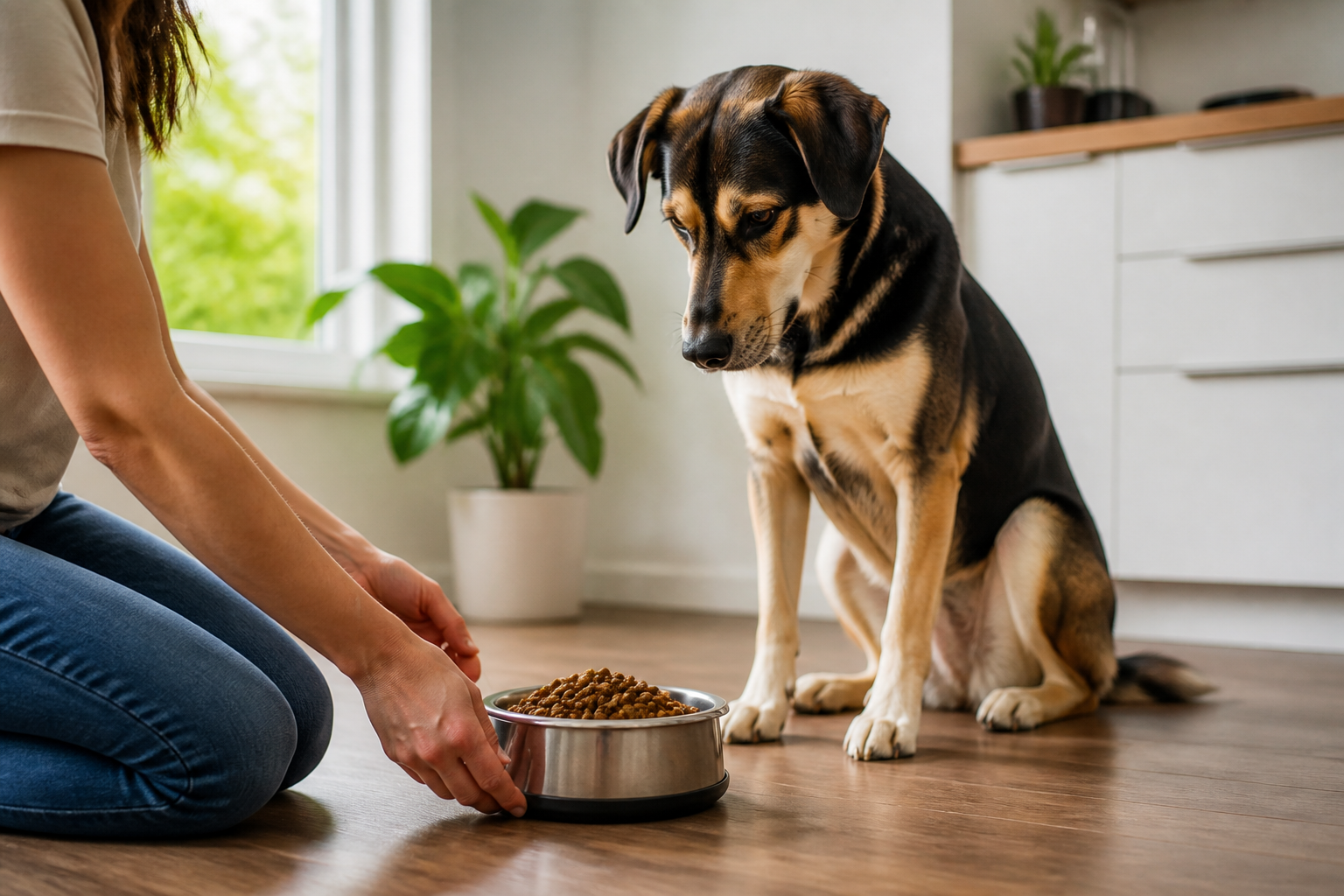
You are standing in your kitchen with a plastic scoop in your hand. Your 45 lb dog is sitting at your feet. They are watching your every move with focused intensity. You want to make sure they get enough energy to stay active and happy. At the same time, you worry about the health risks of overfeeding. At BaxterBoo, we know that finding the perfect balance can feel like a constant guessing game. This article will explain how to calculate the exact daily portion of dry food for your dog. We will look at calorie counts, activity levels, and specific life stages. Understanding these variables helps you move away from guesswork and toward a precise routine that supports long term wellness.
Quick Answer: On average, a 45 lb adult dog with moderate activity needs about 2.25 to 2.5 cups of dry dog food per day. This amount can shift between 1.75 and 3 cups depending on the calorie density of the specific kibble and the dog's lifestyle.
Why 45 Pounds is a Unique Weight Category
A 45 lb dog often sits right on the edge of "medium" and "large" breed categories. This weight range includes a wide variety of shapes and energy levels. You might have a sturdy English Bulldog or a lean Border Collie. You might have a smaller female Labrador Retriever. Each of these dogs has a different metabolic rate despite weighing the same on a scale.
When you look at a bag of food, the feeding chart often groups weights together. You might see a range for "30 to 50 lbs." This 20 lb gap is huge when it comes to nutrition. A dog at the bottom of that range needs much less than a dog at the top. Because your dog is 45 lbs, you are near the upper limit of that bracket. You cannot simply pick the middle number and hope for the best. You must look deeper into the energy your dog actually uses.
The Factors That Influence Daily Portions
Weight is just the starting point for a feeding plan. Several other factors dictate how much energy your dog's body requires to function.
Daily Activity Levels
Activity is the biggest variable in the calorie equation. A dog that spends the day napping on the sofa burns very few calories. A dog that goes on a three mile run every morning has much higher needs.
Working dogs or those who participate in agility training may need 20 percent more food than a standard house pet. If your dog gets about 30 to 60 minutes of walking or play per day, they are likely "moderately active." Most feeding charts use this moderate level as their baseline. If your dog is sedentary, you should lean toward the lower end of the suggested range. For additional guidance, see our article on how many cups of dry dog food dogs need per day.
Age and Life Stage
Puppies have an incredibly high metabolic rate. They are building bone, muscle, and organ tissue every day. A 45 lb puppy that is still growing needs more calories than a 45 lb adult.
Senior dogs usually have a slower metabolism. They also tend to move less than they did in their younger years. If you feed a senior dog the same amount they ate at age three, they will likely gain weight. This extra weight puts unnecessary strain on aging joints.
Spaying and Neutering
Research shows that spaying or neutering can change a dog's metabolic needs. Fixed dogs often have a slightly slower metabolism than intact dogs. This does not mean they are less healthy. It just means their bodies require fewer calories to maintain the same weight. If your dog was recently fixed, watch their waistline closely. You may need to reduce their portions by about 10 percent.
Key Takeaway: Never rely on weight alone. Always adjust your dog's portion based on their age, activity level, and whether they have been spayed or neutered.
Understanding Calories Versus Cups
The most common mistake owners make is focusing on "cups" instead of calories. Not all dry dog foods are the same. One brand might have 320 calories per cup. Another premium, high protein brand might have 500 calories per cup. You can compare different formulas in our dog food category.
If you switch from a low calorie food to a high calorie food but keep the same "two cup" portion, your dog will gain weight fast. You could be overfeeding them by 400 calories a day without realizing it.
Calculating the Resting Energy Requirement (RER)
Veterinarians use a math formula called the Resting Energy Requirement. This is the number of calories a dog needs for basic life functions like breathing and heart rate.
To find the RER for a 45 lb dog:
- Convert weight to kilograms (45 divided by 2.2 equals 20.45 kg).
- Use the formula: 70 x (body weight in kg raised to the 0.75 power).
- For a 45 lb dog, the RER is approximately 670 calories.
Calculating the Maintenance Energy Requirement (MER)
The MER accounts for real world activity. You multiply the RER by a factor based on lifestyle:
- Neutered adult with average activity: RER x 1.6 (About 1,072 calories).
- Active or working dog: RER x 2.0 (About 1,340 calories).
- Sedentary or weight loss goal: RER x 1.2 (About 804 calories).
Once you have this number, look at your dog food bag. Find the "kcal/cup" listed on the label. Divide your dog's MER by that number to get the exact cup count.
How to Read a Dog Food Label Correctly
The feeding chart on the back of the bag is a suggestion, not a law. Manufacturers design these charts to be a starting point for the "average" dog. However, many brands lean toward the generous side.
Find the Calorie Density
Look for a section titled "Calorie Content." It will usually say something like "3,500 kcal/kg" or "385 kcal/cup." This number tells you how much energy is packed into every scoop. If this number is high, you will feed a smaller volume of food. If it is low, the portion will be larger.
Check the "Per Day" Instructions
Most charts show the total amount for the entire 24 hour period. If the chart says 2.5 cups, do not give 2.5 cups at breakfast and again at dinner. You must split that total amount between the meals. If you feed twice a day, give 1.25 cups at each meal.
Vet Tip: If your dog is consistently leaving food in the bowl or gaining weight, consult your veterinarian. They can help you determine if the issue is the portion size or an underlying metabolic condition.
Measuring for Accuracy
Most people "eyeball" the food using a coffee mug or a random plastic cup. This is very inaccurate. A "heaping" scoop can easily add 20 percent more calories to a meal. Over a year, this can lead to several pounds of weight gain.
Step 1: Use a standard measuring cup.
Use a level 8 oz measuring cup specifically designed for cooking or pet food. Do not use a "heaping" scoop. Use a flat edge to level the top of the kibble.
Step 2: Consider a kitchen scale.
The most accurate way to feed is by weight. Most dog foods list calories per kilogram. Weighing the food in grams ensures your dog gets the exact same amount of energy every single day.
Step 3: Keep the scoop inside the container.
Store your measuring tool inside the food bin. This prevents you from grabbing a different, larger cup when you are in a rush.
The Impact of Treats and Table Scraps
Treats are often the "hidden" calories that cause weight gain. If you feed the perfect amount of kibble but give three large biscuits every day, your dog is being overfed.
The "10 Percent Rule" is the industry standard. Treats should never make up more than 10 percent of your dog's total daily calories. If your 45 lb dog needs 1,000 calories a day, only 100 should come from treats. You should then reduce their dry food portion to 900 calories to compensate. Our guide to the 10 percent rule for dog treats offers another way to think about treat calories.
Healthy Low Calorie Options
If your dog loves treats, try using low calorie alternatives:
- Green beans (fresh or frozen)
- Carrot slices
- Small pieces of plain, cooked chicken
- Blueberries
These options provide a crunch or a reward without adding a massive calorie load to the daily total.
Monitoring Your Dog's Body Condition
The scale is helpful, but the "Body Condition Score" is better. Every dog carries weight differently. You should perform a physical check of your dog's body every two weeks. Our guide to body condition scoring and pet weight management includes a helpful rib, profile, and overhead check.
The Rib Test
Place your hands on your dog's sides. You should be able to feel their ribs easily under a thin layer of skin. You should not see the ribs poking out through the fur. If you have to press hard to find the ribs, your dog is likely overweight.
The Waistline Check
Stand over your dog and look down at their back. You should see a clear "tuck" or waistline behind the ribs. If your dog looks like a straight rectangle or an oval from above, they are carrying too much fat.
The Profile View
Look at your dog from the side while they are standing. Their stomach should slope upward from the end of the ribcage toward the hind legs. This is called an abdominal tuck. A flat or sagging belly is a sign that it is time to trim the portions.
Bottom line: Your dog's appearance and energy levels are the ultimate indicators of whether you are feeding the right amount.
Transitioning to a New Portion or Food
If you realize you have been overfeeding, do not slash the portion in half overnight. This can cause digestive upset and make your dog feel hungry and anxious. For more guidance, read our article about switching from dry to wet dog food.
Step 1: Reduce the portion gradually.
Lower the amount by about 10 percent every few days until you hit the target goal. This allows the dog's stomach to adjust to the smaller volume.
Step 2: Watch for hunger signals.
If your dog seems excessively hungry, you can add "fillers" like plain canned pumpkin or steamed green beans. These add fiber and volume without many calories.
Step 3: Monitor energy levels.
A dog that is getting the right amount of food should be alert and active. If they seem lethargic, you may have reduced the calories too far.
Managing Health and Weight with the Pharmacy
Some 45 lb dogs have specific medical needs that affect their diet. This includes conditions like diabetes, thyroid issues, or severe allergies. In these cases, a standard over the counter dry food might not be enough.
Our pet pharmacy for dogs offers a wide selection of prescription medications and prescription pet foods. If your veterinarian recommends a prescription weight management diet like Farmina Vet Life, you can fulfill that order through us. These specialized foods are formulated to help dogs feel full while consuming fewer calories. They often contain specific nutrients to support joint health during weight loss.
Always consult your veterinarian before switching to a prescription diet. They can provide a precise diagnosis and a dosing plan that fits your dog's specific health profile.
Common Feeding Mistakes to Avoid
Even well intentioned owners can fall into bad habits. Here are the most common errors seen with medium sized dogs.
Free Feeding
Leaving a bowl of food out all day is called free feeding. This makes it impossible to know exactly how much your dog is eating. It also prevents you from noticing a loss of appetite, which is often the first sign of illness. Stick to scheduled mealtimes instead.
Ignoring the "Small" Extras
A piece of cheese here or a crust of pizza there adds up. For a 45 lb dog, a single ounce of cheddar cheese is the caloric equivalent of a human eating a small hamburger. Be mindful of the "stealth" calories coming from your own plate.
Using the Wrong Scoop
Never use a laundry detergent scoop or a large plastic cup from a stadium. These are not calibrated. Only use standard measuring tools to ensure consistency.
Not Adjusting for Weather
Dogs often burn more calories in the winter to stay warm. Conversely, they may be much less active during a hot summer. At BaxterBoo we suggest checking your dog's weight at the start of every season. Adjust the portion slightly if their activity level changes with the weather.
The Benefits of Consistency
When you feed the same amount at the same time every day, your dog's digestion becomes predictable. This leads to consistent bathroom habits and fewer accidents. It also reduces "begging" behavior because the dog knows exactly when to expect their next meal.
Consistent feeding also helps you catch health problems early. If a dog that always finishes their 1.25 cups suddenly stops eating, you know something is wrong immediately. If you free feed, you might not notice a problem for days.
Key Takeaway: Precision in feeding is the simplest way to extend your dog's life and reduce future veterinary costs related to obesity and joint pain.
Conclusion
Determining how much dry dog food to feed your 45 lb dog is a blend of math and observation. Start by calculating the maintenance calories based on their activity level. Translate those calories into cups using the specific information on your food bag. Use a level measuring cup for every meal and keep track of treats. Most importantly, use the rib test to monitor your dog's body condition over time.
We are here to help you every step of the way. You can use our Autoship program to save on your favorite brands and ensure you never run out of kibble. If your dog needs a specialized diet for a health condition, our pharmacy partnership with Pet's Choice is ready to help with prescription options.
Bottom line: A healthy weight is one of the greatest gifts you can give your dog.
FAQ
Is 2 cups of dry food enough for a 45 lb dog?
For a sedentary or older 45 lb dog, 2 cups might be exactly right. However, for a highly active or younger dog, this might be too little. Always check the calorie count on your specific bag of food to be sure.
Should I feed my 45 lb dog once or twice a day?
Most veterinarians recommend feeding adult dogs twice per day. This helps regulate blood sugar levels and prevents the dog from feeling overly hungry between meals. It also reduces the risk of bloating in some breeds.
Does the kibble size change how much I should feed?
The size of the kibble does not change the nutritional requirement, but it can change how much fits in a measuring cup. Large kibble has more air space between pieces, while small kibble is more dense. This is why weighing food on a scale is the most accurate method.
How do I know if my dog is actually hungry or just begging?
Many dogs will beg for food even if they are perfectly healthy and full. If your dog is at an ideal weight according to the rib test, they are likely just looking for a tasty reward. Use low calorie vegetables like green beans to satisfy their desire to chew without adding weight.






