
 Save 15% on your 1st Autoship learn more

 Email us
 Live Chat
 FAQs
FAQs





Introduction
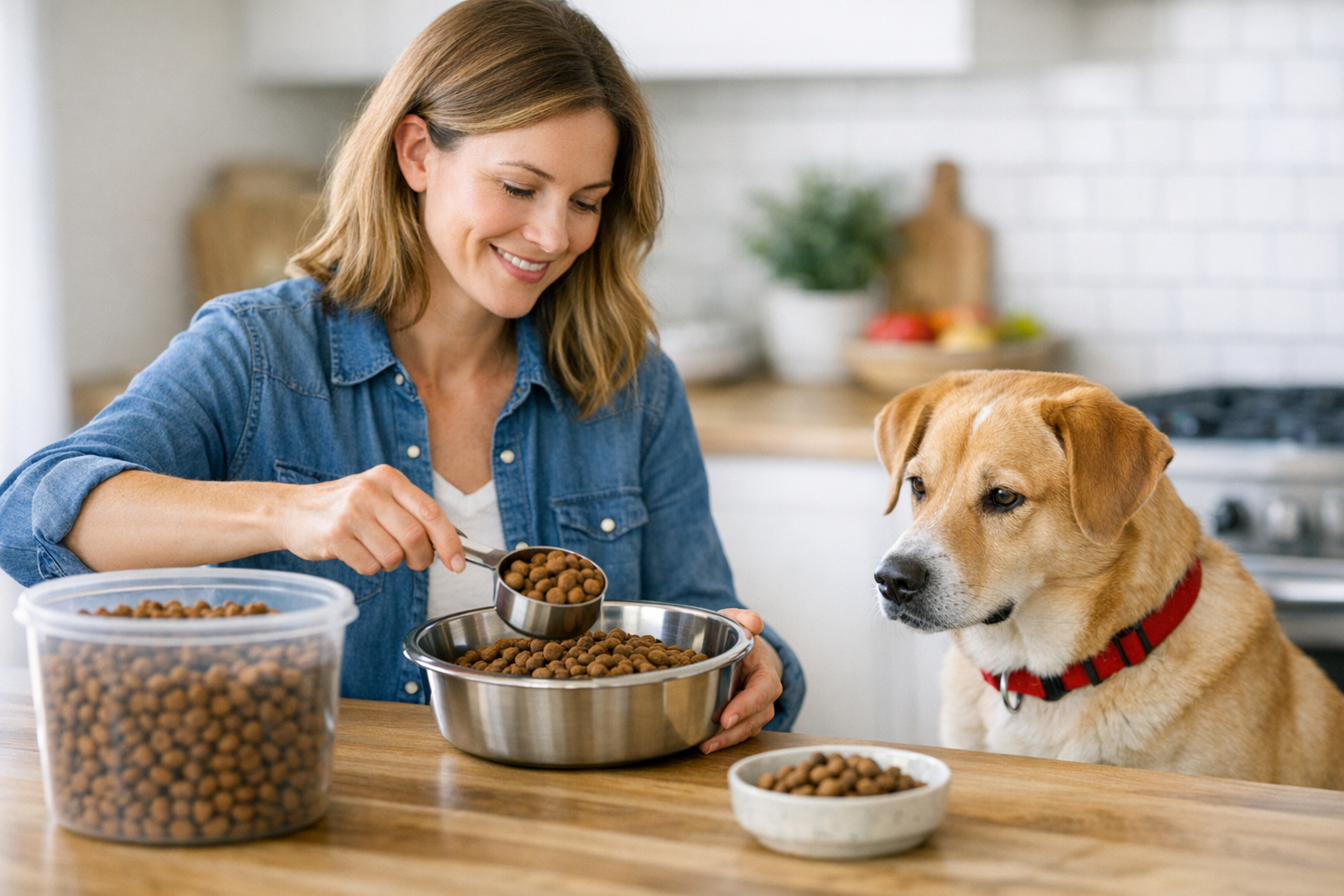
You are standing in the kitchen with a measuring scoop in one hand while your 55 lb dog watches every move with intense focus. This weight marks a common size for many popular breeds, from athletic Labradors and Golden Retrievers to sturdy mixed breeds and Boxers. Finding the exact amount of dry food to put in the bowl can feel like a guessing game because no two dogs are identical. At BaxterBoo, we understand that proper nutrition is the foundation of your dog's long-term health and energy. If you are comparing options, our adult dog food category is a helpful place to start. This guide will walk you through calculating the right portions based on activity, age, and individual health needs. We want to move past the vague suggestions on the bag so you can feed your dog with total confidence.
Quick Answer: A healthy adult 55 lb dog typically needs between 1,000 and 1,300 calories per day. This usually translates to 2.5 to 3.5 cups of standard dry kibble, depending on the calorie density of your specific food brand and your dog's daily activity level.
The Calorie Foundation for a 55 Lb Dog
Determining the right portion size begins with understanding calories rather than just volume. While we measure food in cups for convenience, every brand of dog food has a different caloric density. Some high-protein performance blends might contain 500 calories per cup. A weight management formula might only provide 300 calories per cup. This discrepancy explains why two dogs of the exact same weight might eat vastly different amounts of food.
For a 55 lb dog, the baseline is often calculated using the Resting Energy Requirement. This is the amount of energy the body needs just to perform basic functions like breathing, heart function, and digestion. For a dog of this size, that baseline is roughly 800 to 900 calories. However, very few dogs spend the entire day resting. Once you factor in a daily walk or a game of fetch, that number naturally increases. For more everyday feeding options, our dog food category gives you a broad place to compare formulas.
Why Calorie Density Matters
When you look at the back of a bag from brands like Farmina or NutriSource, you will see a measurement listed as kcal per cup or kcal per kilogram. This number is your most important tool for accuracy. If you switch from a calorie-dense food to a lighter formula without adjusting the volume, your dog may lose weight unintentionally. Conversely, moving to a rich, grain-free formula while keeping the same cup measurement can lead to rapid weight gain. If you want to browse a trusted option, our selection of NutriSource products is worth a look.
The Problem with the Standard Scoop
Standard measuring cups are surprisingly inconsistent in a household setting. Many owners use a plastic scoop and eyeball the line. A heaping cup can contain 20 percent more food than a level cup. Over the course of a week, those extra kibbles add up to an entire extra day of food. This is one of the most common reasons medium-large dogs struggle with weight gain even when their owners believe they are following the rules.
Key Takeaway: Always calculate portions based on the calories per cup listed on your specific bag of food. Volume measurements are only accurate if you know the energy density of the kibble inside the scoop.
How Activity Levels Change the Equation
The most significant variable in your dog's diet is their lifestyle. A 55 lb dog who spends the day napping on the rug needs significantly less fuel than a dog of the same weight who runs three miles a day. We generally categorize activity into three levels to help narrow down the daily calorie target.
Low Activity Dogs
This category includes dogs that get less than 30 minutes of exercise per day or are reaching their senior years. These dogs usually need about 950 to 1,050 calories. If you have a sedentary breed or a dog recovering from an injury, staying at the lower end of this range prevents obesity.
Moderate Activity Dogs
The average family pet typically falls into this category. These dogs get between 30 and 60 minutes of movement through walks, backyard play, or light training. They usually thrive on 1,100 to 1,250 calories per day. This amount supports their energy needs without putting extra stress on their joints.
High Activity Dogs
Working dogs, hiking companions, or very young adults with high energy fall into this group. They may require 1,400 calories or more to maintain their weight. If you notice your dog looking too lean despite eating three cups of food, they likely need a more calorie-dense performance diet. If your dog needs a more nutrient-dense recipe, our selection of Open Farm products is another useful stop.
| Activity Level | Estimated Daily Calories | Estimated Cups Per Day |
|---|---|---|
| Low Activity | 950 – 1,050 | 2.25 – 2.5 cups |
| Moderate Activity | 1,100 – 1,250 | 2.75 – 3.25 cups |
| High Activity | 1,400+ | 3.5+ cups |
Note: These estimates assume a standard kibble containing approximately 375 to 400 calories per cup. Always check your specific bag for exact math.
Life Stage and Your Dog's Nutritional Needs
A dog's nutritional needs are not static. As your 55 lb dog moves through different life stages, you will need to revisit their portion sizes. What worked for a two-year-old athlete might be far too much for an eight-year-old senior.
The Late-Stage Puppy
If your dog is still a puppy but already approaching 55 lbs, they are likely a large breed. These dogs need more calories than an adult because they are still building bone density and muscle mass. However, overfeeding a large breed puppy can lead to growth that is too rapid, which puts strain on developing joints. Always follow a growth-specific chart for puppies until they reach at least 12 to 18 months of age.
The Mature Adult
Once a dog reaches adulthood, their metabolism stabilizes. This is the easiest stage to manage, but it is also when most weight gain occurs. It happens slowly over several years. If your dog is spayed or neutered, their metabolic rate may be slightly lower than an intact dog. Research suggests that altered dogs often need about 10 percent fewer calories to maintain a healthy weight.
The Senior Years
For a 55 lb dog, the senior stage usually begins around age seven or eight. As their activity levels naturally decrease, their calorie needs drop. Senior dogs also benefit from specific nutrients to support cognitive function and joint health. If you notice your senior dog is getting a little rounder, it is time to trim the portions or switch to a senior-specific formula like those from Royal Canin or NutriSource. For broader wellness support, our dog healthcare category is a useful next step.
Vet Tip: If your senior dog is slowing down significantly or showing signs of joint stiffness, consult your veterinarian. They may recommend a prescription mobility diet or a specific supplement. Our pet pharmacy carries prescription foods through our partnership with Pet's Choice for these ongoing health needs.
Assessing Body Condition at Home
The scale is only one part of the story. Because muscle is denser than fat, a very fit 55 lb dog will look much thinner than an overweight 55 lb dog. Instead of focusing solely on the number 55, you should use the rib test to check their body condition.
Step 1: Stand over your dog and look down at their back. You should see a clear waistline behind the ribs, creating an hourglass shape.
Step 2: Place your hands on their ribcage. You should be able to feel the ribs easily under a thin layer of skin without having to press hard.
Step 3: Look at your dog from the side. Their abdomen should tuck up toward their hind legs rather than running in a straight line from the chest.
If you cannot feel the ribs or the waistline has disappeared, your dog is likely carrying extra weight. For a 55 lb dog, losing just two or three pounds can make a massive difference in their energy levels and long-term health. Overweight dogs are at a higher risk for diabetes, heart disease, and ligament tears.
Managing Treats and Extras
Treats are often the hidden calories that disrupt a feeding plan. If you are training your 55 lb dog with high-value rewards or giving them a biscuit after every walk, those calories must be subtracted from their main meals. Most veterinarians recommend the 10 percent rule. This means treats should make up no more than 10 percent of your dog's total daily caloric intake.
For a dog eating 1,200 calories a day, that allows for 120 calories from treats. To put this in perspective, a single tablespoon of peanut butter can contain nearly 100 calories. A large dental chew might have 80 to 100 calories. If you provide these extras, you must reduce the amount of dry kibble in the bowl to compensate. If you want to shop smarter, our dog treats category makes it easier to compare treat options.
We carry a wide variety of healthy, low-calorie treats from brands like Stella and Chewy's or Zesty Paws. Using small, broken-up pieces for training instead of whole biscuits is an easy way to keep your dog motivated without adding inches to their waistline. If you prefer a specific brand, our selection of Stella & Chewy's products is another easy shortcut.
When to Consider a Prescription Diet
Sometimes, simply reducing the portion of standard kibble is not enough to manage a dog's health needs. If your 55 lb dog has chronic allergies, skin issues, or needs significant weight loss, a specialized diet might be necessary.
Our pet pharmacy provides access to prescription pet foods through a partnership with Pet's Choice. This includes brands like Farmina Vet Life and Royal Canin Veterinary Diet. These foods are formulated to address specific medical conditions that general retail food cannot. If your veterinarian identifies a need for a prescription diet, we can help fulfill that order and deliver it directly to your home.
Prescription weight loss diets are particularly helpful because they allow the dog to feel full while consuming fewer calories. They are often higher in fiber and formulated with specific nutrients to support metabolism. This prevents the "begging" behavior that often makes traditional dieting difficult for pet owners. For related reading, our guide on how to feed freeze-dried dog food for better health offers another way to think about nutrient density.
Key Takeaway: Chronic health conditions often require more than just portion control. Working with your vet to find a prescription diet can address the root cause of weight or skin issues.
Tips for Feeding Consistency
Dogs thrive on a predictable schedule. Feeding your 55 lb dog at the same time every day does more than just stop the begging. It helps regulate their digestion and keeps their energy levels stable.
- Split the daily amount into two meals. This prevents the stomach from becoming over-distended and can help reduce the risk of bloat in medium-large breeds.
- Use a consistent measuring tool. A standard kitchen measuring cup is better than a generic plastic scoop.
- Watch the environment. Dogs often need more calories in the winter if they spend time outside, as their bodies use energy to stay warm.
- Store food properly. Keep kibble in its original bag inside an airtight container to prevent the fats from oxidizing and losing nutritional value.
Transitioning to a new amount of food should be done slowly. If you determine your dog needs to eat less, do not cut their portion in half overnight. Reduce the amount by about 10 percent and monitor their weight and energy for two weeks before making further changes. If freshness is a concern, our article on how long dry dog food stays fresh once opened is a practical follow-up.
Why Quality Matters More than Quantity
The quality of the ingredients in the bag dictates how much nutrition your dog actually absorbs. High-quality foods from brands like Open Farm or Acana often require smaller portions because they contain fewer fillers and more digestible proteins. While these foods may have a higher price point per bag, the cost per feeding is often comparable because you are scooping less into the bowl.
Feeding a nutrient-dense diet also results in smaller, firmer stools. This is a sign that your dog's body is efficiently using the fuel you provide. If you find yourself feeding four or five cups of food to a 55 lb dog just to keep weight on them, the food may be too low in caloric density or quality for their needs. For more ideas on portioning concentrated meals, our guide on how much freeze dried dog food to feed your pet is a helpful comparison.
Conclusion
Feeding a 55 lb dog is a balancing act that changes as they age and move through different levels of activity. By focusing on calories instead of just cups, you can ensure your companion stays at their ideal weight. Remember to assess their body condition regularly and adjust for treats and life stages. We are here to help you navigate these choices with expertly curated food and a dedicated pharmacy for any specialized health needs. If you want to make sure you never run out of your dog's favorite formula, our Autoship programme offers a convenient way to save while keeping your pantry stocked. You can also explore the MVP Rewards programme for another way to make every order go further. Ensuring your dog gets the right amount of high-quality food is the best way to enjoy many more active years together.
FAQ
How many cups of food should a 55 lb dog eat a day?
Most 55 lb dogs need between 2.5 and 3.5 cups of dry food per day. This number depends heavily on the specific calorie count of your kibble and your dog's activity level. Always check the label for the kcal per cup measurement to be precise.
Is 2 cups of food enough for a 55 lb dog?
For most 55 lb dogs, 2 cups of food is likely too little unless the food is extremely calorie-dense or the dog is very sedentary. Feeding too little can lead to lethargy and nutritional deficiencies over time. Consult with your vet if you feel your dog needs a very restricted diet.
What should a 55 lb dog weigh?
A dog's ideal weight depends more on their breed and frame than a single number. While 55 lbs is a healthy weight for many medium-large breeds, you should use the rib test to ensure they have a visible waist and palpable ribs. A dog with a larger frame might be underweight at 55 lbs, while a smaller-framed dog might be overweight.
Should I feed my 55 lb dog once or twice a day?
It is generally recommended to feed adult dogs twice a day, once in the morning and once in the evening. This helps maintain steady blood sugar levels and can prevent digestive upset. Splitting meals is also helpful for dogs that tend to eat too quickly.






