
 Save 15% on your 1st Autoship learn more

 Email us
 Live Chat
 FAQs
FAQs





Introduction
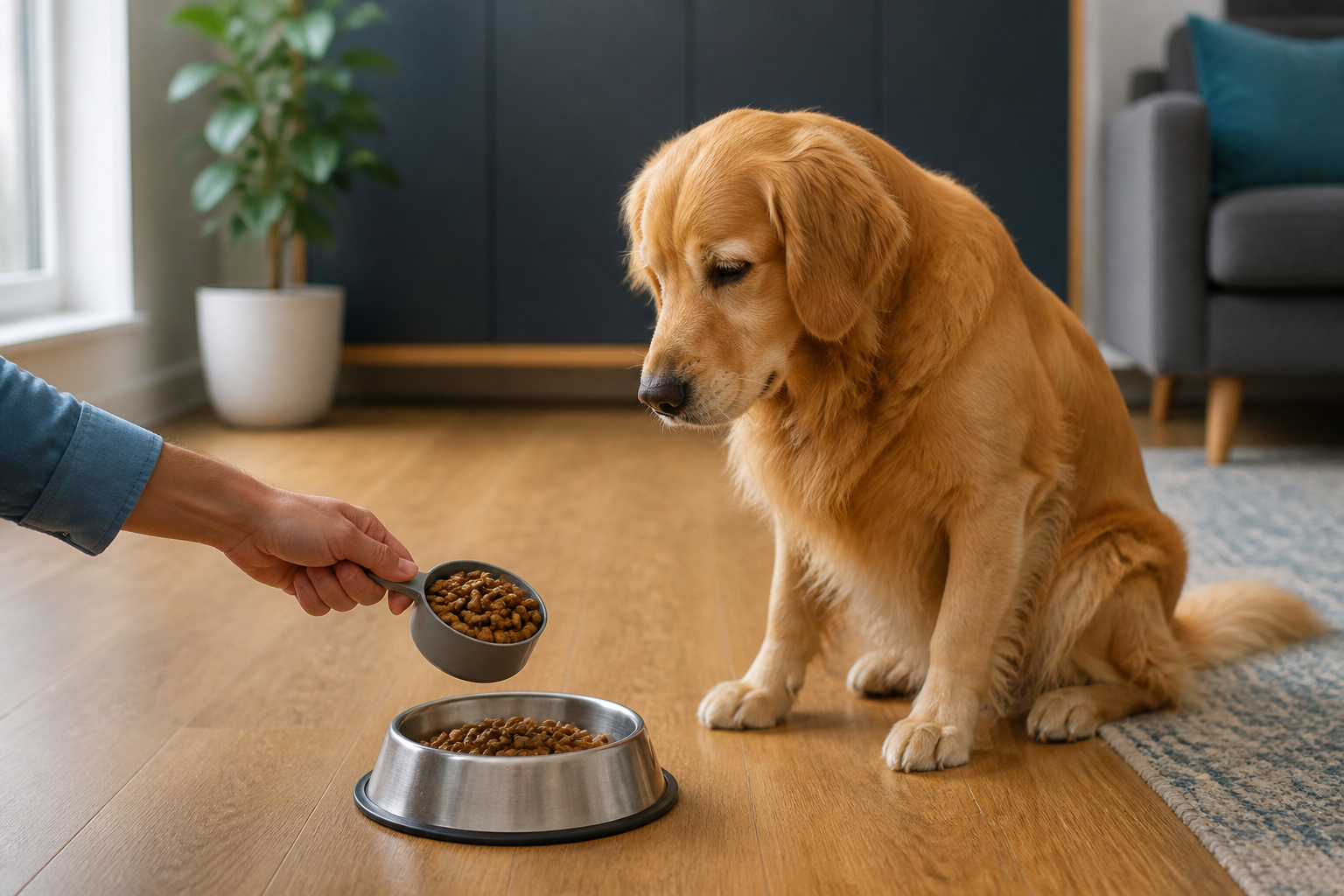
You are standing in the kitchen with a measuring scoop in one hand and a bag of premium kibble in the other. You look at your dog and then at the back of the bag. The feeding chart provides a range, but it feels like a guess. Feeding the right amount of dry dog food is one of the most important daily decisions you make for your pet's long-term health. At BaxterBoo, we know that every dog is an individual with unique metabolic needs. This guide will help you move past the guesswork to find the precise portion your dog needs based on their weight, age, and activity level. We will cover how to read labels, adjust for lifestyle, and use professional tools to keep your dog at their ideal weight.
Quick Answer: Most adult dogs require between 1/2 cup to 4 cups of dry food daily depending on their weight and the calorie density of the food. A 10 pound dog may only need 1/2 to 3/4 of a cup, while an 80 pound dog often requires 3 to 4 cups. Always start with the specific feeding chart on your food bag and adjust based on your dog's body condition.
Why Weight is the Starting Point for Portions
Weight is the most consistent metric we have for determining a dog's caloric needs. It serves as the baseline for almost every nutritional calculation in the pet food industry. When a manufacturer like Open Farm or NutriSource designs a recipe, they calculate the nutrients based on the metabolic rate of an average dog at a specific weight. However, it is important to remember that weight alone is not the whole story. Our dog food category includes formulas for different sizes, lifestyles, and life stages.
A 50 pound couch potato and a 50 pound farm dog have very different energy requirements. We use weight to get into the right neighborhood, but we use lifestyle to find the right house. If you feed based purely on a number on a scale without looking at your dog's shape, you might overfeed or underfeed. This is why we recommend weighing your dog at home or during your regular vet visits.
The Problem with "The Scoop"
Many owners use a generic plastic cup or a coffee mug to scoop food. This leads to massive inconsistencies in daily calories. A standard 8 ounce measuring cup is the only way to be accurate with volume. If you are even slightly over the line every meal, your dog could be getting 10 percent more calories than they need. Over a year, that leads to significant weight gain.
Accuracy Matters
If you want the highest level of accuracy, consider using a kitchen scale. Measuring food by weight in grams is more precise than measuring by volume in a cup. Kibble pieces vary in size and shape. Smaller kibble like those found in Stella and Chewy’s recipes packs tighter in a cup than larger pieces. This guide to weighing dry dog food explains why weighing food ensures the calorie count is the same every single time.
Key Takeaway: Weight provides the baseline for feeding amounts, but precise measurement with a standard cup or scale is necessary to avoid accidental overfeeding.
How to Read a Dog Food Feeding Chart
Every bag of dry dog food sold in the United States must have a feeding guide. These charts are usually broken down into weight brackets. You find your dog's weight on the left and see the recommended daily amount on the right. It is vital to notice that these amounts are for the total day, not per meal. If the bag says 2 cups and you feed twice a day, you should give 1 cup in the morning and 1 cup at night.
Feeding charts are regulated but are still just estimates. Most manufacturers base their recommendations on active adult dogs that have not been spayed or neutered. Since spaying or neutering can lower a dog's metabolic rate, these charts might suggest more food than your pet actually needs. We often suggest starting at the lower end of the recommended range for a typical house pet.
Understanding Kcal Per Cup
The most important number on the bag is the calorie content, often listed as "kcal/cup" or "kcal/kg." This tells you the energy density of the food. A high calorie performance food might have 450 calories per cup. A weight management formula might only have 300 calories per cup. You cannot feed the same volume of two different brands and expect the same results. For additional guidance, read how many cups of dry dog food your dog may need.
Sample Feeding Guidelines
While every brand is different, most standard adult dry foods follow a similar pattern for daily portions. These numbers are based on an average dry food with roughly 350 to 400 calories per cup:
- Dogs 3 to 12 pounds: 1/3 to 1 cup
- Dogs 13 to 20 pounds: 1 to 1 and 1/3 cups
- Dogs 21 to 35 pounds: 1 and 1/3 to 2 cups
- Dogs 36 to 50 pounds: 2 to 2 and 2/3 cups
- Dogs 51 to 75 pounds: 2 and 2/3 to 3 and 1/3 cups
- Dogs 76 to 100 pounds: 3 and 1/3 to 4 and 1/4 cups
Vet Tip: If your dog is significantly overweight, do not feed for their current weight. You should feed for their "target" or "ideal" weight. Consult your veterinarian to determine a safe target weight and a timeline for weight loss to avoid nutritional deficiencies.
Adjusting for Life Stages
A dog's age drastically changes how much they should eat per pound of body weight. Puppies are growing rapidly and burning energy at a much higher rate than adults. Senior dogs often have slower metabolisms and may be less active. You must adjust your portions as your dog moves through different life stages to prevent health issues.
Feeding Puppies
Puppies usually need to eat more frequently and in higher quantities relative to their size. They often require three to four meals a day until they are six months old. Most puppy food charts are based on the expected adult weight of the dog. This can be tricky if you have a mixed breed. We recommend tracking their growth monthly and adjusting the scoop size as they get heavier. For more detail, review our puppy dry food feeding guide.
Adult Maintenance
Once a dog reaches maturity, their caloric needs stabilize. This is the stage where it is easiest to maintain a healthy weight. For most breeds, this happens between 12 and 18 months. Large and giant breeds like those who eat Royal Canin or Acana large breed formulas may take up to two years to fully mature. This is the time to watch for the "middle age spread" and trim back portions if they start losing their waistline.
Senior Dog Considerations
As dogs age, they may develop joint stiffness or lower energy levels. They might not need as many calories as they once did. However, some seniors actually need more protein to maintain muscle mass as they age. If your senior dog is losing weight unexpectedly, it is time for a vet visit. Our dog health category offers products that can support senior wellness alongside a proper diet.
Bottom line: Nutritional needs shift from high energy growth in puppies to lower calorie maintenance in seniors, requiring regular portion adjustments.
The Impact of Activity Levels on Portions
Activity level is the biggest "X factor" in pet nutrition. A dog that goes on a three mile run every morning will need more dry food than a dog that only goes out for quick bathroom breaks. Most pet owners tend to overestimate how active their dogs really are. If your dog spends most of the day sleeping on the couch, they fall into the "sedentary" or "low activity" category.
Working dogs or those involved in high intensity sports like agility need significantly more calories. These dogs may require a performance formula with higher fat and protein. If your dog's activity levels change with the seasons, your feeding routine should too. Many owners in the Midwest feed a little more in the summer when the weather is nice and a little less in the winter when walks are shorter.
Using Food Puzzles
If you have a high energy dog, how you feed them can be as important as how much. Using a Kong toy or a slow feeder can make a meal last longer and provide mental enrichment. This does not change the amount of food they need by weight, but it does help burn extra mental energy. It also prevents fast eaters from swallowing air, which can lead to digestive upset.
Measuring Treats
Treats are often the hidden culprit in weight gain. At BaxterBoo, we carry a wide variety of healthy treats from brands like RedBarn and Real Meat Co. However, treats should never make up more than 10 percent of your dog's daily calories. If you give a lot of treats during training, you must reduce the amount of dry food you put in the bowl at dinner. Explore our dog treats collection for training and everyday reward options.
Key Takeaway: Be honest about your dog's actual activity level and remember to subtract treat calories from their daily dry food allotment.
Weight Management and Prescription Diets
Sometimes a standard dry dog food is not enough to manage a specific health condition or significant weight issues. If your dog has been diagnosed with obesity, a veterinarian might recommend a prescription weight loss diet. These foods are formulated to keep a dog feeling full while providing fewer calories and higher fiber.
Our dog pharmacy provides access to prescription medications and prescription pet foods through our partnership with Pet's Choice. This includes specialized diets like Farmina Vet Life or Royal Canin Veterinary Diet formulas. These products are designed for pets with chronic conditions like diabetes, kidney disease, or severe allergies that require strict nutritional management.
When to See the Vet
If you are feeding the recommended amount for your dog's weight but they are still gaining or losing weight, there may be an underlying medical issue. Thyroid problems, parasites, or metabolic disorders can all affect how a dog processes food. Always consult your veterinarian before making drastic changes to your dog's diet, especially if they are showing signs of lethargy or digestive distress.
Transitioning Foods
If you decide to switch brands or move to a prescription diet, do it slowly. A sudden change in dry food can cause stomach upset and diarrhea. Start by mixing 25 percent of the new food with 75 percent of the old food for a few days. Gradually increase the new food over the course of a week. This allows your dog's digestive system to adapt to the new nutrient profile.
Vet Tip: For dogs with persistent weight issues or food sensitivities, a veterinary consultation is essential to rule out medical causes before starting a restrictive diet.
How to Assess Your Dog's Body Condition
The scale is a great tool, but your eyes and hands are even better. Veterinarians use a tool called the Body Condition Score (BCS) to determine if a dog is at a healthy weight. This is a scale from 1 to 9, where 4 or 5 is ideal. You can perform a simple version of this check at home every time you groom or pet your dog.
First, look at your dog from above. They should have a visible waistline behind the ribs. If they look like a solid rectangle or an oval, they are likely overweight. Second, look at them from the side. The abdomen should be tucked up behind the rib cage. If the belly hangs down or is level with the chest, it is time to trim the portions.
The Rib Test
Place your hands on your dog's sides. You should be able to feel their ribs easily under a thin layer of fat. It should feel like the back of your hand when you make a fist. If you have to press hard to find the ribs, your dog is carrying too much weight. If the ribs are visible to the eye without touching them, your dog may be underweight and might need a portion increase.
Consistency is Key
We recommend checking your dog's body condition once a month. This allows you to catch small changes before they become big problems. It is much easier to reduce a portion by a tablespoon now than to put a dog on a strict diet later. Keeping a log of your dog's weight and the amount you feed can help you spot trends over time.
Step 1: Weigh your dog on a consistent schedule. / Use the same scale at the same time of day for the most accurate results.
Step 2: Perform a rib and waist check. / Feel for the ribs and look for a visible tuck behind the chest.
Step 3: Consult the feeding chart. / Check the current bag of food for the recommended daily cups based on your dog's weight.
Step 4: Adjust for activity and treats. / Reduce the portion slightly if your dog is sedentary or has received many treats.
Step 5: Monitor and repeat. / Watch for changes in energy or body shape over the next two to four weeks.
Putting It All Together for Your Dog
Determining how much dry dog food to feed per day by weight is a dynamic process. It starts with the bag's feeding chart, but it ends with your daily observations. Your dog's needs will change as they age, as the seasons change, and as their health evolves. By staying proactive and measuring accurately, you are giving your pet the best chance at a long and vibrant life.
We are here to support you with a curated selection of over 500 brands. Whether you need a high protein kibble like Zesty Paws or a specialized diet from our pharmacy, we have the products you can trust. Remember to take advantage of our Autoship programme to save on your recurring orders and ensure you never run out of your dog's favorite food.
Bottom line: Use the feeding chart as a starting point, measure with a standard cup, and adjust based on your dog's body condition and activity level.
FAQ
What should I do if my dog is always acting hungry?
First, ensure you are actually feeding the correct amount for their weight and activity level. If the portions are correct, consider using a slow feeder or food puzzles to make mealtimes last longer. You can also talk to your vet about adding low calorie, high fiber vegetables like green beans to their bowl to help them feel full.
How do I know if my dog's food has too many calories?
Check the label for the kcal/cup measurement. If the food has more than 450 calories per cup and your dog is not a working athlete, it may be too energy dense for them. Switching to a weight management formula or a food with more moderate calorie counts can help prevent weight gain.
Should I feed my dog once or twice a day?
Most veterinarians recommend feeding adult dogs twice a day to help maintain steady blood sugar levels and prevent hunger. For puppies, three to four small meals are usually necessary. Some large breeds may benefit from multiple small meals to reduce the risk of bloat, though you should discuss this with your vet.
Can I just leave food out all day for my dog?
Free feeding is generally discouraged because it makes it impossible to track exactly how much your dog is eating. It can also lead to obesity, as many dogs will eat out of boredom. Set mealtimes allow you to monitor your dog's appetite, which is often the first indicator that something might be wrong with their health.






