
 Save 15% on your 1st Autoship learn more

 Email us
 Live Chat
 FAQs
FAQs





Introduction
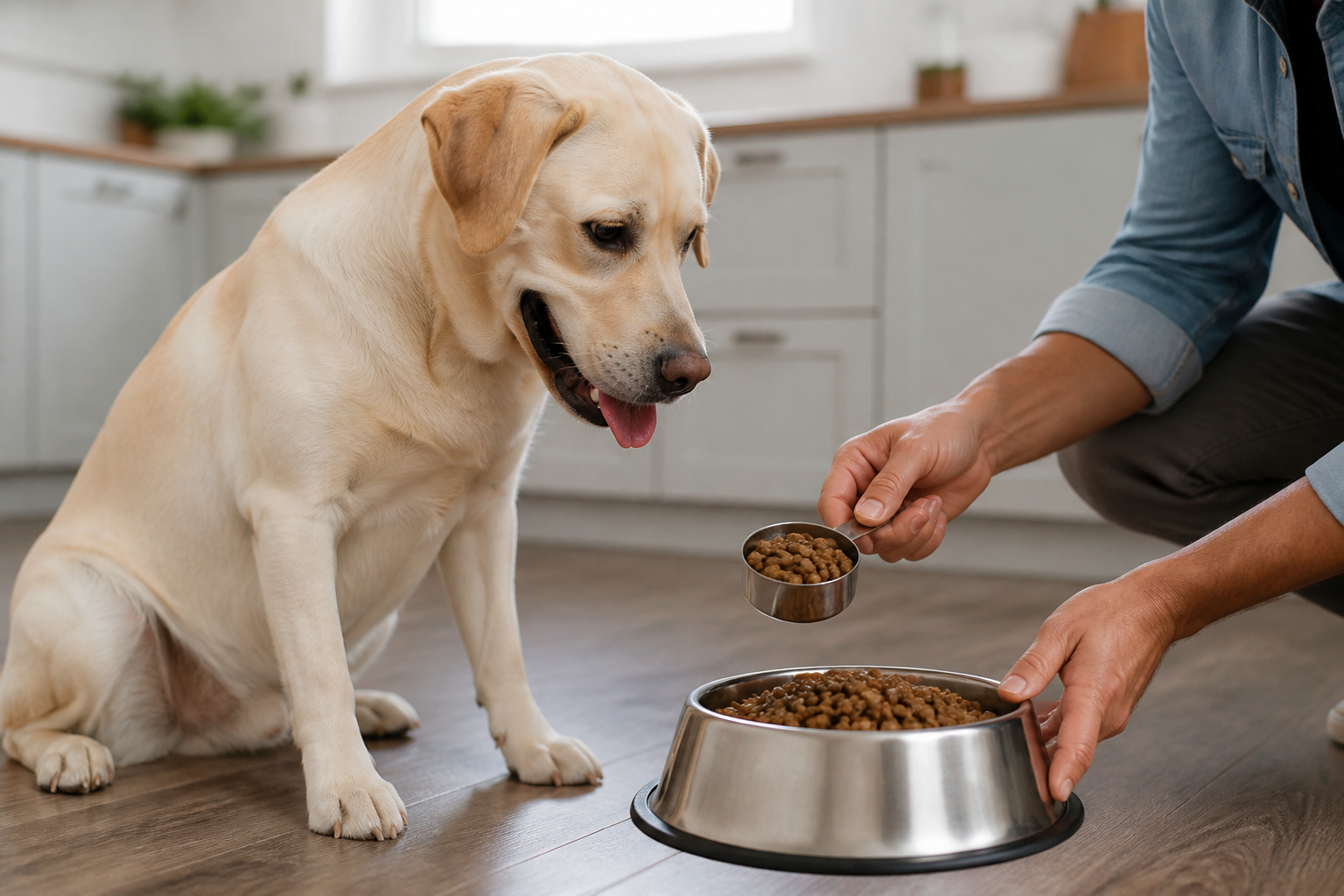
You are standing in your kitchen with a measuring scoop in one hand and a bag of kibble in the other. You want to make sure your dog gets enough energy to stay active but not so much that they start gaining unnecessary weight. It is a common struggle for many pet parents. At BaxterBoo, we have helped thousands of owners navigate the complexities of pet nutrition since 2006. Determining how much dry dog food per pound of body weight depends on several variables. These include the calorie density of the specific recipe and the unique metabolic needs of your dog. This guide will help you decode feeding charts and calculate the right portions for your pup. We want to ensure your dog thrives at every life stage through precise nutrition and high quality ingredients.
Factors That Impact Daily Feeding Amounts
Every dog is an individual with a unique metabolism. While weight is the primary metric used on food labels, it is only one part of the puzzle. You must also consider how much energy your dog burns throughout the day. A working cattle dog will require significantly more calories than a companion who spends most of the day on the sofa.
Age is another critical factor. Puppies are in a state of rapid growth and development. They require calorie dense formulas to support their bones, muscles, and organs. As dogs enter their senior years, their metabolism often slows down. They might need fewer calories to avoid weight gain while still requiring high quality protein to maintain muscle mass.
Reproductive status also changes nutritional needs. Spayed and neutered dogs generally have lower caloric requirements than unaltered pets. If you have a pregnant or nursing dog, her energy needs will skyrocket to support her growing litter. Finally, the specific formulation of the food matters. Some brands are very concentrated. This means you can feed a smaller volume while still providing the same amount of energy.
Key Takeaway: Caloric needs are determined by a combination of weight, age, activity level, and the specific energy density of the food you choose.
Understanding Calorie Density in Kibble
Not all dry dog foods are created equal when it comes to volume. One cup of a budget brand might contain 300 calories. One cup of a premium, nutrient dense brand like Orijen or ACANA might contain over 450 calories. This is why you cannot simply use the same scoop size when switching between different brands or formulas. You can compare available formulas in our adult dog food category.
When you look at a bag of dry food, check the label for the kcal per cup or kcal per kilogram. This tells you exactly how much energy is packed into every serving. High protein and high fat diets usually have a higher calorie count per cup. These are excellent for active dogs or those who struggle to keep weight on. If your dog is less active, you might look for a formula with a lower calorie density to allow them to eat a satisfying volume without overdoing the calories.
Checking the Guaranteed Analysis
The guaranteed analysis on the back of the bag provides the minimum levels of protein and fat. These nutrients are the primary drivers of calories.
- Protein: Essential for muscle repair and immune function.
- Fat: The most concentrated source of energy for dogs.
- Fiber: Helps with digestion and can make a dog feel full on fewer calories.
How to Read a Dog Feeding Chart
The feeding chart on your dog food bag is the best place to start. These charts are regulated to provide a safe baseline for the average dog. However, the ranges provided are often quite broad. For example, a chart might suggest one to two cups for a twenty pound dog. That is a 100 percent difference in food volume.
Always start at the lower end of the recommended range for your dog’s weight. Monitor their body condition for two to four weeks. If they are losing weight and should not be, increase the amount slightly. If they are putting on extra padding, scale back. Remember that the amount listed on the bag is the total for the entire day. If you feed two meals, you must divide that total number by two. For another look at portion calculations, read this guide to how many cups of dry dog food to feed per day.
Vet Tip: If your dog is significantly overweight or underweight, do not follow the chart for their current weight. Consult your veterinarian to determine their ideal target weight and feed according to that goal instead.
General Feeding Ranges by Dog Weight
While every food is different, we can look at general averages for adult dogs with moderate activity levels. These figures assume a standard kibble density of roughly 350 to 400 calories per cup.
Toy and Small Breeds (3 to 12 Pounds)
Small dogs have very high metabolic rates per pound of body weight. They burn energy quickly and have tiny stomachs.
- 3 to 6 pounds: 1/3 to 1/2 cup per day.
- 7 to 12 pounds: 1/2 to 3/4 cup per day.
Medium Breeds (13 to 40 Pounds)
Medium dogs often have the widest variety of activity levels. A Beagle and a Border Collie may weigh the same but have very different needs.
- 13 to 20 pounds: 3/4 to 1 1/4 cups per day.
- 21 to 40 pounds: 1 1/4 to 2 cups per day.
Large Breeds (41 to 100 Pounds)
Large breeds require careful portioning to avoid putting excess stress on their joints. Options related to general wellness are available in our dog healthcare category.
- 41 to 60 pounds: 2 to 3 cups per day.
- 61 to 80 pounds: 3 to 4 cups per day.
- 81 to 100 pounds: 4 to 5 cups per day.
Giant Breeds (Over 100 Pounds)
For dogs over 100 pounds, a general rule is to start with 5 cups. Add another 1/3 cup for every additional 10 pounds of body weight.
Bottom line: Use the feeding chart as a baseline but adjust based on your dog's unique ribs-to-waist ratio.
Life Stage Adjustments
The amount of food per pound changes as your dog moves through life. A puppy might eat three times as much food per pound of body weight as an adult dog of the same breed.
Puppy Feeding Needs
Puppies need frequent meals to keep their blood sugar stable. Most puppies do well with three to four small meals a day. They need higher concentrations of calcium and phosphorus for bone growth. We carry specialized puppy formulas from brands like NutriSource and Stella and Chewy's that are designed for these specific needs.
Senior Feeding Needs
Senior dogs may experience a decline in activity and a slower metabolism. They often benefit from foods with lower fat content but higher fiber. This helps them feel full while consuming fewer calories. However, some seniors lose weight as they age due to poor absorption. In these cases, a highly digestible, calorie dense food might be necessary.
Transitioning Between Life Stages
When it is time to move from puppy to adult food, do it slowly.
Step 1: Mix 25% of the new food with 75% of the old food for three days.
Step 2: Move to a 50/50 split for the next three days.
Step 3: Increase to 75% new food and 25% old food for the final three days.
Step 4: Switch entirely to the new formula.
For another perspective on gradual changes, see this guide to feeding dry dog food to a 15-pound dog.
The Role of Activity Level
A dog's daily routine is the biggest variable in the feeding equation. If you take your dog on a five mile hike every weekend, they will need an extra boost of energy. If they spend a rainy week sleeping on the rug, you should probably tighten the belt on their portions.
Working dogs or those competing in agility or dock diving may require "Performance" or "Sport" formulas. These often have a 30/20 protein to fat ratio. This provides the sustained energy needed for high intensity exercise. For the average suburban dog who gets two twenty minute walks a day, a standard maintenance diet is usually sufficient.
- Low Activity: Short walks, mostly indoor time, senior status.
- Moderate Activity: One to two hours of active play or walking daily.
- High Activity: Working dogs, long distance hiking, intense daily training.
Monitoring Your Dog's Body Condition
The scale is helpful but it does not tell the whole story. Muscle weighs more than fat. A very fit dog might weigh more than a soft dog of the same size. We recommend using the Body Condition Score (BCS) method at home.
- Feel the Ribs: You should be able to feel your dog’s ribs easily under a thin layer of skin. If you have to press hard to find them, your dog may be overweight.
- Check the Waist: Look down at your dog from above. There should be a visible tuck at the waist behind the ribs.
- Side Profile: Look at your dog from the side. The abdomen should tuck up toward the hind legs rather than hanging low or being a straight line.
If you notice your dog losing their waistline, it is time to reduce the food by 10 percent. If the ribs are becoming too prominent, increase the food by 10 percent.
Key Takeaway: Visual and tactile checks are often more accurate than the scale for determining if you are feeding the right amount.
Measuring Tips for Accuracy
Many pet owners use a standard kitchen coffee mug or a large plastic cup to scoop food. These are rarely eight ounces. Using a non-standard measuring tool can lead to overfeeding by hundreds of calories a week. This is a primary cause of gradual weight gain in pets.
Always use a level, standard dry measuring cup. For even better accuracy, consider using a digital kitchen scale. Most dog food bags list the weight of a cup in grams. Weighing the food ensures your dog gets the exact same amount every single meal. This is especially helpful for small dogs where an extra ten kibbles can represent a significant percentage of their daily intake.
- Use a standard 8 oz measuring cup.
- Level off the top of the scoop.
- Consider a digital scale for gram precision.
- Keep a consistent person in charge of feeding to avoid double meals.
The Importance of Treats and Scraps
Treats should never make up more than 10 percent of your dog's total daily calorie intake. If you are doing heavy training and using a lot of treats, you must reduce their dinner portion accordingly. Many owners forget that a single large biscuit can contain 100 calories. For a ten pound dog, that might be half of their daily requirement.
If you enjoy giving your dog treats, look for low calorie options. We carry many freeze dried treats from brands like Vital Essentials or PureVita that are high in flavor but low in calories. You can also use a portion of their daily kibble allowance as training treats throughout the day. Browse our dog treats category for additional options.
Health Conditions and Prescription Diets
Sometimes a dog's weight or health cannot be managed by simple portion control. Chronic conditions like kidney disease, urinary crystals, or severe food allergies require specific nutrient profiles. In these cases, a standard commercial diet may not be enough.
Our pharmacy at BaxterBoo offers a wide range of FDA-approved prescription pet foods through our partnership with Pet's Choice. These diets are formulated by veterinary nutritionists to manage specific health concerns. If your veterinarian has recommended a prescription diet for weight management or a metabolic condition, you can easily fulfill that through our dog pharmacy. Prescription foods are often designed to help dogs feel satisfied while strictly controlling the calories and minerals they consume.
Vet Tip: If your dog has a sudden change in appetite or begins losing weight despite eating the usual amount, schedule a veterinary exam. This can be a sign of underlying health issues like parasites, dental pain, or metabolic changes.
Managing Weight with the BaxterBoo Pharmacy
Obesity is one of the most common health threats facing dogs in the United States today. Carrying extra weight puts immense strain on the heart, lungs, and joints. It can lead to early onset arthritis and decrease a dog's lifespan by several years. If your dog is struggling to lose weight on standard kibble, talk to your vet about a metabolic weight loss diet.
Through our pharmacy and Pet's Choice, we carry specialized formulas like Farmina Vet Life for weight management. These diets use high fiber and specific proteins to boost the metabolism. We also provide access to FDA-approved flea, tick, and heartworm preventives. Keeping your dog at a healthy weight and protected from parasites is a two-pronged approach to long term wellness.
Feeding Large and Giant Breeds
Large breed dogs have a unique risk called Gastric Dilatation-Volvulus (GDV) or "bloat." This is a life threatening condition where the stomach fills with gas and twists. Feeding habits play a role in prevention.
Avoid feeding your large dog one massive meal per day. Instead, split the daily amount into two or three smaller servings. Do not use an elevated feeder unless specifically recommended by your vet for a medical reason. Some studies suggest elevated feeders may actually increase the risk of bloat in certain breeds. Also, try to limit heavy exercise for one hour before and after meals.
Transitioning to a New Food
Whenever you change brands, even if the flavor is the same, the calorie count per pound will change. A bag of Royal Canin might have a different density than a bag of Farmina. When you switch, always refer back to the new bag's feeding chart. Do not assume the scoop size remains the same. This related guide explains how to calculate daily dry food portions.
Monitor your dog's stool during any transition. Loose stools can be a sign that the new food is too rich or that you are feeding too much. Sometimes simply reducing the portion size slightly will firm up the stool. If the issues persist, the formula might not be the right fit for your dog's digestive system.
Using Autoship for Consistency
One of the easiest ways to keep your dog on a healthy feeding routine is through our Autoship programme. When you find the perfect dry food that keeps your dog at their ideal weight, you do not want to run out. Running out of food often leads to "emergency" store trips where you might buy a different, lower quality brand. This sudden change can cause stomach upset and throw off your portioning.
Autoship ensures your dog's favorite food arrives at your door on a schedule you choose. Plus, you get a discount on your first order and a free MVP Gold membership. This helps you maintain a consistent diet, which is the foundation of good health.
Conclusion
Finding the right amount of dry dog food per pound is an ongoing process of observation and adjustment. Start with the feeding chart on your bag as a baseline. Take into account your dog’s age, activity level, and body condition. Use a standard measuring cup or a scale for accuracy. Remember that treats count toward the daily total. By paying close attention to your dog's waistline and energy levels, you can help them lead a longer, more comfortable life.
- Start with the low end of the feeding chart.
- Adjust portions based on the Body Condition Score.
- Measure every meal with a standard tool.
- Factor treats into the daily calorie budget.
- Consult your vet for any sudden weight or appetite changes.
Bottom line: The best feeding amount is the one that maintains a visible waistline and provides steady energy for your dog's lifestyle.
If your dog needs a specialized diet or ongoing health support, visit our dog pharmacy. We are here to provide the tools, food, and medications your pet needs to thrive through every season of life.
FAQ
How many cups of dry dog food are in a pound?
On average, there are about 4 cups of dry dog food in one pound of kibble. This number varies based on the size and density of the individual kibble pieces. High protein, calorie dense foods often have smaller, heavier kibble, while "weight care" formulas may be lighter and airier.
Should I follow the feeding chart for my dog's current weight or target weight?
If your dog is at their ideal weight, follow the chart for their current weight. If your dog is overweight, you should feed them based on their target weight. However, you should always consult your veterinarian before starting a significant weight loss plan to ensure the calorie reduction is safe.
Is it better to feed my dog once or twice a day?
Most veterinarians recommend feeding adult dogs at least twice a day. This helps regulate blood sugar levels and keeps the dog from feeling overly hungry between meals. For large breeds, multiple smaller meals can also help reduce the risk of digestive issues like bloat.
Do I need to change how much I feed my dog in the winter?
It depends on your dog's lifestyle and coat type. Outdoor dogs or those who spend a lot of time in the cold may need more calories to maintain their body temperature. Conversely, if your dog is less active during the winter because of the weather, you may actually need to reduce their food intake to prevent weight gain.






