
 Save 15% on your 1st Autoship learn more

 Email us
 Live Chat
 FAQs
FAQs





Introduction
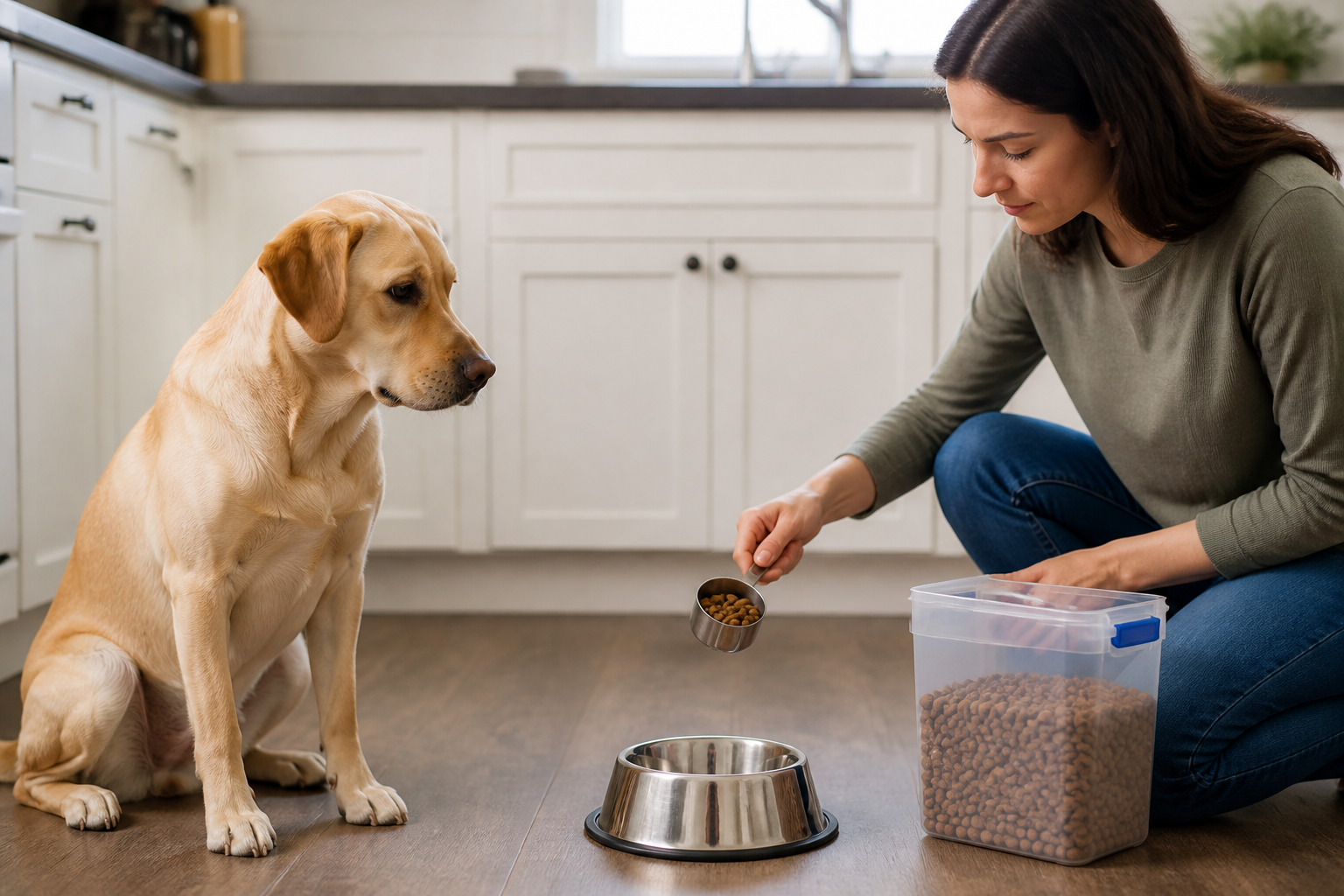
You are standing in the kitchen with a scoop in your hand and a pair of soulful, pleading eyes staring up at you. Your Labrador Retriever acts as if they have not eaten in a week, even though they finished a meal just hours ago. At BaxterBoo, we understand that Labradors are the ultimate foodies of the canine world. This guide will help you navigate the confusing variables of calorie counts, activity levels, and feeding charts. We want to help you move past the generic suggestions on the back of the bag to find the exact amount your specific dog needs. Getting the portion size right is the most important step you can take to prevent obesity and keep your Lab active for years to come.
Why the Bag Guidelines Might Be Wrong for Your Lab
The feeding chart on the back of a bag of dry dog food is a helpful starting point, but it is rarely the final answer. These charts are usually based on an average, intact adult dog with a high activity level. Most pet Labradors in the United States lead a more sedentary lifestyle. If you follow the bag guidelines strictly, you might find that your dog starts to pack on extra weight.
Manufacturers often suggest a range of food, such as two to three cups. This range is broad because every dog has a unique metabolic rate. A Labrador living in a cold climate who spends all day outdoors will burn significantly more calories than a Lab living in a temperature controlled apartment. You must look at the caloric density of the food itself. One brand might have 350 calories per cup, while another premium brand like Orijen might have nearly 500 calories per cup.
Quick Answer: Most adult Labradors require between 2 and 3.5 cups of high quality dry food per day, divided into two meals. The exact amount depends on their weight, age, and how much exercise they get daily.
Key Factors That Determine Daily Portions
Before you settle on a number of cups, you need to evaluate several lifestyle factors. Labradors are famously prone to weight gain, and their bodies are efficient at storing fat. This was historically useful for a breed meant to swim in icy waters, but it is a challenge for the modern pet owner.
Activity Level
A working Labrador who spends the morning fetching ducks or going on five mile hikes needs a much higher caloric intake. For these dogs, you may need to look at performance formulas that provide more fat and protein. On the other hand, a "couch potato" Lab who only goes for a brisk twenty minute walk around the block needs significantly less.
Reproductive Status
Spaying or neutering a dog changes their hormonal balance and can slow down their metabolism. Studies often show that neutered dogs require about 20 percent fewer calories than intact dogs of the same size. If your Lab has recently been fixed, keep a close eye on their waistline and be prepared to reduce their portion size slightly.
Age and Metabolism
A seven month old puppy is a calorie burning machine because their body is building bone and muscle at an incredible rate. A ten year old senior dog has a much slower metabolism. Their joints may also be stiffer, leading to less movement throughout the day. We carry several senior specific formulas that offer lower calorie counts and added joint support like glucosamine.
For additional guidance about age-related nutrition, read how to choose the right dog food for senior pets.
Key Takeaway: You cannot set a feeding amount once and expect it to work for the life of the dog. You must adjust the scoop size as your Lab ages and as their activity levels change with the seasons.
Using Body Condition Score Over the Scale
While knowing your dog's weight in pounds is helpful, the number on the scale does not tell the whole story. A muscular, tall Lab might weigh 80 pounds and be perfectly lean. A shorter, small boned Lab might be obese at the same weight. This is why veterinarians use a Body Condition Score (BCS) to evaluate a dog's health.
To check your Lab at home, use these three steps:
Step 1: The Rib Test.
Run your hands along your dog's sides. You should be able to feel the ribs easily under a thin layer of fat. If you have to press hard to find them, your dog is likely overweight.
Step 2: The Overhead View.
Stand over your dog and look down at their back. You should see a clear indent at the waist, just behind the ribcage. If your dog looks like a solid rectangle or an oval from above, they are carrying too much weight.
Step 3: The Profile View.
Crouch down so you are at eye level with your dog's side. Their abdomen should "tuck up" behind the ribs rather than hanging down or appearing flat.
For more guidance on evaluating body condition, see this practical guide to pet weight management.
Vet Tip: Maintaining a lean weight is the best way to protect your Labrador's joints. If you notice your dog is losing their waistline or struggling to get up, consult your veterinarian to rule out thyroid issues or other metabolic conditions before starting a restrictive diet.
Estimated Daily Portions for Adult Labradors
If you are using a standard, high quality dry kibble with about 350 to 400 calories per cup, you can use these estimates as a baseline. Remember that these are daily totals, so you should divide this number by the number of meals you feed.
- 55 to 65 pounds: 2 to 2.5 cups per day.
- 65 to 75 pounds: 2.5 to 3 cups per day.
- 75 to 85 pounds: 3 to 3.5 cups per day.
- 85+ pounds: Consult a vet, as this is often above the ideal weight for most Labs unless they are exceptionally large framed.
If you are feeding a grain free or high protein food like those from Royal Canin or Farmina, the calories per cup might be higher. Always check the label for the kcal per cup measurement.
For more accurate portioning, read how many grams are in a cup of dry dog food.
Feeding Your Labrador Puppy for Safe Growth
Feeding a Labrador puppy is a delicate balancing act. If they grow too fast, it puts immense pressure on their developing joints. This can lead to hip and elbow dysplasia later in life. You want your puppy to grow at a steady, controlled rate rather than reaching their full size as quickly as possible.
Labrador puppies should almost always be fed a formula specifically labeled for large breed puppies. These recipes have a precise calcium to phosphorus ratio that supports healthy bone development.
Puppy Feeding Schedule
- 8 to 12 weeks: Four meals per day. This helps maintain steady blood sugar and is easier on their small stomachs.
- 3 to 6 months: Three meals per day.
- 6 months and up: Two meals per day.
Most owners find that 2 to 4 cups per day is standard for a growing Lab puppy, but this will fluctuate wildly during growth spurts. Do not be surprised if your puppy is ravenous one week and slightly less interested the next.
For a deeper look at puppy portions, read how much dry dog food to feed a puppy.
Key Takeaway: Slow and steady growth is the goal for Labrador puppies. Avoid "free feeding" where food is left out all day, as this almost always leads to overconsumption and rapid growth.
Senior Labradors and Metabolism Changes
As your Labrador enters their senior years, which usually begins around age seven or eight, their nutritional needs shift. They often require fewer calories but higher quality protein to maintain muscle mass. Many senior Labradors also begin to experience joint stiffness or cognitive changes.
Our pharmacy offers several prescription diets and FDA approved medications through our partnership with Pet's Choice for dogs managing chronic conditions. If your senior Lab is struggling with weight despite eating very little, they may benefit from a prescription metabolic diet. These are formulated to help dogs feel full while consuming fewer calories.
For healthy seniors, look for foods that include:
- Glucosamine and Chondroitin for joint health.
- Omega-3 fatty acids for skin, coat, and brain health.
- Increased fiber to help with digestion and satiety.
You can also browse our pet pharmacy when your veterinarian recommends prescription support.
Bottom line: Senior Labradors have lower energy requirements, so you must reduce your dry food portions to prevent obesity from worsening age related joint pain.
The Danger of "Hidden Calories" in Treats
Because Labradors are so motivated by food, we often use treats for training and bonding. It is easy to forget that these calories count toward the daily total. A single medium sized milk bone can have 40 calories. If you give your dog five of those a day, that is 200 extra calories, which is equivalent to about half a cup of food.
Follow the 10 percent rule: treats should never make up more than 10 percent of your dog's total daily caloric intake. If you are doing a heavy training session, set aside a portion of their daily kibble to use as rewards instead of adding extra treats on top of their meals.
You can compare options in our dog treats category when you need training rewards or occasional snacks.
You can also use low calorie alternatives for snacking:
- Green beans (fresh or canned with no salt).
- Carrot slices.
- Blueberries.
- Plain pumpkin (not pie filling).
Managing the "Bottomless Pit" Behavior
If your Lab is at a healthy weight but constantly acts like they are starving, you can use strategies to slow them down and help them feel full. Labradors are notorious for "inhaling" their food, which can lead to a dangerous condition called bloat.
Slow Feeders and Puzzles
Using a slow feed bowl or a stuffing toy like a Kong can turn a thirty second meal into a fifteen minute activity. This not only prevents bloat but also provides mental stimulation. When a dog has to work for their food, their brain has more time to register the feeling of fullness.
Fiber Buffering
Adding a tablespoon of plain, canned pumpkin or some steamed green beans to the dry kibble adds bulk and fiber without many calories. This helps the dog feel physically full, which can reduce begging between meals.
When to Consult Your Veterinarian
If you have adjusted your dog's food and they are still gaining weight, or if they are losing weight despite eating a large amount, it is time for a checkup. Conditions like hypothyroidism or Cushing's disease can cause weight gain and increased appetite in Labradors.
Our pharmacy carries a wide range of medications for these conditions. Through our partnership with Pet's Choice, we can help you manage your dog's long term health with prescription foods and FDA approved treatments. Always work with your vet to determine if a sudden change in weight or appetite is a medical issue rather than a simple feeding problem.
Vet Tip: If you are transitioning your Lab to a new food or a significantly lower portion size, do it gradually over 7 to 10 days. This prevents digestive upset and helps your dog's metabolism adjust to the new caloric intake.
Conclusion
Determining how much dry food to feed your Labrador is a process of observation and adjustment. Start with the guidelines for your dog's weight, but be ready to change the amount based on their activity level and body condition. Keep a close eye on their waistline and use the rib test weekly. By focusing on lean muscle and a healthy weight, you are giving your Lab the best chance at a long, mobile, and happy life. Whether you are looking for a standard premium kibble or a specialized formula, we are here to help you find the right fit. Consider signing up for our Autoship programme to save on every order and ensure you never run out of your dog's favorite food.
FAQ
How many times a day should I feed my adult Labrador?
Most veterinarians recommend feeding an adult Labrador twice per day, once in the morning and once in the evening. This helps regulate their blood sugar levels and prevents them from becoming overly hungry and scavenging for scraps. Dividing the food into two meals also reduces the risk of bloat compared to feeding one large meal.
Can I just leave food out for my Lab to eat when they want?
Free feeding is generally not recommended for Labradors because most individuals of this breed lack an "off switch" when it comes to eating. They will likely consume the entire bowl immediately, leading to overeating and rapid weight gain. Scheduled mealtimes also allow you to monitor exactly how much they are eating and notice any changes in appetite.
Why is my Lab always acting hungry even after a big meal?
Labradors have a genetic predisposition toward food seeking behavior, and some even have a gene mutation that prevents them from feeling full. This "bottomless pit" behavior is a breed trait rather than a sign of actual starvation. Using high fiber toppers and slow feeders can help satisfy their urge to eat without overfeeding them.
What should I do if my Lab is overweight?
The first step is to consult your veterinarian to ensure there are no underlying health issues like a slow thyroid. Once cleared, you should gradually reduce their daily food intake by about 10 to 15 percent and eliminate high calorie table scraps. Increasing their daily exercise and using low calorie vegetables as treats can also help them shed pounds safely.






