
 Save 15% on your 1st Autoship learn more

 Email us
 Live Chat
 FAQs
FAQs





Introduction
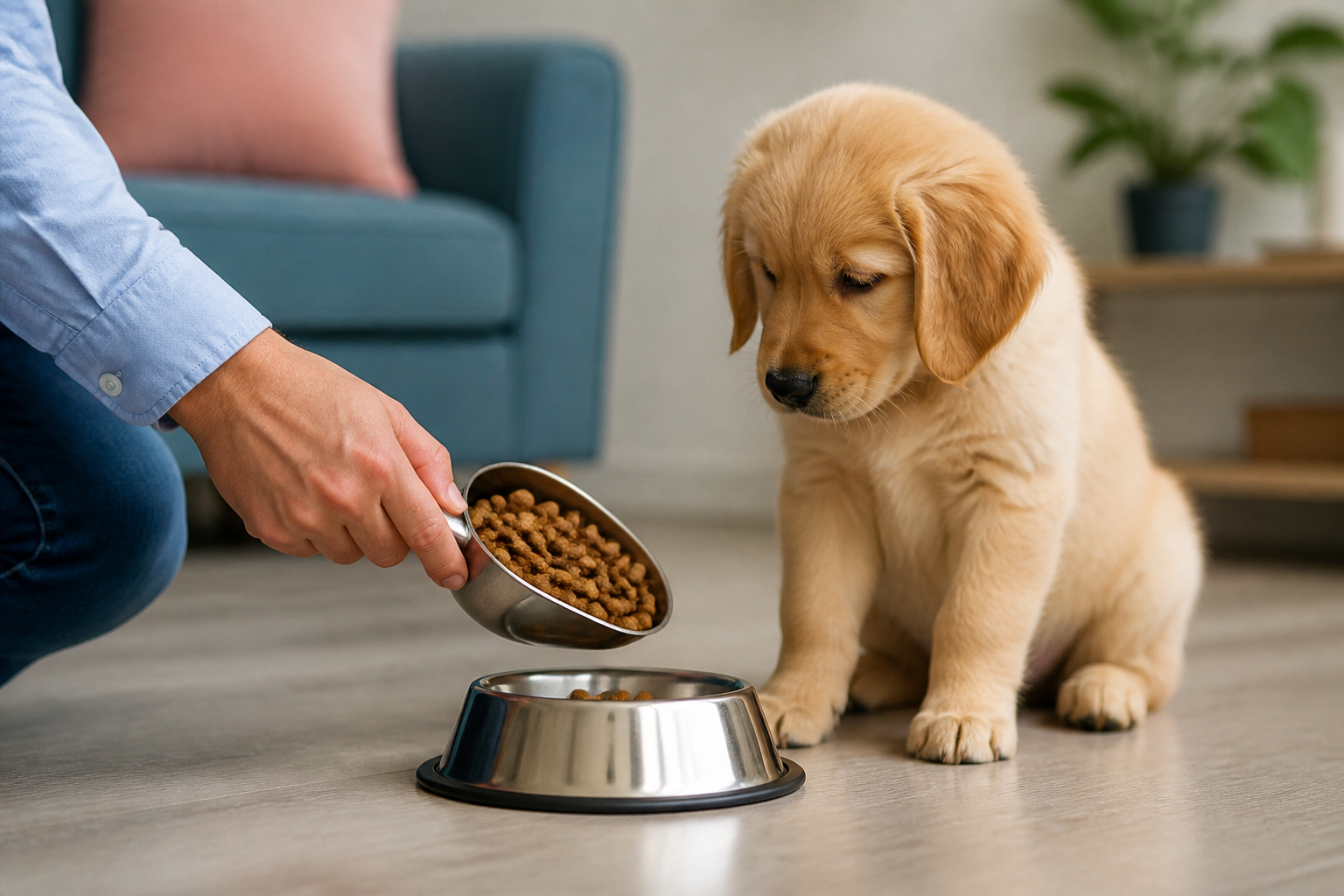
You are standing in your kitchen with a plastic scoop in one hand and a bag of puppy kibble in the other. Your new family member is likely dancing around your feet, convinced they are starving. Looking at the feeding chart on the back of the bag can feel like trying to solve a complex math problem. At BaxterBoo, we understand that getting the portion size right is one of the most important jobs a new pet owner has. This article covers how to calculate daily portions, why breed size changes the rules, and how to tell if your puppy is growing at a healthy rate. Proper nutrition during these first few months builds the foundation for a lifetime of wellness.
Quick Answer: Most puppies require between one half cup and four cups of dry food daily, divided into three or four meals. The specific amount depends entirely on their current weight, their expected adult size, and the caloric density of the specific kibble brand you choose.
The Importance of Precision in Puppy Feeding
Feeding a puppy is not the same as feeding an adult dog. Puppies are essentially professional growers. They need a significant amount of energy to develop bones, muscles, and organs in a very short window of time. If you feed too little, you risk stunted growth or developmental delays. If you feed too much, you risk rapid weight gain that puts dangerous pressure on developing joints.
Many owners assume that a hungry puppy should always be fed more. However, puppies are often opportunistic eaters who will consume whatever is put in front of them. This is why following a measured plan is better than "free feeding," which is the practice of leaving a bowl full of food out all day. Scheduled, measured meals help you track exactly how much nutrition your puppy receives. They also make house training much easier because regular input leads to regular output.
Key Takeaway: Using a standard measuring cup is essential for puppy health because even a quarter-cup error can lead to significant weight issues in a small growing dog.
Understanding Nutrient Density in Dry Food
Not all dry dog foods are created equal. One cup of a high protein, grain-free kibble might contain 500 calories, while a cup of a budget-friendly grocery brand might only have 300 calories. This is why you cannot simply use a generic "cups per day" rule.
When you look at the bag, you will see a measurement called "kcal/kg" or "kcal/cup." This tells you how concentrated the energy is in that specific recipe. Puppies need a higher concentration of protein and fat than adult dogs. They also require specific ratios of calcium and phosphorus to ensure their bones do not grow too fast or too slow.
We carry a wide variety of expertly curated brands like NutriSource, Stella and Chewy's, and Open Farm that offer puppy-specific formulas. These recipes are designed to provide the specific amino acids and minerals a growing body needs without the fillers that often lead to excessive weight gain.
How to Read a Puppy Feeding Chart
Every bag of dry food features a feeding guide, but these can be confusing. Most charts use two main data points: your puppy’s current weight and their expected adult weight.
Step 1: Determine the current weight. / Use a home scale or visit your veterinarian for a precise measurement.
Step 2: Estimate the adult weight. / If you have a purebred dog, this is easy to look up. For mixed breeds, your vet can provide an estimate based on paw size and current growth.
Step 3: Find the age range. / Charts are usually broken down into age brackets, such as 2 to 4 months or 6 to 8 months.
Step 4: Locate the daily total. / The number in the box is the total for the entire day, not for each individual meal.
Common Chart Mistakes
Many owners see "2 cups" on the chart and give two cups at breakfast and two cups at dinner. This results in double the necessary calories. Always divide the daily total by the number of times you plan to feed your puppy that day. If the bag says two cups and you feed three times a day, each meal should be roughly two-thirds of a cup.
Vet Tip: Feeding charts are only starting points. Every puppy has a unique metabolism and activity level. If your puppy is much more active than average, they may need slightly more than the chart suggests, while a more sedentary pup may need less.
For another perspective on portion planning, read this guide to feeding a 15-pound dog.
Feeding by Breed Size and Type
A Chihuahua puppy and a Great Dane puppy have vastly different nutritional requirements. It is not just about the volume of food, but the rate of growth.
Small and Toy Breeds
Small breed puppies, like those expected to weigh under 20 pounds, have incredibly fast metabolisms. They often finish their skeletal growth by 9 or 10 months of age. Because they are so small, they are prone to hypoglycemia, which is a dangerous drop in blood sugar. These puppies need calorie-dense food and frequent meals to keep their energy levels stable.
Large and Giant Breeds
Large breed puppies, like Labradors or Great Danes, grow for a much longer period. Some giant breeds are not fully mature until they are two years old. It is vital that these puppies do not grow too quickly. If they put on weight faster than their bones can harden, they can develop lifelong joint problems or hip dysplasia. Large breed puppy foods are specifically formulated with lower calcium and fat levels to encourage slow, steady growth.
Bottom line: Choose a dry food specifically formulated for your puppy's expected adult size to ensure their skeletal development matches their weight gain.
For additional guidance when comparing recipes, see this article about choosing dry dog food.
Determining Daily Feeding Frequency
The younger the puppy, the more often they need to eat. Their small stomachs can only hold a limited amount of food at one time, yet their energy needs are constant.
- Age 6 to 12 weeks: Four meals per day. This provides a steady stream of energy and prevents stomach upset from overfilling.
- Age 3 to 6 months: Three meals per day. At this stage, you can begin to increase the portion size per meal and drop the mid day feeding.
- Age 6 to 12 months: Two meals per day. Most puppies can transition to a standard adult schedule of breakfast and dinner during this window.
If you have a busy schedule, an automatic feeder can help keep these times consistent. Consistency helps regulate the digestive system and makes potty training more predictable.
How to Tell if Your Puppy is Eating the Right Amount
Since feeding charts are just estimates, you must learn to read your puppy's body condition. You do not want a "chunky" puppy. While "puppy fat" might look cute, it is actually quite hard on their developing frames.
The Rib Test
You should be able to feel your puppy's ribs easily under a thin layer of skin and muscle. If you have to press hard to find the ribs, your puppy is likely overweight. If the ribs are visible from a distance, they may need more food.
The Waistline Check
Look at your puppy from above. They should have a visible "tuck" or narrowing at the waist, just behind the ribcage. If they look like a solid cylinder or an oval from above, it is time to trim back their portions slightly.
Energy and Stool Quality
A well-fed puppy should have plenty of energy for play and solid, well-formed stools. If the stools are consistently soft or loose, it could be a sign of overfeeding. The digestive system can only process so much at once, and excess food often results in diarrhea or soft waste.
Vet Tip: If your puppy is losing weight, has a distended "potbelly" appearance, or seems constantly lethargic despite eating, consult your veterinarian. These can be signs of internal parasites or underlying health issues that require medical attention rather than just more food.
Using Treats and Training Rewards
Training is a huge part of puppyhood, and most training involves food. Many owners forget to account for these extra calories. If you are using a lot of treats for potty training or crate training, you must subtract that energy from their daily kibble total.
A good strategy is to set aside a portion of their measured daily dry food to use as training rewards. If you want to use "high value" treats like freeze-dried liver or jerky, make sure these do not exceed 10% of their total daily caloric intake. At BaxterBoo, we offer many low-calorie training treats that are perfect for repetitive sessions without ruining your puppy's diet. Browse our dog treats category for training-friendly options.
Transitioning to Adult Dry Food
Knowing when to stop feeding puppy food is just as important as knowing how much to give. Puppy food is very high in calories. If you continue feeding it after the dog has stopped growing, they will quickly become obese.
- Small breeds: Transition around 9 to 12 months.
- Medium breeds: Transition around 12 months.
- Large breeds: Transition around 18 to 24 months.
When you make the switch, do it slowly over the course of a week. Start by mixing 25% adult food with 75% puppy food for two days. Then move to a 50/50 split, and finally 75% adult food before switching completely. This prevents the stomach upset and gas that often comes with sudden diet changes.
For more information about early food changes, read this puppy weaning timeline.
When a Prescription Diet is Necessary
Some puppies have health needs that a standard bag of kibble cannot meet. This might include severe food allergies, chronic digestive issues, or specific urinary health requirements. In these cases, your veterinarian may prescribe a therapeutic diet like those found in the Farmina Vet Life range.
Our pet pharmacy offers a wide selection of FDA-approved prescription pet foods and medications through our partnership with Pet's Choice. If your veterinarian determines that your puppy requires a specialized diet or ongoing medication for a health condition, our pharmacy can help fulfill those needs conveniently. Having a pharmacy integrated with your favorite pet supply source makes managing your puppy's health much simpler.
Key Takeaway: Prescription diets are formulated for specific medical needs and should only be used under the direct guidance of a veterinarian who has examined your puppy.
Common Signs of Feeding Issues
It is normal for a puppy's appetite to fluctuate occasionally, especially during teething. However, you should watch for patterns that suggest the current feeding plan is not working.
- Excessive Hunger: If your puppy is constantly searching for food, eating non-food items, or acting aggressive around the bowl, they may need a higher volume of food with more fiber to feel full.
- Pickiness: If a healthy puppy refuses dry food, they might be holding out for table scraps. Ensure everyone in the house is following the "no human food" rule.
- Bloat Signs: If you have a large, deep-chested breed, be aware of the risk of bloat. Using a slow-feeder bowl can prevent them from gulping air along with their dry food.
Adjusting for Activity
If you take your puppy on a long hike or they spend the day at a puppy daycare, they will burn significantly more calories. It is okay to offer a small extra snack on these high-activity days. Conversely, if your puppy is resting more due to a rainy day or post-vaccination lethargy, you can stick to the lower end of their feeding range.
Maintaining a Healthy Weight for Life
Starting with the right amount of dry food sets the stage for a healthy adult weight. Canine obesity is a leading cause of early-onset arthritis and heart disease. By measuring every meal now, you are preventing major health complications later.
We recommend keeping a growth journal for the first year. Note down their weight every two weeks and adjust their food intake based on the trends you see. This data is incredibly helpful for your vet during routine check-ups.
Bottom line: Feeding a puppy is an evolving process that requires regular observation, accurate measuring, and occasional adjustments as they grow.
Summary Checklist for Puppy Feeding
To ensure your puppy stays on the right track, follow this simple routine:
- Use a standard 8-ounce measuring cup for every meal.
- Divide the total daily amount into at least three feedings for puppies under six months.
- Check the rib and waistline condition weekly.
- Adjust portions if training treats make up more than 10% of the daily diet.
- Consult your vet if growth seems to stall or if your puppy becomes overweight.
Conclusion
Feeding your puppy the correct amount of dry food does not have to be a source of stress. By starting with the bag's recommendations and adjusting based on your pup's unique body condition and energy levels, you can ensure they are getting exactly what they need. Remember to account for breed size and life stage, and always use a consistent measuring tool. At BaxterBoo, we are here to support your journey from the very first bag of puppy kibble to the transition to adult food. To make sure you never run out of your puppy’s favorite recipe, consider signing up for our Autoship programme. It saves you money on every order and ensures your growing pup always has a fresh supply of nutrition delivered right to your door.
FAQ
How do I know if I should feed my puppy more?
If you can clearly see your puppy's ribs or hip bones from a distance, or if they have very low energy and a dull coat, they likely need an increase in food. Always increase portions gradually, adding about 10% more to their daily total and monitoring their stool for a few days to ensure they can digest the extra volume.
Is it okay to leave dry food out all day for my puppy?
Free feeding is generally discouraged for puppies because it makes it difficult to monitor exactly how much they are eating. It also interferes with house training since you cannot predict when they will need to go outside. Scheduled meals help establish a routine and allow you to notice immediately if your puppy loses their appetite, which is often the first sign of illness.
What should I do if my puppy is eating their dry food too fast?
Puppies who "inhale" their food can suffer from choking or digestive upset. You can slow them down by using a slow-feeder bowl with ridges, or by placing a large, clean rock in the center of their bowl that they have to move around. Spreading the kibble out on a flat baking sheet is another simple way to force them to take smaller, individual bites.
Why does my puppy have soft stools even though I am feeding the recommended amount?
Soft stools are often a sign that the puppy's digestive system is overwhelmed by the volume of food. Even if the bag says to feed more, your specific puppy might have a slower metabolism or more efficient digestion. Try reducing their daily portion by 10% for a few days to see if the stools firm up, and always check with your vet to rule out parasites like worms.






