
 Save 15% on your 1st Autoship learn more

 Email us
 Live Chat
 FAQs
FAQs





Introduction
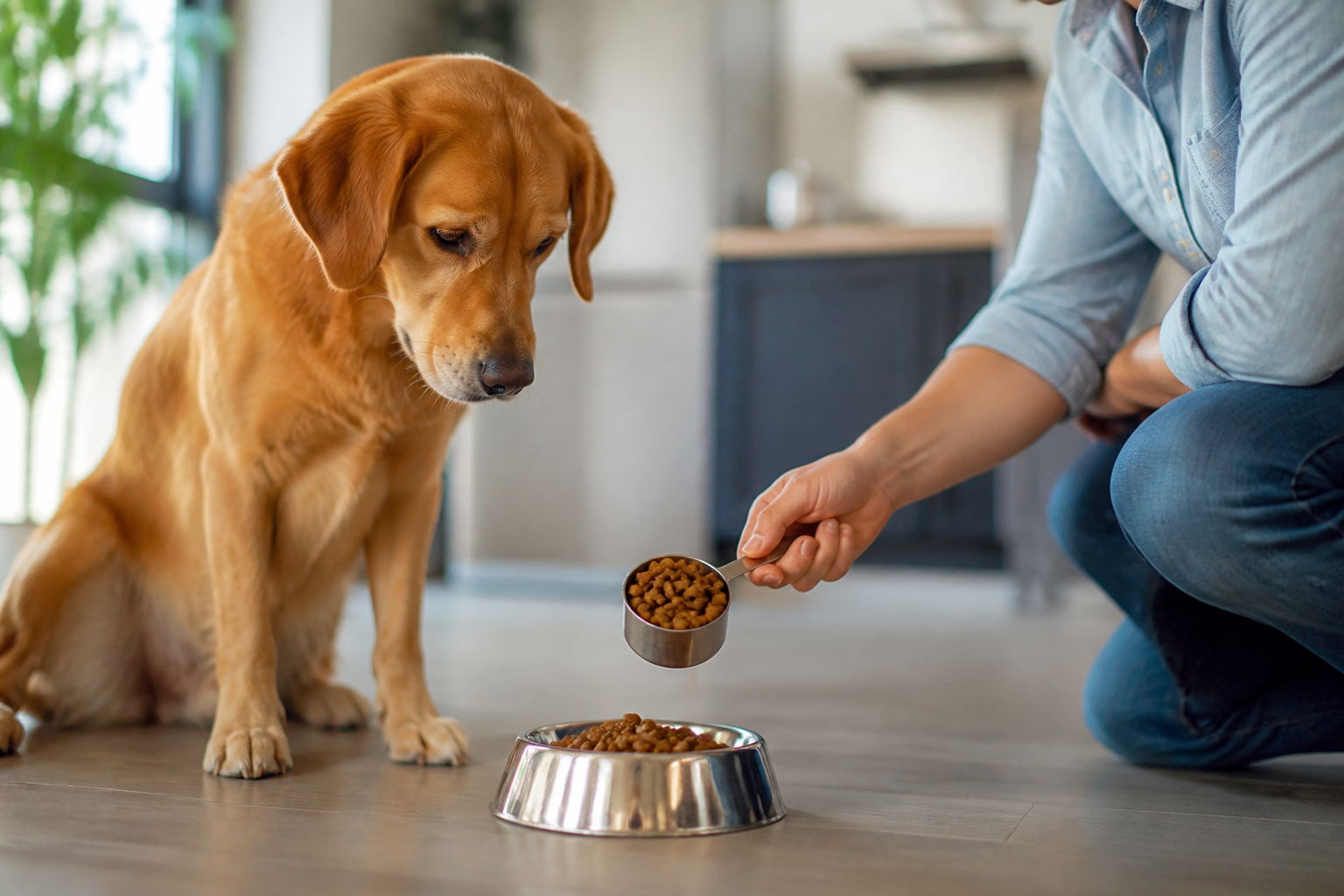
Standing in your kitchen with a measuring scoop in one hand and a bag of kibble in the other can feel surprisingly complicated. You want to make sure your dog gets enough energy for their morning walk without accidentally contributing to unhealthy weight gain. It is a balancing act that every pet owner faces. At BaxterBoo, we have helped thousands of owners navigate these nutritional choices since 2006. This guide covers how to read feeding charts, calculate caloric needs based on activity levels, and adjust portions as your dog ages. Finding the perfect amount of dry food is not just about following a label. It involves understanding your dog's unique metabolism and lifestyle. By the end of this article, you will feel confident managing your dog's daily bowl.
The Core Factors of Canine Nutrition
Every dog is an individual. A high-energy Border Collie living on a farm has vastly different caloric requirements than a senior Pug who enjoys a quiet life in a suburban apartment. Determining the right amount of food starts with looking at the specific characteristics of your pet.
Age and Life Stage
Puppies are in a constant state of growth and development. They require more protein and calories per pound than adult dogs to build muscle and bone. Their metabolism is incredibly fast. Once a dog reaches adulthood, their needs level off. Senior dogs often face a slowing metabolism and decreased activity. This shift means they usually require fewer calories to maintain a healthy weight.
Activity Levels
Think of food as fuel. If your dog spends hours hiking or playing fetch, they burn through that fuel quickly. These active dogs can often eat more than the standard recommendation on a bag. Conversely, a sedentary dog who only goes for short walks around the block needs a more controlled portion. Overfeeding a low-activity dog is a primary cause of pet obesity.
Breed and Size
Size matters, but so does breed-specific metabolism. Some breeds, like Beagles or Labrador Retrievers, are known for being highly food-motivated and prone to weight gain. Other breeds, like Greyhounds or some terriers, may have naturally higher metabolic rates. Larger dogs obviously eat more than small ones, but smaller breeds often require more calories per pound of body weight because they have higher metabolic rates.
Reproductive Status
Spaying or neutering a dog can lead to a slight decrease in their metabolic rate. This change occurs because the hormonal shifts can lower the energy needed for basic bodily functions. If your dog was recently fixed, you might need to reduce their portion by about 10 percent to prevent weight gain.
Quick Answer: Most healthy adult dogs require about 20 to 30 calories per pound of body weight daily. However, this is only a baseline. You should start with the manufacturer feeding guide and adjust based on your dog's activity level and body condition.
Deciphering the Dog Food Label
The feeding chart on the back of your dry food bag is a legal requirement, but it is also a broad estimate. Manufacturers typically base these charts on the needs of an active, un-neutered adult dog. Since many pets do not fit that exact profile, the chart should be your starting point rather than the final word.
Understanding Kcal per Cup
Every brand of dry food has a different caloric density. One cup of a high-protein, grain-free formula like Orijen or Acana might contain 450 calories. A weight-management formula from a brand like NutriSource might only have 320 calories per cup. You cannot simply switch brands and keep the volume the same. Always look for the kcal/cup measurement on the label. Compare available options in our dog food category.
Using the Chart Correcty
Feeding charts are usually organized by weight ranges. If your dog is at the top of a weight bracket, you might start at the higher end of the suggested range. If they are less active, start at the lower end.
- Find your dog's ideal weight (not necessarily their current weight).
- Locate the corresponding weight row on the bag.
- Identify the total daily amount of food.
- Divide that total by the number of meals you feed daily.
Key Takeaway: Always measure food with a standard 8-ounce measuring cup. Using a random plastic scoop or a coffee mug can lead to overfeeding by as much as 20 percent every single day.
For more help with accurate portions, read how much a cup of dry dog food weighs.
Feeding for Different Life Stages
We carry over 500 brands at BaxterBoo to ensure every life stage is covered. The transition between these stages is the most common time owners get the portion size wrong.
Puppyhood Portions
Puppies usually need to eat three to four times a day. Their small stomachs cannot handle a full day's worth of calories in one sitting. For large breed puppies, such as those that will grow to be over 70 pounds, careful portion control is vital. Feeding them too much can cause them to grow too fast. This rapid growth puts immense strain on their developing joints. Brands like Royal Canin and Farmina offer specific formulas designed to manage this growth rate. Explore our selection of Royal Canin products when comparing life-stage formulas.
Adult Maintenance
Most dogs enter the adult phase between 12 and 24 months. At this point, you can usually move to twice-a-day feeding. If your dog is maintaining a steady, healthy weight, you have likely found their "sweet spot." Keep in mind that changes in the weather can affect appetite. Many dogs eat slightly more in the winter to stay warm and less in the summer when they are less active.
Senior Years
When a dog becomes a senior depends on their size. Giant breeds reach this stage at age 7, while small breeds might not be considered seniors until 11 or 12. Senior diets often have lower calories but higher fiber to keep them feeling full. They may also include supplements like Cosequin for joint support.
Vet Tip: If your senior dog is losing weight despite eating the usual amount, consult your veterinarian. This can be a sign of underlying health issues like kidney disease or dental pain. Never simply increase food for a losing senior without a professional check-up.
Managing Weight and the Body Condition Score
The scale is not the only way to tell if you are feeding the right amount. Veterinarians use a Body Condition Score (BCS) to assess a dog's fat and muscle. You can do a basic version of this at home.
The Rib Test
Run your hands along your dog's sides. You should be able to feel their ribs easily under a thin layer of fat. If you have to press hard to find them, your dog is likely overweight. If the ribs are visible and sticking out, your dog might be underweight.
The Waistline View
Look down at your dog from above. They should have a visible tuck behind the ribs, creating an hourglass shape. If they look like a solid rectangle or an oval, it is time to cut back on the kibble.
Adjusting for Weight Loss
If your dog needs to lose weight, do not make a drastic cut all at once. Start by reducing their daily intake by 10 percent. You can also replace a small portion of their kibble with low-calorie additions like canned green beans (no salt) to keep them feeling full.
For dogs with significant weight issues, our pharmacy for dogs provides access to FDA-approved prescription diets through our partnership with Pet's Choice. These specialized formulas, like Farmina Vet Life, are designed to support healthy metabolism and weight loss under the guidance of a veterinarian. Prescription foods require a valid script, which we can process for you for home delivery.
Bottom line: Feeding for your dog's "goal weight" rather than their "current weight" is the fastest way to manage obesity safely.
For additional portion guidance, see how many cups of dry dog food your dog may need per day.
The Role of Treats in the Daily Total
It is easy to forget that treats are food. Those biscuits, dental chews, and scraps from the table add up quickly. If you are training a new puppy and using a lot of treats, you must reduce their dinner portion accordingly.
- Treats should never exceed 10 percent of a dog's total daily calories.
- Dental chews like Greenies can be surprisingly high in calories.
- Small pieces of carrot or apple make excellent low-calorie rewards.
- Subtract the caloric value of treats from the total daily kibble allowance.
Step 1: Calculate the total daily calories your dog needs based on the bag and their activity level.
Step 2: Determine how many treats they usually get in a day.
Step 3: Reduce the dry food portion by the amount of those treat calories to keep the total balance correct.
Browse our dog treats category when choosing rewards that fit into your dog's daily calorie allowance.
Feeding Schedules and Consistency
Consistency is helpful for both your dog's digestion and their behavior. Most adult dogs thrive on two meals per day, roughly 12 hours apart. This schedule keeps their blood sugar stable and prevents them from becoming overly hungry and scavenging.
Free Feeding vs. Scheduled Meals
Free feeding, or leaving a bowl of dry food out all day, is generally discouraged by experts. It makes it nearly impossible to track how much your dog is eating. It also makes it harder to notice a sudden loss of appetite, which is often the first sign of illness. Scheduled meals help you monitor exactly what goes into your dog.
The Importance of Water
Dry food has very little moisture, usually around 10 percent. This makes access to fresh, clean water mandatory. If your dog is a fast eater, you can add a little warm water to their dry food. This slows them down and adds hydration. It also helps release the aromas of the food, which is great for picky eaters.
Introducing New Foods
When you find a new brand at BaxterBoo that you want to try, never switch all at once. A sudden change in dry food can cause upset stomachs or diarrhea. Use a seven-day transition period.
- Days 1-2: 75% old food, 25% new food.
- Days 3-4: 50% old food, 50% new food.
- Days 5-6: 25% old food, 75% new food.
- Day 7: 100% new food.
Using Technology and Tools for Accuracy
Since every cup of food counts, precision is your best friend. Many owners have moved toward weighing their dog's food on a digital kitchen scale. This is far more accurate than using a volume-based cup, as kibble sizes and shapes can lead to air gaps in a measuring cup.
We recommend checking the bag for the weight measurement, usually listed in grams. If the bag says a dog your size should eat 200 grams, weighing it out ensures they get exactly that amount every single time. This is especially helpful for small toy breeds where an extra tablespoon of food can represent a significant percentage of their daily intake.
If your schedule is unpredictable, an automatic feeder can help. These devices can be programmed to dispense specific amounts of dry food at set times. This keeps your dog's routine stable even if you are stuck at work or running errands in Vernon Hills.
For more measuring guidance, read how many grams are in a cup of dry dog food.
When to Seek Professional Guidance
While blog guides are helpful, they do not replace the expertise of a vet. If you notice your dog is constantly hungry, even when being fed the correct amount, they could have a malabsorption issue or a parasite. Likewise, a dog that refuses to eat their dry food might be experiencing dental pain or a more serious internal health concern.
Your veterinarian can perform a professional Body Condition Score and give you a specific caloric target. If your dog has a chronic condition like diabetes or kidney disease, their nutritional needs will be very specific. Our BaxterBoo pharmacy carries a wide range of prescription medications and specialized diets to support these needs. Working with your vet ensures you are not just feeding your dog, but also supporting their long-term health.
Vet Tip: Bring the name and calorie count of your current dry food to your annual check-up. Your vet can tell you exactly how many cups of that specific brand your dog needs based on their current health status.
Signs You Are Feeding the Right Amount
How can you tell if your hard work is paying off? A well-fed dog shows it in their appearance and behavior.
- Steady energy: Your dog should be alert and ready for activities without being lethargic.
- Coat health: A shiny, soft coat often indicates that the dog is getting the right balance of fats and proteins.
- Stool consistency: Small, firm, and regular stools are a sign that the dog is digesting their dry food efficiently.
- Weight stability: You should not see frequent fluctuations in their body shape or weight.
If you see these signs, you have likely found the perfect portion for your pet. Remember that as they age or as the seasons change, you may need to make small adjustments.
Summary of Feeding Best Practices
Feeding the right amount of dry food is an ongoing process. It requires observation, a bit of math, and a commitment to consistency. By starting with the bag's guidelines and adjusting for your dog's unique life, you provide them with the foundation for a long and healthy life.
- Use a proper measuring cup or scale every time.
- Account for treats in the daily calorie total.
- Monitor your dog's body condition regularly.
- Adjust portions for age, activity, and reproductive status.
Our MVP Rewards program is a great way to save on the premium brands your dog loves. You can also set up our Autoship programme to ensure you never run out of their favorite kibble. This service provides savings on your first order and helps you stay consistent with your dog's diet.
Key Takeaway: The goal is to feed the smallest amount of food that maintains a healthy weight and good energy levels. Overfeeding is much harder to correct than underfeeding, so err on the side of caution and adjust upward as needed.
FAQ
Can I trust the feeding chart on the back of the dog food bag?
The chart is a helpful starting point, but it is often based on the needs of active, intact adult dogs. Most household pets are spayed or neutered and have moderate activity levels, so they may need slightly less than the chart suggests. Always monitor your dog’s body condition and adjust the portion up or down by 10 percent if they are gaining or losing weight.
How many calories are in a standard cup of dry dog food?
Calorie counts vary wildly between brands and formulas, typically ranging from 300 to 500 calories per cup. A high-protein puppy food will be much more calorie-dense than a senior or weight-management formula. You must check the specific "kcal/kg" or "kcal/cup" listing on your bag every time you switch brands to avoid accidentally overfeeding or underfeeding.
Is it better to feed my dog once or twice a day?
Most veterinarians recommend feeding adult dogs twice a day to maintain stable blood sugar levels and prevent hunger-related behaviors. Small puppies usually require three to four meals a day because their stomachs are small and they need constant energy for growth. A consistent schedule also helps with house training and allows you to monitor your dog's appetite more closely.
What should I do if my dog is always acting hungry?
If your dog is at a healthy weight but constantly begs for food, try splitting their daily portion into more frequent, smaller meals. You can also use slow-feeder bowls or puzzle toys to make mealtime last longer and provide mental stimulation. If the hunger is sudden or accompanied by weight loss, consult your vet to rule out medical issues like parasites or metabolic disorders.






