
 Save 15% on your 1st Autoship learn more

 Email us
 Live Chat
 FAQs
FAQs





Introduction
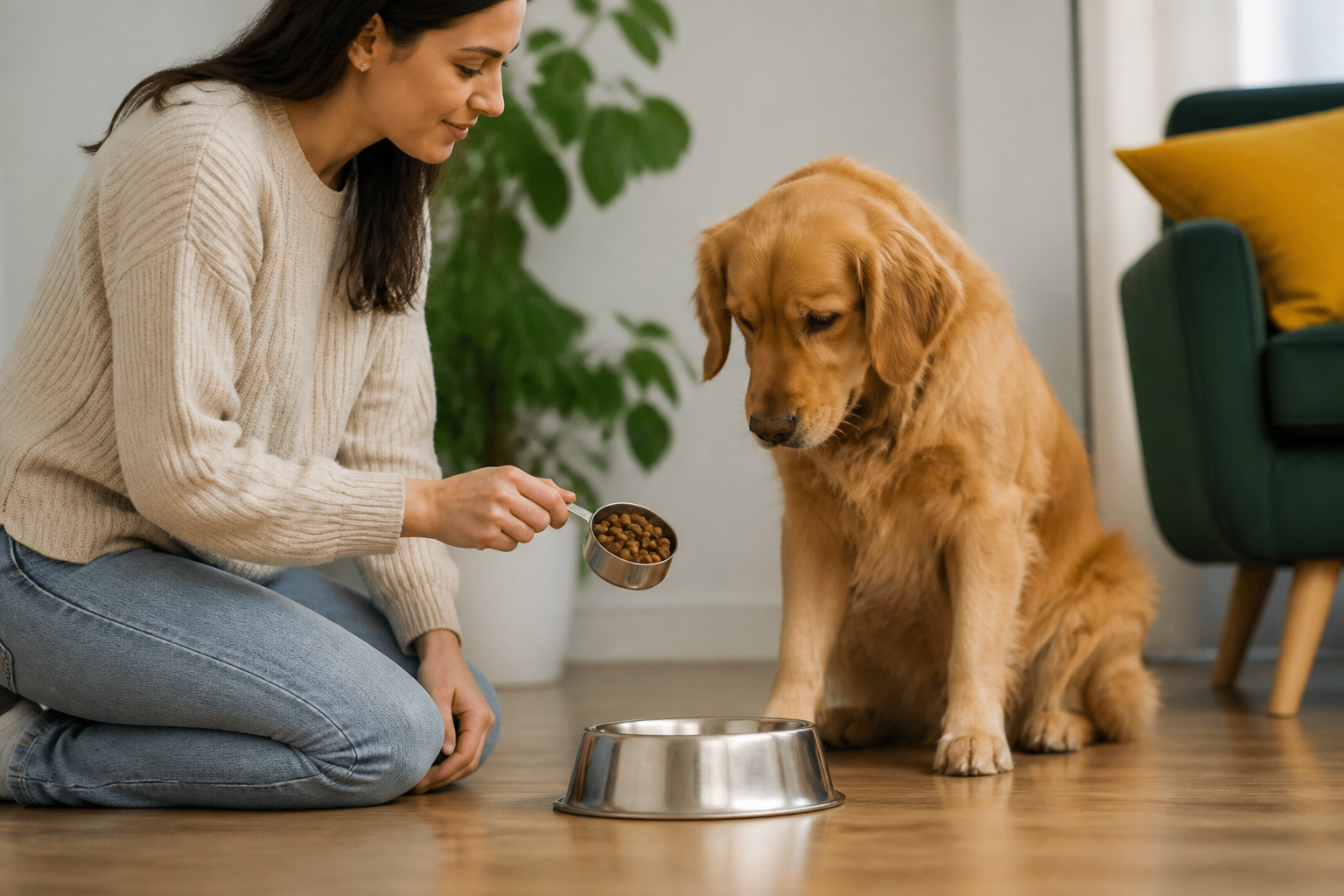
You are standing in your kitchen with a plastic scoop in one hand and a hungry dog staring at your every move. You look at the feeding chart on the back of the bag. It gives a wide range of cups per day. You wonder if your dog is an average eater or if they need a little extra fuel for their morning walk. At BaxterBoo, we have helped pet parents navigate these daily decisions since 2006. Getting the portion size right is about more than just satisfying hunger. It is the foundation of long term health and weight management. This guide covers how to read labels, adjust for activity levels, and recognize the signs that your dog is eating the right amount. Finding the perfect portion involves balancing the science of the bag with the unique needs of your specific dog.
Quick Answer: Start with the recommended daily amount on your dog food label based on your dog's current weight. Divide that total by the number of meals you feed daily. Adjust this amount based on their activity level and life stage under the guidance of your veterinarian.
The Core Factors That Influence Portions
Every dog has a unique metabolic rate. This is why two dogs of the same breed and weight might need different amounts of food. Identifying where your dog falls on the spectrum of needs helps you avoid the trap of overfeeding. We see many pet owners struggle with this because they follow a one size fits all approach.
Age and Life Stage
Puppies are growing machines. They require significantly more calories per pound of body weight than adult dogs to support bone development and organ growth. Conversely, senior dogs often have slower metabolisms. They may also be less active due to joint stiffness. If you continue feeding a senior dog the same amount they ate at age three, they will likely gain weight quickly.
Size and Breed
A Great Dane needs significantly more calories than a Toy Poodle. However, small breeds often have faster metabolisms per pound. They might need more calorie dense kibble to maintain their energy levels. Genetics also play a role in how a dog processes fat and protein.
Activity Level
An active dog that goes on three mile runs or spends the day in a backyard needs more fuel. A dog that spends most of the day on the sofa has much lower energy requirements. Most feeding charts assume a moderate activity level, which is typically thirty to sixty minutes of exercise daily.
Reproductive Status
Spayed and neutered dogs generally require fewer calories than intact dogs. The hormonal changes after these procedures can slow the metabolism slightly. It is common to need a ten percent reduction in food after a dog is fixed to prevent weight gain.
Key Takeaway: Feeding charts are a starting point, not a strict rule. You must adjust based on your dog's individual metabolism, age, and daily exercise.
Decoding the Dog Food Label
The label on your bag of dry dog food is the most important tool you have. Every brand has a different calorie density. One cup of a high protein food like Orijen or Acana may have many more calories than a cup of a budget grocery brand.
Understanding Kcal per Cup
Look for the calorie content on the bag. It is usually listed as kcal/kg or kcal/cup. If the food is very dense, you will feed a smaller volume. This is often why premium foods seem more expensive but last longer. You are feeding less to get the same nutritional value.
The Guaranteed Analysis
This section tells you the minimum percentages of protein and fat. High fat foods are more calorie dense. If you switch from a weight management formula to a high performance formula, you cannot keep the scoop size the same. You must recalculate based on the new calorie count.
Following the Feeding Table
The table on the bag usually lists the dog's weight in one column and the total daily cups in the next. Note that this is the total for the day, not per meal. If the bag says two cups and you feed twice a day, your dog gets one cup in the morning and one cup at night.
- Check the weight range carefully.
- Identify if the chart is for "cups" or "grams."
- Determine if the chart is based on current weight or ideal weight.
- Look for specific instructions for puppies or pregnant dogs.
Vet Tip: Always use a standard measuring cup. Using a random coffee mug or a large plastic scoop can lead to overfeeding by twenty percent or more without you even realizing it.
Feeding for Different Life Stages
A dog's nutritional needs change as they move through life. We carry over 500 brands at BaxterBoo to ensure we have the right fit for every stage. Using the correct formula makes it much easier to get the portion size right.
Puppyhood (Birth to 12-18 Months)
Puppies need small, frequent meals. Their stomachs are tiny, but their energy needs are high. Large breed puppies need specialized formulas to ensure they do not grow too fast, which can cause joint issues later.
Step 1: Determine the puppy's expected adult weight.
Step 2: Find the age of the puppy on the chart.
Step 3: Measure the total daily amount and divide into three or four meals.
Adulthood (The Maintenance Phase)
Most dogs reach adulthood between twelve and twenty four months. At this point, the goal is maintenance. You want to keep their weight steady. If they are maintaining a healthy body condition, you have found the "sweet spot" for their portions.
The Senior Years
When a dog hits seven to ten years old, their needs shift again. Many senior dogs benefit from food that is lower in calories but higher in fiber to help them feel full. This is also the time when many owners start looking into supplements for joint health. Our pharmacy carries a variety of prescription diets and medications through our partnership with Pet's Choice if your senior dog has specific health needs.
Bottom line: Transition to life stage specific food to ensure your dog gets the right nutrient balance for their age.
Calculating the Right Amount for Weight Loss
If your dog has lost their waistline, it is time to adjust their intake. Canine obesity is a leading cause of joint pain and decreased lifespan. Reducing food is the first step, but it must be done safely. For additional guidance, read our guide to dog weight management.
The Ten Percent Rule
Never slash your dog's food in half overnight. Start by reducing their total daily intake by ten percent. Monitor their weight for two weeks. If they are not losing weight, you can reduce it by another five percent.
Accounting for Treats
Treats should never make up more than ten percent of your dog's daily calories. If you give a large biscuit after a walk, you must take a little bit of kibble out of their dinner bowl to compensate.
Prescription Diets
For dogs that struggle with significant weight issues, a standard dry food might not be enough. Your veterinarian might suggest a prescription weight loss formula. These foods are designed to keep the dog feeling full while providing fewer calories. Our pharmacy provides these FDA approved prescription diets to help manage chronic weight issues.
Healthy Low Calorie Additions
If your dog seems hungry on a reduced portion, you can add "bulk" without many calories.
- Green beans (fresh or canned with no salt)
- Plain canned pumpkin (not pie filling)
- Sliced cucumbers
- Steamed broccoli
Vet Tip: If your dog is gaining weight despite eating very little, consult your vet to rule out underlying issues like hypothyroidism or Cushing’s disease.
How Often Should You Feed?
The frequency of meals depends on your dog's age and lifestyle. While some people prefer once a day feeding, most experts agree that multiple meals are better for digestion. For more portion and schedule guidance, see our daily dry food feeding guide.
Twice Daily (The Standard)
Most adult dogs do well with two meals, spaced about twelve hours apart. This helps keep blood sugar levels stable and prevents the dog from becoming overly hungry and scavenging for scraps.
Three to Four Times (Puppies and Small Breeds)
Young puppies and very small toy breeds are prone to hypoglycemia (low blood sugar). They need more frequent meals to maintain their energy levels. Most puppies can transition to twice daily feeding once they reach six months of age.
Free Feeding vs. Scheduled Feeding
Free feeding involves leaving a bowl of dry food out all day. We generally advise against this for several reasons. It makes it impossible to track exactly how much your dog is eating. It can also lead to obesity in dogs that lack self regulation. Scheduled feeding creates a routine and helps with house training.
- Set a timer for fifteen minutes.
- Pick up the bowl after the time is up.
- This teaches the dog to eat when food is presented.
Key Takeaway: Consistent feeding schedules help regulate digestion and make it easier to notice if your dog has a sudden loss of appetite.
Monitoring Your Dog's Body Condition
The scale is not the only way to tell if you are feeding the right amount. Learning how to perform a body condition score at home is a vital skill for every pet owner. Our body condition guide for dogs offers additional tips for evaluating your dog's shape.
The Rib Test
Run your hands along your dog's sides. You should be able to feel their ribs easily under a thin layer of skin. If you have to press hard to find them, your dog is likely overweight. If the ribs are visible from a distance, they may be underweight.
The Waistline Check
Look at your dog from above. They should have a visible tuck behind the ribcage. From the side, their abdomen should slope upward from the chest to the back legs. A rectangular shape from above usually indicates that the dog needs a portion reduction.
Energy and Coat Quality
If your dog is lethargic or their coat looks dull and brittle, they might not be getting enough nutrients. High quality dry food provides the essential fats needed for a shiny coat. If you see these signs, it may be time to upgrade to a more nutrient dense brand like Stella and Chewy's or NutriSource. Explore our NutriSource selection when comparing formulas.
Bottom line: Use your eyes and hands to evaluate your dog's weight every two weeks and adjust the scoop size accordingly.
Special Considerations for Specific Needs
Sometimes the standard rules do not apply. Certain health conditions or environmental factors require a change in how you measure food.
Cold Weather Feeding
If your dog spends a lot of time outdoors in the winter, they burn more calories just to stay warm. You may need to increase their food by ten to twenty percent during the coldest months.
High Protein Diets and Digestion
Foods that are very high in protein can sometimes lead to loose stools if the portion is too large. If you switch to a premium brand and notice digestive upset, try reducing the portion size slightly. Often, the dog is simply getting more rich nutrients than their system can handle at once.
Dogs with Allergies
For dogs with skin or food sensitivities, the amount you feed is just as important as the ingredients. Overfeeding can exacerbate inflammatory responses. If your dog requires a limited ingredient diet or a hypoallergenic prescription food, we can fulfill those needs through the BaxterBoo pharmacy.
Transitioning to New Food
Whenever you change brands or formulas, you must transition slowly over seven to ten days.
Step 1: Mix 25% new food with 75% old food for two days.
Step 2: Mix 50% new food with 50% old food for two days.
Step 3: Mix 75% new food with 25% old food for two days.
Step 4: Feed 100% new food.
For more details, read our guide to changing your dog's food.
Using Technology and Tools for Accuracy
Since we are a hybrid retailer with a physical warehouse in Illinois, we see all the latest gear that helps make feeding easier. Accuracy is the enemy of weight gain.
Digital Kitchen Scales
Measuring by volume (cups) can be inconsistent. Kibble size and shape affect how much fits in a cup. Measuring by weight (grams) is the most accurate way to feed. Many high quality brands now list grams on the back of the bag for this reason.
Slow Feeders and Puzzles
If your dog inhales their food in seconds, they may not feel full. Using a slow feeder bowl or a food dispensing toy like a Kong can make the meal last longer. This provides mental stimulation and gives the body time to send "fullness" signals to the brain.
Automatic Feeders
Automatic feeders are great for maintaining a strict schedule, especially if you work long hours. Just ensure you have calibrated the machine correctly to dispense the exact amount your dog needs.
Vet Tip: If your dog is a "gulper," a slow feeder is not just for fun. It helps prevent bloat, which is a life threatening condition where the stomach twists.
Conclusion
Determining how much dry food to feed your dog is a balance of following the label and watching your dog's physical condition. There is no perfect number that stays the same forever. As your dog ages or their activity level changes, their bowl needs to change too. By using a consistent measuring tool and monitoring their ribs and waistline, you can keep them at an ideal weight. We carry a massive selection of 500 plus brands at BaxterBoo to help you find the specific nutrition your dog deserves. Whether you need a high energy kibble for an athlete or a prescription diet from our pharmacy for a senior, we are here to support your journey as a pet parent. To make your life easier, consider our MVP Rewards programme. It ensures you never run out of food and gives you a discount on your orders while providing a free MVP Gold membership for even more savings.
FAQ
How many cups of dry food should I feed my dog per day?
The number of cups depends entirely on the calorie density of the food and your dog's weight. A 50 pound dog might need two cups of a high calorie food but three cups of a weight management formula. Always start with the specific feeding table on your bag of food and adjust based on your dog's body condition.
Can I just follow the feeding chart on the bag exactly?
The feeding chart is a generalized recommendation for an average dog. Most charts overstate the amount needed to ensure the most active dogs get enough calories. You should treat the chart as a starting point and reduce or increase the amount by ten percent based on whether your dog is gaining or losing weight.
Is it better to feed my dog once or twice a day?
Most veterinarians recommend feeding adult dogs twice a day. This helps with digestion, keeps their metabolism steady, and prevents them from getting too hungry between meals. Small breeds and puppies often require even more frequent feedings to prevent drops in blood sugar.
How do I know if I am overfeeding my dog?
The easiest way to tell is the rib test. You should be able to feel your dog's ribs without pressing hard. If your dog has lost their visible waistline when viewed from above, or if they have a rounded belly from the side, you are likely feeding too much. Consistent weight gain is a clear sign that the calorie intake is higher than the energy output.






