
 Save 15% on your 1st Autoship learn more

 Email us
 Live Chat
 FAQs
FAQs





Introduction
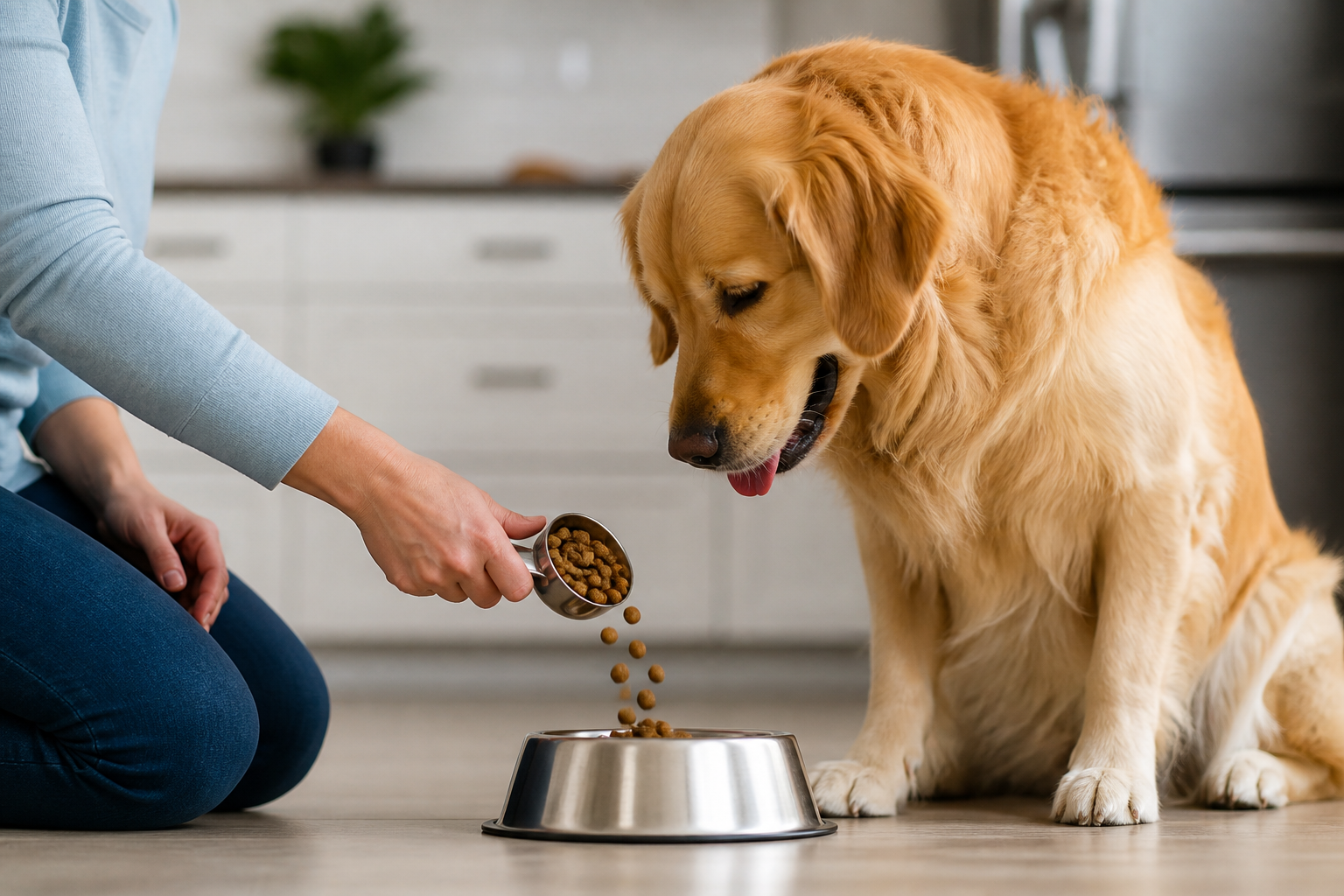
You are standing in the kitchen with a measuring scoop in one hand and a bag of kibble in the other. Your dog is watching your every move with hopeful eyes. It is a scene we see every day at BaxterBoo. You want to give them enough to stay satisfied but not so much that they put on extra weight. Finding that perfect balance is one of the most important parts of being a pet parent. This guide covers how to read feeding charts and adjust for life stages. We will also look at how activity levels and health conditions change your dog's caloric needs. Our goal is to help you move past the guesswork. Proper nutrition starts with the right portion size for your unique dog.
Quick Answer: Most adult dogs need between one half cup and four cups of dry food per day depending on their weight. You should start with the feeding chart on your specific food bag and adjust based on your dog's activity level and body condition.
Why Precision Matters at Mealtime
Feeding your dog seems simple until you realize how much impact a few extra kibbles can have. Dog food is very calorie dense. Even a small overage every day can lead to significant weight gain over a year. Canine obesity is a growing concern that leads to joint stress and heart issues. It can even shorten a dog's lifespan. We want our pets to stay mobile and energetic for as long as possible.
Underfeeding is just as problematic. If a dog does not get enough calories, they may lack the energy for daily walks. Their coat might become dull or brittle. They might even develop nutritional deficiencies that affect their immune system. Precision at mealtime ensures your dog has the building blocks for healthy skin, strong muscles, and a sharp mind.
Decoding the Feeding Chart
Every bag of dry dog food sold at BaxterBoo includes a feeding guideline. These charts are required by law but they can be confusing. The amounts listed are almost always the total for a 24 hour period. If you feed your dog twice a day, you must divide that number in half.
Most charts use weight ranges to suggest a serving size. These ranges are based on an average dog with a moderate activity level. If your dog spends most of the day on the couch, they likely need the lower end of that range. If they spend hours at the dog park, they might need the higher end.
Understanding Cup Measurements
Not all measuring cups are created equal. A standard eight ounce measuring cup is the industry standard for these charts. Using a large coffee mug or a random plastic scoop can lead to massive feeding errors. We always recommend using a dedicated, level measuring cup for every meal.
Calorie Content Variations
Dry food varies wildly in calorie density. One brand might have 300 calories per cup while another has 500. This is why you cannot use the same measurement if you switch brands. If you move from a standard kibble to a high protein option like Orijen or Acana, you will likely need to feed less volume. Always check the kcal per cup or kcal per kilogram listed on the packaging.
Key Takeaway: Feeding charts are a starting point and not a strict rule. Always divide the daily total by the number of meals you serve.
Calculating Needs Based on Life Stage
A dog's nutritional requirements change as they age. What worked for a puppy will not work for a senior. Their metabolism and growth needs dictate how much fuel they require.
Puppies: Fuel for Growth
Puppies are like little athletes in training. They need a lot of energy to build bones, muscles, and organs. Because their stomachs are small, they cannot eat huge meals at once. Most puppies need to eat three or four times a day.
Puppy food is formulated with higher fat and protein levels. You will notice that puppy feeding charts are often based on their expected adult weight. This helps ensure they get enough nutrients to reach their full potential without growing too fast. Growing too quickly can be especially dangerous for large breeds like Great Danes or Labradors.
Adult Dogs: Maintenance Mode
Once a dog stops growing, they enter the maintenance stage. This usually happens between twelve months and two years of age. At this point, the goal is to keep their weight stable. Most adult dogs do well with two meals per day. This helps keep their blood sugar stable and prevents them from getting too hungry between feedings.
Senior Dogs: Adjusting for a Slower Pace
As dogs age, their metabolism naturally slows down. They may also become less active due to joint stiffness. Many senior dogs need fewer calories to prevent weight gain. However, they still need high quality protein to maintain muscle mass. If you notice your older dog is gaining weight on their usual portions, it may be time to switch to a senior formula or reduce their scoop size slightly. You can also review how many cups of dry food dogs need by age, weight, and activity.
The Impact of Breed and Size
Size plays a massive role in how much dry food to feed your dog. A tiny Chihuahua has a very fast metabolism compared to a giant Mastiff. Small breeds often need more calories per pound of body weight than large breeds. This is because they lose body heat faster and have higher heart rates.
Large breeds have different challenges. They are prone to joint issues, so keeping them lean is vital. A few extra pounds on a small dog is a concern. A few extra pounds on a large dog puts immense pressure on their hips and knees. We carry many brands like NutriSource that offer specific formulas for small, medium, and large breeds to help manage these differences.
| Dog Size | Typical Weight | Estimated Daily Dry Food |
|---|---|---|
| Toy | 3–10 lbs | 1/3 to 3/4 cup |
| Small | 10–20 lbs | 3/4 to 1 1/3 cups |
| Medium | 20–50 lbs | 1 1/3 to 2 2/3 cups |
| Large | 50–100 lbs | 2 2/3 to 4 1/2 cups |
| Giant | 100+ lbs | 4 1/2 cups + 1/4 cup per 10 lbs |
Bottom line: Your dog's breed and size determine their metabolic rate and caloric density needs.
Lifestyle and Activity Factors
A dog's daily routine is the biggest variable in the feeding equation. A working farm dog might burn three times as many calories as a dog living in a city apartment.
The Couch Potato
If your dog's main exercise is walking from the bed to the food bowl, they are sedentary. These dogs should stay at the lower end of the feeding chart. It is very easy to overfeed a quiet dog. We often suggest using puzzle toys or slow feeders to make mealtime last longer for these pets.
The Weekend Warrior
Some dogs are quiet during the week but go on long hikes every weekend. You may need to slightly increase their food on active days. However, do not overdo it. One extra long walk does not usually require a massive increase in calories.
The Working Dog
Dogs involved in agility, hunting, or herding have very high energy demands. They often need high performance dry food. These formulas have higher fat content to provide sustained energy. If your dog is losing weight despite eating the recommended amount, they likely need a more calorie dense food or a larger portion.
Spay and Neuter Status
Spaying or neutering a dog changes their hormones. This often leads to a slightly slower metabolism. Many owners find they need to reduce food intake by about ten percent after the surgery. Keeping your dog lean after their procedure helps prevent the common post-op weight gain.
Assessing Your Dog: The Rib Test
The best way to know if you are feeding the right amount is to look at your dog. You do not need a scale to do a basic check at home. We call this the body condition score.
First, look at your dog from above. They should have a visible waistline behind the ribs. If they look like a solid rectangle, they are likely overweight. If their hip bones are sticking out sharply, they may be underweight.
Next, do the rib test. Place your hands on their ribcage. You should be able to feel the ribs easily with light pressure. They should feel like the back of your hand. If you have to press hard to find a rib, there is too much fat covering them. If the ribs are highly visible to the eye, your dog needs more calories.
Vet Tip: If you cannot feel your dog's ribs or if they have lost their visible waistline, consult your veterinarian. They can help rule out underlying health issues and create a safe weight loss plan.
For another look at body shape and portion adjustments, read this guide to evaluating your dog's body condition while managing food portions.
The Role of Treats and Toppers
We all love giving our dogs treats. Whether it is a biscuit for a good sit or a piece of chicken from the table, those calories count. Treats should never make up more than ten percent of your dog's total daily calories.
If you give your dog a large dental chew or a stuffed Kong, you must reduce their dry food for that day. Many owners find success by taking a portion of the dog's daily kibble and using it as training treats throughout the day. This ensures the dog gets rewarded without exceeding their calorie limit. You can browse our dog treats category for training rewards and occasional snacks.
Food toppers are also popular. Adding a spoonful of wet food or a sprinkle of freeze dried raw like Stella and Chewy's adds flavor. Just remember to account for those additions. If the topper adds 50 calories, take 50 calories worth of dry food out of the bowl. For more ideas, explore ways to add toppers to dry dog food.
Managing Health Conditions and Weight
Sometimes, a standard dry food is not enough. Dogs with allergies, kidney issues, or severe obesity may need specialized nutrition. Our pet pharmacy offers a wide selection of prescription diets through our partnership with Pet's Choice.
If your vet prescribes a specific weight loss food like Farmina Vet Life, it is designed to help your dog feel full while eating fewer calories. These foods often have higher fiber content. This helps with the begging behavior that often comes with a diet.
Key Takeaway: Prescription diets and pharmacy medications should always be used under the guidance of a professional to manage chronic health conditions.
How to Transition to a New Amount
If you realize you have been feeding too much or too little, do not change the amount overnight. Sudden changes in food volume can cause an upset stomach. It can also lead to scavenging behavior if you suddenly cut their portions.
Step 1: Determine the target amount based on their ideal weight.
Step 2: If reducing food, cut back by ten percent every few days.
Step 3: Monitor their energy levels and stool quality during the change.
Step 4: Re-evaluate their body condition after two to three weeks.
If you are increasing food for a thin dog, do it slowly as well. Giving a dog a massive increase in kibble can lead to bloating or diarrhea. Slow and steady changes are always best for the digestive system.
Practical Tips for Success
Consistency is the secret to maintaining a healthy weight. If multiple people in the house are feeding the dog, it is easy for mistakes to happen. Use a dry erase board to track who fed the dog and when.
- Use a consistent measuring device every single time.
- Feed at the same times every day to regulate digestion.
- Store dry food in an airtight container to keep it fresh and calorie dense.
- Keep a log of your dog's weight if you are working on a weight loss goal.
We see many customers at our Vernon Hills warehouse who find that using a digital scale is the most accurate method. Weighing the food in grams is much more precise than using a plastic cup. This is especially helpful for very small dogs where five extra grams of food can be a big deal. Learn more about measuring dry dog food by weight.
Conclusion
Finding the right amount of dry food to feed your dog is an ongoing process. It changes as they grow and as the seasons change. By using the feeding chart as a guide and adjusting for your dog's unique lifestyle, you can keep them at a healthy weight. Remember to look at their body shape and feel their ribs regularly. If you need help choosing a food or managing a health condition, our team is here to support you. We offer a wide range of premium brands and a full pharmacy to meet every need.
Bottom line: Accurate measurements and regular body checks are the best ways to ensure your dog lives a long and healthy life.
Check out our full selection of dry dog food to find the perfect formula for your pet. If your dog needs a specific diet, visit our pharmacy section to see how we can help. Sign up for our Autoship programme today to save on your first order and ensure you never run out of your dog's favorite meal.
FAQ
How do I know if I should feed my dog more than the bag recommends?
You should increase the amount if your dog is consistently losing weight or if you can see their ribs and hip bones clearly. Highly active working dogs or nursing mothers often require significantly more food than the standard guidelines suggest. Always make increases gradually and monitor their stool to ensure they are digesting the extra nutrients well.
Can I just leave a bowl of dry food out for my dog to eat whenever they want?
Free feeding is generally discouraged because it makes it very difficult to monitor how much your dog is actually eating. It often leads to obesity because most dogs will eat out of boredom rather than hunger. Scheduled mealtimes help you notice changes in appetite early, which can be a vital sign of health issues.
Should I change the amount of food I feed based on the season?
Many dogs need more calories in the winter if they spend a lot of time outside because their bodies burn energy to stay warm. Conversely, some dogs are less active in the heat of summer and may need a slight reduction in their portions. Pay close attention to their body condition as the weather changes to see if an adjustment is necessary.
What should I do if my dog is always acting hungry even though I am feeding the right amount?
Some dogs are naturally food motivated and will act hungry even when their caloric needs are met. You can try adding low calorie fillers like green beans or switching to a high fiber weight management food. Using slow feeder bowls or food dispensing toys can also help them feel more satisfied by making the meal last longer.






