
 Save 15% on your 1st Autoship learn more

 Email us
 Live Chat
 FAQs
FAQs





Introduction
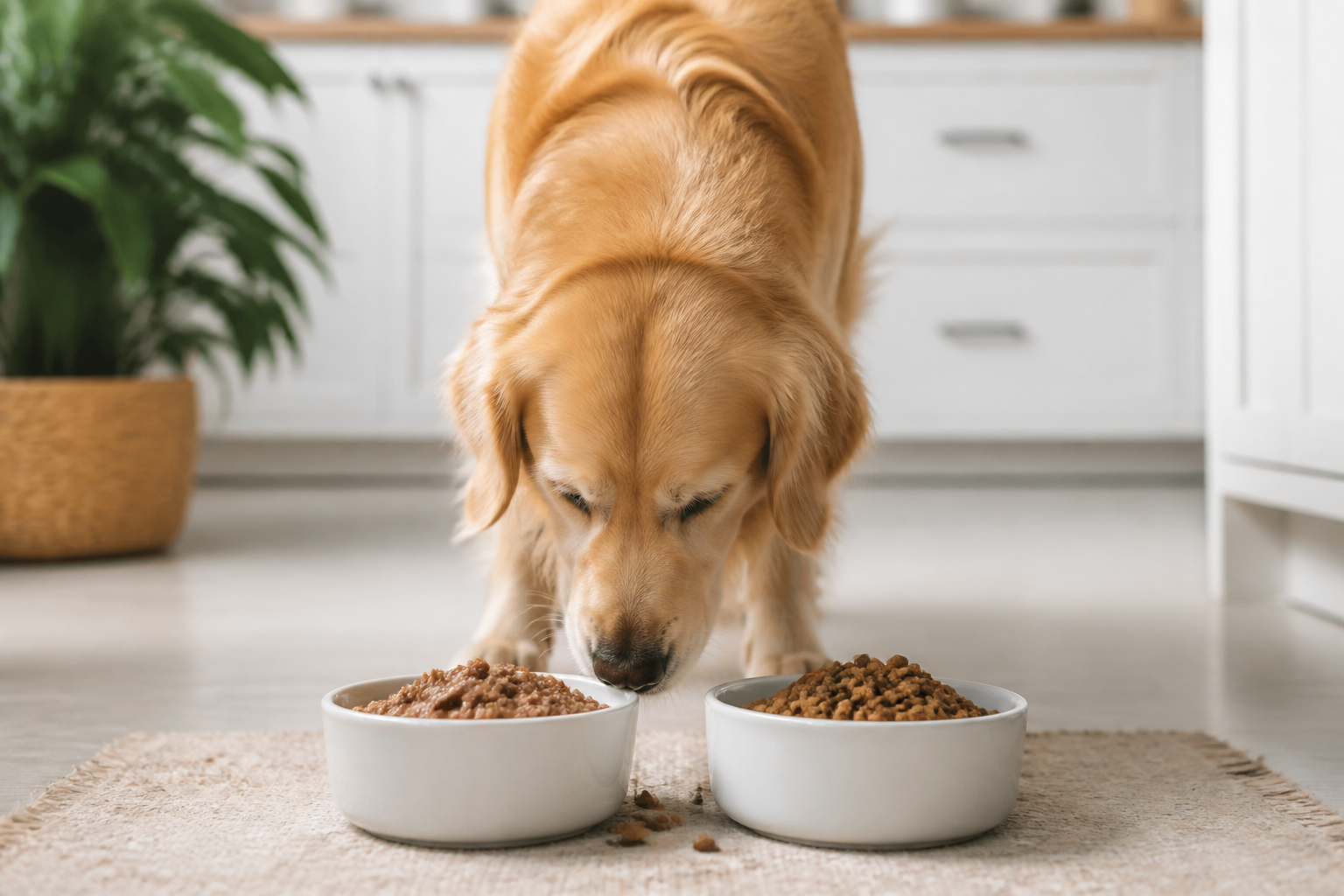
You are standing in your kitchen with a bag of kibble in one hand and a can of savory stew in the other. You know your dog loves the variety and texture of wet food, but you appreciate the convenience and dental benefits of dry kibble. Balancing the two can feel like a guessing game. If you provide too much, your pet might gain weight. If you provide too little, they may lack the energy they need for a busy day of play. At BaxterBoo, we understand that every dog is an individual with unique nutritional requirements. This guide will walk you through the specifics of mixed feeding so you can feel confident at every mealtime. We will cover how to calculate portions, read labels accurately, and adjust for your dog's specific life stage. Finding the right balance helps ensure your pet stays at a healthy weight while enjoying a flavorful, hydrating diet.
Why Consider Mixed Feeding?
Many pet owners choose to combine wet and dry food to give their dogs the best of both worlds. Dry food is calorie dense and easy to store. It also provides a satisfying crunch that can help scrape away a small amount of plaque. Wet food is often more palatable for picky eaters and has a high moisture content. This extra hydration is excellent for urinary tract health and can help a dog feel full without consuming too many calories.
When you mix these two, you create a meal that is aromatic and interesting. This can be especially helpful for senior dogs who may have a declining sense of smell or puppies that need extra encouragement to eat. By using both formats, you provide a wider range of textures. This variety can make mealtime the highlight of your dog's day. For more ideas about combining textures, read our guide to mixing dry dog food with wet food.
Factors That Influence Portion Sizes
Before you can determine the exact amount of food to put in the bowl, you must look at the specific needs of your dog. No two dogs have the same metabolism. A slow-moving senior will have very different caloric needs than a high-energy working breed. You can compare formulas and feeding options in our dog food category.
Current Weight and Ideal Weight
The most important factor is your dog's current weight compared to their ideal weight. If your dog is currently overweight, you should base your feeding calculations on their target weight rather than their current weight. Conversely, if you have a thin dog that needs to gain a few pounds, you will need to increase the caloric intake.
Activity Level
Activity level is a major driver of energy needs. A dog that goes for a three mile run every morning burns significantly more calories than a dog that spends most of the day napping on the sofa. Feeding charts on pet food packaging are generally based on an average adult dog with moderate activity. If your dog is a weekend warrior or a professional couch potato, you will need to adjust the portions accordingly.
Age and Life Stage
Puppies are growing rapidly and require more calories per pound of body weight than adults. They also need specific levels of calcium and phosphorus for bone development. Senior dogs often have slower metabolisms and may benefit from fewer calories to prevent weight gain. They might also need specific nutrients to support joint health or cognitive function.
Breed and Metabolism
Some breeds are notorious for having slow metabolisms. For example, Basset Hounds or Bulldogs may put on weight easily even with small portions. High energy breeds like Border Collies or Jack Russell Terriers might burn through their meals much faster. Your dog's breed gives you a clue about where to start, but you must monitor their individual body condition.
Quick Answer: The amount of wet and dry food your dog needs depends on their weight, age, and activity level. Generally, you determine the total daily calories required and then split that number between the calories provided by the kibble and the wet food.
The Science of Calories and Portions
To get mixed feeding right, you have to move past measuring by volume and start measuring by calories. A cup of dry kibble is much more calorie dense than a cup of wet food. This is because wet food is often 75 percent to 80 percent water. Water has no calories, but it takes up a lot of space in the can. For another perspective on the differences between food formats, see our comparison of wet and dry dog food.
Reading the Label
Look for the "Calorie Content" statement on your dog's food packaging. It is usually listed as "kcal/kg" and "kcal/cup" for dry food or "kcal/can" for wet food. This number tells you exactly how much energy is in a specific amount of that food. Every brand is different. One brand of kibble might have 350 calories per cup, while another has 500. You cannot simply swap one for the other without doing the math.
The Replacement Method
The easiest way to mix food is to use the replacement method. Decide what percentage of the diet you want to be wet food. Common choices are a 25/75 split or a 50/50 split.
If you want to feed 50 percent dry and 50 percent wet, follow these steps:
- Find the total recommended daily amount of dry food for your dog's weight.
- Divide that dry food amount by two.
- Find the total recommended daily amount of wet food for your dog's weight.
- Divide that wet food amount by two.
- Feed the combined half portions.
Example Calculation
Imagine you have a 30 pound dog. The dry food bag says a 30 pound dog should eat 2 cups per day. The wet food can says a 30 pound dog should eat 3 cans per day. If you want to feed a 50/50 mix, you would provide 1 cup of dry food and 1.5 cans of wet food over the course of the day.
Key Takeaway: Always calculate portions based on calories rather than volume. Because wet food contains a high percentage of water, you will usually need to feed a larger volume of wet food to match the calories found in a smaller amount of dry kibble.
Mixed Feeding for Different Life Stages
Your dog's needs will shift as they move through life. What worked for them as a vibrant three year old may not work when they are ten. We carry a wide variety of brands at BaxterBoo, such as Royal Canin, Farmina, and NutriSource, which offer formulas tailored to these specific stages. You can browse food for puppies and growing dogs when planning meals for a young pet.
Puppies
Puppies have small stomachs but huge energy needs. Feeding them only dry food can sometimes be a challenge if they are distracted or picky. Adding a bit of wet food can encourage them to finish their meals. However, you must be careful not to overfeed. Excess weight in large breed puppies can lead to serious joint issues later in life.
Adults
For healthy adult dogs, mixed feeding is often about maintenance and enjoyment. This is the best time to establish a consistent routine. Most adult dogs do well with two meals per day. You can choose to mix the wet and dry in every meal, or you can give dry in the morning and wet at night.
Seniors
As dogs age, they may experience dental sensitivity that makes chewing hard kibble difficult. Wet food is much easier on the mouth. Additionally, older dogs often lose interest in food. The strong aroma of wet food can stimulate their appetite. Many senior diets are also formulated with lower calories to prevent obesity, which is a common problem for less active older pets. For more feeding considerations, read our guide to choosing wet or dry food for dogs.
Vet Tip: If your senior dog is showing signs of dental pain or sudden weight loss, consult your veterinarian before changing their diet. They can help rule out underlying health issues and may recommend a prescription diet available through our dog pharmacy.
Monitoring Body Condition
The feeding chart on the bag is just a starting point. It is an estimate based on a "typical" dog. Your dog might not be typical. You must monitor their body condition regularly and adjust their food intake up or down.
The Rib Test
You should be able to feel your dog's ribs easily under a thin layer of fat. If you have to press hard to find the ribs, your dog is likely overweight. If the ribs are visible from across the room, your dog may be underweight.
The Waist Check
Look at your dog from above. They should have a visible waistline behind the ribs. If they look like a solid rectangle or an oval, they are carrying too much weight. From the side, their abdomen should tuck up toward the hind legs rather than hanging low.
Adjusting the Mix
If you notice your dog is gaining unwanted weight, try reducing the dry food portion by 10 percent while keeping the wet food the same. Since wet food is less calorie dense, it helps the dog feel full even when total calories are reduced. If they are losing weight and are otherwise healthy, increase the dry kibble portion slightly.
Common Mistakes to Avoid
Mixed feeding is simple once you get the hang of it, but there are a few pitfalls that can derail your dog's nutrition.
- Treat Inflation: Many owners forget that treats have calories too. If you provide several biscuits a day, you must reduce the amount of food in the bowl. Treats should never make up more than 10 percent of your dog's daily calories.
- Eyeballing It: Using a coffee mug or a scoop instead of a standard measuring cup can lead to significant overfeeding. A "scoop" can easily vary by 20 percent each time you dip it in the bag.
- Ignoring the Liquid: Some wet foods come in a lot of gravy. While tasty, this gravy often contains most of the fat and calories. Make sure you scrape the whole can into the bowl.
- Leaving Wet Food Out: Unlike dry kibble, wet food can spoil quickly. If your dog doesn't finish their mixed meal within 30 minutes, you should pick it up and discard the leftovers to prevent bacterial growth.
Transitioning to a Mixed Diet
If your dog currently eats only dry food, do not switch to a 50/50 mix overnight. Sudden changes in diet can cause upset stomachs, gas, or diarrhea.
Step 1: Start by replacing 10 percent of the dry food with a calorically equivalent amount of wet food. / Do this for two or three days.
Step 2: If your dog's stool remains firm and they seem comfortable, increase to a 25 percent replacement. / Observe them for another few days.
Step 3: Gradually continue this process until you reach your desired ratio. / This slow transition allows your dog's digestive enzymes to adjust.
Key Takeaway: A slow transition over 7 to 10 days is the best way to introduce wet food into a dry diet. This prevents digestive upset and helps you monitor how the new food affects your dog's energy and weight.
For additional transition guidance, see our article on switching from dry to wet dog food.
Managing Health Conditions with Mixed Feeding
Some dogs have specific health needs that require specialized nutrition. For example, dogs with kidney issues often need high moisture diets with restricted protein. Dogs with food allergies may need a single protein source that is only available in specific limited ingredient formulas.
We carry many therapeutic brands like Farmina Vet Life and Royal Canin. These diets are often prescribed by veterinarians to manage chronic conditions. If your dog requires a prescription diet, our BaxterBoo pharmacy can help. Through our pharmacy, we offer prescription foods and medications that can be delivered right to your door.
Weight Management
If your dog is on a weight loss journey, mixed feeding can be a powerful tool. You can use a weight management dry kibble and top it with a low calorie wet food. This adds volume to the bowl, making your dog feel like they are getting a large meal even though the calorie count is low. This helps prevent the "begging" behavior that often happens when a dog is on a diet.
Skin and Coat Health
Adding high quality wet food often increases the intake of essential fatty acids like Omega-3 and Omega-6. These nutrients are vital for maintaining a shiny coat and healthy skin. If your dog struggles with dry, itchy skin, look for wet foods that feature salmon or other fish oils.
Bottom line: Mixed feeding can be tailored to support specific health goals, provided you work closely with your veterinarian to choose the right formulas.
Practical Tips for the Modern Pet Owner
Managing two different types of food requires a little organization. Here are some practical tips to make the process easier.
Storage Solutions
Dry food should be kept in its original bag inside an airtight container. This keeps it fresh and prevents the fats from going rancid. Once a can of wet food is opened, it must be refrigerated. Use a silicone can cover to keep the food from drying out and to prevent the smell from filling your fridge. Most opened wet food stays fresh for about three days in the refrigerator.
Warming Up the Meal
Many dogs do not like eating cold food straight from the fridge. You can mix the cold wet food with the dry kibble and add a splash of warm water. This creates a warm gravy and brings out the aroma of the food. Never microwave the food in the can, and be careful not to make the meal too hot. If you want to add moisture to kibble, read our guide to mixing dry dog food with water.
Using Wet Food as a Topper
If you don't want to do a full 50/50 mix, you can use wet food as a simple topper. Just a tablespoon or two of wet food can make dry kibble much more appealing. When using it as a topper, you still need to reduce the dry food slightly to account for those extra calories.
Choosing the Right Brands
At BaxterBoo, we pride ourselves on carrying brands that prioritize quality ingredients. When looking for wet or dry food, look for a named protein source as the first ingredient, such as "chicken" or "lamb," rather than generic "meat by-products."
Brands like Stella and Chewy's, Open Farm, and Acana offer excellent options for both formats. Many of these brands use human grade ingredients and avoid artificial fillers. By choosing high quality brands, you ensure that every calorie your dog consumes is packed with nutrition.
The Role of Our Pharmacy
If your vet recommends a specific medication or a prescription diet to go along with your feeding routine, you can find it in our pharmacy section. We aim to be a one stop shop for all your pet's needs. Whether you are managing allergies with a specific diet or need flea and tick protection like Frontline or NexGard, we have you covered.
Conclusion
Feeding a mix of wet and dry food is a wonderful way to provide your dog with variety, hydration, and balanced nutrition. By understanding the caloric differences between the two and monitoring your dog's body condition, you can create a meal plan that supports a long and healthy life. Remember to transition slowly and always use a standard measuring cup. If you have concerns about your dog's weight or specific health needs, a conversation with your veterinarian is always the best next step.
- Calculate portions based on calories, not volume.
- Adjust the mix based on your dog's age and activity level.
- Monitor your dog's ribs and waistline to ensure they stay at an ideal weight.
- Store opened wet food in the fridge and discard any leftovers in the bowl.
Bottom line: Successful mixed feeding is a balance of science and observation that results in a happier, healthier dog.
Check out our full collection of dog food or consider signing up for our Autoship programme to save on your favorite wet and dry recipes while ensuring you never run out of supplies.
FAQ
Can I mix any brand of wet food with any brand of dry food?
Yes, you can generally mix different brands, provided both foods are complete and balanced for your dog's life stage. However, it is often easier to mix products from the same brand because they are frequently formulated to complement each other. If your dog has a sensitive stomach, sticking to one brand or a similar protein source can help prevent digestive issues.
Is wet food bad for my dog's teeth?
Wet food itself does not cause dental disease, but it does not provide the mechanical scraping action that dry kibble offers. If you feed a diet high in wet food, it is even more important to maintain a regular dental care routine. This includes brushing your dog's teeth daily and providing dental treats or toys that help manage plaque and tartar.
How do I know if I am overfeeding my dog?
The most reliable way to tell is by checking their body condition. If you can no longer feel your dog's ribs or if they lose their visible waistline, you are likely providing too many calories. Keep in mind that even a small amount of extra food every day can lead to significant weight gain over a few months, so it is important to catch changes early.
My dog is on a prescription diet, can I still mix in wet food?
You should only mix wet food into a prescription diet if the wet food is also the same prescription formula. For example, if your dog is eating Royal Canin Veterinary Diet for urinary health, you should only mix it with the corresponding Royal Canin urinary wet food. Adding a standard over the counter wet food can dilute the therapeutic benefits of the prescription diet.






