
 Save 15% on your 1st Autoship learn more

 Email us
 Live Chat
 FAQs
FAQs





Introduction
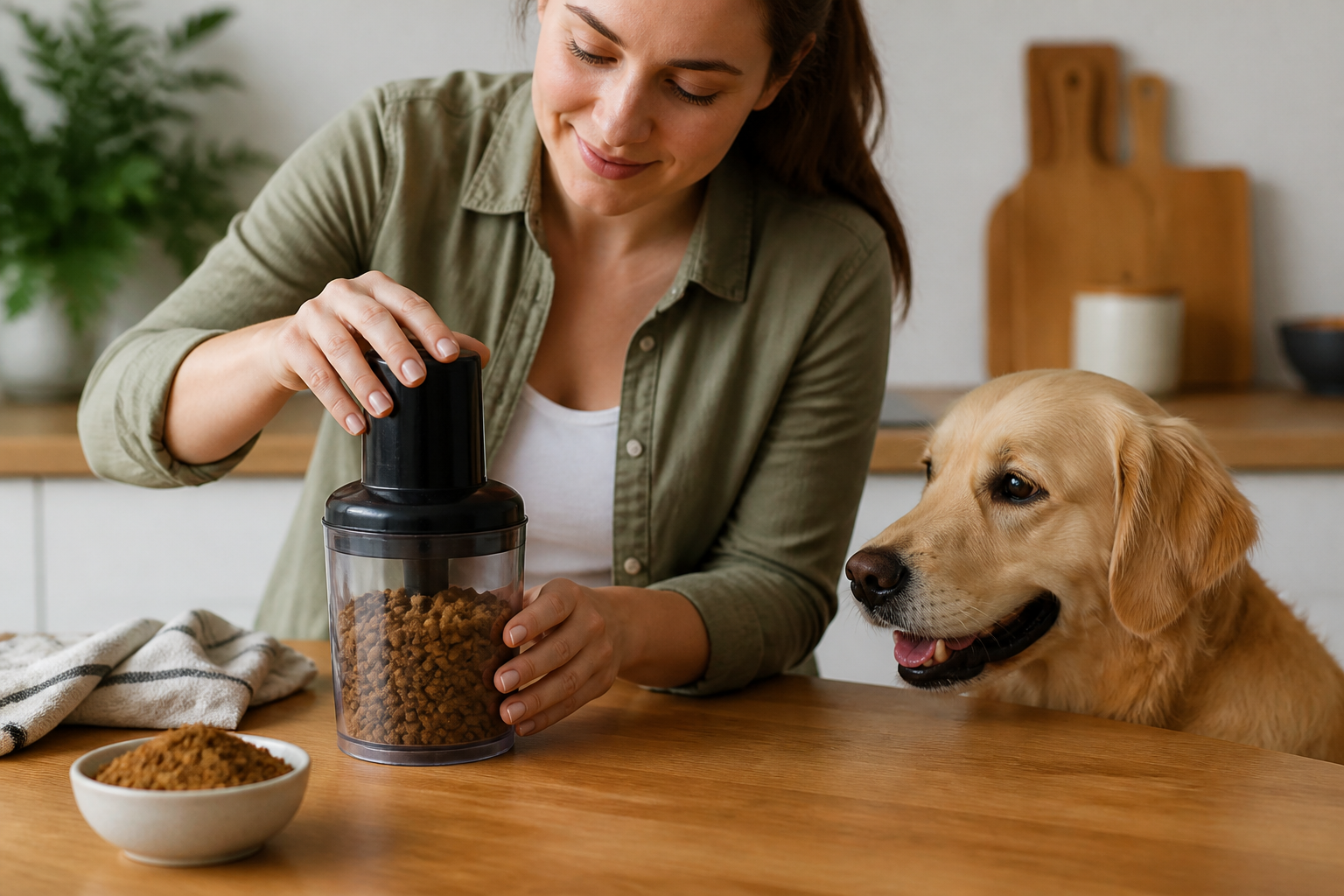
A senior dog standing over a bowl of hard kibble often wants to eat but simply cannot manage the crunch. Their gums might be sensitive, or they may be missing several teeth due to age. You might also have a puppy transitioning to solid meals or a dog who needs medication hidden in their dinner. Grinding dry dog food into a meal or powder is a practical solution that makes nutrition more accessible. At BaxterBoo, we see many pet owners navigating these transitions and looking for ways to keep their dogs healthy and fed. This guide covers the best methods for grinding kibble, the tools you need, and how to maintain the nutritional quality of the food. By changing the texture of a favorite dry food, you can support your dog’s health and comfort during mealtime.
Quick Answer: You can grind dry dog food using a high-speed blender, food processor, or a dedicated coffee grinder. It is essential to measure the whole kibble before grinding to ensure accurate portioning and only process enough for 24 to 48 hours to prevent the food from going rancid.
Why You Might Need to Grind Dry Dog Food
There are several functional reasons why a pet owner might need to alter the texture of a standard dry diet. While kibble is designed to be shelf-stable and crunchy, that crunch is not always ideal for every pet. Explore our dog food category to compare dry, wet, and other meal options.
Support for Senior Dogs
As dogs enter their golden years, dental health often becomes a primary concern. Periodontal disease, tooth loss, and sensitive gums can make chewing hard nuggets painful. When a dog associates eating with pain, they may begin to skip meals or lose weight. Grinding the food into a fine powder allows you to add warm water or low-sodium broth. This creates a soft mash that provides all the nutrients of their regular diet without the physical strain of chewing.
For additional guidance about choosing between softened, wet, and dry meals, read our comparison of wet and dry food for senior dogs.
Transitioning Puppies to Solids
Puppies moving from mother’s milk to solid food often find standard kibble too hard for their developing teeth. Their jaws are not yet strong enough to break down dense pieces of adult or even some puppy-specific foods. Creating a “kibble flour” and mixing it with a puppy milk replacer or warm water creates a transitional porridge. This helps their digestive systems adjust to solid ingredients while maintaining a familiar texture.
If you are preparing meals for a young dog, our puppy food category can help you find formulas designed for this life stage.
Enticing Picky Eaters
Some dogs are simply bored with their food or have a low appetite due to health conditions. Grinding a small portion of kibble into a fine dust releases more of the natural aromas. When you sprinkle this concentrated kibble powder over their regular whole pieces, it acts as a natural flavor booster. This is often more effective than store-bought toppers because it does not introduce new ingredients that might cause an upset stomach.
For another way to add moisture and aroma gradually, see our guide to switching from dry to wet dog food.
Hiding Medications and Supplements
Administering pills can be a daily struggle for many pet owners. If you have a dog who can find a pill hidden in a piece of cheese or a hot dog, ground kibble might be the answer. Mixing crushed medication into a thick paste made from ground food and a bit of water makes the medicine nearly impossible to pick out. The familiar scent of the food masks the chemical smell of the medication.
Vet Tip: If your dog is refusing food or struggling to chew, consult your veterinarian first to rule out underlying dental disease or gastrointestinal issues. Our pet pharmacy offers prescription pet foods and medications, which may be necessary for managing chronic conditions like IBD or advanced dental decay.
Best Tools for the Job
You do not need industrial equipment to change the texture of your dog’s meals. Most common kitchen appliances work well, but each produces a different result.
High-Speed Blenders
A high-speed blender is the most efficient tool for creating a very fine, flour-like powder. This is ideal if you plan to mix the food with water to create a smooth pate. Blenders work fast and can handle large amounts of kibble at once. However, they can be loud, which might startle a nervous dog. They also require thorough cleaning because the oils in dog food can leave a residue on the blades.
Food Processors
Food processors are excellent for creating a coarser meal rather than a fine powder. If you want to break the kibble down into smaller “grit” but not a complete dust, this is the tool to use. The wider base of a food processor often makes it easier to scrape out the ground food compared to a deep blender jar. Most food processor bowls are also dishwasher safe, making cleanup easier.
Coffee Grinders
If you have a small dog or only need to grind a small amount of food as a topper, a coffee grinder is a perfect choice. These are inexpensive and take up very little counter space. However, you must be careful not to burn out the small motor by overfilling it. It is also best to have a dedicated grinder for pet food so you do not transfer coffee oils or caffeine to your dog’s meal.
Manual Methods
For those who do not want to use electricity or need to keep noise to a minimum, manual methods work in a pinch. You can place the kibble in a heavy-duty freezer bag and use a rolling pin or a mallet to crush it. A mortar and pestle also works well for very small quantities, such as when you are preparing a single meal for a toy breed.
| Tool | Best Texture | Use Case |
|---|---|---|
| High-Speed Blender | Fine Powder | Smooth mash or porridge |
| Food Processor | Coarse Meal | Texture change for seniors |
| Coffee Grinder | Very Fine | Small dogs or flavor toppers |
| Rolling Pin | Chunky Bits | Quick fix or power outage |
Maintaining Nutritional Integrity
One of the biggest concerns with grinding food is whether it changes the health benefits of the diet. While the calories and vitamins remain the same the moment you grind the food, the shelf life changes immediately.
The Problem with Oxidation
Dry dog food is sprayed with fats and oils after the cooking process to make it palatable. These fats are protected from the air while the kibble is in its whole, nugget form. Once you grind the kibble, you vastly increase the surface area exposed to oxygen. This process is called oxidation.
Oxidation causes the fats in the food to go rancid much faster than they would otherwise. Rancid fats not only taste terrible to your dog but can also lose their nutritional potency, specifically the Omega fatty acids. To prevent this, only grind what your dog will eat within a day or two.
Storage Requirements
If you must grind enough food for more than one meal, storage is critical. Use an airtight container made of glass or BPA-free plastic. Store the container in a cool, dark place like a pantry. Avoid storing ground food in the refrigerator unless you have already added moisture to it. The humidity in a fridge can cause the dry powder to clump or develop mold.
Key Takeaway: Grinding kibble speeds up the oxidation of fats. Always process food in small batches to ensure your dog is getting fresh, high-quality nutrition every time.
The Importance of Precise Portions
When you change the physical state of a food, you also change its density. This is the most common mistake pet owners make when switching to ground food. A standard measuring cup of whole kibble has a lot of air space between the nuggets. A measuring cup of ground kibble is much denser because the powder settles into all those gaps.
If you measure one cup of powder, you are likely feeding your dog significantly more calories than if you measured one cup of whole nuggets. This can lead to unintended weight gain. To avoid this, always measure the whole kibble first. Once you have the correct portion for the meal, put that specific amount into the grinder.
Steps for Accurate Feeding
- Determine the daily caloric needs of your dog based on their weight.
- Measure the daily portion of whole kibble using a standard measuring cup.
- Grind that specific portion.
- If you are grinding for the whole day, divide the resulting powder into the appropriate number of meals.
Bottom line: Never measure by volume after the food is ground. Always measure the whole pieces first to maintain an accurate calorie count.
Step-by-Step: How to Grind Dog Food
If you are ready to prepare a meal, follow these steps to ensure a clean and consistent result for your pet.
Step 1: Prep your equipment. / Ensure your blender or processor is completely dry. Any moisture left in the machine will turn the kibble dust into a sticky paste that is very difficult to clean.
Step 2: Measure the kibble. / Use your regular scoop to measure the whole nuggets. This ensures you are not overfeeding your pet.
Step 3: Pulse the machine. / Do not just turn the blender on and walk away. Use short pulses of three to five seconds. This prevents the motor from overheating and allows you to check the texture as you go.
Step 4: Check for large chunks. / Shake the container to bring any unground pieces to the bottom near the blades. Pulse a few more times until the consistency is even.
Step 5: Transfer and store. / Move the ground food to a bowl or an airtight storage container immediately. Wipe down your equipment with a damp cloth to remove any oily residue.
Practical Scenarios: When Grinding is the Best Option
The IBD or Sensitive Stomach Dog
Dogs with inflammatory bowel disease or other digestive sensitivities often do better with smaller particles that are easier for the stomach to break down. When you grind a high-quality food like Farmina Vet Life or Royal Canin, you are essentially “pre-digesting” the mechanical part of the meal. Adding warm water to the powder creates a slurry that moves through the digestive tract more gently than hard, sharp-edged kibble.
For dogs with dietary sensitivities, you can also browse our limited-ingredient dog food options.
The Post-Surgery Recovery
If your dog has recently had oral surgery or a tooth extraction, your vet will likely recommend a soft food diet for several days. If you do not want to switch brands or formulas and risk a stomach upset, grinding their current food is the safest route. It keeps their nutrition consistent while protecting their healing gums.
The High-Energy Topper
For working dogs or those who need extra calories, you can make a “power topper.” Grind a small amount of a high-protein, high-fat food and mix it with a little bit of warm water or canned food. This adds a concentrated burst of energy to their standard meal without making the volume of the food too large for them to finish.
Managing the Mess: Tips for a Clean Kitchen
Grinding dog food can be a dusty process. The fine powder has a way of drifting onto countertops and into the cracks of your appliances. To keep your kitchen clean, follow these practical tips.
- Use a lid with a seal: Ensure your blender or food processor lid has a rubber gasket. This keeps the “kibble dust” inside the container.
- Wait before opening: After you finish grinding, let the container sit for thirty seconds. This allows the dust to settle so it doesn’t puff out when you remove the lid.
- Designate a prep area: If you grind food daily, use a small silicone mat under your grinder. This catches any spills and can be easily rinsed in the sink.
- Clean immediately: The fats in dog food can go rancid and smell if left on the blades of a blender. Wash your equipment with warm, soapy water right after use.
Adding Liquids to Ground Food
Once you have the powder, you have several options for how to serve it. While some dogs will eat the dry meal as is, most prefer a bit of moisture.
Warm Water
This is the simplest and safest option. Warm water helps release the fats and aromas in the food, making it much more enticing. It also helps hydrate your dog, which is particularly important for seniors.
Low-Sodium Broth
If you use broth, ensure it is specifically made for pets or is a single-ingredient, low-sodium version. Avoid any broths containing onions or garlic, as these are toxic to dogs. Broth adds a punch of flavor that can help a dog who has lost their appetite.
Goat Milk or Milk Replacer
For puppies or dogs needing to put on weight, mixing ground kibble with goat milk provides extra probiotics and calories. It creates a creamy texture that most dogs find irresistible.
Canned Food Mix-In
You can mix ground kibble into a small amount of wet food. This is a great way to “stretch” a can of expensive prescription food while still ensuring your dog gets the texture they need. For more puppy-specific feeding guidance, read our weaning timeline for introducing dry dog food.
The Role of Routine and Consistency
Dogs thrive on routine. If you decide to start grinding your dog’s food, try to keep the texture and the temperature of the mix consistent. If one day it is a thick paste and the next day it is a watery soup, a picky dog might become even more hesitant.
Find a ratio of powder to liquid that your dog enjoys and stick with it. Most owners find that a 2:1 ratio of food to water creates a nice, oatmeal-like consistency that is easy for dogs to lap up.
Key Takeaway: Consistency in texture and temperature is just as important as the food itself for maintaining a steady appetite in picky or senior dogs.
Health and Wellness Considerations
While grinding kibble is generally safe, it is not a cure-all for health problems. If your dog is losing weight despite eating their ground food, there may be an underlying metabolic issue.
Nutrient Absorption
In some cases, ground food might actually improve nutrient absorption for senior dogs. Because the particles are smaller, the digestive enzymes in the stomach can work more efficiently. However, this varies by dog.
Dental Health Trade-offs
One downside to ground food is the lack of mechanical cleaning for the teeth. Hard kibble can help scrape away a small amount of plaque as a dog chews. When you switch to a soft, ground diet, you must be even more diligent about dental care. Consider using a dog-safe toothbrush or dental wipes to keep their gums healthy. At BaxterBoo, we carry a wide range of dog dental care products that can supplement a soft-food diet.
For additional at-home dental guidance, read our dog dental care tips.
Consulting Your Veterinarian
Always tell your vet if you have changed how you feed your dog. They can help you monitor your dog’s weight and dental health to ensure the new texture is working well for them. If your dog is on a prescription diet, such as Royal Canin Vet Life, check with the manufacturer or your vet before significantly altering the texture to ensure no specific “time-release” nutrients are affected.
Next Steps for Your Pet
If you are ready to start grinding your dog’s food, start with a small batch today. It is a simple way to show extra care for a senior pet or a puppy. We recommend checking out our dog healthcare category for other tools that can help senior dogs, or exploring our wide variety of premium dog foods to find the perfect base for your “kibble flour.”
- Start with a clean, dry blender or processor.
- Measure the whole kibble first for calorie accuracy.
- Grind in small batches to prevent oxidation.
- Store any leftovers in an airtight container.
- Add warm water for better aroma and hydration.
For regularly purchased food, our Autoship programme can help you keep the right formula on hand.
Bottom line: Grinding dry dog food is a practical, cost-effective way to adapt a diet for dental issues, life stages, or picky eating habits while maintaining nutritional consistency.
FAQ
Can I use a coffee grinder to grind my dog's food?
Yes, a coffee grinder works well for small amounts of food or for toy breeds. However, you should have a dedicated grinder for your pet to avoid exposing them to caffeine or coffee oils. Be sure to pulse the grinder in short bursts to avoid overheating the motor, as dog kibble is often denser than coffee beans.
Will grinding the kibble make it lose its nutritional value?
The nutrition remains the same immediately after grinding, but the shelf life decreases. Because more of the food is exposed to the air, the fats can go rancid through a process called oxidation. To keep the food healthy and tasty, only grind enough for a day or two at a time and store it in an airtight container.
How do I make sure I am not overfeeding my dog with ground food?
Ground food is much denser than whole kibble, so measuring it by the cup after grinding will lead to overfeeding. Always measure your dog’s specific portion of whole nuggets first, then put those nuggets into the grinder. This ensures the calorie count remains exactly what your dog needs for their weight and activity level.
Can I mix ground dog food with water to make wet food?
Yes, this is one of the best ways to serve ground kibble, especially for senior dogs or puppies. Mix the powder with warm water, low-sodium broth, or a pet-safe milk replacer to create a porridge consistency. This makes the food easier to eat and helps with hydration, which is vital for pets with kidney or dental issues.






