
 Save 15% on your 1st Autoship learn more

 Email us
 Live Chat
 FAQs
FAQs





Introduction
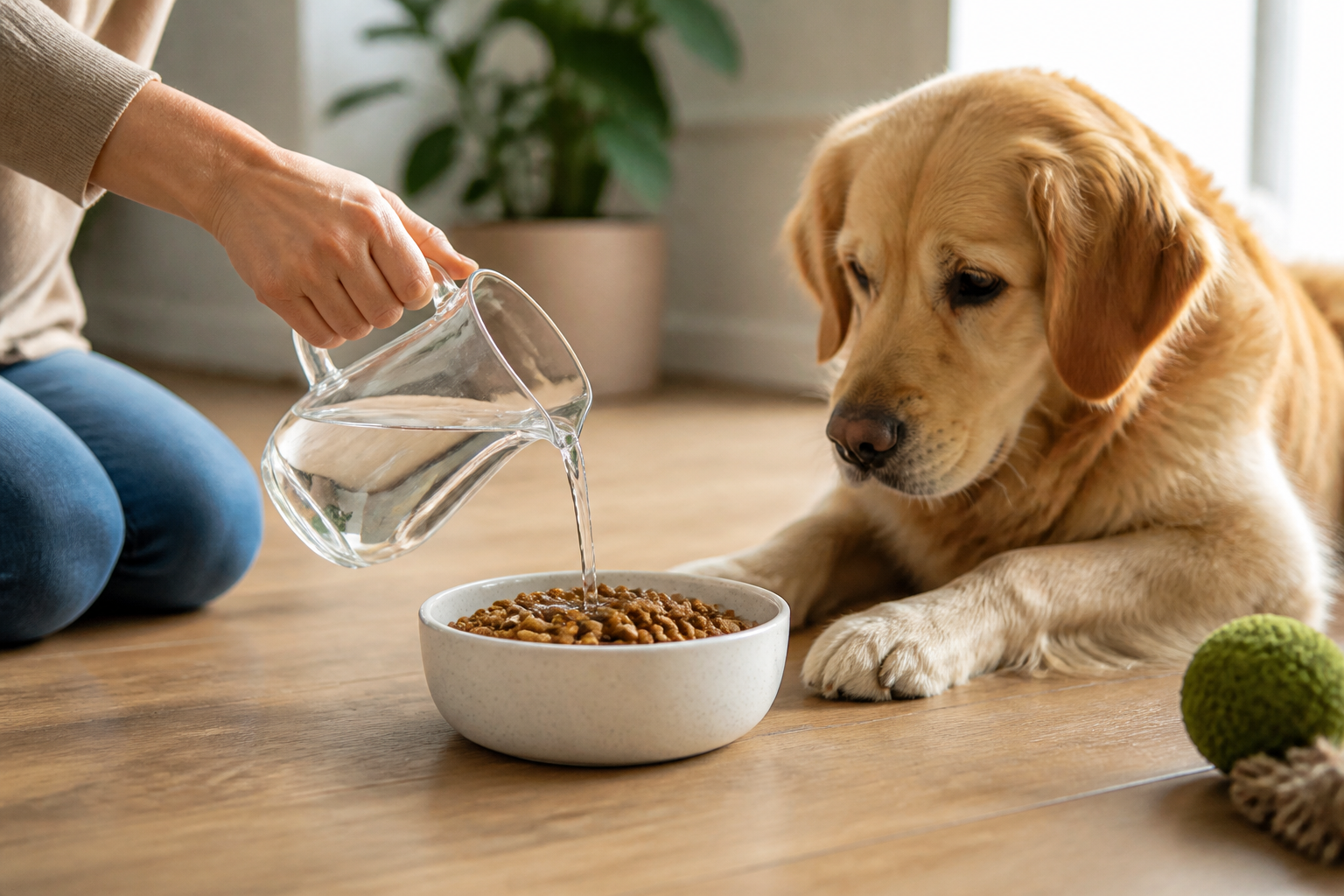
You might notice your dog sniffing their bowl and walking away, or perhaps you worry that they rarely visit the water dish during the day. Many pet owners face this exact moment of concern when a once-favorite kibble feels too dry or unappealing. At BaxterBoo, we know that mealtime is more than just a routine. It is a vital opportunity to support your dog’s long-term health and hydration. This guide covers the most effective ways to add moisture to dry food, the nutritional benefits of doing so, and how to keep the process safe. Adding liquid to kibble can transform a basic meal into a hydrating, aromatic experience that supports digestion and kidney health.
Quick Answer: Hydrating dry dog food involves adding a liquid like warm water, dog-safe bone broth, or goat milk to kibble. The standard ratio is roughly one part liquid to four parts food. Let it soak for ten to fifteen minutes to soften the texture and release aromas.
The Physical Benefits of Adding Moisture
Dry kibble typically contains about ten percent moisture. In contrast, a dog's natural diet in the wild would consist of much higher water content. By adding liquid to dry food, you bridge this gap and help your dog maintain a better state of hydration. This is particularly important for dogs that are not proactive drinkers.
Proper hydration supports almost every bodily function. It aids in temperature regulation, cushions joints, and protects internal organs. When a dog eats dry food without sufficient water intake, their body must pull moisture from other tissues to process the meal. Adding liquid directly to the bowl ensures that the digestion process starts with the hydration it needs.
Improved hydration is also a key factor in urinary tract health. Increased water intake helps flush the bladder and kidneys. This can reduce the concentration of minerals that might otherwise lead to stones or crystals. For dogs with a history of urinary issues, our pharmacy for dogs offers prescription diets through our partnership with Pet's Choice that are specifically formulated to manage these conditions. Hydrating these specialized foods can further support their effectiveness.
Enhancing Palatability for Picky Eaters
If your dog has become bored with their diet, the issue might be scent rather than flavor. A dog's sense of smell is their primary way of experiencing the world. Dry kibble straight from the bag often has a muted aroma because the fats and proteins are locked inside the hard pellet.
Adding warm water or broth acts as a key to unlock those scents. The warmth helps the fats in the food become more volatile, which means they travel through the air more easily. This creates a much stronger "food signal" for your dog. For many picky eaters, this simple change is enough to rekindle their interest in mealtime.
Choosing the Right Liquid
- Warm Water: The most cost-effective and simplest option. It hydrates without adding calories or sodium.
- Bone Broth: Look for dog-specific options from brands like Open Farm or Stella and Chewy's. These are free from onions, garlic, and excessive salt. You can also explore our dog food toppers and broths for convenient options.
- Goat Milk: A nutrient-dense option that provides probiotics to support gut health.
- Unsalted Vegetable Broth: A good alternative for dogs with protein sensitivities, provided it is free of toxic ingredients.
Key Takeaway: Hydration does more than just quench thirst. It unlocks the hidden aromas in kibble, making it more enticing for picky eaters while supporting essential kidney and urinary functions.
Supporting Better Digestion
Dry kibble is a dense, processed product. When a dog swallows hard pieces of kibble, the stomach must work overtime to break them down. Adding liquid effectively "pre-digests" the food by softening the structure before it even reaches the stomach.
This can be especially helpful for dogs that suffer from occasional gas or bloating. When kibble is hydrated before feeding, it expands in the bowl rather than in the dog's stomach. This can lead to a more comfortable feeling after eating.
Some research also suggests that moistening dry food can help improve the bioavailability of certain nutrients. When the food is softened, the digestive enzymes in the stomach can access the vitamins and minerals more easily. This means your dog may get more nutritional value out of every bite.
For another perspective on this feeding method, read our guide to wetting dry dog food for digestion and hydration.
Next Steps for Better Digestion
- Start by adding a small amount of warm water to see how your dog reacts.
- Slowly increase the volume over a week to avoid sudden changes in stool consistency.
- Observe your dog’s energy levels and coat quality over the next month.
Hydration for Different Life Stages
The needs of a puppy are vastly different from those of a senior dog. Hydrating dry food is a versatile tool that can be adjusted based on your dog's age and physical condition.
For puppies, softening kibble is often a necessity during the weaning process or when they are losing their baby teeth. Hard kibble can be painful on sore gums. A mushy consistency allows them to get the nutrition they need without the discomfort of chewing hard pellets. If you are caring for a young dog, our puppy supplies section can help you find age-appropriate essentials.
Senior dogs often face dental issues or a declining sense of smell. As dogs age, they may lose teeth or develop gingivitis, making hard food difficult to manage. Softening the food with warm broth makes it easier to chew and swallow. Additionally, the boosted aroma of hydrated food helps seniors with a fading appetite stay interested in their meals.
Vet Tip: If your senior dog suddenly stops eating hard kibble, consult your veterinarian to rule out dental pain or underlying health issues. They may recommend a professional cleaning or a specific therapeutic diet available through our pharmacy.
Step-by-Step Guide to Hydrating Kibble
Following a consistent routine ensures that the food is properly prepared and safe for consumption. You do not need any special equipment beyond a measuring cup and a bowl.
Step 1: Measure the kibble. / Use your dog's standard portion size to ensure they are getting the correct number of calories.
Step 2: Add the liquid. / Use a ratio of roughly one-fourth cup of liquid for every one cup of dry food. Use warm, not boiling, water to avoid damaging heat-sensitive vitamins.
Step 3: Let it soak. / Allow the mixture to sit for at least ten to fifteen minutes. You will see the kibble swell and the liquid turn into a light gravy.
Step 4: Stir and serve. / Mix the bowl to distribute the moisture evenly. If you are using additives like salmon oil or toppers, add them just before serving.
Step 5: Clean the bowl immediately. / Once the meal is finished, wash the bowl with soap and water to prevent bacterial growth.
Bottom line: A consistent ratio and a ten-minute soak time provide the perfect balance of hydration and texture for most dogs.
Safety and Hygiene Considerations
While hydrating food has many benefits, it does introduce a few risks if not managed correctly. The biggest concern is spoilage. Dry kibble is shelf-stable because it lacks moisture. Once you add water or broth, you have created a perfect environment for bacteria to grow.
Never leave hydrated food out for more than thirty to forty-five minutes. If your dog is a "grazer" who likes to eat small amounts throughout the day, hydration might not be the best choice unless you can offer smaller, more frequent meals. Any uneaten portions of soaked kibble should be discarded rather than saved for later.
Another consideration is dental health. There is a common belief that dry kibble cleans teeth through abrasion. While some specialized dental diets do this, most standard kibble crumbles too quickly to provide a significant cleaning effect. If you switch to hydrated food, it is even more important to maintain a regular dental care routine. We carry a wide range of toothbrushes, dental wipes, and water additives to help keep your dog's mouth clean.
For more information about the benefits and drawbacks of adding water, explore this guide to mixing dry dog food with water.
Beyond Water: Using Mixers and Toppers
If you want to take hydration a step further, consider using wet food or specialized toppers. This is often called "combo feeding." At BaxterBoo, we see many owners successfully mixing high-quality canned food with their favorite dry brands like NutriSource or Farmina.
Wet food typically contains seventy-five to eighty percent moisture. By mixing a few spoonfuls of canned food with kibble and a splash of water, you create a varied texture that many dogs find irresistible. This method provides high moisture content along with a boost of protein and fat. Browse our dog food category to compare dry, wet, and other meal options.
Freeze-dried raw toppers are another excellent option. Brands like Stella and Chewy's or Vital Essentials offer morsels that are designed to be rehydrated. These provide the benefits of raw nutrition with the convenience of a shelf-stable product. You simply add water to the topper, let it sit, and then mix it into the dry kibble.
Key Takeaway: Using a combination of water, wet food, and freeze-dried toppers can maximize both hydration and nutritional variety in your dog's diet.
For additional ideas, see our guide on mixing dry dog food with wet food.
Managing Specific Health Conditions
Hydrating food can be a practical part of managing several chronic health conditions. For dogs with kidney disease, every extra drop of water is beneficial. Our pharmacy partnership with Pet's Choice provides access to FDA-approved prescription diets like Royal Canin Veterinary Diet or Farmina Vet Life, which are often recommended for renal support.
Dogs with diabetes may also benefit from the slower digestion that comes with hydrated food. The moisture can help prevent the rapid spikes in blood sugar that sometimes occur with very dry, high-carbohydrate kibble. However, any dietary changes for a diabetic dog must be supervised by a veterinarian.
Weight management is another area where hydration helps. Water adds volume to the food without adding calories. A bowl of hydrated kibble looks and feels larger to the dog, which can help them feel more satisfied on a restricted-calorie diet. This makes it easier to manage their weight without the dog feeling constantly hungry.
Transitioning to Hydrated Food
Some dogs may be suspicious of a change in their food's texture. If your dog is used to the crunch of dry kibble, the soft consistency of soaked food might be off-putting at first.
Start by adding just a tablespoon or two of water to the bowl. Do not let it soak; just let the water coat the outside of the kibble. Over several days, slowly increase the amount of water and the soaking time. This gradual transition helps your dog get used to the new mouthfeel and allows their digestive system to adjust to the increased moisture.
If your dog still seems hesitant, try using a high-value liquid like bone broth or a splash of goat milk. The strong scent of these liquids often overcomes any texture aversions. Once they are happily eating the broth-soaked food, you can slowly transition to plain water if that is your preferred long-term goal.
The Role of the BaxterBoo Pharmacy
When a dog’s hydration needs are linked to a medical condition, professional guidance is essential. Through our partnership with Pet's Choice, we offer a full-service pharmacy that carries prescription medications and therapeutic diets.
If your vet has diagnosed your dog with urinary crystals, kidney insufficiency, or severe food allergies, you likely need a specialized diet. These foods are formulated with precise mineral levels and protein sources. Hydrating these prescription diets can make them more palatable and further support the therapeutic goals of the food. Our pharmacy makes it easy to have these essential items delivered directly to your door, ensuring your dog never misses a meal.
Common Myths About Hydrating Kibble
One common myth is that adding water to kibble will make a dog bloated. While "GDV" or bloat is a serious medical emergency, there is no definitive evidence that simply adding water to food causes it. In fact, many experts believe that preventing kibble from expanding rapidly in the stomach by pre-soaking it may actually be safer for breeds prone to bloating.
Another myth is that you should use boiling water to "cook" the food. Boiling water can actually destroy the heat-sensitive probiotics and vitamins that manufacturers spray onto the kibble after the extrusion process. Always use lukewarm or room-temperature water to preserve the nutritional integrity of the meal.
Finally, some owners worry that hydrated food will cause diarrhea. While a sudden increase in water intake can slightly soften stools, it should not cause true diarrhea in a healthy dog. If you notice a significant change in bowel movements, slow down the transition and consult your vet.
Conclusion
Hydrating dry dog food is a simple, effective way to improve your pet’s daily life. It supports vital organ function, makes meals more exciting for picky eaters, and aids in the digestion of dense kibble. Whether you use plain warm water, nutrient-rich bone broth, or a splash of goat milk, the benefits to your dog's health are substantial. Remember to monitor for freshness and maintain a solid dental care routine alongside these changes.
- Hydration supports kidney and urinary health.
- Warm liquids release aromas that entice picky eaters.
- Pre-soaking kibble can prevent stomach discomfort and gas.
- Always discard uneaten hydrated food after 45 minutes to prevent spoilage.
Bottom line: Adding moisture to kibble is a low-cost, high-reward habit that can lead to a happier, better-hydrated dog.
For more ways to support your dog’s wellness, explore our dog food supplements. If you are managing a chronic condition, visit our pet pharmacy to see how our partnership with Pet's Choice can simplify your prescription pet food needs. For the best value on your dog's favorite kibble, consider signing up for our Autoship programme to save on every recurring order.
FAQ
How long should I let the dry food soak?
You should let the food soak for about ten to fifteen minutes for the best results. This allows the kibble to absorb the liquid and soften completely through to the center. If you serve it too quickly, the outside may be wet but the inside will still be hard, which might not provide the full digestive benefits.
Can I rehydrate kibble with cold water?
Yes, you can use cold water, but it will take longer for the kibble to soften. Warm water is generally preferred because it speeds up the soaking process and helps release the aromas that make the food more appealing to your dog. Never use boiling water, as it can damage the nutrients in the food.
Will adding water to food help my dog lose weight?
It can help with weight management by adding volume to the meal without adding calories. The extra water makes the stomach feel fuller, which may help your dog feel more satisfied even if they are eating a smaller portion of food. This is a common strategy for dogs on a calorie-restricted diet.
Does soaking kibble cause it to lose its nutritional value?
No, soaking kibble does not cause it to lose nutritional value as long as your dog consumes the liquid along with the food. The vitamins and minerals that may leach into the water stay in the bowl and are eaten by the dog. Just be sure to use warm water rather than boiling water to protect heat-sensitive nutrients.






