
 Save 15% on your 1st Autoship learn more

 Email us
 Live Chat
 FAQs
FAQs





Introduction
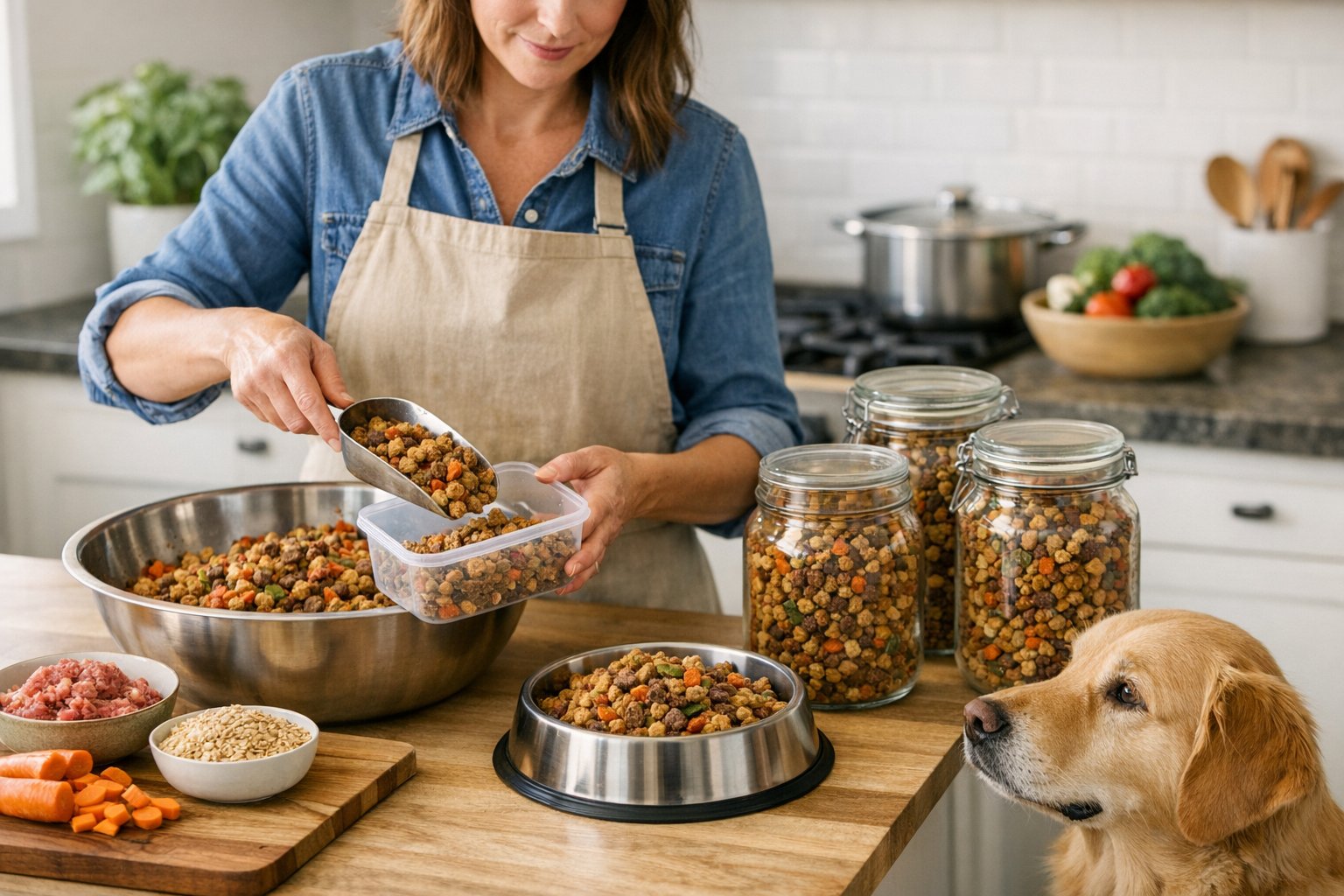
Standing in your kitchen with a counter full of groceries and a hungry dog at your feet is a familiar scene. You want to provide the best nutrition possible, but the rising cost of premium kibble can be a shock to the budget. Many of us at BaxterBoo have felt that same desire to take control of what goes into the dog bowl. Prepping your own kibble in large batches is a practical way to ensure quality while saving time and money. If you want a store-bought starting point for comparison, our dry dog food category is a helpful place to browse. This guide covers how to source ingredients, balance nutrients, and master the drying process for shelf-stable food. By learning how to make dry dog food in bulk, you can simplify your routine and provide a wholesome diet your dog will love.
The Benefits of Bulk Prepping
Making dog food in large quantities is one of the most efficient ways to manage your pet's health. Most people who switch to DIY food find that the time spent in the kitchen is the biggest hurdle. Instead of cooking every night, you can dedicate one afternoon a month to a massive batch. This approach provides the convenience of a bag of store-bought kibble without the mystery ingredients or preservatives.
Cost savings are another major driver for bulk prepping. When you buy chicken, beef, or brown rice in large quantities, the price per pound drops. Many local butchers or wholesale clubs offer significant discounts for large orders. You are essentially removing the costs of marketing and expensive packaging that come with commercial brands, and our Autoship programme can help keep the rest of your pantry stocked on a schedule.
Bulk prepping also ensures total consistency in what your dog eats. Frequent changes in a dog's diet can lead to digestive upset or pickiness. By creating a large, uniform batch, you ensure that every meal provides the same nutrient profile. This is vital for maintaining steady energy levels and a healthy coat over the long term.
Building a Balanced Nutritional Foundation
Before you start mixing ingredients, you must understand what makes a complete meal. Dogs are not strict carnivores. They require a diet that includes animal proteins, healthy fats, and digestible carbohydrates. A common guideline for a balanced DIY kibble follows a ratio of 50 percent protein, 25 percent vegetables, and 25 percent grains or starches.
Vet Tip: Always consult with a veterinarian or a board-certified veterinary nutritionist before making a permanent switch to a homemade diet. They can provide specific guidance on supplements to ensure your dog is not missing vital minerals like calcium or phosphorus.
The Protein Source
Protein provides the amino acids necessary for muscle repair and immune function. When you are making food to be dried in bulk, look for lean options that will not spoil quickly. Lean ground beef, turkey, and chicken breast are excellent choices. Organ meats like heart or liver are very nutrient-dense. However, these should only make up about 5 to 10 percent of the total protein portion to avoid vitamin toxicity, and brands like our selection of Farmina products can be a useful reference point when you want to compare protein-forward formulas.
Carbohydrates and Fiber
Carbohydrates provide the energy your dog needs to stay active. Brown rice, sweet potatoes, and oats are popular because they are easy to digest. These ingredients also help bind the other components together during the baking process. Fiber from vegetables like carrots, peas, and spinach supports healthy digestion and helps your dog feel full.
Essential Fats
Fats are necessary for brain health and a shiny coat. While some fat comes naturally from the meat, you may need to add sources like fish oil or flaxseed oil. Because high heat can sometimes diminish the potency of certain vitamins, many home-cooks add a balancer supplement. These powders are designed to fill nutritional gaps in homemade diets, and if you prefer a more convenient shelf-stable alternative, our freeze-dried pet food collection is another option to explore.
Key Takeaway: A successful bulk batch depends on a consistent ratio of high-quality protein, digestible carbs, and essential fiber sources.
Essential Equipment for Large Batches
To produce 20 or 30 pounds of kibble at once, you need more than a standard mixing bowl. Having the right tools makes the process faster and ensures the food is dried correctly.
- High-Capacity Food Processor: This is necessary for grinding meats and vegetables into a uniform paste. A fine consistency helps the food dry evenly.
- Large Mixing Tubs: Professional-grade tubs or very large stainless steel bowls are needed to fold all the ingredients together.
- Multiple Baking Sheets: To dry food in bulk, you need to spread it thin. Having 6 to 12 rimmed baking sheets allows you to fill your oven completely.
- A Dehydrator: While an oven works, a dedicated dehydrator is often more efficient for removing every trace of moisture from the center of the kibble.
Sourcing Your Ingredients
To make bulk prepping truly worth the effort, you need to change how you shop. Buying small packages of meat at a standard grocery store is expensive. Instead, look for wholesale distributors or local farm cooperatives in your area. Many farms sell pet-grade meats that are safe but do not meet the aesthetic standards for human grocery shelves.
Bulk grains like rice or oats should be purchased in 25-pound or 50-pound bags. These have a long shelf life and provide the structural base for your dry food. Buying in these quantities significantly reduces packaging waste and lowers your cost per meal.
Frozen vegetables are a great hack for bulk prep. Frozen peas, green beans, and carrots are often flash-frozen at their nutritional peak. They are much easier to incorporate into a large batch than fresh produce that requires peeling and chopping. Since you will be blending them into a paste anyway, the texture of frozen vegetables is perfect for this process.
Step-by-Step Bulk Prep Instructions
Creating the perfect batch of dry food is a methodical process. The goal is a mixture that is dry enough to be shelf-stable but still smells and tastes great to your dog.
Step 1: Prepare the base ingredients. Cook your grains and starches until they are very soft. If you are using sweet potatoes, steam them until they can be easily mashed. At the same time, lightly cook your meats. While some prefer raw-based diets, cooking the meat slightly before the drying process helps eliminate bacteria and makes the dough easier to handle.
Step 2: Blend into a uniform paste. Combine your meat, vegetables, and cooked grains in your food processor. Pulse the mixture until it reaches a thick, paste-like consistency. It should be firm enough to hold a shape but moist enough to spread. This is the stage where you add any oils or supplement powders.
Step 3: Spread and score the dough. Line your baking sheets with parchment paper. Spread the mixture onto the sheets in a thin, even layer. Aim for about a quarter-inch of thickness. Use a knife or a pizza cutter to score the dough into small squares. This makes it easy to break the food into individual kibble pieces once it is dry.
Step 4: The low and slow drying process. Set your oven to its lowest possible setting. This is usually between 150 and 200 degrees Fahrenheit. The goal is to dehydrate the food rather than cook it further. Depending on the moisture level, this can take anywhere from 4 to 8 hours. The food is finished when it is hard, brittle, and snaps easily. If you want a companion read on shelf-stable formats, our guide to feeding freeze-dried dog food covers a similar approach.
Quick Answer: To make dry dog food in bulk, blend cooked meats, grains, and vegetables into a paste and spread it thin on baking sheets. Dehydrate the mixture at a low temperature (150-200°F) for several hours until it is completely brittle. Store the finished kibble in airtight containers to prevent spoilage.
Mastering the Drying Process
The most common mistake when making bulk kibble is rushing the drying stage. If even a tiny amount of moisture remains inside the kibble, it will develop mold within days. Commercial kibble is made using high-pressure extruders that flash-dry the food. At home, you must rely on slow evaporation.
Test for dryness by taking a few pieces from the center of the baking tray. Let them cool completely to room temperature before checking. Break them in half. The interior should look just as dry and porous as the exterior. If it looks dark or feels slightly gummy, it needs more time in the heat.
If you live in a high-humidity environment, you might find that your kibble softens after it comes out of the oven. In these cases, a final pass through a food dehydrator can be a lifesaver. This ensures that the core of every piece is moisture-free. This extra step is especially important when you are making 30 pounds of food at a time, as you do not want to lose a whole batch to spoilage.
Proper Storage Solutions
Once your bulk batch is dry and cooled, storage is your next priority. Oxidation is the process that causes food to go stale or turn rancid. This happens when the food is exposed to air and light. To keep your homemade kibble fresh, you must limit this exposure as much as possible.
Airtight containers are a must. Many people use large plastic bins, but stainless steel or glass is often better for long-term storage because they do not absorb odors or oils. If you use plastic, make sure it is BPA-free and food-grade.
For very large batches, consider the double-bagging method. Put the kibble in smaller freezer bags and then place those bags inside a larger airtight bin. This way, you only expose a small amount of food to the air each time you open a bag for feeding, and our blog post on dry dog food storage tips is a useful follow-up read.
Key Takeaway: Moisture and air are the enemies of homemade dry food. Use airtight containers and consider freezing half of your bulk batch to preserve peak nutrition.
Safety and Cleanliness
When handling large amounts of raw or lightly cooked meat, sanitation is critical. You are essentially running a small food production line in your kitchen. Clean every surface, bowl, and food processor part with hot, soapy water before and after use.
Check your bulk ingredients for quality before you start. If a bag of rice smells musty or the meat has any off-color, do not use it. Because you are not using the chemical preservatives found in commercial food, your raw ingredients must be top-notch.
It is also important to label your containers. Write the date the batch was made and the main protein source on the lid. Homemade dry food generally stays fresh for about two to three weeks at room temperature if it is perfectly dry. If you have made enough for a month or more, keep the extra in the freezer.
Transitioning Your Dog to Homemade Food
If your dog has been eating the same commercial kibble for years, do not switch to your bulk homemade food overnight. A sudden change can lead to diarrhea or gas. The transition should take about seven to ten days.
Start by mixing about 25 percent of your homemade food with 75 percent of their old food. Do this for two or three days while watching their stool and energy levels. If everything looks good, move to a 50-50 mix for another three days. Gradually increase the homemade portion until the old food is completely replaced.
If you notice any persistent digestive issues or skin changes during the transition, stop and consult your vet. Some dogs have sensitivities to specific proteins or grains that only show up when they start eating a fresh diet. For a broader look at shopping options while you switch, our guide to selecting the best dry dog food can help you compare formulas.
Bottom line: A slow transition over ten days prevents digestive upset and helps your dog adjust to the new nutrient profile.
When to Use Prescription Options
While making food in bulk is great for most healthy dogs, some pets have specific medical needs. If your dog suffers from chronic kidney disease, severe allergies, or urinary crystals, a DIY diet can be difficult to balance perfectly. In these cases, a prescription diet may be the safer choice.
At BaxterBoo, we offer access to a full pharmacy through our partnership with Pet's Choice. This includes FDA-approved medications and specialized prescription pet foods like the Farmina Vet Life range. These diets are formulated to manage specific health conditions under veterinary supervision, and our pet pharmacy is the place to start when a veterinary diet makes more sense than homemade food.
If you find that your dog needs a more specialized diet than you can provide at home, our pharmacy can help. We provide a convenient way to get these expert-formulated foods delivered to your door. You can still use the bulk prepping skills you have learned to make healthy, one-ingredient treats while relying on a prescription diet for their main meals.
Conclusion
Learning how to make dry dog food in bulk is a rewarding way to take charge of your pet's health. It allows you to skip the fillers and preservatives found in many commercial brands while keeping your costs manageable. By sourcing quality ingredients, maintaining a 50/25/25 nutritional ratio, and ensuring every piece is thoroughly dried, you can create a shelf-stable meal your dog will enjoy.
- Prep in stages: Cook, blend, and dry over a weekend to stay organized.
- Invest in tools: A food processor and dehydrator make bulk work much easier.
- Store safely: Use airtight containers and freeze portions to maintain freshness.
- Consult experts: Talk to your vet about vitamins and minerals for a balanced diet.
If you need specific supplements to balance your homemade meals, want to keep repeat purchases simple with our Autoship programme, or require prescription-grade food for a health condition, visit the BaxterBoo pharmacy for expert support and a wide selection of trusted brands.
FAQ
How long does homemade bulk dry dog food last?
If the kibble is dried thoroughly and stored in an airtight container, it can last for two to three weeks at room temperature. For longer storage, you should keep the food in the freezer, where it will stay fresh for up to six months. Always check for any signs of mold or off-smells before feeding a batch that has been stored for a while.
Can I make dry dog food without a dehydrator?
Yes, you can use your oven at its lowest setting to dry the food. However, it requires more monitoring to ensure the food does not burn and that the center of the kibble is fully dehydrated. A dehydrator is more efficient for bulk batches because it circulates air more effectively and uses less energy over the several hours required for drying.
What is the best protein to use for bulk dog food?
Lean proteins like turkey, chicken breast, and lean ground beef are best for bulk dry food because they have a lower fat content, which reduces the risk of the food turning rancid. You can also use fish like salmon or whitefish, but these can create a stronger odor during the drying process. Always ensure the meat is fresh and sourced from a reputable supplier.
Is it cheaper to make dog food in bulk than to buy it?
In many cases, yes, especially if you are currently buying premium or organic commercial brands. By purchasing ingredients like rice, oats, and meat in large quantities from wholesalers, you can significantly reduce the price per meal. The main trade-off is the time and labor required for the prep and drying process.






