
 Save 15% on your 1st Autoship learn more

 Email us
 Live Chat
 FAQs
FAQs





Introduction
You just brought home a fresh bag of high-quality kibble. You want to make sure every bowl you serve is as nutritious and tasty as the first one. Many pet owners immediately reach for a plastic bin to store their supplies. However, the way you handle that bag can significantly impact your dog's health and the food's shelf life. At BaxterBoo, we see many owners who are surprised to learn that simple storage mistakes can lead to rancidity or nutrient loss. This post covers the best practices for keeping dry food fresh, preventing pests, and maintaining food safety. We will explain why the original bag matters and how to choose the right environment for your dog's meals. Proper storage ensures your dog gets the full benefit of their premium diet, and our dog food collection is a helpful place to compare options.
The Science of Kibble Spoilage
Dry dog food goes through a process called extrusion. During this process, manufacturers often spray the kibble with fats and oils to make it palatable. Once you open the bag, these fats are exposed to oxygen. This starts a process called oxidation. Oxidation leads to rancidity, which changes the smell and taste of the food. It can also cause the fats to break down into unhealthy compounds.
Exposure to air also causes essential vitamins and minerals to degrade. Heat and moisture accelerate this breakdown. If kibble is stored in a warm or humid area, it can become a breeding ground for mold and bacteria. These invisible changes can lead to digestive upset or more serious health issues over time, which is why our dry dog food freshness guide is a useful next read.
Quick Answer: Properly storing dry dog food involves keeping it in its original bag, sealing it tightly, and placing it in a cool, dry area. This prevents oxidation and protects the nutritional value of the ingredients.
Why You Should Keep the Original Bag
It is a common habit to pour kibble directly into a plastic storage container. We recommend against this practice for several reasons. The original bags for brands like Royal Canin or our selection of NutriSource products are designed with specific barriers. these bags are often multi-layered to keep out oxygen and moisture. They also act as a fat barrier to prevent oils from seeping into the storage bin.
The bag also contains vital information that you might need later. This includes the brand name, the lot number, and the "best by" date. If there is ever a product recall or a defect, you will need the lot number to know if your bag is affected. Without the original packaging, you lose the ability to track this information.
- The bag provides a protective barrier against oxygen.
- The lot number and expiration date stay with the food.
- Packaging materials are specifically tested for food safety.
- You avoid the buildup of old oils on the walls of your container.
Key Takeaway: The original packaging is the best defense against spoilage and the only way to track important safety information like lot numbers.
Selecting the Right Storage Container
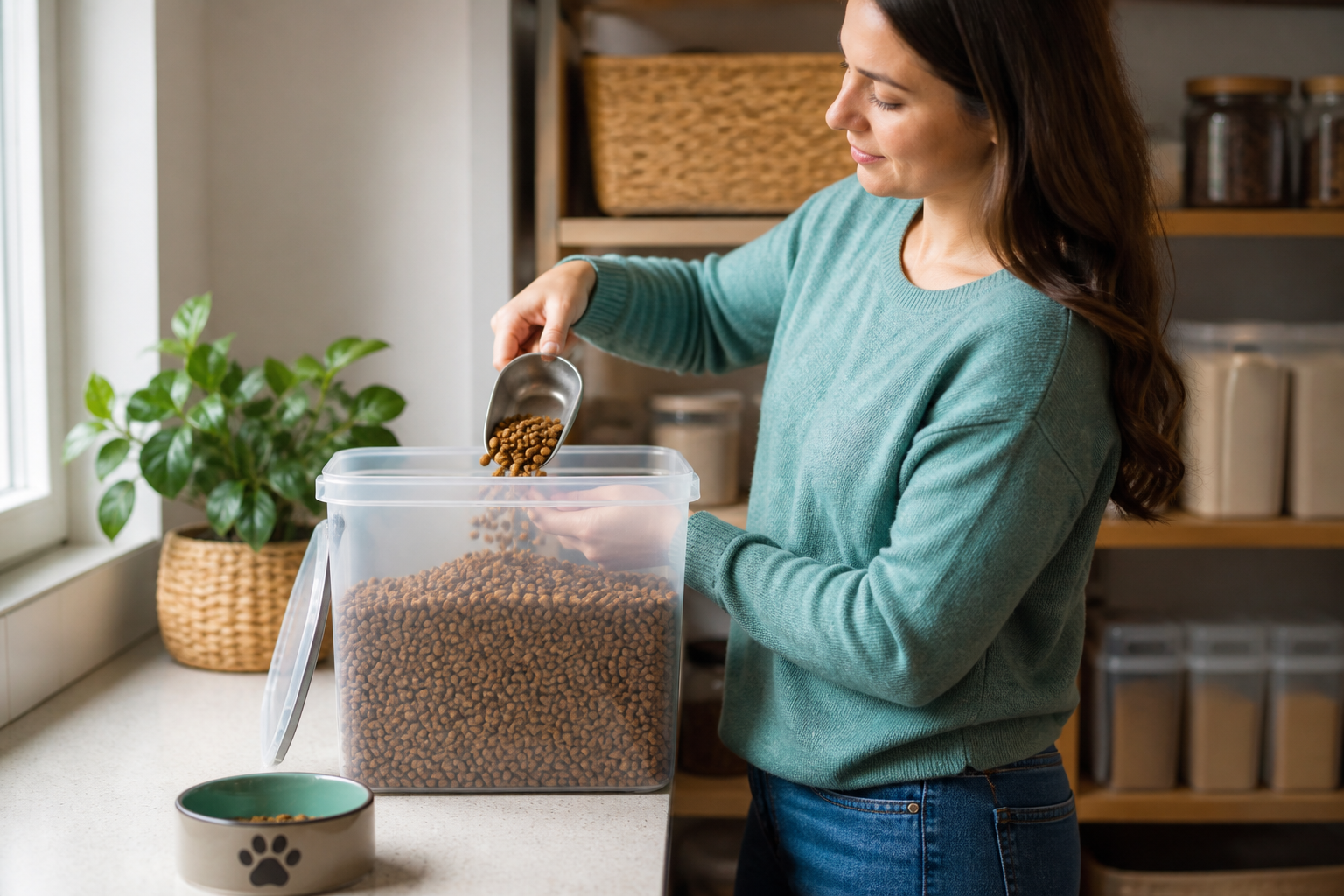
If you prefer the look or convenience of a separate bin, use it as a secondary layer of protection. Place the entire original bag inside an airtight container. This provides a double seal against pests and air. Look for containers with a silicone or rubber gasket in the lid. This ensures the seal is truly airtight.
Plastic bins are popular, but they have some drawbacks. Over time, plastic can develop small scratches. These scratches can trap fats and proteins from the food. These residues can go rancid and contaminate the next batch of food you add. If you must pour food directly into a bin, stainless steel or glass is a better choice. For storage gear that can help, browse our dog food storage and accessories collection.
Benefits of Airtight Seals
An airtight seal does more than just keep food fresh. it keeps out storage mites and household pests like ants or mice. Storage mites are tiny insects that thrive in grain-based products. They can cause allergic reactions in some dogs, leading to itchy skin or hair loss. A secure lid is your first line of defense against these unwanted guests.
Material Choices
- Stainless Steel: Durable, non-porous, and does not absorb odors.
- BPA-Free Plastic: Lightweight and affordable, but requires more frequent cleaning.
- Glass: Excellent for smaller amounts of food or treats, though heavy and breakable.
The Ideal Storage Environment
Temperature and humidity are the biggest enemies of dry dog food. The FDA recommends storing pet food in a cool, dry place. The temperature should ideally remain below 80 degrees Fahrenheit. Excessive heat causes nutrients to break down much faster. It also causes the fats in the kibble to turn rancid more quickly.
Many owners store dog food in the garage or a laundry room. These areas often experience extreme temperature swings. A garage can easily exceed 100 degrees in the summer. High humidity in a laundry room can introduce moisture into the bag. This moisture creates the perfect environment for mold growth. A kitchen pantry or a climate-controlled closet is a much safer choice, and our how to keep dog food dry outside guide covers why moisture control matters so much.
Vet Tip: If your dog experiences sudden vomiting or diarrhea after starting a new bag of food, check the food for odd smells or signs of moisture. Consult your veterinarian to rule out foodborne illness or sensitivities.
Cleaning and Hygiene Protocols
Sanitation is often overlooked in pet food storage. You should wash your dog's food bowl after every single meal. Saliva and leftover food particles can lead to bacterial growth. This rule also applies to your measuring scoops. We recommend washing your scoop once a day with hot, soapy water.
If you use a storage bin, you must clean it thoroughly between every bag of food. Do not simply top off the old food with a new bag. The bottom of the bin will contain crumbs and oils from the previous batch. These old oils can spoil and ruin the fresh food you just added. Use hot water and a mild detergent to scrub the bin. Ensure it is completely dry before placing a new bag inside.
Step 1: Empty the storage bin completely. / Ensure all old crumbs and dust are removed. Step 2: Wash with hot, soapy water. / Use a sponge to reach into the corners and around the seal. Step 3: Rinse and dry thoroughly. / Any remaining moisture can cause the new food to mold.
Bottom line: A clean environment is just as important as an airtight seal for preventing bacterial contamination.
Understanding Shelf Life and Expiration Dates
Every bag of food comes with a "best by" or expiration date. This date applies to unopened bags stored in ideal conditions. Once you open the seal, that date no longer applies in the same way. Most experts and manufacturers suggest using a bag of dry kibble within four to six weeks of opening.
After six weeks, the risk of oxidation and nutrient loss increases significantly. If you have a small dog, it might be tempting to buy a 40-pound bag to save money. However, if that bag lasts you three months, the food will likely be stale and less nutritious by the end. It is better to buy smaller bags that your dog can finish within a month, and our freshness blog post explains the timeline in more detail.
Managing Large Quantities
If you do prefer to buy in bulk, consider how you manage the inventory. You can use our Autoship program to have smaller bags delivered more frequently. This ensures you always have a fresh supply without needing to store massive quantities. It also helps you stay consistent with your dog's feeding schedule.
How to Tell if Dog Food Has Gone Bad
It is not always obvious when kibble has spoiled. Mold is a clear sign that you should throw the food away immediately. However, rancid fats can be harder to spot. If the food has a sour, musty, or "paint-like" smell, it is likely rancid. You should also look for signs of insects or larvae inside the bag.
Your dog might also give you a clue. If a normally enthusiastic eater suddenly refuses their food, they might be smelling something you cannot detect. Never force a dog to eat food that they are rejecting. Spoiled food can cause lethargy, dehydration, and serious digestive distress.
Key Takeaway: Trust your senses and your dog's behavior. If the food looks, smells, or feels wrong, it is safer to discard it.
Special Considerations for Health and Wellness
Proper storage is even more critical for dogs with health conditions. Dogs managing allergies or skin issues are often more sensitive to storage mites and mold. If your dog is on a prescription diet, the ingredients are often formulated for very specific results. Our pharmacy at BaxterBoo offers a variety of prescription pet foods through our partnership with Pet's Choice. These specialized diets must be handled with care to ensure they remain effective for your pet's treatment plan, and our dog healthcare category is a good place to explore related wellness needs.
If you notice your dog has persistent skin irritation or stomach issues, talk to your vet about their diet. Sometimes the issue is not the food itself, but how it is being stored or handled at home. Maintaining a clean and dry storage area is a simple way to support your pet's ongoing wellness.
Practical Tips for Daily Handling
Managing the daily feeding routine can be simplified with a few smart habits. Keep your bag of food off the floor if possible. This helps prevent moisture from the ground from affecting the bag and makes it harder for some pests to reach it. Use a dedicated measuring cup rather than a random bowl to ensure you are feeding the correct amount.
When you open a new bag, take a photo of the lot number and expiration date on your phone. This gives you a digital backup if you decide to discard the bag or if the label becomes unreadable. This small step can save a lot of stress if a recall is ever announced for your specific brand, and our Open Farm selection is one example of a brand page where you can compare fresh options.
- Store bags on a shelf or in a raised bin.
- Seal the bag with a heavy-duty clip after every use.
- Keep the scoop outside the bag to prevent transferring oils from your hands.
- Monitor the humidity levels in your storage area during the summer.
Bottom line: Small, consistent habits in how you handle dog food will lead to better health outcomes for your pet.
Conclusion
Properly storing dry dog food is one of the easiest ways to protect your pet's health and your financial investment. By keeping the food in its original bag, using an airtight container, and choosing a cool, dry location, you ensure that every meal is fresh and safe. Remember to clean your bins and bowls regularly to prevent the buildup of harmful bacteria and rancid oils.
At BaxterBoo, we want to help you provide the best possible care for your dog. Whether you are using a premium brand or a specialized prescription diet from our pharmacy, storage matters. We encourage you to check your current storage setup today. If you need a more convenient way to keep fresh food on hand, consider signing up for our Autoship program to receive regular deliveries of your favorite brands.
FAQ
Is it okay to pour dog food into a plastic bin?
It is better to keep the food in its original bag and then place that bag inside the plastic bin. Plastic can absorb odors and oils over time, which may go rancid and contaminate fresh food. Keeping the bag also ensures you have the lot number and expiration date in case of a recall.
How long does dry dog food stay fresh after the bag is opened?
Most manufacturers recommend consuming the food within four to six weeks once the seal is broken. After this period, the fats in the food begin to oxidize, and the nutritional value starts to decline. If your dog cannot finish a large bag in this timeframe, consider buying smaller bags more frequently.
Can I store my dog's food in the garage?
Storing dog food in a garage is not recommended because of extreme temperature changes and humidity. Temperatures over 80 degrees Fahrenheit can cause vitamins to break down and fats to turn rancid. It is much safer to store the food in a temperature-controlled environment like a kitchen pantry.
How can I tell if my dog's food has gone bad?
Check for a sour or "off" smell, which usually indicates the fats have turned rancid. Look for any signs of mold, moisture, or insects inside the bag or container. If your dog suddenly refuses to eat or shows signs of stomach upset, the food may be spoiled and should be replaced.






