
 Save 15% on your 1st Autoship learn more

 Email us
 Live Chat
 FAQs
FAQs





Introduction
You just opened a fresh bag of freeze dried nuggets and your dog is already dancing at your feet. These nutrient-dense meals offer the benefits of raw food with the convenience of a shelf-stable bag. However, many owners stand over the bowl wondering if they should serve it dry or add water. At BaxterBoo, we know that how you prepare your dog's meal is just as important as the ingredients inside. Adding moisture back into the food is the most effective way to support your dog’s digestion and overall hydration levels. This article covers the best methods for rehydrating these meals, the best liquids to use, and why moisture is so vital for your dog's long-term health. Properly rehydrating freeze dried food ensures your dog gets the full nutritional value of their premium diet.
The Science Behind Freeze Dried Dog Food
Freeze drying is a unique preservation process that has gained popularity in the pet industry since 2006. Unlike traditional kibble, which is cooked at high temperatures, freeze dried food undergoes a process called sublimation. The food is first frozen to a very low temperature. Then, the surrounding pressure is lowered. This allows the frozen water in the food to turn directly into vapor without ever becoming a liquid.
This process is beneficial because it preserves the cellular structure of the ingredients. It keeps vitamins, minerals, and natural enzymes intact. Most high-heat processes used for kibble can denature proteins and destroy sensitive nutrients. Because freeze drying uses minimal heat, the food remains closer to its raw state. This results in a product that is lightweight and shelf-stable but still packed with "living" nutrition.
Key Takeaway: Freeze drying removes moisture without high heat, which preserves the nutritional integrity and flavor of the raw ingredients.
Why Rehydration is Essential for Your Dog
While most freeze dried foods can be fed dry, rehydrating them is usually the better option for your dog's health. Our freeze-dried dog food collection offers a variety of nuggets, patties, toppers, and meal options. Dogs are designed to get a significant portion of their hydration through their food. Traditional raw diets or canned foods are typically 70 percent to 80 percent moisture. Freeze dried food is often less than 5 percent moisture.
Supporting Kidney and Bladder Health
When a dog eats dry food, their body must pull moisture from other tissues to help digest the meal. This can lead to a state of chronic mild dehydration. Over time, this puts stress on the kidneys and the urinary system. By adding water back into the food, you ensure the kidneys do not have to work as hard to process waste.
Improving Digestibility
Rehydrating the food makes it much easier for your dog’s stomach to break down the proteins. When the nuggets or patties are dry, they can be quite hard. Adding liquid softens the texture and begins the process of releasing the natural aromas. This is particularly helpful for senior dogs or pets with sensitive digestive tracts. For another look at adding moisture to meals, read our guide on how to wet dry dog food for better digestion and hydration.
Better Satiety and Weight Management
Adding water increases the volume of the meal without adding calories. This can help your dog feel fuller for longer. If you have a dog that is always begging for more food, a rehydrated meal can provide that sense of fullness they crave. For dogs managing weight issues, our dog pharmacy category offers prescription weight management diets.
Vet Tip: If your dog has a history of urinary crystals or kidney issues, always rehydrate their food to a soup-like consistency to maximize fluid intake.
Step-by-Step Guide to Rehydrating Freeze Dried Food
Rehydrating your dog's meal does not have to be a complicated chore. It only adds a few minutes to your feeding routine. Follow these steps to get the perfect consistency every time. Our freeze-dried food selection is a convenient place to compare available options.
Step 1: Measure and Crumble
Start by measuring the correct amount of food based on the packaging instructions for your dog's weight. If you are using nuggets or patties, crumble them into the bowl using your hands or a fork. Breaking the food into smaller pieces increases the surface area. This allows the liquid to penetrate the center of the food much faster.
Step 2: Add the Liquid
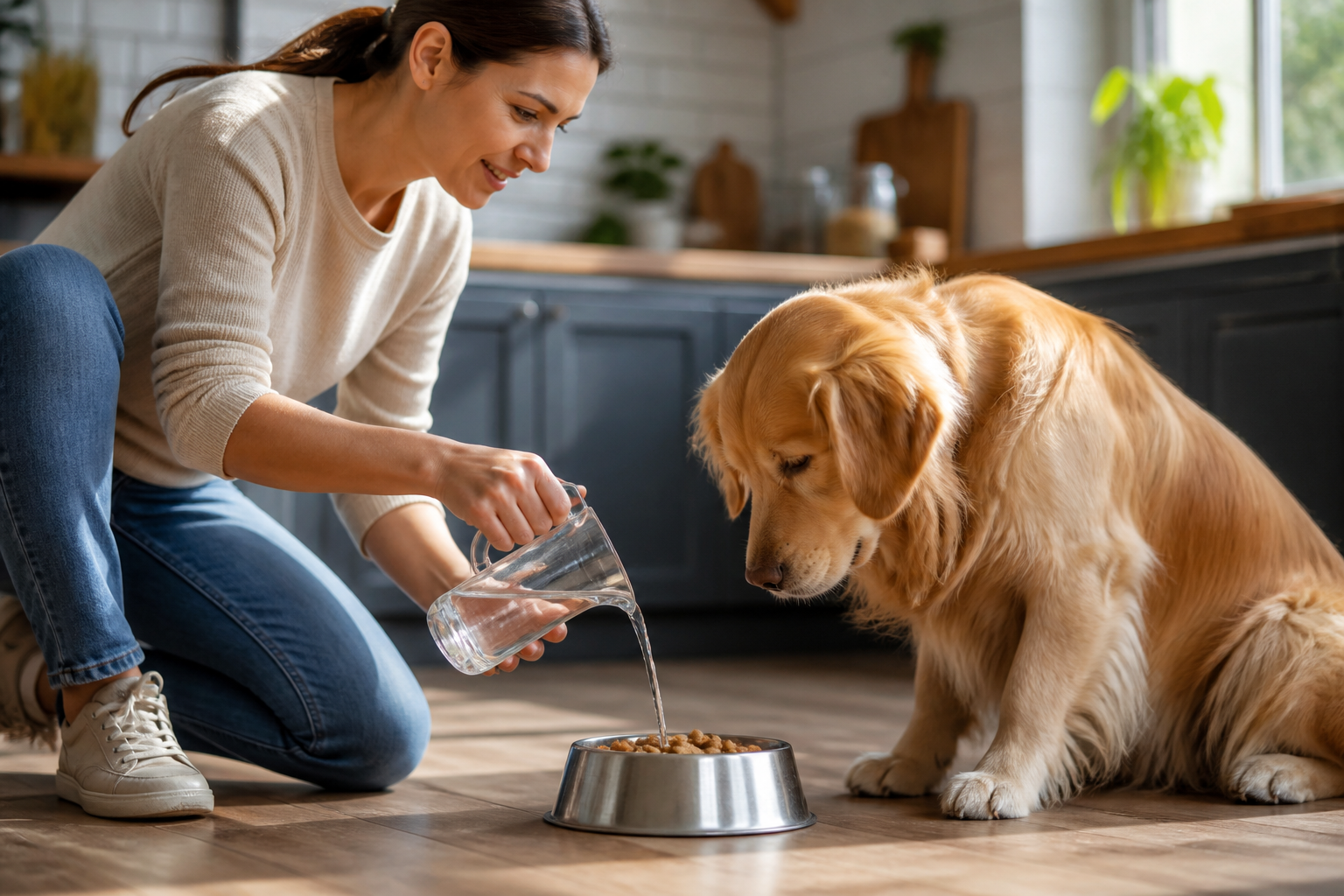
Add your chosen liquid to the bowl. Most manufacturers recommend a ratio of two parts food to one part liquid. However, you can adjust this based on your dog's preference. Use warm liquid rather than cold or boiling liquid. Warm liquid helps release the fats and aromas more effectively. Never use boiling water, as it can cook the food and destroy the beneficial enzymes you are trying to preserve.
Step 3: Wait and Soak
Let the food sit for 3 to 5 minutes. This gives the ingredients time to absorb the moisture. If you are in a rush, stirring the mixture can speed up the process. You will notice the food expand and take on a texture similar to fresh canned food.
Step 4: Stir and Serve
Give the food one final stir to ensure there are no dry pockets left. Check the temperature with your finger to make sure it is not too hot. If your dog is a fast eater, the added moisture will naturally help them slow down.
Quick Answer: To rehydrate freeze dried dog food, crumble the nuggets, add warm water or broth at a 2:1 ratio, and let it sit for 3 to 5 minutes before stirring and serving.
Choosing the Best Liquids for Rehydration
While plain water is the most common choice, you can use other liquids to provide a nutritional boost. Variety in liquids can also help encourage picky eaters to finish their meals. For inspiration, explore Open Farm’s selection of freeze-dried dog food.
- Warm Water: The simplest and most cost-effective option. It does the job perfectly without adding extra calories.
- Bone Broth: Specifically formulated dog bone broth is a fantastic addition. It provides extra collagen and amino acids for joint and gut health. Ensure you use a brand like Open Farm or Stella and Chewy's that does not contain onions, garlic, or high salt levels.
- Raw Goat Milk: This is often called "universal milk." It is packed with probiotics and electrolytes. It is very easy for dogs to digest and adds a creamy texture that most dogs love.
- Plain Kefir: Similar to goat milk, kefir provides a healthy dose of probiotics to support the immune system and digestion.
Bottom line: Using a variety of nutrient-dense liquids like bone broth or goat milk can turn a standard meal into a powerful wellness supplement.
Managing Different Feeding Styles
Not every dog wants their food prepared the same way. You may need to experiment to find the texture your dog prefers. Our Stella & Chewy’s products include freeze-dried meals and toppers that can suit different feeding routines.
The "Soup" Lover
Some dogs love to lap up their food. If your dog enjoys a more liquid meal, use a 1:1 ratio of food to liquid. This is an excellent way to ensure maximum hydration for dogs that do not drink much from their water bowl.
The "Chunky" Fan
If your dog prefers a bit of texture, do not crumble the nuggets entirely. Simply pour a smaller amount of warm water over the top and let it soak for only two minutes. This leaves the center of the nuggets slightly firm while the outside is soft and flavorful.
The Meal Topper Approach
If you are using freeze dried food as a topper for kibble, you should still rehydrate it. Mix the freeze dried pieces with water in a separate small bowl first. Once they are soft, pour the mixture over the kibble. This prevents the dry kibble from soaking up all the water and becoming mushy. You can also compare approaches in our article about mixing dry dog food with wet food.
Safety and Storage Tips for Rehydrated Food
Since freeze dried food is often raw or minimally processed, you must handle it with care. Once you add moisture to the food, it is no longer shelf-stable.
- Do not leave it out: If your dog does not finish their rehydrated meal within 30 minutes, pick it up and discard it. Bacteria thrive in warm, moist environments.
- Clean the bowl: Always wash your dog's bowl with hot, soapy water after every meal. This is especially important when feeding a raw-based diet.
- Fridge storage: If you want to prep meals ahead of time, you can rehydrate a batch and keep it in the refrigerator. However, it should be consumed within 24 hours.
- Wash your hands: Always wash your hands after handling freeze dried nuggets, as they are a raw meat product.
At the BaxterBoo warehouse in Illinois, we take great care in storing our inventory in a climate-controlled environment. You should do the same at home by keeping your bags sealed tight and stored in a cool, dry place to prevent moisture from getting into the bag before you are ready to use it.
Transitioning Your Dog to Rehydrated Food
If your dog has been eating dry kibble for a long time, their digestive system needs time to adjust to the high moisture and nutrient density of freeze dried food. A slow transition helps prevent stomach upset or loose stools. Our guide to feeding freeze-dried dog food offers another helpful preparation overview.
- Days 1 to 3: Replace 25 percent of the current food with rehydrated freeze dried food.
- Days 4 to 6: Move to a 50/50 split between the old food and the new food.
- Days 7 to 9: Increase the freeze dried portion to 75 percent.
- Day 10: Feed a 100 percent rehydrated freeze dried meal.
During this transition, monitor your dog's energy levels and stool quality. Most owners notice smaller, firmer stools within a few weeks of making the switch. This is because the body is absorbing more of the nutrients and producing less waste.
Senior Dogs and Specialized Needs
As dogs age, their needs change. Senior dogs often suffer from dental issues or a decreased sense of smell. Rehydrated freeze dried food is a perfect solution for these pets. The soft texture is easy on sensitive teeth and gums. The strong aroma of the warm meat appeals to older dogs who might be losing interest in their food. For more feeding considerations, see our guide to whether senior dogs should eat wet or dry food.
For dogs with more complex health needs, such as chronic kidney disease or cognitive decline, a specialized diet is often necessary. We carry a wide selection of prescription pet foods through our pet pharmacy. These diets are specifically formulated to support internal organ function while providing the high-quality protein your dog needs.
Key Takeaway: Rehydration is a powerful tool for senior pet care, making food easier to eat and more appealing to those with a diminished appetite.
Common Mistakes to Avoid
Even though the process is simple, a few common errors can reduce the quality of the meal.
- Using cold water: Cold water does not break down the fats as well as warm water. This can result in a grainy texture that some dogs find unappealing.
- Adding too much water too fast: If you drown the nuggets in too much water, they might not absorb it evenly. Start with a little and add more as needed.
- Not stirring: If you do not stir the mixture, you might end up with a layer of mush on the bottom and dry chunks on the top.
- Using salted broths: Never use human-grade broth or stock from the grocery store. These often contain high levels of sodium, onions, and garlic, which are toxic to dogs.
By avoiding these mistakes, you ensure that every meal provides the best possible experience for your pet.
Conclusion
Rehydrating freeze dried dog food is a simple yet impactful way to improve your pet's daily life. It supports their kidneys, aids digestion, and brings back the natural flavors and textures they love. Whether you choose to use plain warm water or a nutrient-rich bone broth, the extra effort of adding moisture is worth it for the long-term health of your dog. We suggest starting with small batches to see which consistency your dog enjoys most. To make your feeding routine even easier, consider using our Autoship programme. You can have your favorite freeze dried brands delivered right to your door on a schedule that works for you. This ensures you never run out of the high-quality nutrition your dog deserves while earning points through the MVP Rewards programme.
FAQ
Can I feed freeze dried dog food without rehydrating it?
Yes, you can feed it dry, but you must ensure your dog has constant access to fresh water. Many dogs do not drink enough on their own to compensate for the dryness of the food. Feeding it dry can lead to minor dehydration or digestive slowing, so rehydration is generally recommended by experts and manufacturers.
How much water should I add to freeze dried dog food?
The standard recommendation is two parts food to one part liquid. For example, if you are feeding one cup of crumbled nuggets, you should add half a cup of warm water. You can increase this ratio if your dog prefers a soupier consistency or if they need extra hydration for medical reasons.
Does rehydrating freeze dried food make it go bad faster?
Yes, once you add water or any other liquid, the food is no longer shelf-stable. You should treat it like any other fresh or canned food. If your dog does not eat it within 30 minutes, it should be thrown away to prevent the growth of harmful bacteria.
What is the best temperature for the water used in rehydration?
The best temperature is lukewarm to warm, roughly the temperature of a baby bottle. This is warm enough to release the natural fats and aromas without being hot enough to burn the dog's mouth. Avoid using boiling water, as it can destroy the natural enzymes and probiotics found in freeze dried raw diets.






