
 Save 15% on your 1st Autoship learn more

 Email us
 Live Chat
 FAQs
FAQs





Introduction
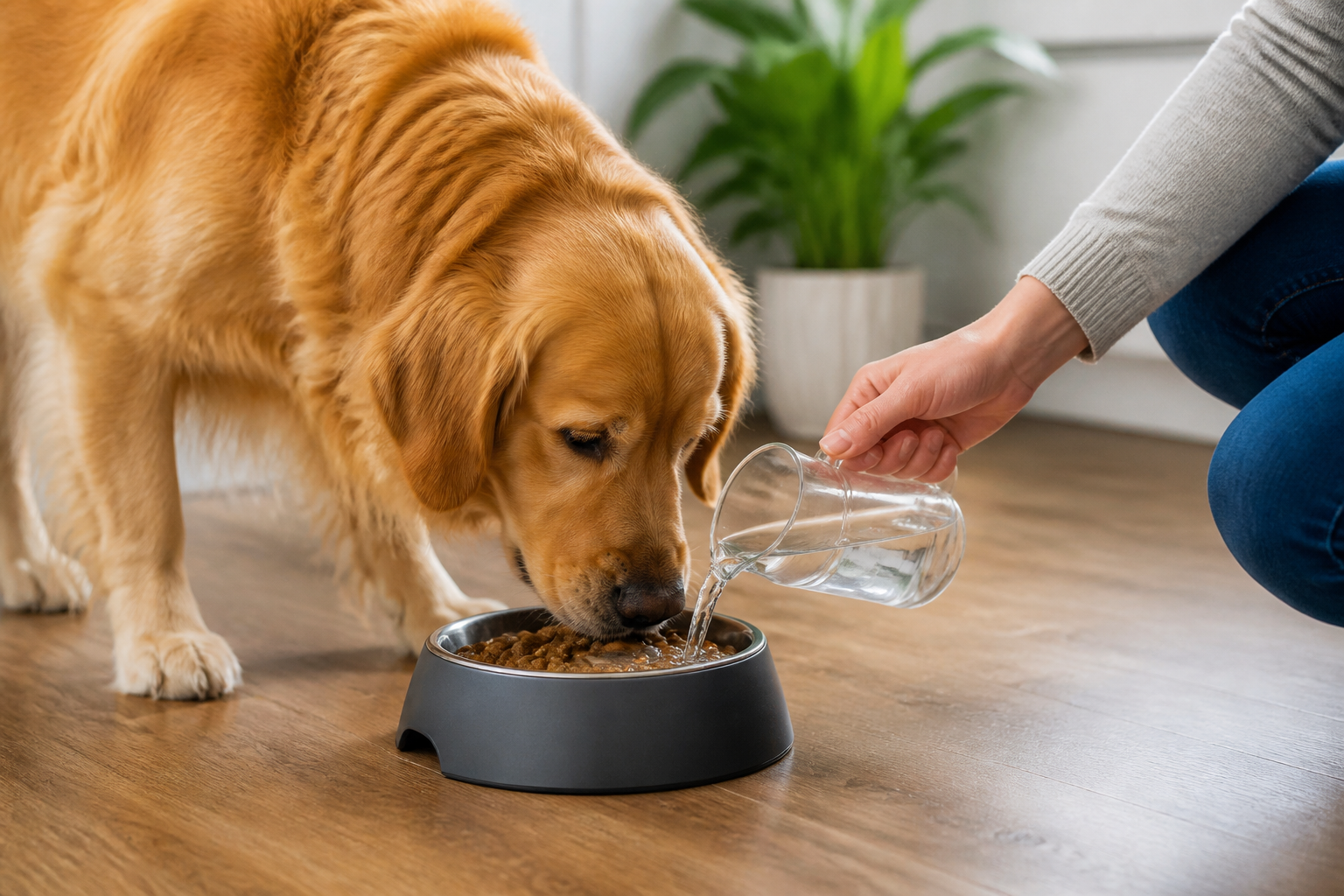
Your dog stands over their bowl, nudging the dry kibble with their nose before walking away. Perhaps they are recovering from a dental procedure, or maybe they have simply become bored with the same old crunch. At BaxterBoo, we see this often. Owners want to make mealtime exciting again without the digestive upset that comes from a sudden diet change. Turning dry food into wet food is a practical solution that increases hydration and makes eating easier for senior dogs. This guide covers the best ways to soften kibble, which liquids are safe to add, and how to maintain the right nutritional balance. You can transform a standard meal into a savory feast using items already in your kitchen.
Why Soften Your Dog's Dry Food?
There are several reasons to change the texture of your dog's meal. For many pets, it is a matter of physical necessity. Older dogs with missing teeth or gum sensitivity often struggle to break down hard biscuits. Softening the food allows them to eat without pain. It also helps puppies that are transitioning from milk to solid food. If you are feeding a young dog, explore our puppy supplies section for age-appropriate essentials.
Hydration is another significant factor. Many dogs do not drink enough water from their bowls. By adding liquid directly to their food, you ensure they stay hydrated. This is especially helpful for dogs with a history of urinary tract issues or kidney concerns.
Adding moisture also increases the aroma of the food. Dogs rely heavily on their sense of smell to determine if something is tasty. Warm liquid releases the scents of the fats and proteins in the kibble. This can jumpstart the appetite of a picky eater or a dog recovering from an illness.
Quick Answer: The best way to turn dry food into wet is to add warm water or low-sodium broth to the kibble. Let it soak for 15 to 30 minutes until the pieces expand and soften. You can then mash the mixture with a fork to reach a canned-food consistency.
The Basic Water Soaking Method
The easiest way to soften kibble is by using plain water. This method does not add any extra calories or fat to the diet. It is the safest choice for dogs with sensitive stomachs or specific weight goals. For more meal options, browse our dog food category.
Step 1: Measure the portion. / Use your dog's standard amount of dry food and place it in a deep bowl. Ensure there is enough room for the food to double in size.
Step 2: Add warm water. / Pour warm, not boiling, water over the kibble. Use a ratio of roughly one part water to two parts kibble. The water should just cover the top of the food.
Step 3: Wait for absorption. / Let the bowl sit for 20 to 30 minutes. Warm water works faster than cold water. You will see the kibble swell as it takes in the moisture.
Step 4: Stir and serve. / Give the mixture a quick stir to distribute any remaining liquid. The kibble should be soft enough to squash between your fingers.
Vet Tip: If your dog has a medical condition like diabetes or kidney disease, always consult your veterinarian before adding new liquids or toppers to their food. A prescription diet may also be softened using these methods.
Using Broth for Extra Flavor
If your dog is not interested in water-soaked kibble, broth is a great alternative. It provides a much stronger scent and flavor. However, you must be very careful about the type of broth you choose.
Many store-bought broths for humans contain onions, garlic, and high levels of salt. Onions and garlic are toxic to dogs. High sodium can lead to dehydration or heart issues. Always look for "pet-safe" broths or make your own at home.
To make a simple home version, simmer chicken or beef in plain water without any seasoning. Strain the liquid and let it cool. You can store this in the fridge for a few days or freeze it in ice cube trays for easy portioning.
Benefits of Bone Broth
Bone broth is more than just flavored water. It contains collagen and amino acids that support joint health and digestion. It is a thick, nutrient-dense liquid that coats the kibble beautifully. We carry several bone broth toppers that are specifically formulated for dogs. These are a safe and convenient way to add moisture without the risks of human grade canned soups. For another perspective on adding moisture, read how to wet dry dog food for better digestion and hydration.
Creating a Pate Consistency
Some dogs prefer the smooth texture of canned pate over chunky soaked kibble. This is common for pets that have recently had teeth pulled. You can achieve this texture with a little bit of extra effort.
Once the kibble has soaked for at least 30 minutes, it should be very soft. Use a potato masher or a sturdy fork to crush the pieces. If the mixture is too thick, add a tablespoon of warm water at a time until it reaches the desired consistency.
For an even smoother result, you can use a blender or food processor. This is highly effective for dogs that are "bolters" and try to swallow large pieces without chewing. A smooth puree ensures they get their nutrition without the risk of choking or gagging.
Key Takeaway: Mashing soaked kibble allows you to mimic the texture of expensive canned food while using the dry diet your dog already tolerates. This saves money and prevents the digestive upset often caused by switching brands.
Safe Mix-Ins to Enhance the Meal
While liquids are the primary way to turn dry food into wet, you can also use soft food toppers. These add variety and different nutritional benefits.
- Pumpkin Puree: Use 100 percent plain canned pumpkin. It is high in fiber and helps regulate digestion. Do not use pumpkin pie filling, as it contains sugar and spices.
- Plain Yogurt: A dollop of unsweetened Greek yogurt provides probiotics. Avoid any yogurt with artificial sweeteners like Xylitol, which is deadly for dogs.
- Goat Milk: This is often easier for dogs to digest than cow milk. It adds a creamy texture and plenty of vitamins.
- Wet Food Toppers: Mixing a small amount of high-quality canned food with soaked kibble can bridge the gap for a picky pet. For more ideas, explore our collection of bone broths and meal toppers.
Managing Portions and Calories
It is easy to forget that adding "extras" to a bowl also adds calories. If you are adding a quarter cup of broth or a tablespoon of yogurt every meal, those calories add up over a week.
If your dog is on a weight management plan, you should reduce the amount of dry kibble slightly to account for the toppers. If you are only using water, you do not need to adjust the portion. However, the volume of the food will increase significantly. A cup of dry food might look like two cups once it is fully hydrated. This can actually help your dog feel fuller and more satisfied after eating.
Bottom line: Monitor your dog's weight and adjust their base kibble amount if you frequently use high-calorie liquids like milk or broth.
Safety and Storage Guidelines
Moistened food behaves differently than dry food. Dry kibble can sit in a bowl for several hours without spoiling. Once you add moisture, the clock starts ticking. For additional guidance, read can I wet dry dog food.
Bacteria love warm, wet environments. If your dog does not finish their moistened meal within 30 to 60 minutes, you should pick up the bowl and discard the leftovers. Leaving wet food out at room temperature for too long can lead to food poisoning.
If you like to prepare meals in advance, you can soak a large batch and keep it in the refrigerator. Use an airtight container to keep it fresh. Refrigerated soaked food should be used within two to three days. When you are ready to serve it, you can add a tiny splash of warm water to take the chill off, as most dogs prefer room temperature or slightly warm meals.
Temperature Check
Never use boiling water to soak kibble. Extremely high temperatures can degrade some of the vitamins and minerals in the food. It also poses a burn risk. The water should be about the same temperature as a baby bottle. Always test the food with your finger before setting the bowl down for your dog.
Addressing Dental and Health Needs
Sometimes the need for wet food is a sign of an underlying health issue. If your dog suddenly stops wanting to crunch their food, it is time for a veterinary checkup. They may have a broken tooth, an abscess, or gum disease that requires professional treatment.
Our pharmacy partnership allows us to provide medications for many of these conditions. If your vet prescribes a dental wash or a specific medication for oral health, you can find it through our pharmacy section. We also carry prescription diets from Farmina Vet Life that are designed for specific health goals. These diets are often easier to transition into a wet format because of their high-quality ingredients.
Vet Tip: Sudden changes in eating habits or a refusal to eat dry food should always be discussed with a veterinarian. They can rule out medical issues that might be causing oral pain or decreased appetite.
Hydration and Digestion
Soaking food is a major benefit for the digestive system. When a dog eats dry kibble, their body has to provide the moisture to break it down in the stomach. This can lead to a heavy, bloated feeling.
Pre-soaking the food starts the breakdown process before the food even enters the stomach. This is particularly helpful for dogs prone to gas or those with slower digestive tracts. It can also help prevent "bloat" or GDV in large breeds, although you should always talk to your vet about the best preventative measures for your specific dog. For a related look at mixing kibble and water, read are you supposed to mix dry dog food with water.
Key Takeaway: Moistened food is easier on the stomach and helps the body absorb nutrients more efficiently by starting the hydration process before ingestion.
Managing the Transition
If your dog has always eaten dry food, they might be suspicious of the new texture at first. It is best to start slow.
Step 1: Start with a light spray. / Use a spray bottle or a small drizzle of water to just barely dampen the surface of the kibble.
Step 2: Increase the soak time. / Over the next few days, add more water and let it sit for five minutes, then ten, then twenty.
Step 3: Introduce the mash. / Once they are comfortable with soft kibble, you can begin mashing it if they need that pate-like consistency.
Step 4: Watch for reactions. / Pay attention to their stool and energy levels. Most dogs handle this transition very well because the base ingredients remain the same.
How BaxterBoo Can Help
At BaxterBoo, we curate products that make these transitions easier. From high-quality stainless steel bowls that are easy to sanitize after a wet meal to specialized bone broths and goat milk powders, we have the tools you need. Our warehouse in Illinois is stocked with brands that focus on ingredient transparency.
If you find that your dog loves the new moistened format, you might want to look into our Autoship program. This ensures you never run out of their favorite kibble or the toppers you use to soften it. Plus, you can save on your orders and earn rewards points with every purchase.
Summary of Best Practices
To turn dry dog food into wet effectively, keep these points in mind:
- Use warm water or pet-safe, low-sodium broth.
- Soak for 15 to 30 minutes to allow for full expansion.
- Mash or blend for dogs with severe dental issues.
- Discard uneaten portions after one hour to prevent bacteria growth.
- Check with your vet if the preference for soft food is a new behavior.
Turning dry food into wet is a simple, cost-effective way to improve your dog's mealtime experience. Whether you are helping a senior dog stay comfortable or just want to boost your pet's water intake, these methods are easy to implement. By using the high-quality foods and supplements found at BaxterBoo, you can ensure your dog gets the best possible nutrition in a texture they love.
FAQ
How long can I leave moistened dog food in the bowl?
You should remove and discard any moistened dog food that has not been eaten within 60 minutes. Because water and warmth encourage bacterial growth, leaving it out longer can make your dog sick. For safety, treat it like you would a bowl of canned wet food.
Can I turn any brand of dry dog food into wet food?
Yes, almost all dry kibble can be softened with water or broth. Some high-density or baked kibbles may take longer to absorb moisture than standard extruded kibble. If the food is very hard, try using slightly warmer water and letting it sit for a full 30 minutes.
Does soaking dog food help with dental health?
While dry kibble is often touted for its ability to scrape teeth, the effect is minimal for many dogs. If your dog has existing dental pain, soaking the food is much better as it prevents further injury or discomfort. For true dental health, regular brushing and professional cleanings are the most effective methods.
Can I prep soaked dog food in bulk for the week?
It is best to only prep what you need for two to three days at a time. Store the pre-soaked food in an airtight container in the refrigerator immediately after preparing it. This keeps the food fresh and prevents it from picking up other odors in the fridge.






