
 Save 15% on your 1st Autoship learn more

 Email us
 Live Chat
 FAQs
FAQs





Introduction
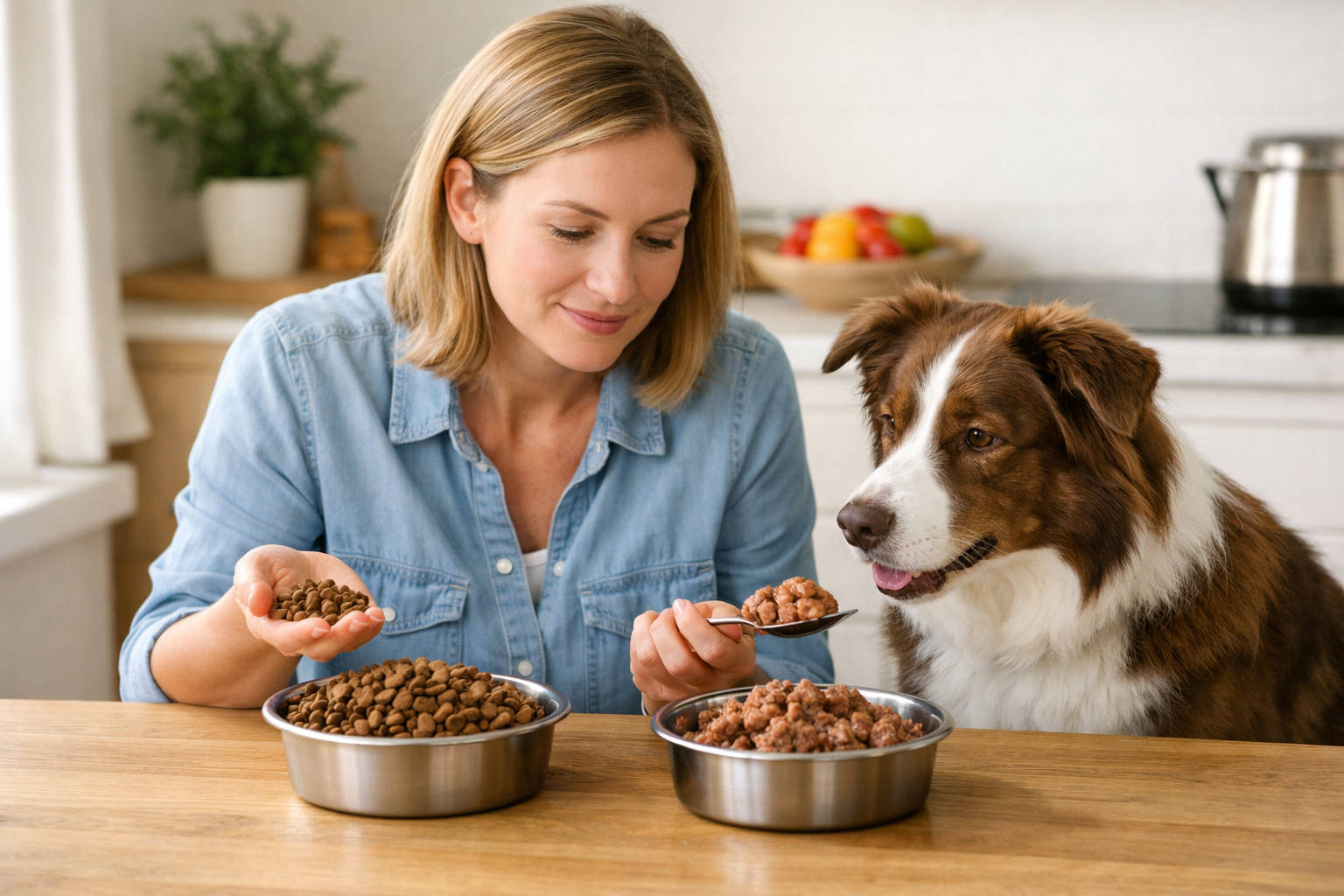
You stand in the pet food aisle or scroll through a website and feel the weight of a dozen different decisions. Your dog is waiting at home for dinner, and you want to make sure the bowl you set down provides the best possible fuel for their long walks and afternoon naps. The debate between dry kibble and canned wet food is one of the most common hurdles for pet owners. At BaxterBoo, we talk to people every day who are trying to balance nutrition, budget, and their dog's specific health needs. This article explains the pros and cons of both formats and how to choose the right one for your household. While both options can provide a complete and balanced diet, the right choice often comes down to your dog's age, dental health, and hydration levels. To start comparing options, browse our dog food category.
The Case for Kibble: Why Dry Food Is a Household Staple
Dry dog food is the most popular choice for pet owners across the United States. It is created through a process called extrusion. This involves mixing wet and dry ingredients into a dough, which is then cooked under pressure and pushed through a die to create specific shapes. These pieces are dried and often sprayed with fats or oils to make them more appetizing.
The primary benefit of dry food is its convenience. You can buy a large bag and store it for weeks as long as it is kept in a cool, dry place. It does not require refrigeration after opening. This makes it an excellent choice for owners who prefer to let their dogs graze throughout the day. If you leave a bowl of kibble out for a few hours, it will not spoil or attract pests as quickly as wet food would.
Cost is another major factor. On a per-calorie basis, dry food is almost always more affordable than wet food. Because kibble is calorie-dense and contains very little water (usually around 10 percent), you do not need to feed as much volume to meet your dog's energy requirements. This makes it a practical choice for owners of large or giant breeds who require a high volume of food every day. If you are shopping for a full range of dry options, take a look at our adult dog food selection.
Key Takeaway: Dry food offers a budget-friendly and shelf-stable way to provide complete nutrition, especially for large dogs or multi-pet households.
Dental Health and Cognitive Enrichment
Many people believe that the crunch of kibble helps keep teeth clean. While some specialized dental diets are designed to scrub plaque away, standard kibble only provides a small amount of mechanical cleaning. It is not a substitute for regular toothbrushing or professional veterinary cleanings. However, dry food is much better for interactive play. You can easily use kibble in:
- Snuffle mats for scent work
- Puzzle feeders to slow down fast eaters
- Treat-dispensing balls for mental stimulation
- Training sessions as a low-calorie reward
Using food for enrichment can help reduce anxiety and boredom in dogs. It turns a thirty-second meal into a fifteen-minute brain workout. For more on keeping meals fresh, see our blog post on dry dog food freshness.
The Benefits of Wet Food: Hydration and Flavor
Wet food is usually found in cans, pouches, or plastic trays. It is cooked at high temperatures to sterilize the contents before being sealed. The most obvious difference is the moisture content. Most wet foods consist of 75 to 80 percent water. This can be a significant benefit for dogs that do not drink enough water on their own.
Proper hydration is essential for kidney function and urinary tract health. If your dog has a history of urinary stones or crystals, a high-moisture diet is often recommended by veterinarians. The extra water helps flush the system and keeps the bladder healthy.
Wet food is also famously aromatic. Because it is moist and contains more fats and proteins than some dry foods, it smells much stronger to a dog. This makes it a great solution for picky eaters or dogs with a diminished sense of smell. If a dog is recovering from an illness or surgery, the strong scent of a canned stew or pâté can often jump-start their appetite. If you are considering a change in texture, our guide to switching from dry to wet dog food is a helpful next step.
Quick Answer: Neither food is objectively better for all dogs. Dry food is more convenient and cost-effective, while wet food provides superior hydration and is often more appealing to picky or senior dogs.
Satiety and Weight Management
For dogs that are always looking for a snack, wet food can help them feel full. Because wet food is less calorie-dense than kibble, a dog can eat a larger volume of food without consuming more calories. This can be helpful for weight management. A dog might feel more satisfied after eating a large bowl of wet food than a small handful of kibble, even if the calorie count is identical.
Comparing Nutrition: The Dry Matter Basis
When you look at the labels on a can of wet food and a bag of dry food, the numbers can be confusing. The label on a bag of kibble might say it has 26 percent protein. The can of wet food might only list 8 percent protein. This does not mean the kibble has three times as much protein.
To compare the two fairly, you have to look at them on a dry matter basis. This means calculating the nutritional value after all the water is removed. Once you do the math, you will often find that wet food actually has higher protein and fat levels and fewer carbohydrates than dry food.
How to Calculate Dry Matter
- Check the moisture percentage on the label.
- Subtract that number from 100 to get the total dry matter.
- Divide the listed protein percentage by the total dry matter.
- Multiply by 100.
For example, if a wet food is 75 percent moisture, the dry matter is 25 percent. If the protein is listed as 10 percent, you divide 10 by 25 to get 0.40. This means the food is actually 40 percent protein on a dry matter basis. This is often higher than the 25 or 30 percent found in many dry foods.
Vet Tip: If your dog has specific nutritional requirements, such as a need for low-protein or high-fat meals, always ask your vet to help you compare brands. They can ensure the nutritional profile fits your dog's health status.
Special Considerations for Puppies and Seniors
Life stage plays a massive role in deciding between wet and dry food. Puppies have small mouths and baby teeth. While they can certainly eat kibble, some very young puppies find it hard to crunch through hard nuggets. Soaking kibble in warm water or mixing in a bit of wet food can make the transition to solid food much easier. For age-specific shopping, visit our puppy food category.
Senior dogs face different challenges. As dogs age, they often develop dental issues like gum disease, loose teeth, or tooth loss. Chewing hard kibble can become painful. In these cases, switching to a wet food diet can significantly improve their quality of life. Senior dogs also tend to have a harder time staying hydrated, so the extra moisture in canned food provides a double benefit. If your older dog needs a more tailored assortment, explore our senior dog food category.
Cognitive Support for Older Dogs
We carry several brands that focus on senior health, including Senilife supplements and specialized diets from our selection of Royal Canin products and our selection of Purina Pro Plan products. If your senior dog is showing signs of cognitive decline or slowed movement, their diet is a primary tool for management. Soft foods are easier to digest and can be easily mixed with supplements for joint support or brain health.
The Pharmacy and Prescription Diets
Sometimes the choice between wet and dry food is dictated by a medical condition. For dogs with chronic kidney disease, diabetes, or severe allergies, a standard over-the-counter food might not be enough. This is where prescription diets come in.
We provide access to our pet pharmacy for vet-directed medications and prescription pet foods like Farmina Vet Life or Royal Canin Veterinary Diet. Many of these therapeutic diets come in both wet and dry versions.
For example, a dog with kidney issues might benefit most from the wet version of a prescription diet to keep their hydration levels high. A dog on a weight management plan might do well with a specific dry kibble that is high in fiber. Because we have been operating since 2006, we understand that managing a chronic condition is a long-term commitment. Our pharmacy makes it easier to get these specialized foods delivered directly to your door alongside your other pet supplies.
Key Takeaway: Prescription diets are a vital tool for managing health conditions. Our pharmacy offers a streamlined way to get these vet-approved foods and medications in one place.
Mixing Both Worlds: The Benefits of a Combined Diet
You do not have to choose just one. Many pet owners find that a combination of wet and dry food provides the best balance of health and value. This is often called "mixed feeding" or "topping."
Using wet food as a topper on kibble can make a meal much more exciting for your dog. It provides the variety of textures they crave while keeping your costs down. This also allows you to provide the dental benefits of chewing kibble while ensuring your dog gets the extra hydration of wet food. If your dog prefers a topper-focused approach, our selection of Stella & Chewy's products includes plenty of meal mixers and treats.
Rules for Successful Mixing
If you decide to mix food, you must be careful about calories. It is very easy to overfeed when you are adding "a little extra" to the bowl.
- Calculate the calories: Look at the kilocalories (kcal) per cup for the dry food and per can for the wet food.
- Use a consistent ratio: A common split is 75 percent calories from dry food and 25 percent from wet food.
- Adjust for treats: If you use a lot of treats for training, you should reduce the amount of food in the bowl.
- Consult your vet: If your dog is prone to weight gain, ask your vet for a specific calorie target.
Bottom line: Mixing wet and dry food is an excellent way to improve palatability and hydration without breaking your budget.
Storage and Safety Tips
The way you store your dog's food is just as important as the food itself. Improper storage can lead to nutrient loss, spoilage, or even bacterial growth.
Storing Dry Food
Keep dry food in its original bag. These bags are designed with liners that help preserve the fats and oils in the kibble. If you use a plastic bin, place the entire bag inside the bin rather than pouring the kibble directly into the plastic. Plastic containers can develop microscopic scratches that trap bacteria and old fats, which can turn rancid and make your dog sick. Always seal the bag tightly and use the food within six weeks of opening. For a deeper look at freshness and spoilage, see our blog post on dry dog food storage tips.
Storing Wet Food
Once a can of wet food is opened, the clock starts ticking. It must be covered and refrigerated immediately. You can buy silicone can lids that create an airtight seal. Use the opened can within three days. If your dog does not eat their wet food within thirty minutes of it being served, you should pick up the bowl and throw the remains away. Bacteria grow quickly in moist food left at room temperature. To make sure you keep a steady supply on hand, consider our Autoship programme.
How to Transition Your Dog to a New Food
If you decide to switch from dry to wet (or vice versa), you must do it slowly. A sudden change in diet is the most common cause of upset stomachs, diarrhea, and vomiting in dogs. Their digestive systems need time to adjust to new protein levels and moisture content.
Follow this ten-day schedule for a smooth transition:
- Days 1 to 3: Serve 75 percent of the old food and 25 percent of the new food.
- Days 4 to 6: Serve a 50/50 split of the old and new food.
- Days 7 to 9: Serve 25 percent of the old food and 75 percent of the new food.
- Day 10: Serve 100 percent of the new food.
Watch your dog closely during this time. If you notice soft stools or gas, slow down the transition and stay at the current ratio for a few more days before increasing the new food again. If you shop certain brands often, you may also want to explore the Frequent Buyer Program for added value.
Finding Value with BaxterBoo
We know that high-quality pet food is a significant investment. To help you provide the best nutrition for your dog without overspending, we offer several programs designed for regular shoppers.
Our MVP Rewards program allows you to earn up to 5 percent back on every purchase. If you find a brand your dog loves, like our selection of NutriSource products, you can use our Frequent Buyer Program to earn free products over time. For maximum convenience, our Autoship program ensures you never run out of food. It offers savings on your first order and grants you a free MVP Gold membership.
Whether you are looking for a premium kibble like Orijen or a high-quality wet food from Tiki Dog, we have a curated selection of over 500 brands. We only stock products we would give to our own pets. Our warehouse in Vernon Hills is always full of fresh stock ready for home delivery or in-store pickup.
Conclusion
Deciding between wet and dry dog food is not about finding a single right answer. It is about finding the right answer for your specific dog at their current stage of life. Dry food offers unmatched convenience and value, while wet food provides essential hydration and high palatability. Many owners find that a combination of the two serves their needs best.
- Kibble is best for budget, convenience, and dental exercise.
- Wet food is best for hydration, picky eaters, and senior dogs.
- Mixing provides the benefits of both while managing costs.
Key Takeaway: Your dog's nutritional needs will change as they grow. Regular vet checkups and a flexible approach to their diet will help them stay healthy and happy for years to come.
If you are managing a health condition that requires a specific diet, visit our pet pharmacy to explore our range of prescription foods and medications. We are here to help you navigate every stage of your dog's nutritional journey.
FAQ
Is dry food better for a dog's teeth than wet food?
While the crunch of kibble can provide a very small amount of mechanical cleaning, it is not a replacement for dental care. Some specialized dental kibbles are designed to be more effective at removing plaque, but standard dry food is not a "cure" for dental disease. Regular brushing and professional cleanings are the only ways to ensure your dog's mouth stays healthy.
Can I mix wet and dry food every day?
Yes, mixing wet and dry food is a great way to provide variety and hydration. However, you must be careful not to overfeed your dog. You should calculate the total calories your dog needs and ensure the combined amount of wet and dry food does not exceed that limit. It is often helpful to have your vet calculate a daily calorie goal for you.
Why is wet food more expensive than dry food?
Wet food is more expensive because it contains a high percentage of water, meaning you have to buy more volume to get the same amount of calories. The canning and sterilization process is also more costly than the extrusion process used for dry food. Additionally, wet food often contains higher levels of animal protein and fat, which are more expensive ingredients than the carbohydrates used to bind kibble.
Does wet food cause diarrhea in dogs?
Wet food itself does not cause diarrhea, but a sudden switch to a rich wet food can upset a dog's stomach. Because wet food is often higher in fat and protein than dry food, it should be introduced slowly over a week to ten days. If your dog has a sensitive stomach, look for wet food formulas specifically designed for easy digestion.






